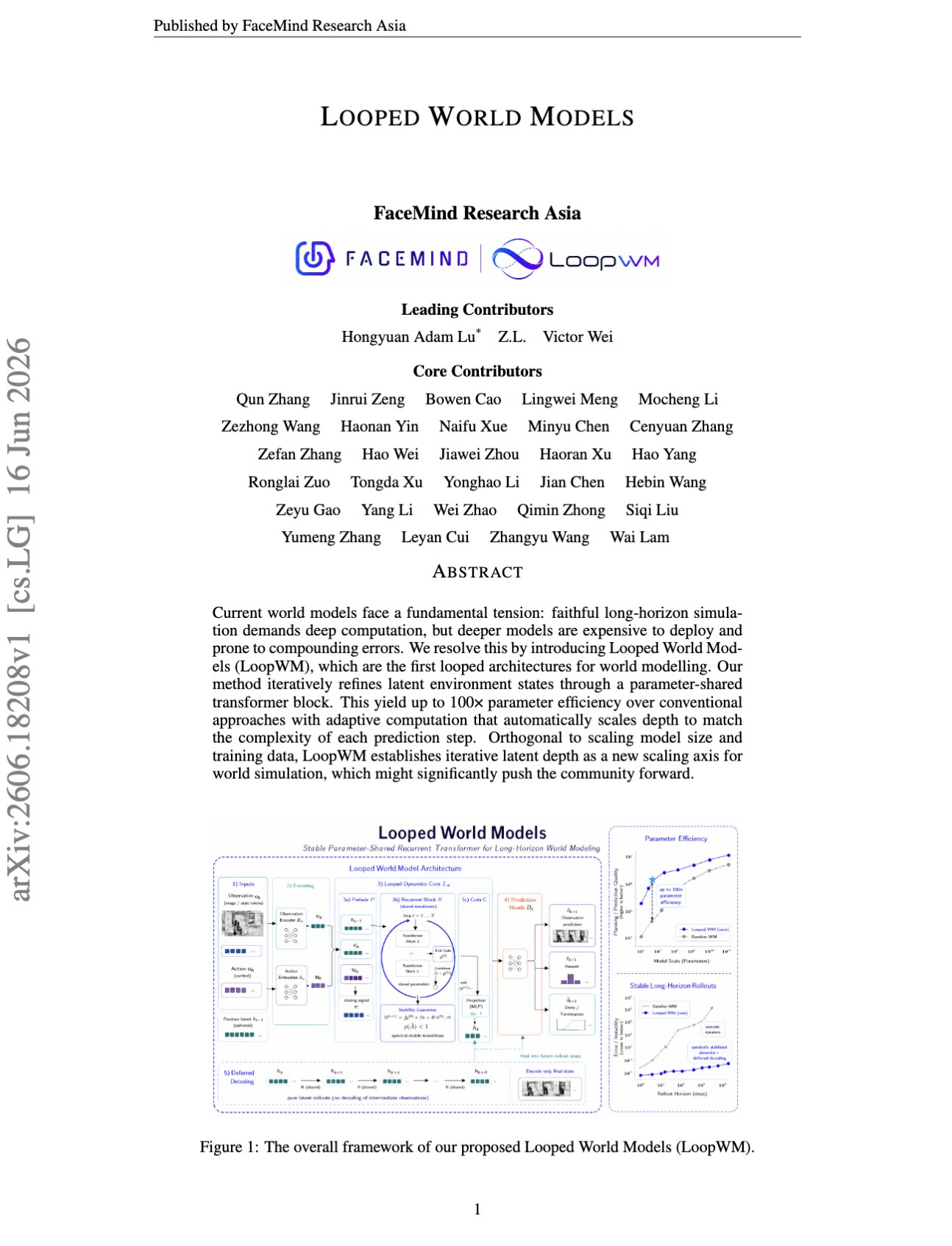
“World Models in a Loop” World models require deep computations for stable long-horizon simulation, but deeper models are costly and errors accumulate over deployments. This paper makes depth reusable by looping
MACHINE LEARNING
-
Gary Marcus celebrates another win for neurosymbolic systems
By
–
yet another win for neurosymbolic systems!
-
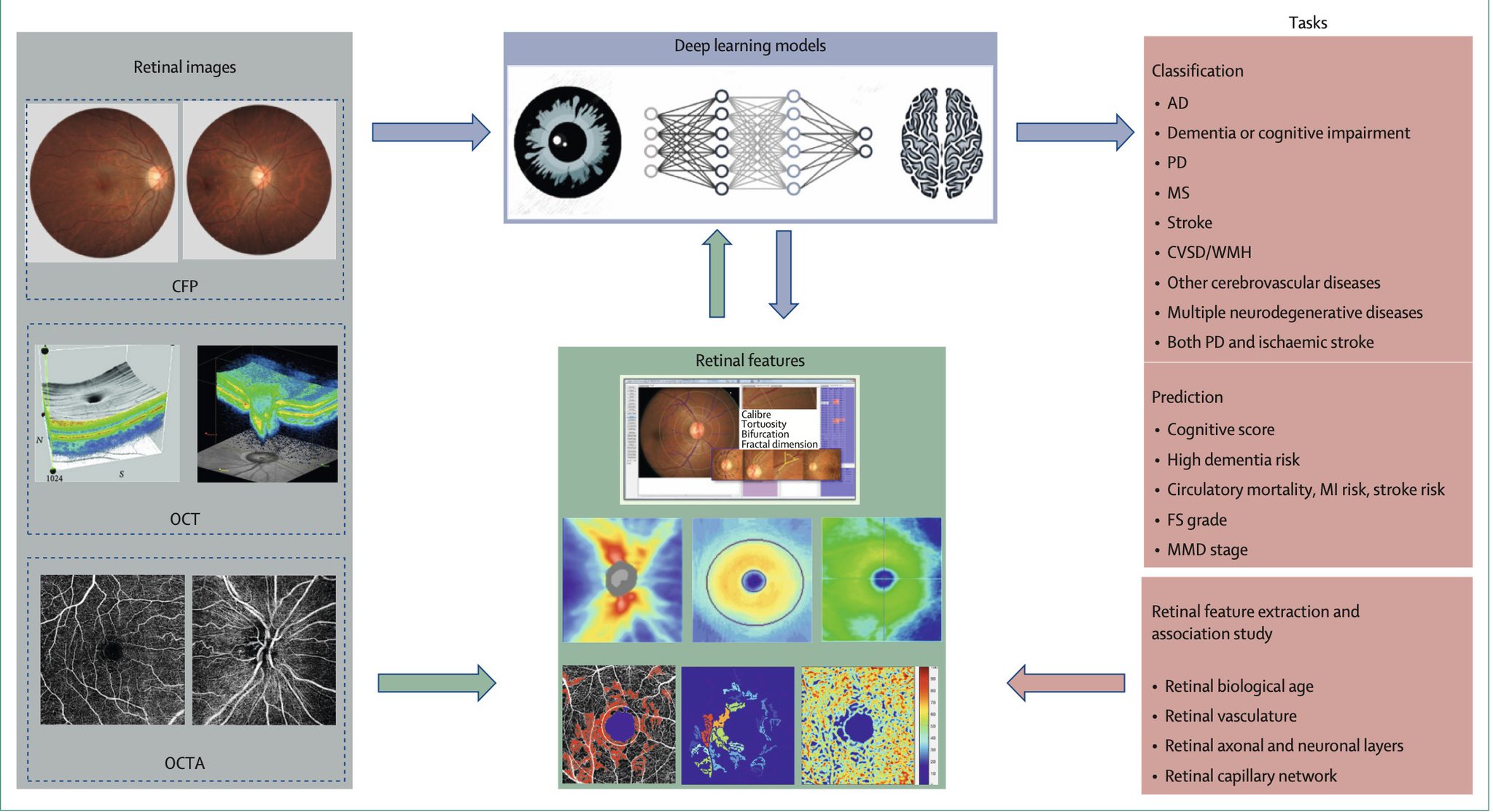
AI-analyzed retina photo reveals brain health
By
–
If you want to know a lot about a person's brain health, it is embedded in a retina photo, deciphered by AI https://thelancet.com/journals/landig/article/PIIS2589-7500(26)00043-9/fulltext
… @LancetDigitalH -
Iteratively improve your agents for production with LangSmith
By
–
✅ Take your agent from first run to production-ready through iterative cycles of improvement.
— LangChain (@LangChain) 18 juin 2026
✅ Learn how to observe and evaluate agents with LangSmith
✅ Build reliable agents that last pic.twitter.com/pXS87Pk47xTake your agent from first run to production-ready with iterative improvement cycles. Learn to observe and evaluate agents with LangSmith. Build reliable agents that last.
-
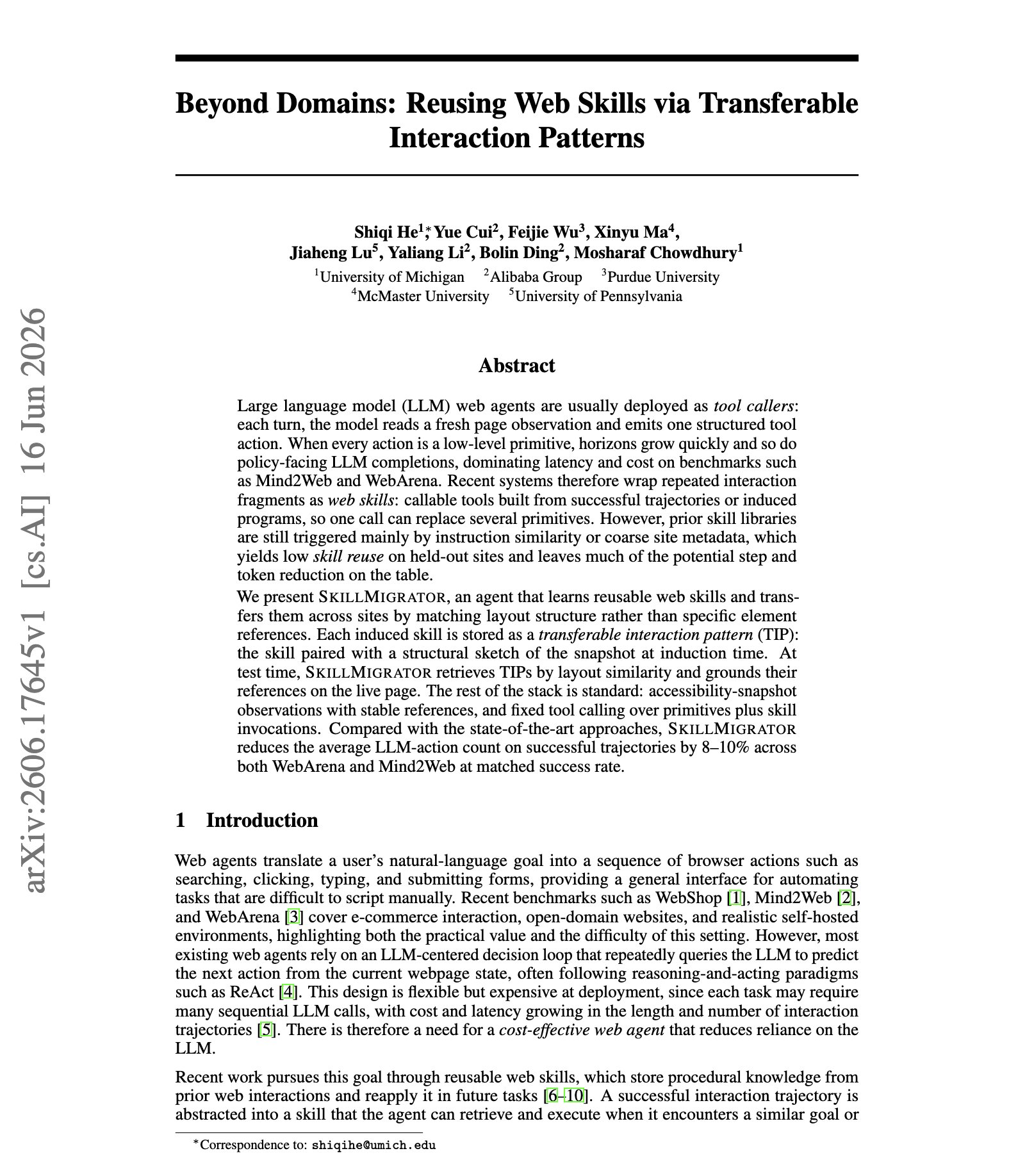
How to Make Web Agent Skills Reusable
By
–
If you build web agents, this one is worth your time. It's on how to make agent skills reusable. (bookmark it) LLM web agents usually run as tool callers. Each turn, the model reads a fresh page and emits one low-level action, so horizons and policy-facing LLM completions both
-
LFM2.5-ColBERT-350M reliably selects top 5 tools from 151
By
–
LFM2.5-ColBERT-350M is a surprisingly reliable smart tool selector.
— Maxime Labonne (@maximelabonne) 18 juin 2026
We gave it 151 tools, and it consistently surfaces the 5 most relevant ones based on the user prompt.
This saves tokens and improves accuracy. Ideal for hmmmm agentic edge models? 👀 pic.twitter.com/IPyizctesULFM2.5-ColBERT-350M is a surprisingly reliable smart tool selector. We gave it 151 tools, and it consistently surfaces the 5 most relevant ones based on the user prompt. This saves tokens and improves accuracy. Ideal for hmmmm agentic edge models?
-
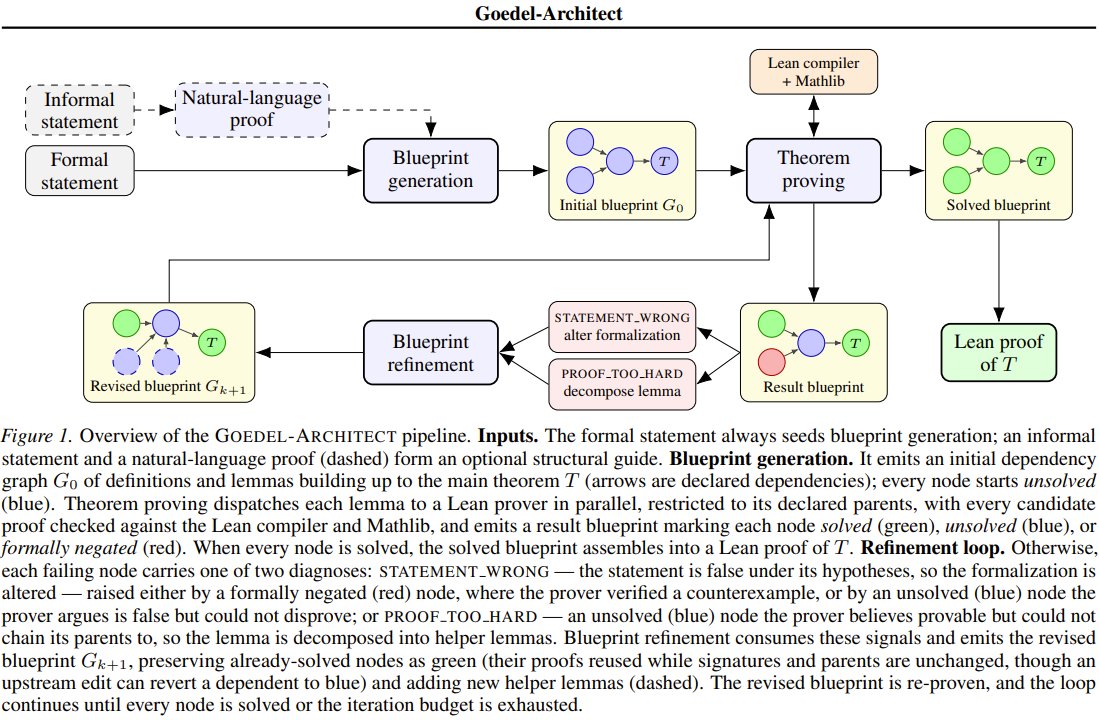
Princeton’s Goedel-Architect: AI generates formal theorem proving blueprints for Lean 4
By
–
What if an AI could write its own blueprint to prove math theorems? Princeton researchers introduce Goedel-Architect, a new agentic framework for formal theorem proving in Lean 4. Instead of recursively decomposing lemmas (which can loop on dead ends), it first generates a
-
Causal decoder patched to bidirectional encoder excels in multilingual tasks
By
–
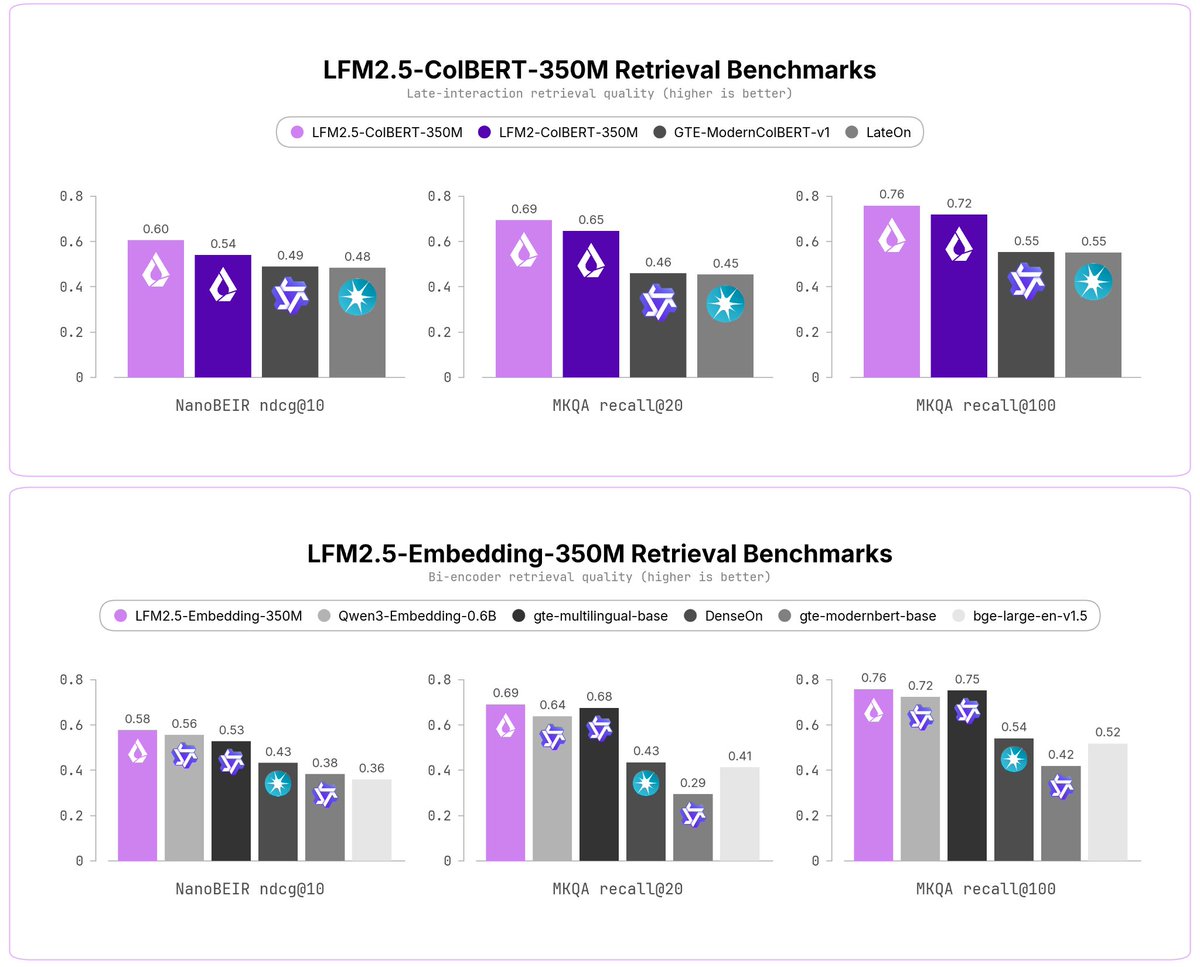
We patched LFM2.5-350M (pre-trained on 28T tokens) to transform a causal decoder into a bidirectional encoder. It worked extremely well: both Embedding and ColBERT models get best-in-class performance, especially for multi/cross-lingual tasks.
-
GLM-5.2: best open-weight model with multi-head latent attention
By
–
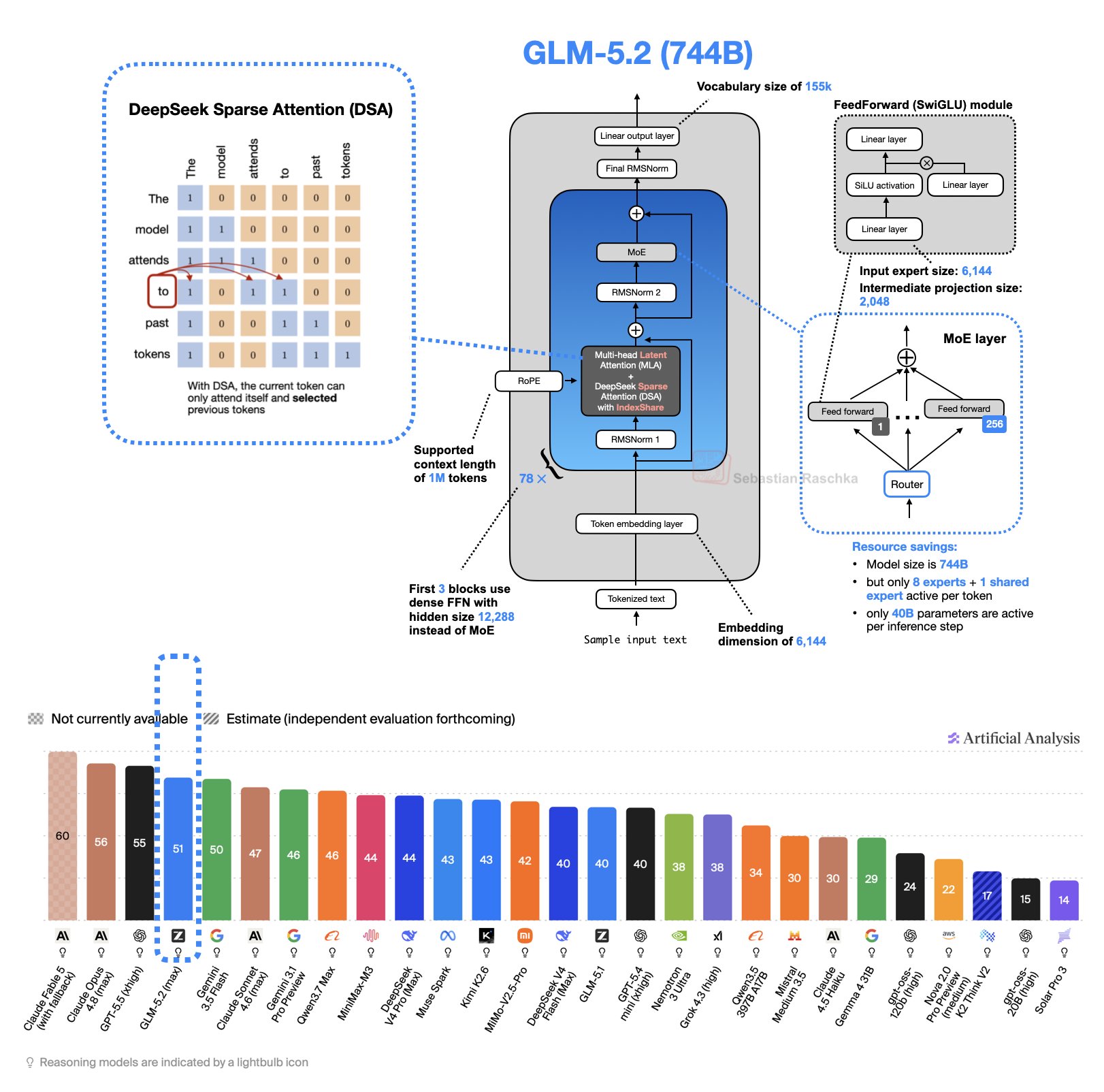
Just updated with the recent release of GLM-5.2. The best open-weight model today. Architecture-wise, it is built on the GLM-5 and GLM-5.1 architecture that I covered previously, meaning it reuses the Multi-head Latent Attention mechanisms.