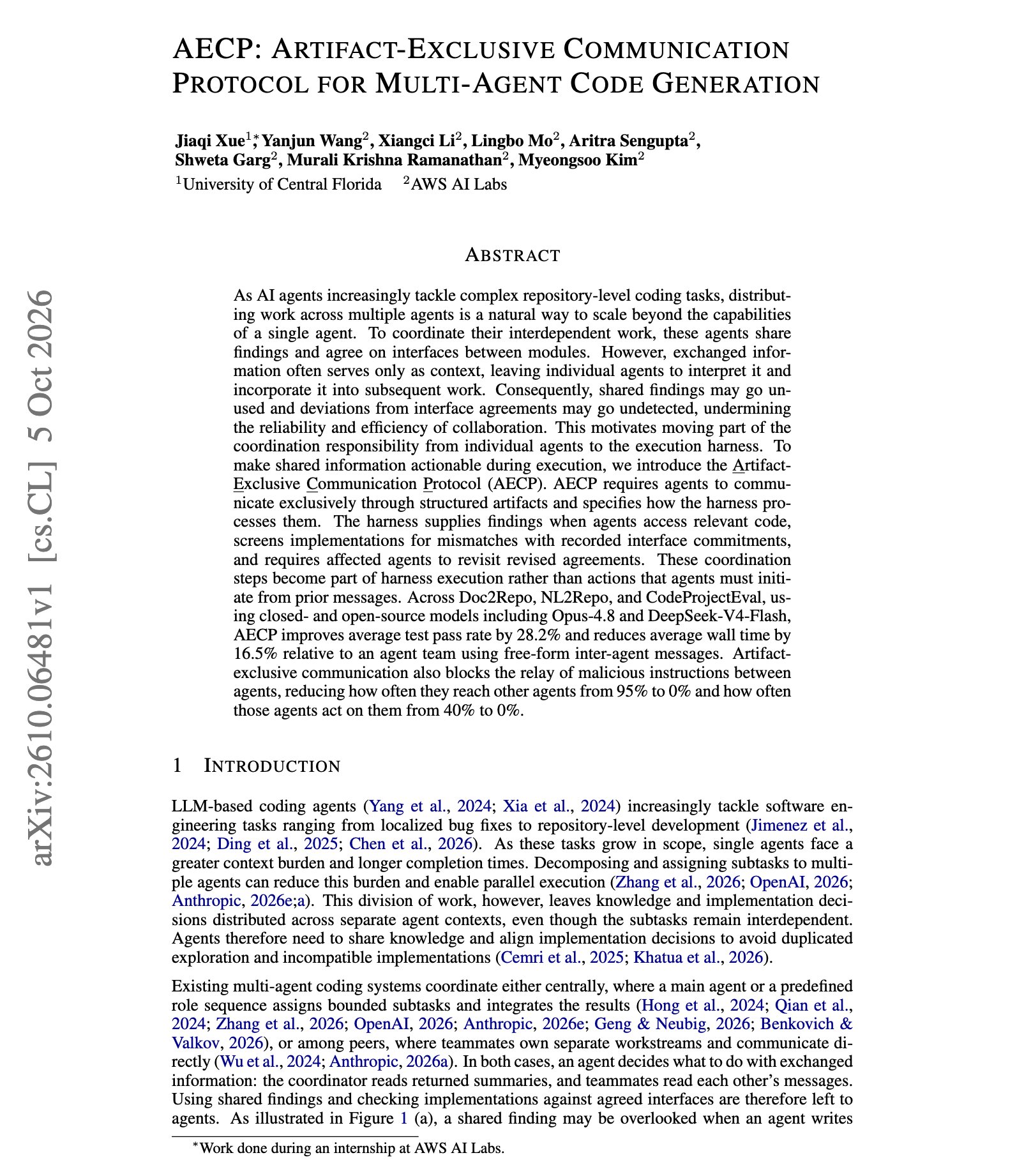
This is a great paper from AWS AI Labs. They show that multi-agent coding teams raised their test pass rate by 28.2% and cut wall time by 16.5% without changing the model. The authors achieve this by changing how the agents communicate. In free-form agent teams, shared
@dair_ai
-
MCP tools to explore top AI papers of the week
By
–
Explore the top AI papers of the week with our brand-new MCP tools.
— DAIR.AI (@dair_ai) 7 octobre 2026
Connect it to Codex, Claude Code, or Grok Bot. https://t.co/kZ3E1rte8GExplore the top AI papers of the week with our brand-new MCP tools. Connect it to Codex, Claude Code, or Grok Bot.
-
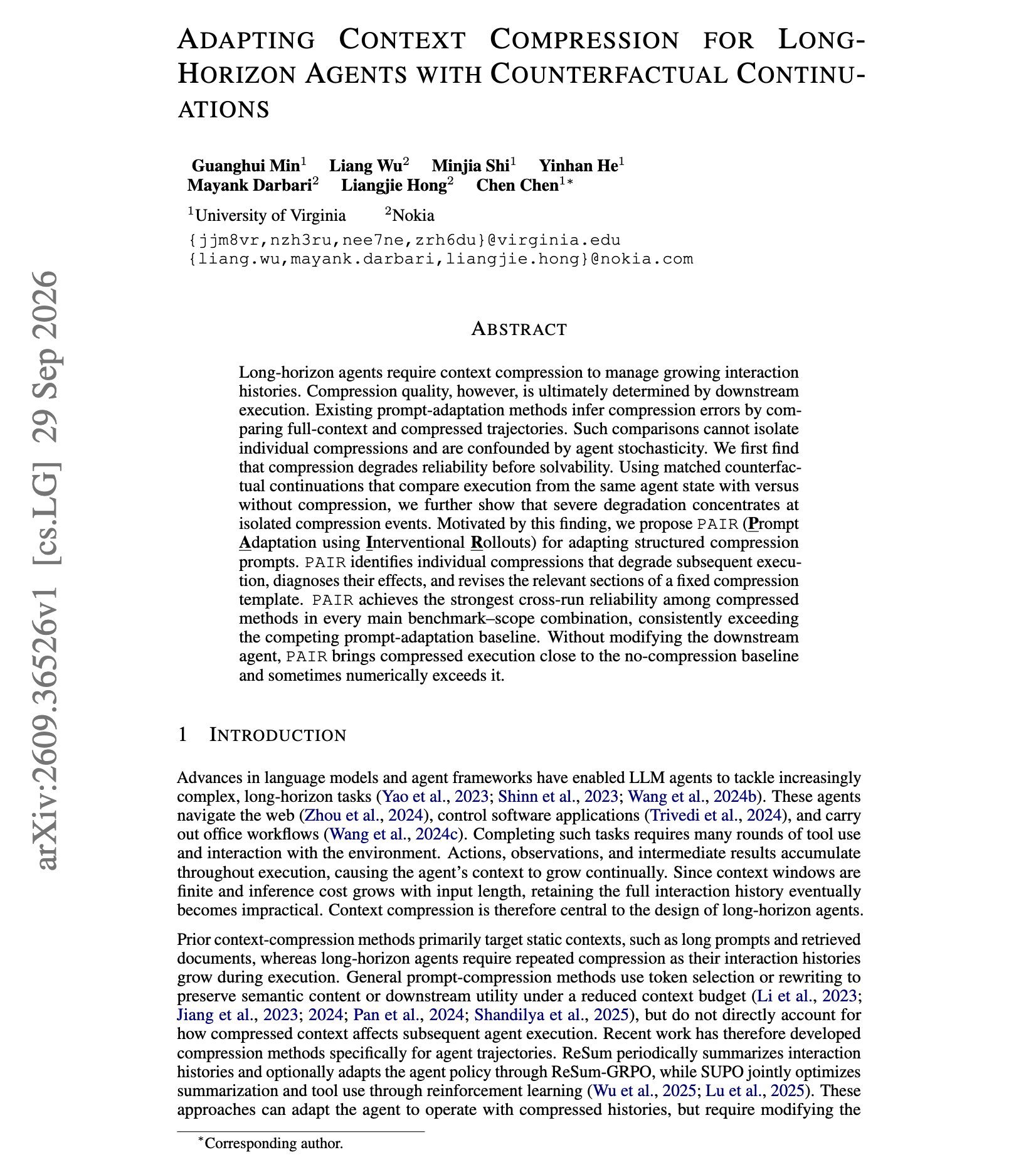
PAIR method evaluates context compression impact on long-horizon agents
By
–
Context compression is a huge bottleneck for long-running agents. This work finds that context compression hurts long-horizon agents at a few specific points. They propose PAIR, which replays the agent from the same state with and without a given compression, instead of
-
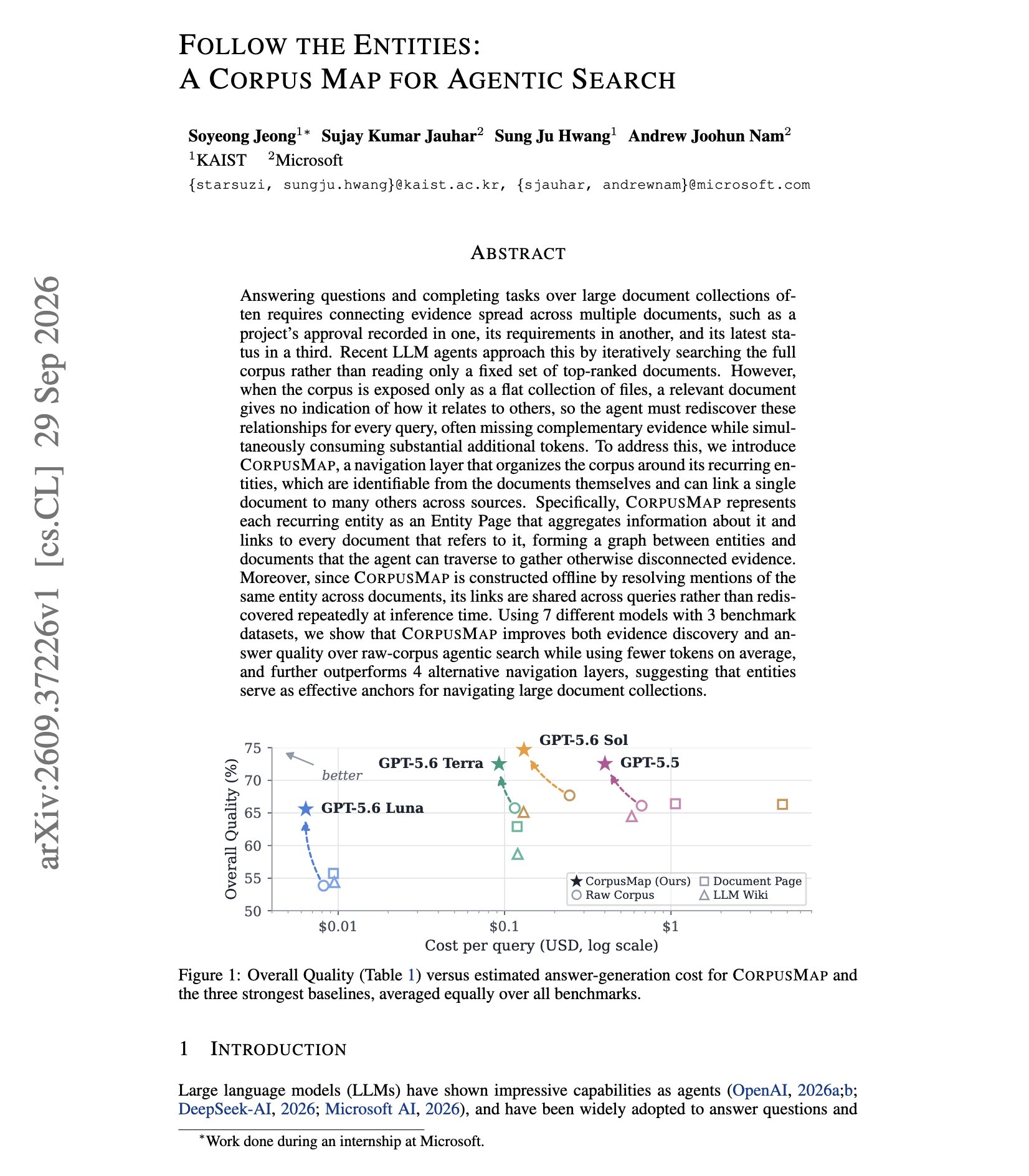
Microsoft paper introduces CorpusMap for AI agent document search
By
–
Banger paper from Microsoft and colleagues. If you run agents that search a large document collection, this one is worth your time. (bookmark it) They introduce CorpusMap, which resolves recurring entities across the collection in advance and gives each entity a page that
-
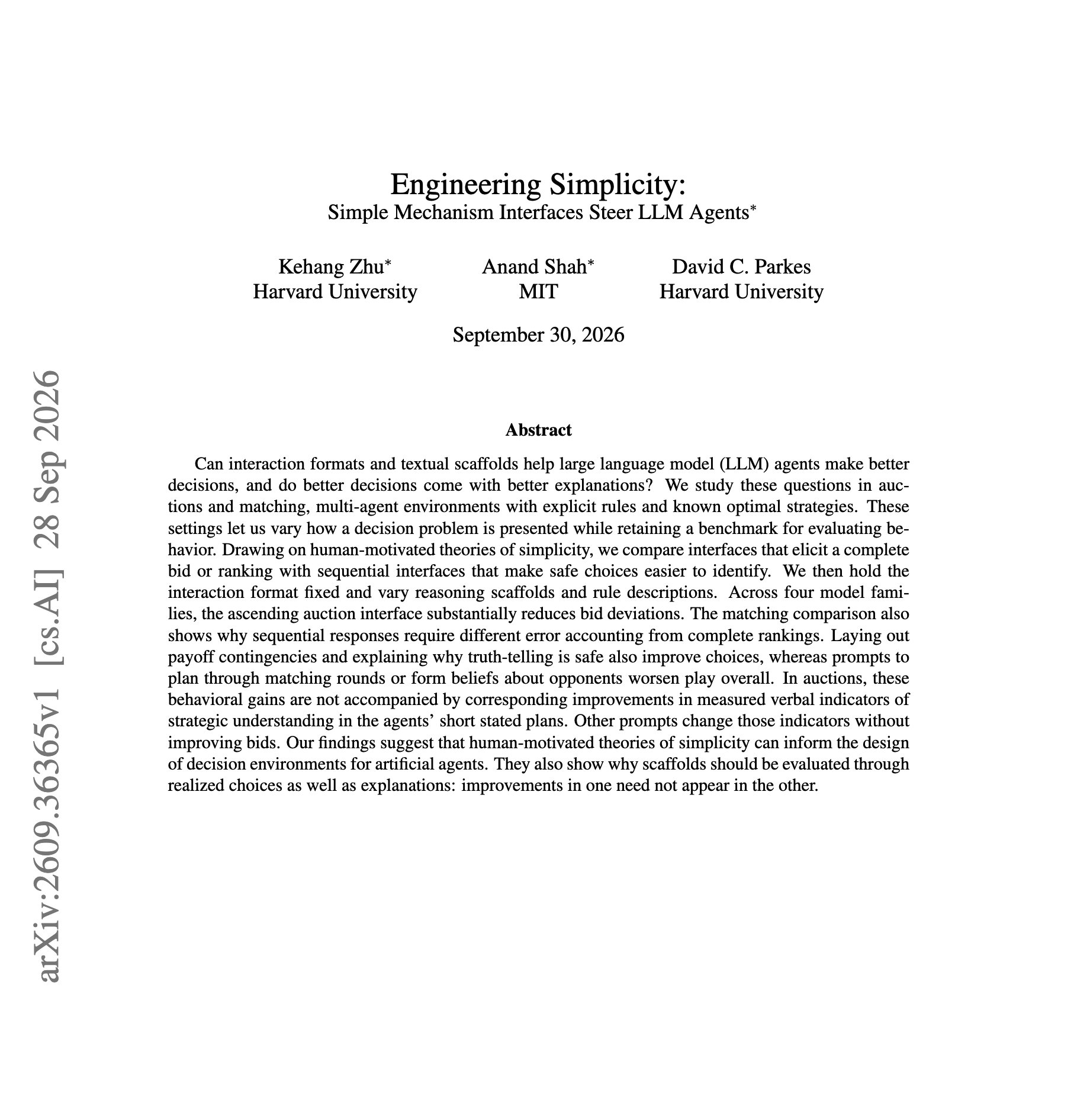
Harvard-MIT paper: ‘plan ahead’ prompts worsen AI agent play
By
–
Does telling your agent to plan ahead actually help? It's standard practice to add a "plan ahead" or "think about the other players" instruction to an agent's prompt. In auctions and matching markets, this Harvard-MIT paper finds that those prompts make play worse overall. The
-
EverMind AI releases Raven open-source multi-agent system
By
–
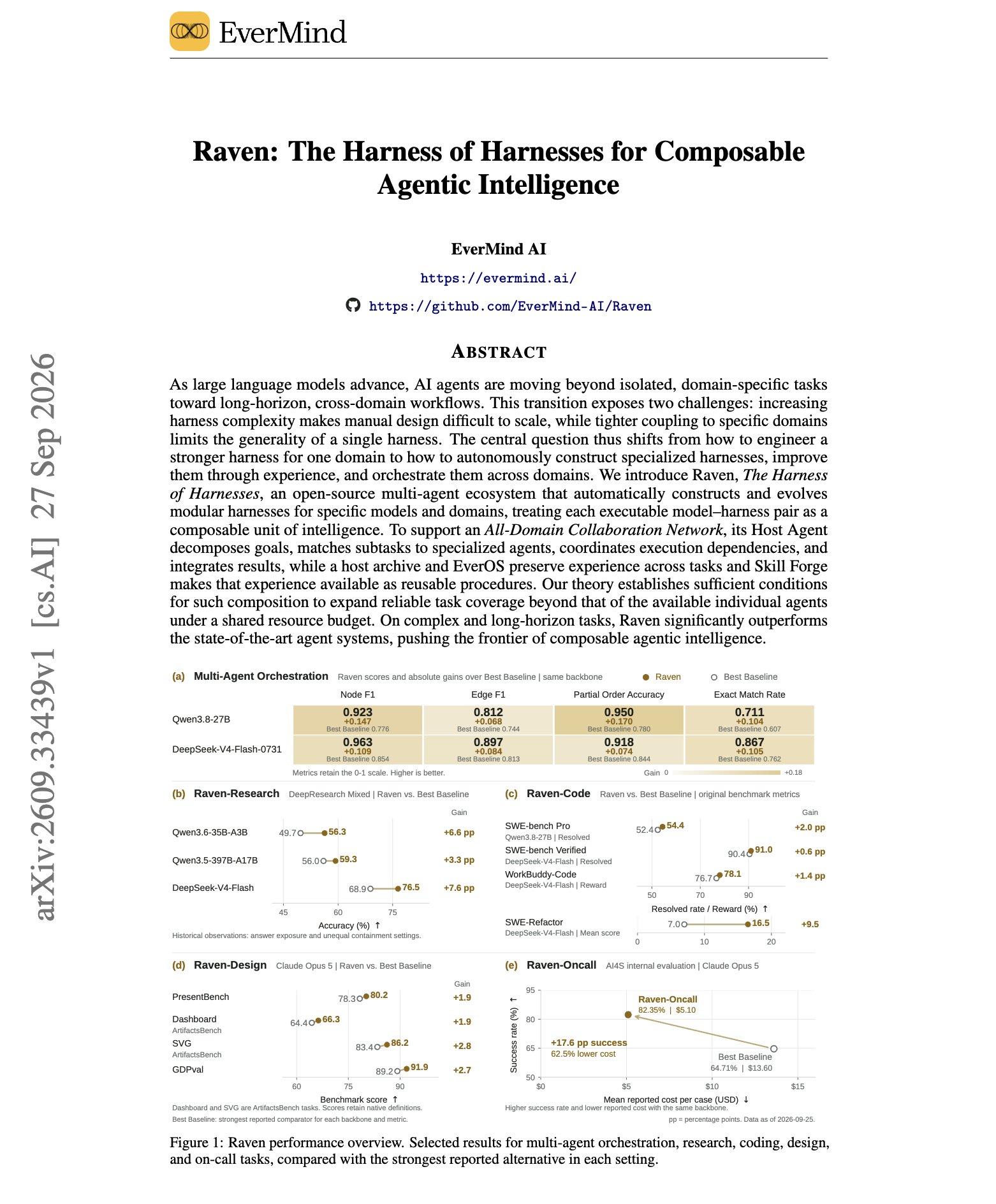
Huge release from EverMind AI. Raven is an open-source multi-agent system that builds a separate harness for each model and domain, evolves those harnesses from their failures, and coordinates them through a host agent. The host agent splits a goal into a task graph and sends
-
Top AI Papers of the Week (Sep 28 – Oct 4)
By
–
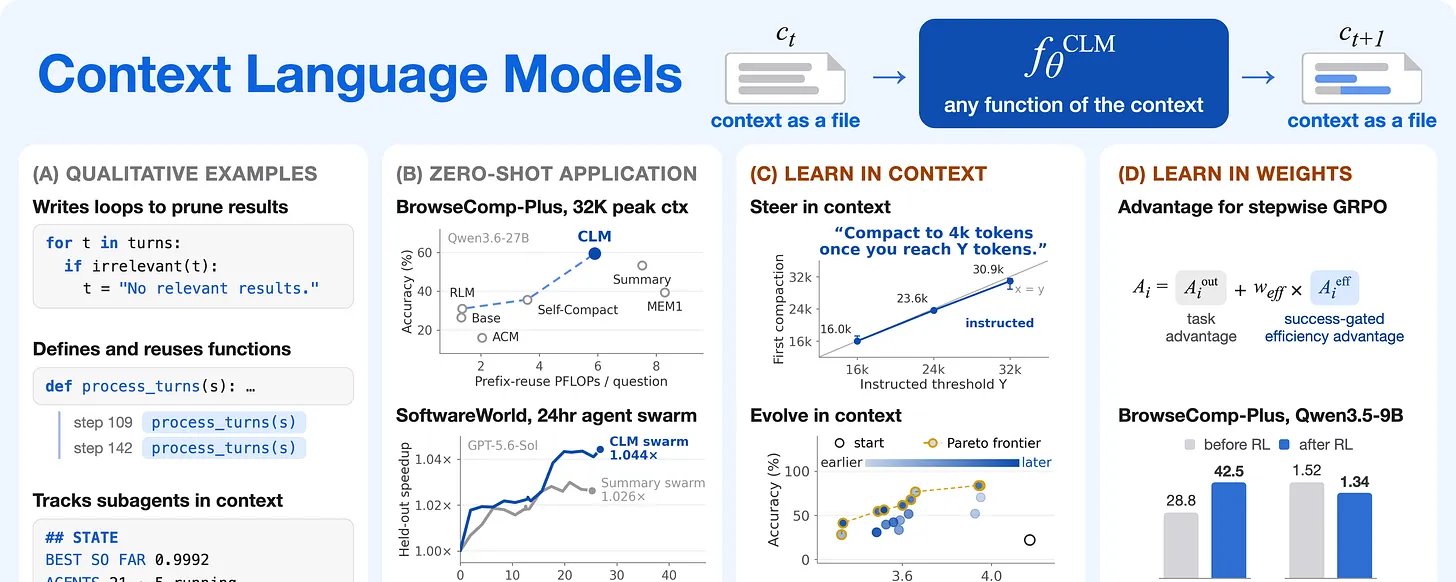
The Top AI Papers of the Week (Sep 28 – Oct 4): – JAZ
– CASD
– Agensh
– Jev-Mem
– AutoGym
– Taste-Bench
– Context Language Models Read on for more: -
NVIDIA paper on test-time compute for terminal agents
By
–
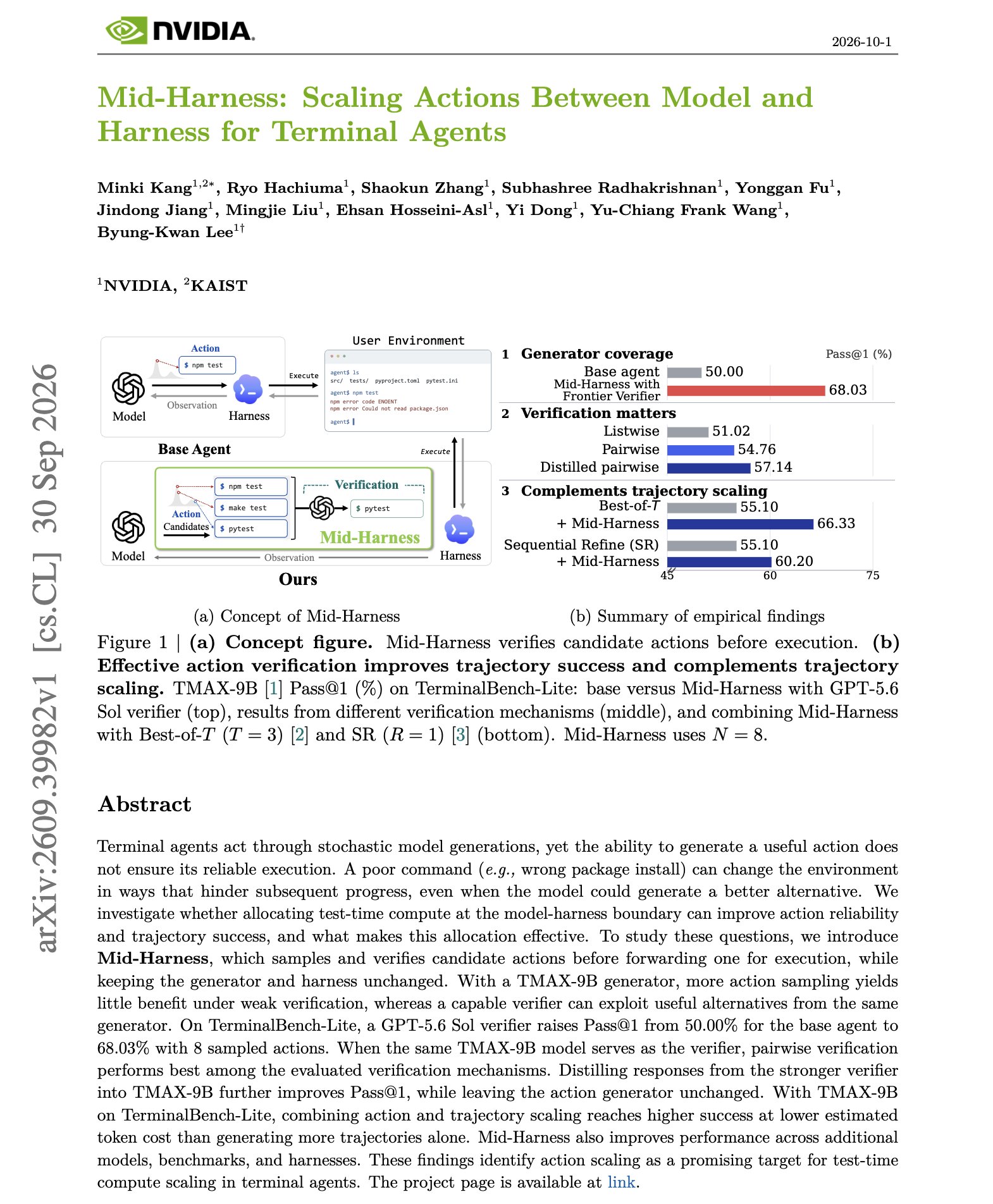
Banger paper from NVIDIA on test-time compute for terminal agents. The finding is that you should sample several candidate shell commands, verify them before running one, and spend more on the verifier than on extra samples. With a GPT-5.6 Sol verifier choosing among 8 sampled
-
Microsoft paper on optimizing AI agent harnesses
By
–
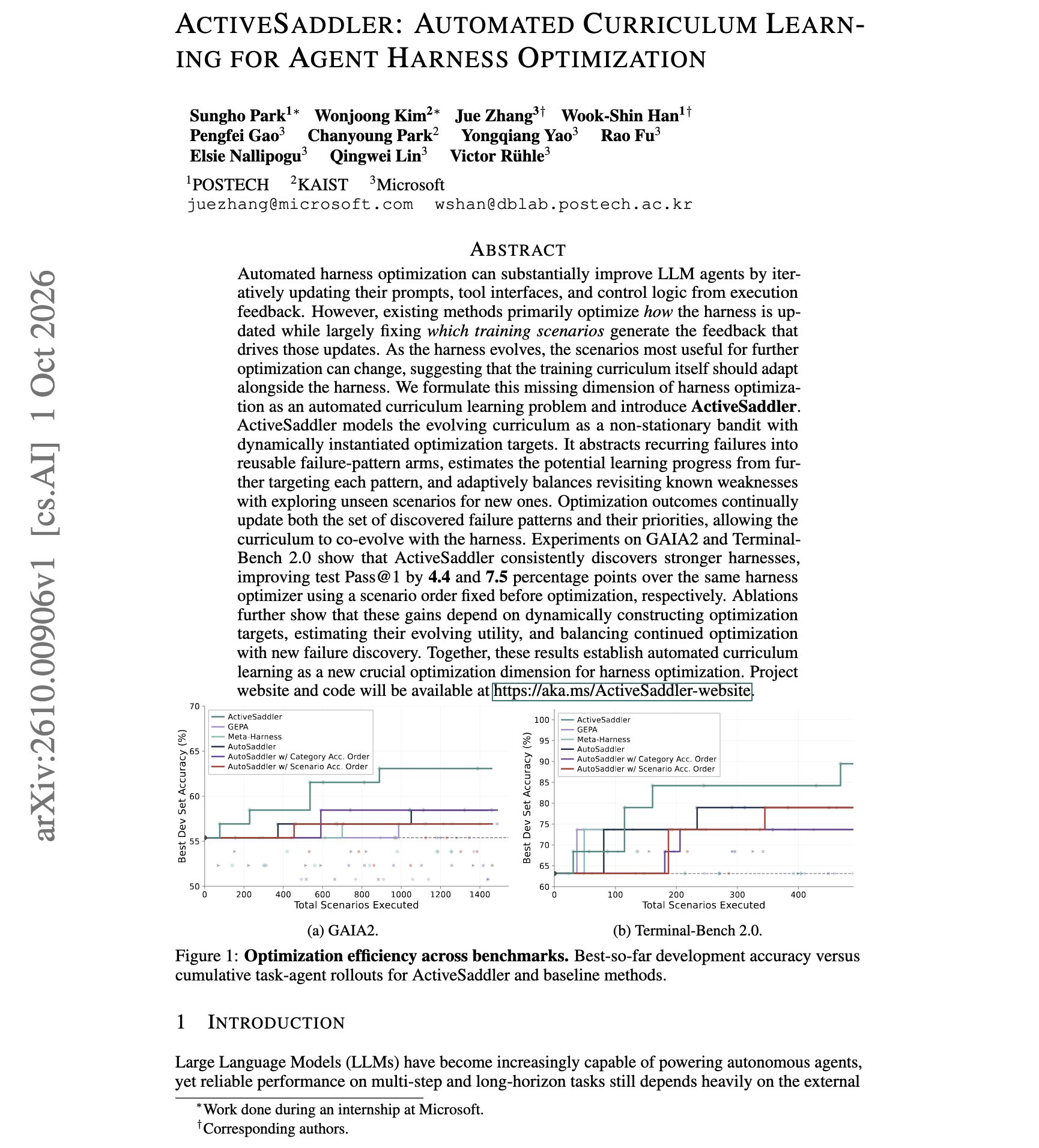
Great paper from Microsoft and colleagues on optimizing agent harnesses. Current harness optimizers change how the harness is updated but keep the training scenarios fixed, so feedback keeps coming from tasks that stop being informative as the harness improves. This work adapts
-
Meta paper on reliable auto-research agents for ML experiments
By
–
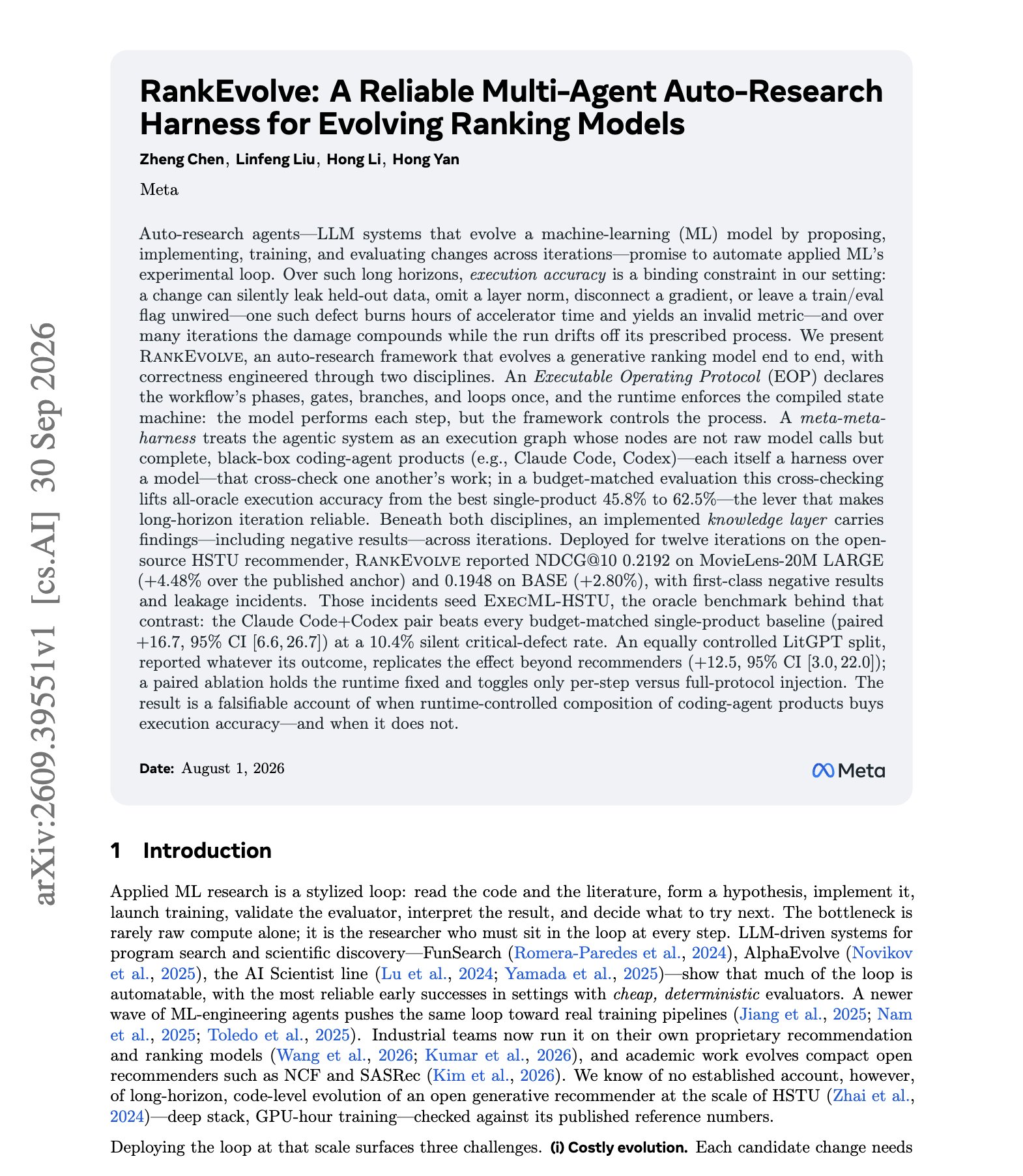
Must-read paper from Meta on reliable auto-research agents. If you let coding agents run ML experiments, one silent bug like leaked eval data or a disconnected gradient can invalidate hours of training and every iteration built on it. RankEvolve enforces each research phase and