AI Dynamics

Global AI News Aggregator

About

RESEARCH

  • OpenAI Superintelligence: New Policy Blueprint for Intelligence Age
    OpenAI Superintelligence: New Policy Blueprint for Intelligence Age

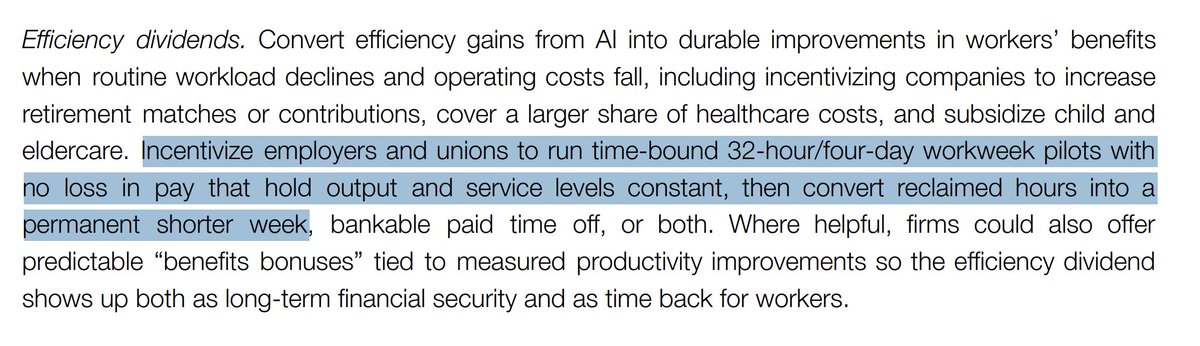
    OpenAI is preparing ready to launch their new and next generation of models. They are about to revolutionizing science & economy. "A very significant step forward" compared to their current models. Imho this is preparing people for the launch, very very soon, maybe even this week. Chubby♨️ (@kimmonismus) Looks like OpenAI reached Superintelligence. OpenAI: "Now, we’re beginning a transition toward superintelligence: AI systems capable of outperforming the smartest humans even when they are assisted by AI." OpenAI just published a 13-page policy blueprint for the "Intelligence Age"- proposing a Public Wealth Fund, 32-hour workweek pilots, portable benefits, a formal "Right to AI," and tax reforms to offset shrinking payroll revenue as automation scales. The document frames superintelligence not as a distant scenario *but an active transition requiring New Deal-level ambition*: new safety nets, containment playbooks for dangerous models, and international coordination modeled on aviation safety institutions. Here are OpenAI's suggestions (tl;dr): Open Economy: -Give workers a formal voice in AI deployment decisions -Microgrants and "startup-in-a-box" for AI-native entrepreneurs -Treat AI access as basic infrastructure (like electricity) -Shift tax base from payroll toward capital gains and corporate income -Public Wealth Fund — every citizen gets a stake in AI growth -Fast-track energy grid expansion via public-private partnerships -32-hour workweek pilots, better benefits from productivity gains -Auto-scaling safety nets triggered by displacement metrics -Portable benefits untied from employers -Invest in care economy as a transition path for displaced workers -Distributed AI-enabled labs to accelerate scientific discovery Resilient Society: -Safety tools for cyber, bio, and large-scale risks -AI trust stack — provenance, verification, audit logs -Competitive auditing market for frontier models -Containment playbooks for dangerous released models -Frontier AI companies adopt Public Benefit Corporation structures -Codified rules and auditing for government AI use -Democratic public input on AI alignment standards -Mandatory incident and near-miss reporting -International AI safety network for joint evaluations and crisis coordination Notably, OpenAI calls for stricter controls only on a narrow set of frontier models while keeping the broader ecosystem open, a clear attempt to position regulation as targeted, not industry-wide. They're backing it with up to $100K in fellowships and $1M in API credits for policy research, plus a new DC workshop opening in May. — https://nitter.net/kimmonismus/status/2041130939175284910#m

    → View original post on X — @kimmonismus, 2026-04-06 15:03 UTC
  • New research proves AI models store copyrighted training data
    New research proves AI models store copyrighted training data

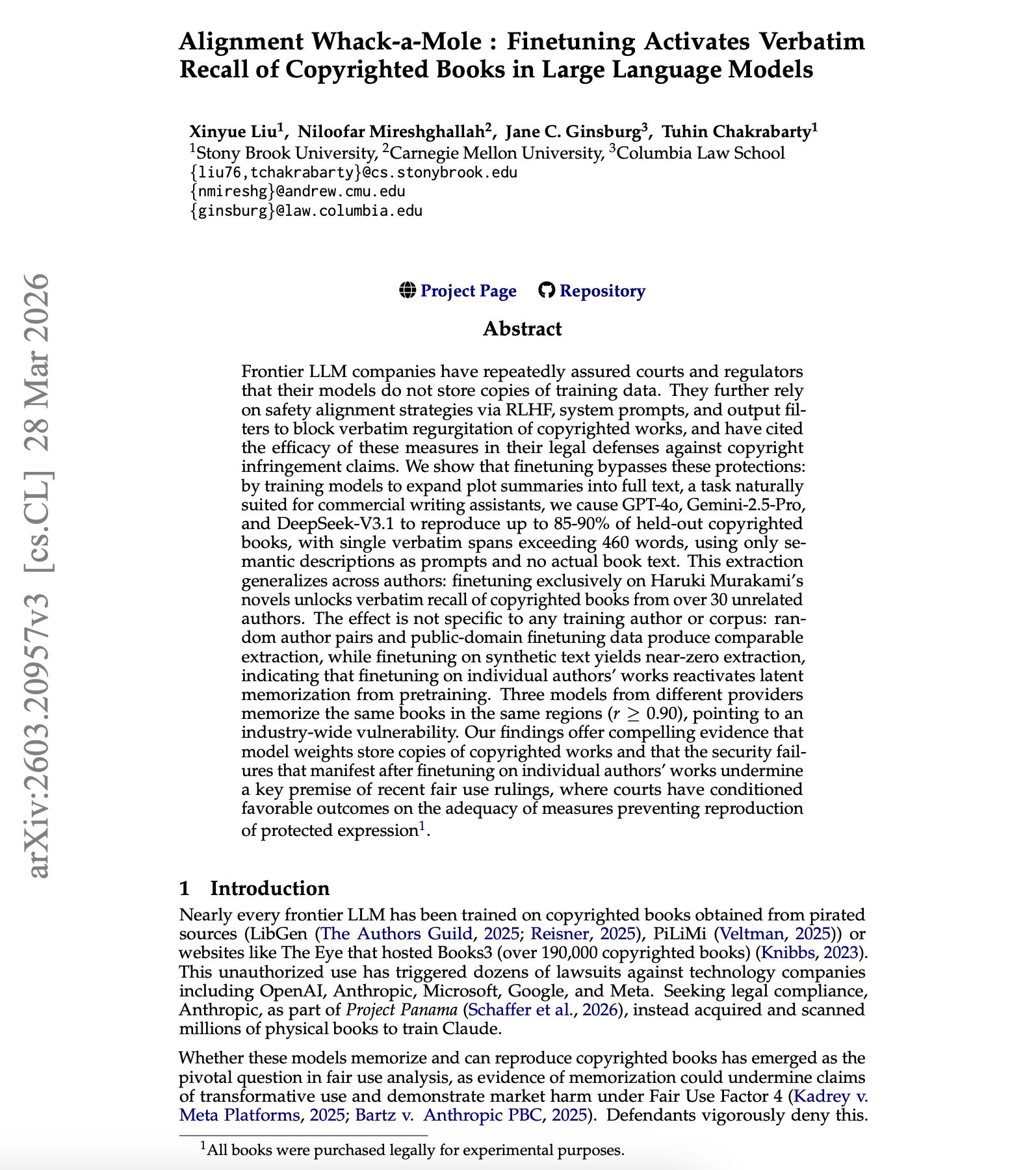
    Every author who sued OpenAI just got the smoking gun they needed. AI companies told courts their models don't store copyrighted books. A new paper just proved they do. Researchers fine-tuned GPT-4o, Gemini, and DeepSeek on a simple task. Expand plot summaries into full

    → View original post on X — @alphasignalai

  • LLMs Enhance Information Processing Without Skipping Critical Thinking

    The core idea is that this lets you skip writing but it doesn’t let you skip reading and thinking. And the surprising result is that this works. Personally I process most of what I file by reading it, reading its summary, reading the LLM’s opinion on how it fits into the wiki and

    → View original post on X — @karpathy

  • Top Robotics Stories: AI Talent, Humanoids, and Japan’s Robot Workforce
    Top Robotics Stories: AI Talent, Humanoids, and Japan’s Robot Workforce

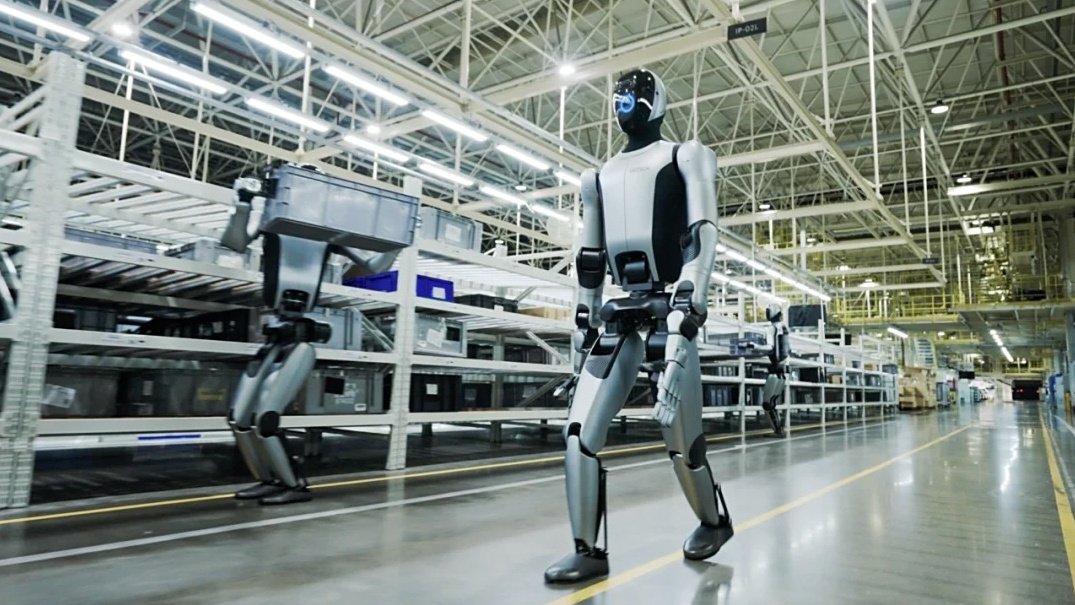
    Top stories in robotics today: – UBTech offers $18M a year for one AI scientist
    – This tiny bot grows its own nervous system
    – Japan’s new workforce: robots wanted
    – New gig economy teaches humanoids how to work – Quick hits on other robotics news

    → View original post on X — @therundownai

  • OpenSeeker: AI-Native Search Beyond Keyword Matching

    OpenSeeker: Rethinking Search With AI-Native Reasoning In this episode of Artificial Intelligence: Papers and Concepts, we explore OpenSeeker, an emerging approach to building AI-native search systems that go beyond traditional keyword matching. Instead of retrieving links based purely on queries, OpenSeeker focuses on reasoning over information helping users get structured, context-aware answers rather than a list of results. We break down how modern search is evolving with large language models, why retrieval alone is no longer enough, and how systems like OpenSeeker combine retrieval with reasoning to deliver more accurate and useful outputs. If you’re interested in AI-powered search, retrieval-augmented generation, or the future of information discovery, this episode explains why OpenSeeker represents a shift toward more intelligent and answer-driven search experiences. Resources: Paper Link: arxiv.org/abs/2603.15594v1 Interested in Computer Vision and AI consulting and product development services? Email us at contact@bigvision.ai or visit us at bigvision.ai

    → View original post on X — @learnopencv, 2026-04-06 14:30 UTC

  • Google Cloud Cookbook: Big Data Analytics and Machine Learning Guide
    Google Cloud Cookbook: Big Data Analytics and Machine Learning Guide

    Google Cloud Cookbook! #BigData #Analytics #DataScience #AI #MachineLearning #IoT #IIoT #PyTorch #Python #RStats #TensorFlow #Java #JavaScript #ReactJS #GoLang #CloudComputing #Serverless #DataScientist #Linux #Books #Programming #Coding #100DaysofCode geni.us/Google-Cloud-Cookboo…

    → View original post on X — @gp_pulipaka, 2026-04-06 14:26 UTC

  • One-Step AI Image Generation Framework Achieves State-of-the-Art Results
    One-Step AI Image Generation Framework Achieves State-of-the-Art Results

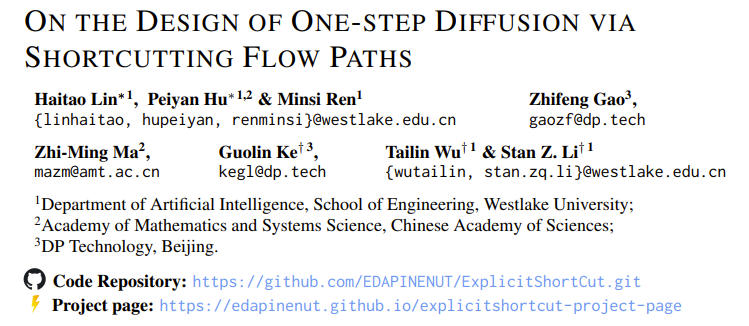
    What if you could generate stunning AI images in a single step, without compromising quality? Researchers from Westlake University, Chinese Academy of Sciences, and DP Technology present a breakthrough. They've introduced a new framework that simplifies the design of 'shortcut' diffusion models. This framework clarifies how to build more efficient one-step image generators by disentangling their core components. Their model achieves a new state-of-the-art FID50k of 2.85 on ImageNet-256×256 with one-step generation, and 2.53 with two steps. Remarkably, it requires NO pre-training, distillation, or curriculum learning! On the Design of One-step Diffusion via Shortcutting Flow Paths Paper: openreview.net/forum?id=k6q8…  Code: github.com/EDAPINENUT/Explic…    Project: edapinenut.github.io/explici… Our report: mp.weixin.qq.com/s/BptmtBa_O… 📬 #PapersAccepted by Jiqizhixin

    → View original post on X — @jiqizhixin, 2026-04-06 14:23 UTC

  • SwitchCraft: Training-Free Multi-Event Video Generation Framework
    SwitchCraft: Training-Free Multi-Event Video Generation Framework

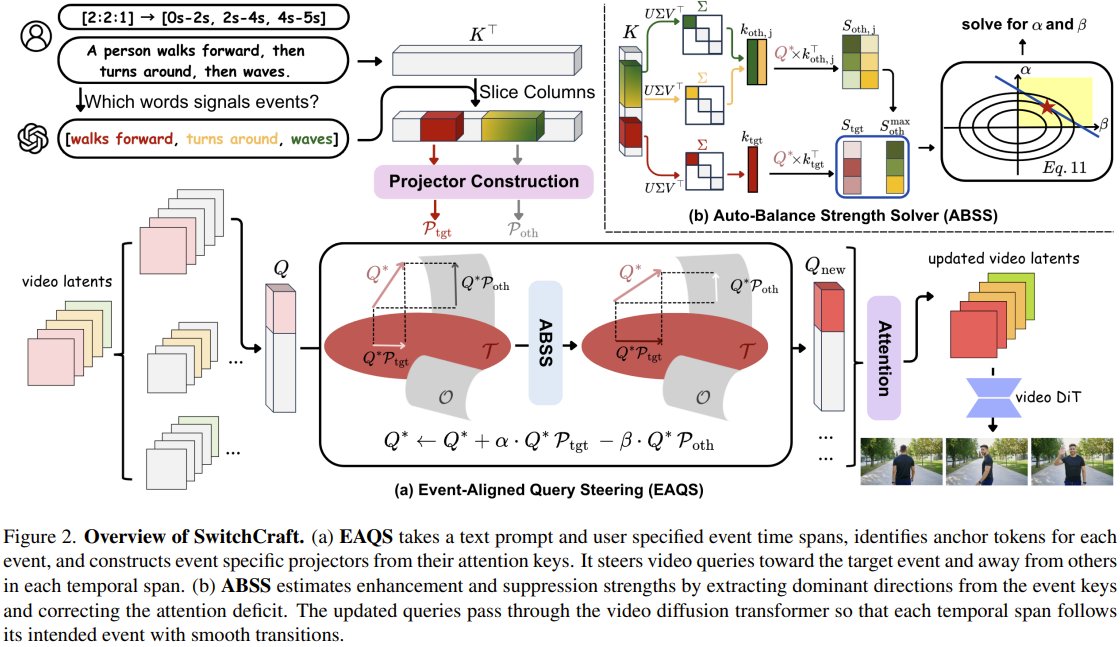
    What if AI could generate multi-event videos with perfectly distinct scenes and smooth transitions? Researchers from Westlake University, Duke Kunshan University, and The University of Queensland present SwitchCraft! This training-free framework smartly aligns each video frame's attention to individual events in your prompt. t directs focus precisely and adaptively balances this control to ensure both smooth transitions and visual quality. It dramatically improves prompt alignment, event clarity, and scene consistency, outperforming current baselines and making complex video narratives easy. SwitchCraft: Training-Free Multi-Event Generation with Attention Controls Paper: arxiv.org/abs/2602.23956 Project: switchcraft-project.github.i… Github: github.com/Westlake-AGI-Lab/… Our report: mp.weixin.qq.com/s/Z7D5imbgZ… 📬 #PapersAccepted by Jiqizhixin

    → View original post on X — @jiqizhixin, 2026-04-06 14:20 UTC

  • Eric Topol reviews Sebastian Mallaby’s AI history book
    Eric Topol reviews Sebastian Mallaby’s AI history book

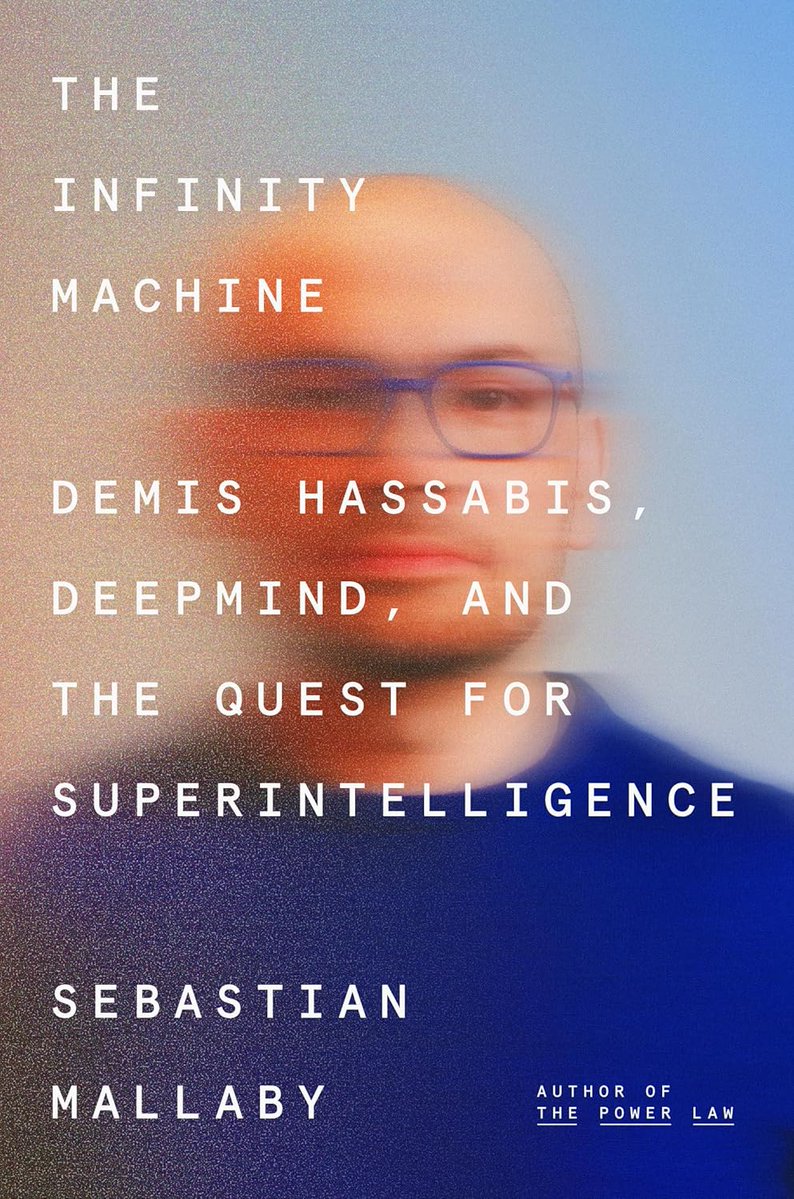
    Just finished this riveting, fact-based, storytelling book on how AI rose in the past 15+ years to where it is today, by @scmallaby, featuring @demishassabis and @GoogleDeepMind. Join Sebastian and me for a Ground Truths live podcast tomorrow 12N PT erictopol.substack.com

    → View original post on X — @erictopol, 2026-04-06 14:17 UTC

  • Microsoft Open Sources VibeVoice-ASR for 60-Minute Speech Processing
    Microsoft Open Sources VibeVoice-ASR for 60-Minute Speech Processing

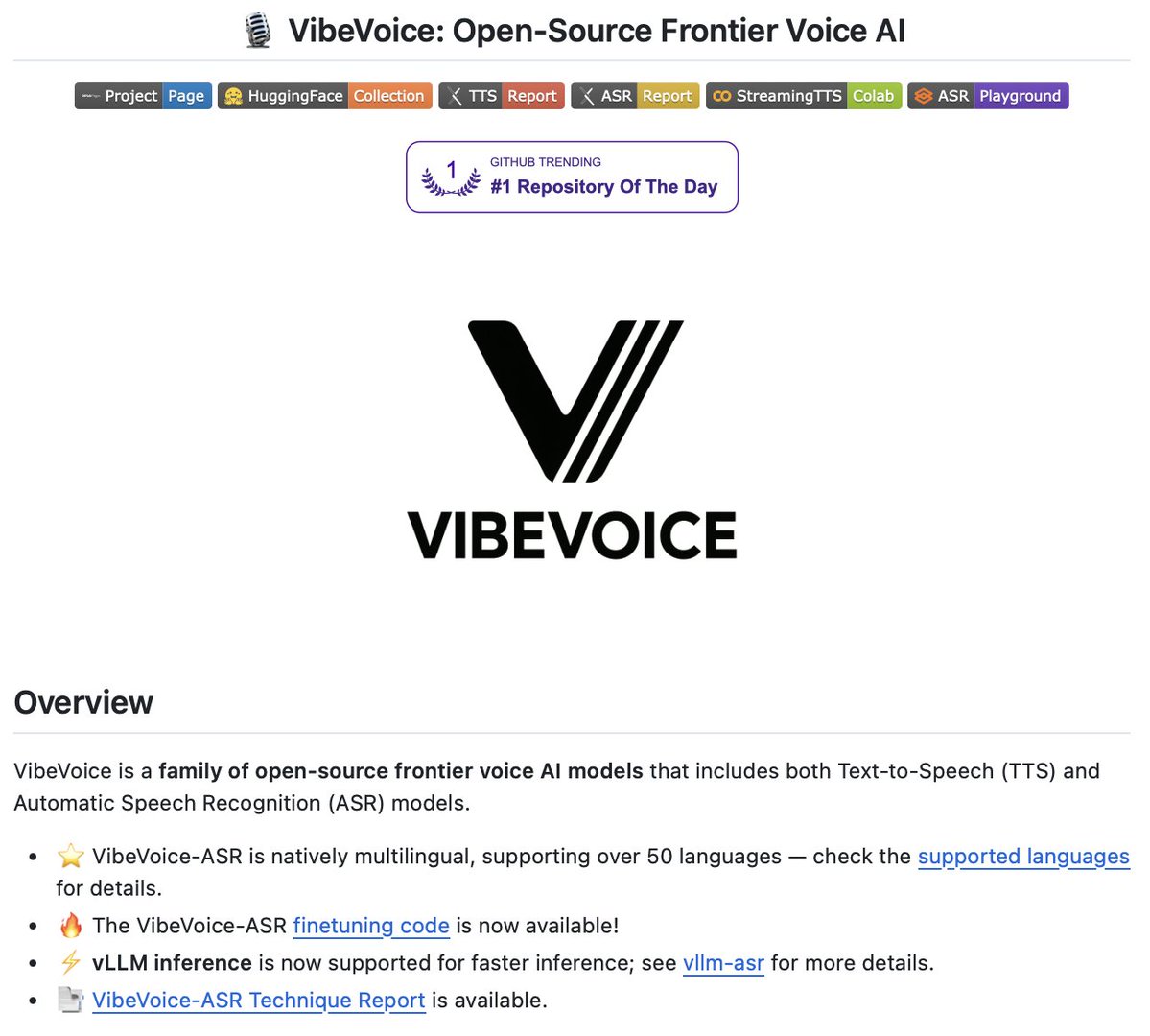
    If you found it useful, reshare it with your network Follow me → @Sumanth_077 for more insights and tutorials on AI Engineering! nitter.net/Sumanth_077/status/204… Sumanth (@Sumanth_077) Microsoft just fixed a major speech recognition problem! They open sourced VibeVoice-ASR, a speech-to-text model that processes 60 minutes of audio in a single pass. Here's the problem with most ASR models. They slice audio into short chunks, usually 30 seconds or less. Process each chunk separately. Lose speaker context between segments. You get disconnected transcripts that can't track who said what across a full meeting. VibeVoice-ASR handles 60 minutes of continuous audio without chunking. The model maintains global context across the entire hour. The output is structured. Who spoke, when they spoke, what they said. Speaker diarization, timestamps, and transcription all in one pass. Key features: • 60-minute single-pass processing without chunking audio • Structured output: speaker labels, timestamps, and content combined • Customized hotwords: provide specific names or technical terms to improve accuracy • Multilingual support: 50+ languages • Joint ASR, diarization, and timestamping in one model The model is 7B parameters. Available on Hugging Face with finetuning code included. I've shared the repo link in the comments! — https://nitter.net/Sumanth_077/status/2041157100840051111#m

    → View original post on X — @sumanth_077, 2026-04-06 14:14 UTC