
I had a fascinating conversion this week with a computing pioneer, Matei Zaharia, the CTO of Databricks, who is the recipient of this year’s ACM Prize in Computing, a kind of genius award, in part because of his development of the Spark open-source software. Out chat confirmed my
MACHINE LEARNING
-
Matei Zaharia Receives Well-Deserved AI Recognition
By
–
This recognition is so well deserved @matei_zaharia
! We're honored to build alongside you every day -
Clarification on Model Evaluation Scores and Improvement Areas
By
–
apologies, we did not intend to imply our scores were highest. to the contrary, most of these evals show that our model has many areas to continue improving. we won’t this mistake again
-
TriAttention: Efficient Long Reasoning with Trigonometric KV Compression
By
–
“TriAttention: Efficient Long Reasoning with Trigonometric KV Compression”
— alphaXiv (@askalphaxiv) 8 avril 2026
Most KV-cache compression methods guess what to keep by looking at recent attention.
But this paper argues that the signal is unstable because RoPE keeps rotating queries with position, so what looks… pic.twitter.com/GrEYc0gZ2b“TriAttention: Efficient Long Reasoning with Trigonometric KV Compression” Most KV-cache compression methods guess what to keep by looking at recent attention. But this paper argues that the signal is unstable because RoPE keeps rotating queries with position, so what looks unimportant now may matter later. So they proposed TriAttention, which looks in the pre-RoPE space and finds that many heads have stable Q/K centers. That lets it predict which token distances a head is likely to retrieve, and compress the KV cache using that structure rather than noisy recent attention. This shift from "keeping what was attended recently” to “keeping what this head is likely to need later” Empirically, it matches full attention on AIME25 with 2.5x higher throughput or 10.7x less KV memory.
-
EvoKernel: Self-Evolving AI Agent for NPU Code
By
–
How can LLMs code for cutting-edge hardware when there's almost no training data?
— 机器之心 JIQIZHIXIN (@jiqizhixin) 8 avril 2026
Researchers from Shanghai Jiao Tong University, Shanghai AI Lab, and MemTensor present EvoKernel!
This self-evolving AI agent teaches LLMs to write code for new, data-scarce hardware. It uses a… pic.twitter.com/dHIJZlxYTdHow can LLMs code for cutting-edge hardware when there's almost no training data? Researchers from Shanghai Jiao Tong University, Shanghai AI Lab, and MemTensor present EvoKernel! This self-evolving AI agent teaches LLMs to write code for new, data-scarce hardware. It uses a clever memory system to prioritize and learn from the most valuable coding experiences, continually refining its drafts. EvoKernel boosts code correctness for NPU kernel synthesis from a mere 11% to an impressive 83% and speeds up programs by 3.6x over initial drafts! Towards Cold-Start Drafting and Continual Refining: A Value-Driven Memory Approach with Application to NPU Kernel Synthesis Project: evokernel.zhuo.li Paper: arxiv.org/abs/2603.10846 Our report: mp.weixin.qq.com/s/0TOzZ_rZn… 📬 #PapersAccepted by Jiqizhixin
-
LLM Visual Understanding Enhancements for Edge Detection and Sizing
By
–
LLM plus visual understanding, but yeah. For context, you could do this before, but models tended to be very off with edge detection and sizes.
-
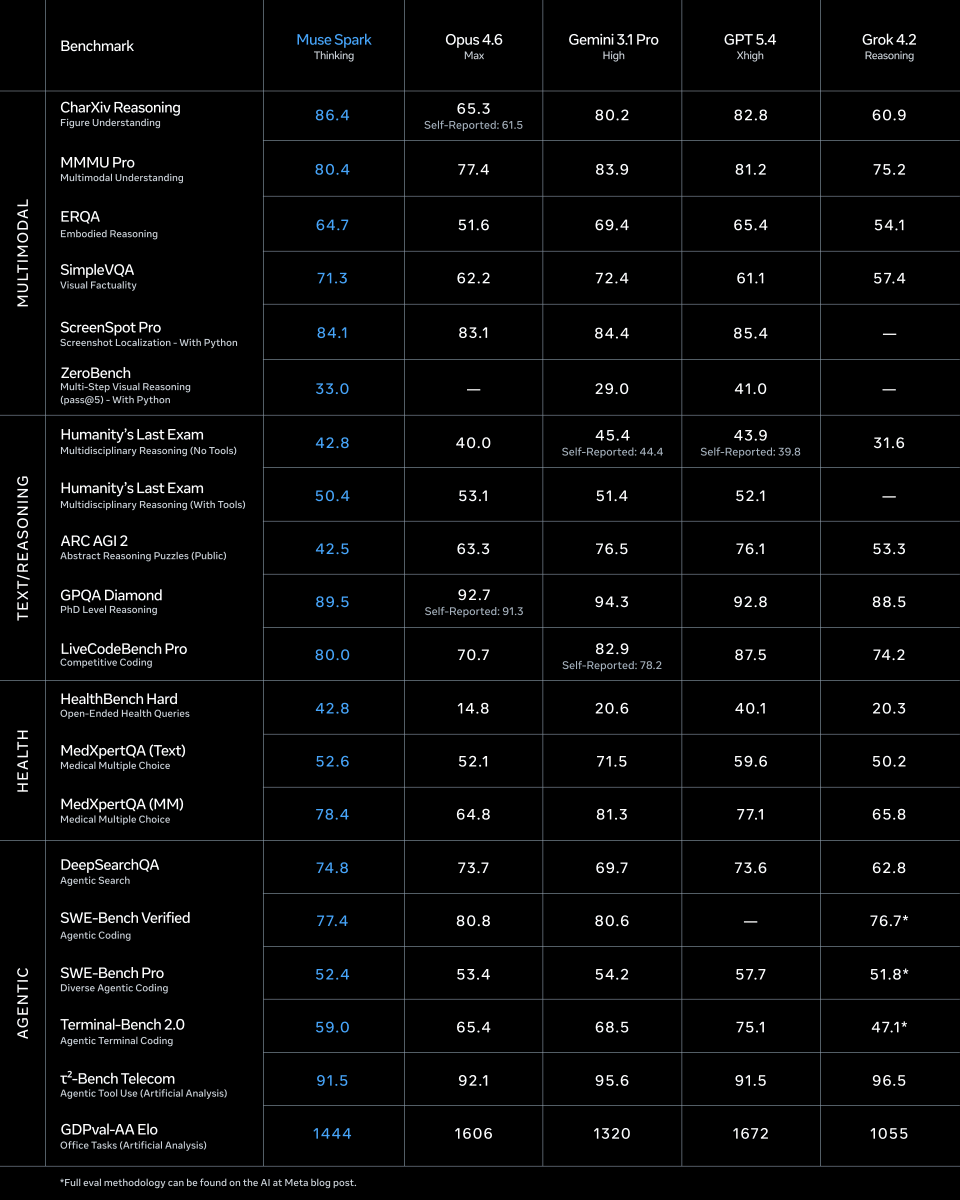
Nine Months of Building: Muse Spark Model Launch Success
By
–
Fun nine months! My first week i remember we had a long dinner in the cafeteria daydreaming about the cool research directions to pursue, then going to back to our desks to write a basic script to inference llama. Now we have a pretty complete stack and our first model is out 🥑 Alexandr Wang (@alexandr_wang) 1/ today we're releasing muse spark, the first model from MSL. nine months ago we rebuilt our ai stack from scratch. new infrastructure, new architecture, new data pipelines. muse spark is the result of that work, and now it powers meta ai. 🧵 — https://nitter.net/alexandr_wang/status/2041909376508985381#m
→ View original post on X — @_jasonwei, 2026-04-08 17:25 UTC
-
Hamiltonian Monte Carlo: Physics-Based Probabilistic Sampling
By
–
Hamiltonian Monte Carlo: probability as physics.
— Mathematica (@mathemetica) 8 avril 2026
Endow particles with momentum, then let Hamilton’s equations (dq/dt = ∂H/∂p, dp/dt = −∂H/∂q) carve reversible, volume-preserving trajectories through phase space.pic.twitter.com/Uf7MD4lqnqHamiltonian Monte Carlo: probability as physics. Endow particles with momentum, then let Hamilton’s equations (dq/dt = ∂H/∂p, dp/dt = −∂H/∂q) carve reversible, volume-preserving trajectories through phase space.
-

Which AI Tool to Use and When Guide
By
–
Which #AI Tool to Use and When by @genamind #ArtificialIntelligence #MachineLearning #ML #MI
→ View original post on X — @ronald_vanloon, 2026-04-08 17:23 UTC
-
Neurosymbolic AI: Symbol Placement in Transformer Systems
By
–
please read my 2001 book that laid out what neurosymbolic AI is. you are just wrong. and the python script doing the work is a transformer NOT doing the work. it’s just a question of where you put the symbols. if you don’t have them somewhere in the system (a la what hinton