maybe 5.4 is just 4.5 with extra coding and logical reasoning capabilities
LLMS
-
LLMs as the foundational engine for AI applications
By
–
But it uses LLMs underneath it. It is like a better transmission on the engine
-

Claude Ranks High in 2026 Finance Benchmark
By
–
Anthropic just built Claude specifically for investment banking. Wall Street Prep's 2026 benchmark ranked Claude #2 for finance tasks, with a score of 5.5 out of 10 – ahead of Copilot (4.4) and ChatGPT (2.5). Most finance prompts circulating on X are basic role assignments. No
-
Codex App: AI Transforms Software Development Into Task Delegation
By
–
holy sht.. AI just changed how software gets built. Codex App might be the closest thing to a GPT-3 moment for development. For years, AI coding tools lived inside terminals. Claude Code, Codex CLI, all incredibly powerful, but they still felt like tools built by developers, for developers. Flexible? absolutely. But also fragmented, full of setup, plugins, MCP servers, and custom workflows. Great for engineers. Not exactly a product for everyone else. What Codex changes isn’t just the model. It’s the interface of development. Instead of stitching together tools, environments and scripts, you simply talk to the system. Behind the scenes, agents read your codebase, modify files, install dependencies and execute tasks. Software creation starts to feel less like programming and more like delegating work. The moment it clicked for me was simple. During the OpenClaw wave I bought a Mac mini and set up a fresh environment. Normally the first installs would be npm or brew. This time it was Codex. I gave it full access and asked it to install everything needed to run the project. Dependencies, environment setup, configuration, runtime. All from a single prompt. Watching the system configure itself without touching the terminal once felt like looking at the next interface of computing. Not because AI wrote code. But because the computer started executing intentions instead of commands. Most people think AI will democratize coding by generating code faster. But that’s not the real shift. The real shift is that software development is slowly moving from writing code to assigning tasks to agents. Historically computing had three main interfaces. CLI for engineers, GUI for consumers, APIs for systems. AI introduces a new one. The agent interface. You don’t operate the software anymore. You tell systems what outcome you want and they orchestrate the process. If that interface becomes mainstream, the impact goes far beyond coding. It changes how startups are built, how products are shipped, and how technical the world needs to be to create software. Codex App might be one of the first glimpses of that future.
→ View original post on X — @arrakis_ai, 2026-03-06 12:32 UTC
-
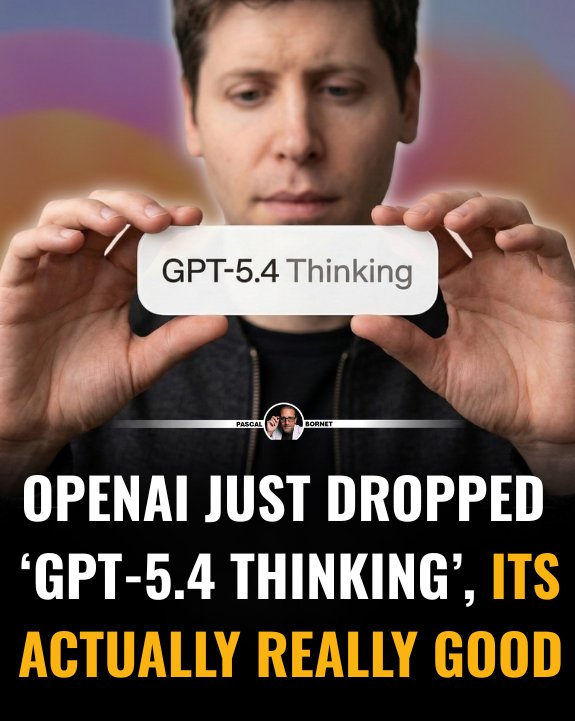
OpenAI GPT-5.4: Beyond Scale in AI Race
By
–
Everyone keeps saying the AI race is about bigger models. More parameters.
More data.
More compute. That has been the playbook for the last two years. But when I looked at OpenAI’s new release this week, one detail caught my attention. OpenAI introduced 𝐆𝐏𝐓-𝟓.𝟒, its -
Introduction to LLM Post-Training Techniques Presentation
By
–
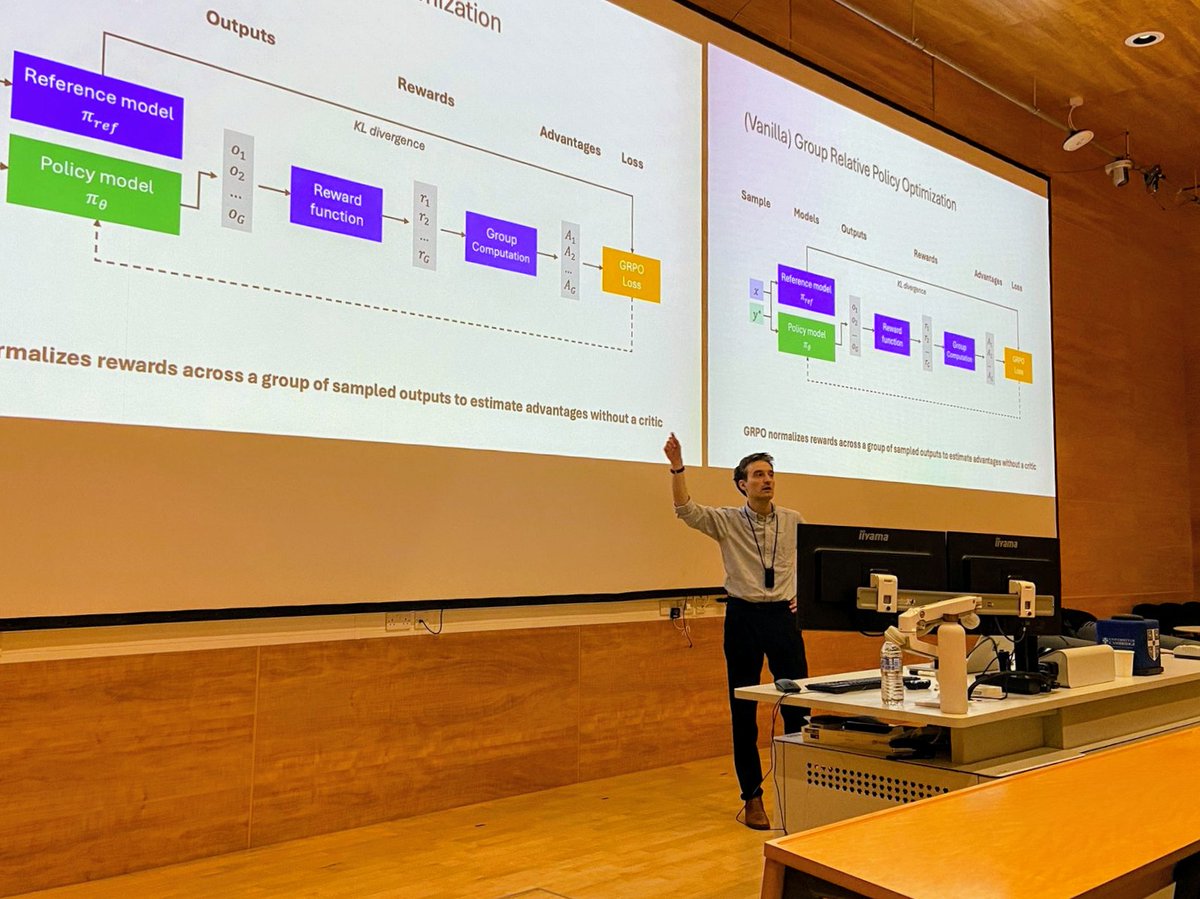
A big thank you to @itsmaddox_j for the invitation, and to professors @niclane7 and @contactrika for having me! slideshare.net/slideshow/int…
→ View original post on X — @maximelabonne, 2026-03-06 10:46 UTC
-
53 Slides on Post-Training Algorithms and Data Quality
By
–
I'm releasing 53 slides on post-training, covering core algorithms like DPO and GRPO, as well as data quality, synthetic data pipelines, and on-policy training. I had the pleasure of presenting it yesterday as a guest lecturer in Cambridge, UK
→ View original post on X — @maximelabonne, 2026-03-06 10:45 UTC
-
DeepSeek and Qwen3 performance improvements
By
–
specific numbers worth sitting with: > DeepSeek-R1-7B on MATH-500: 93% accuracy (up from 91.6%), tokens cut from 3,871 to 2,141 > DeepSeek-R1-1.5B on AIME 2025: accuracy jumps 6.2 percentage points > Qwen3-8B: response length halved from 18,342 to 9,183 tokens with no accuracy
-
SAGE: Efficient Reasoning with Confidence Checks
By
–
their solution: SAGE (Self-Aware Guided Efficient Reasoning). instead of generating token by token, SAGE extends chains in whole reasoning steps. after each step, it checks: is the model confidently signaling it wants to stop? if yes, reasoning ends. no fine-tuning. no new
-
Overthinking harms accuracy in AI responses
By
–
and it's not just wasted compute. overthinking actively hurts accuracy. DeepSeek-R1 produces responses 5x longer than Claude 3.7 Sonnet on AIME 2025 with comparable accuracy. QwQ-32B scores 2 percentage points HIGHER with its shortest answers using 31% fewer tokens. 72% of