
MIT Prof. & CSAIL principal investigator Dina Katabi has been elected to the National Academy of Medicine for building wireless devices that assist w/digital health using AI & radio signals, helping doctors detect diseases like Parkinson’s from digital biomarkers. Having
RESEARCH
-
The Bitter Lesson: Compute versus Other Approaches in AI
By
–
Without checking, what is the message behind the "Bitter Lesson", in your opinion? (a) all other things being equal, using more compute is better.
(b) more compute is better than all the other things put together. -
EU and ESA deepen next-generation connectivity cooperation
By
–
Smart Networks and Service Joint Undertaking and the European Space Agency agree to deepen cooperation on the development of next-generation connectivity | Shaping Europe’s digital future https://
digital-strategy.ec.europa.eu/en/news/smart-
networks-and-service-joint-undertaking-and-european-space-agency-agree-deepen-cooperation
…
#digitaleu #space #science #innovattion #technology @DigitalEU -
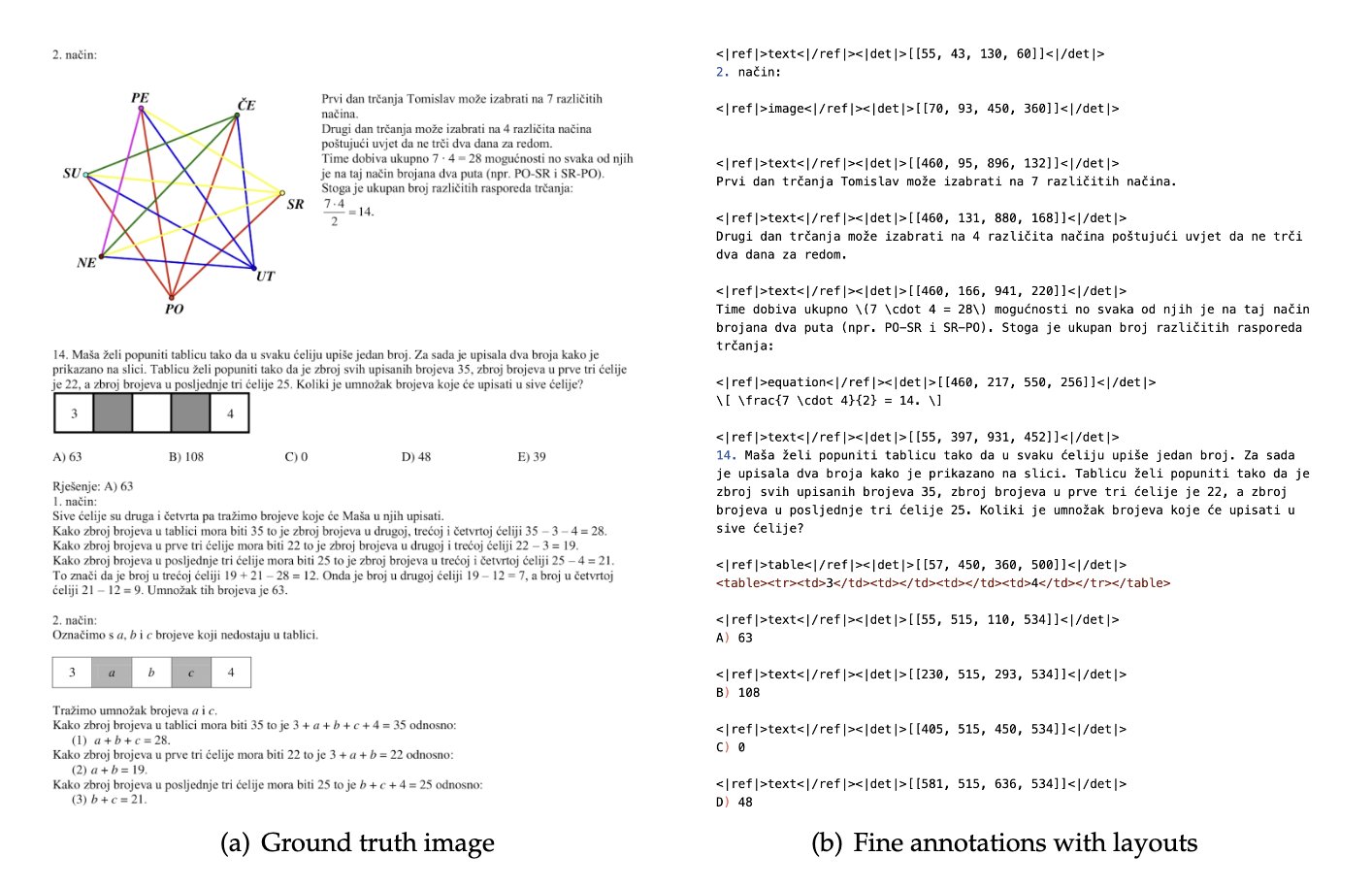
Using Visual Context Compression to Improve LLM Memory and Reasoning
By
–
5. This isn’t “just another OCR.” It’s a proof of concept for context compression. If text can be represented visually with 10× fewer tokens LLMs could use the same idea for long-term memory and efficient reasoning. Imagine GPT-5 processing a 1M-token document as a 100K-token
-
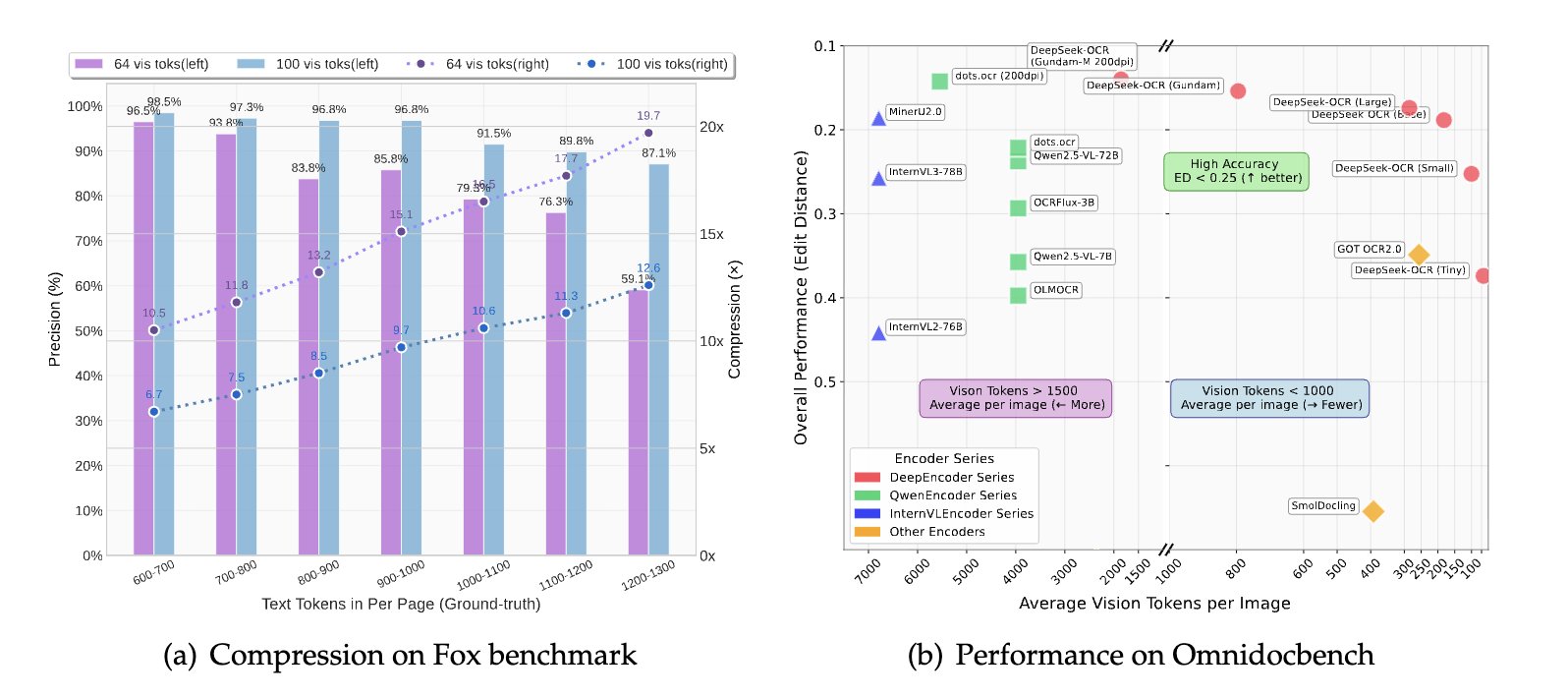
Technical Analysis of DeepSeek-OCR Vision-Text Compression
By
–
1. Vision-Text Compression: The Core Idea LLMs struggle with long documents because token usage scales quadratically with length. DeepSeek-OCR flips that: instead of reading text, it encodes full documents as vision tokens each token representing a compressed piece of visual
-
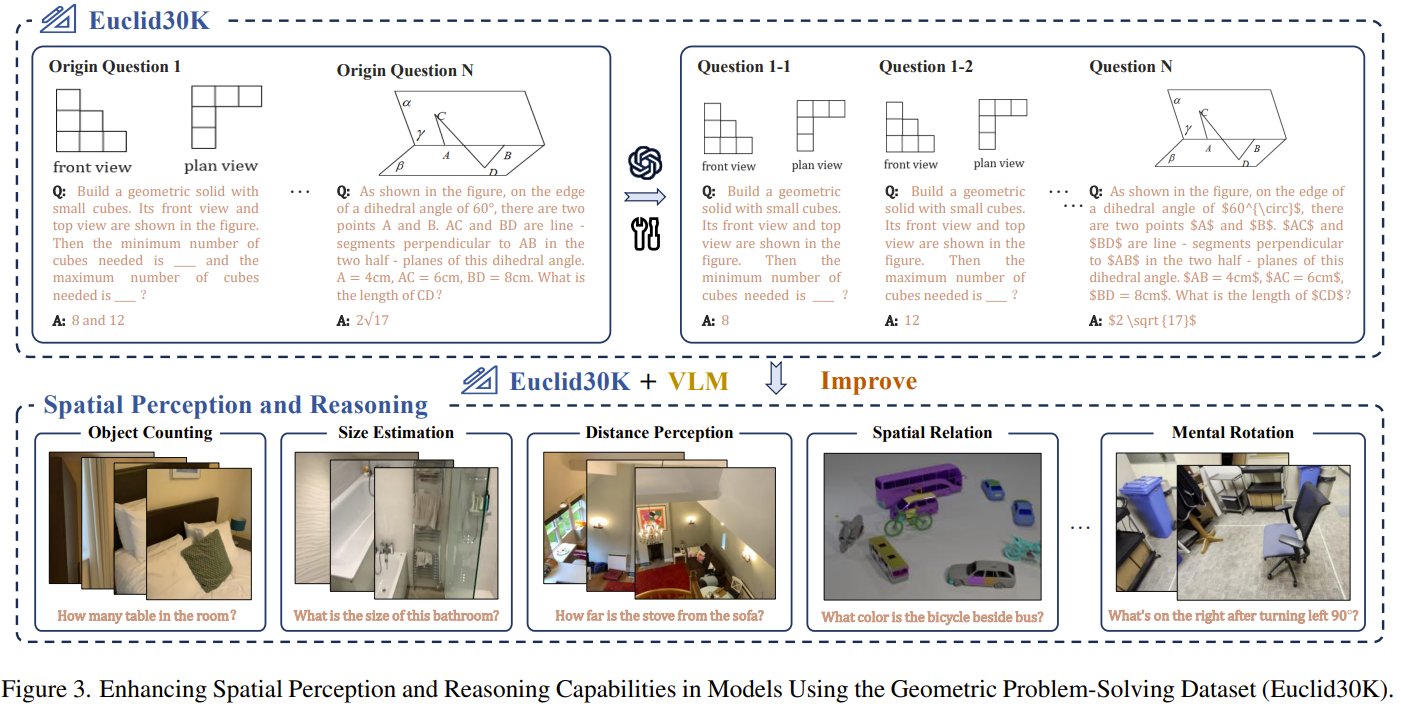
High School Geometry Improves Spatial Intelligence in AI Models
By
–
Can high school geometry teach AI to understand space? A new study tackles the critical challenge of spatial intelligence in Multimodal Large Language Models (MLLMs). Researchers found that fine-tuning models on Euclid30K, a new dataset of ~30,000 Euclidean geometry
-
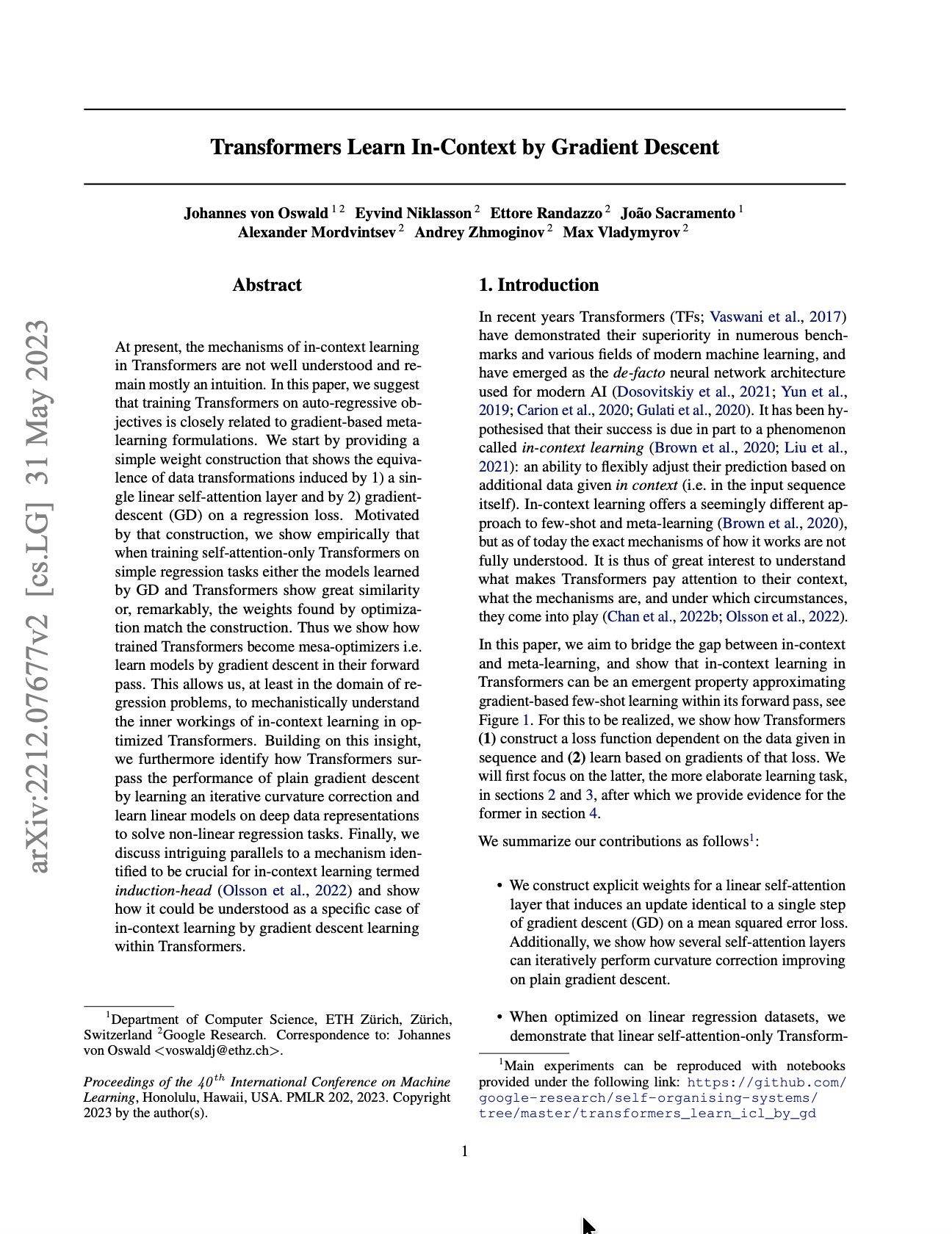
Transformers Learn In-Context Through Gradient Descent
By
–
Transformers learn in-context by gradient descent Oswald et al.: https://
arxiv.org/abs/2212.07677 #ArtificialIntelligence #DeepLearning #MachineLearning -

Hallucinations vs Confabulation: Rethinking RNN Behavior Terminology
By
–
It’s been a decade but yes I believe I hallucinated the term in my 2015 post on unreasonable effectiveness of RNNs. I later became aware that Geoff Hinton used “confabulate”, which is often (but I think not always) a better analogue in human psychology. It’s a bit too specific,
-

Douglas Adams and Reinforcement Learning for Robotics
By
–
Douglas Adams invented reinforcement learning for robotics in 1992 🙂 https://
en.wikipedia.org/wiki/Mostly_Ha
rmless
…
