> 385ms average tool selection. > 67 tools across 13 MCP servers. > 14.5GB memory footprint. > Zero network calls. LocalCowork is an AI agent that runs on a MacBook. Open source. 🧵
→ View original post on X — @maximelabonne, 2026-03-05 15:55 UTC

By
–
> 385ms average tool selection. > 67 tools across 13 MCP servers. > 14.5GB memory footprint. > Zero network calls. LocalCowork is an AI agent that runs on a MacBook. Open source. 🧵
→ View original post on X — @maximelabonne, 2026-03-05 15:55 UTC
By
–
AI Engineering are going to love this!
— Akshay 🚀 (@akshay_pachaar) 5 mars 2026
ART (Agent Reinforcement Trainer) is an open-source framework for training agents with GRPO + RULER (an automatic reward system).
No need to hand-craft reward functions.
GitHub: https://t.co/O4dIDm6cqv https://t.co/OHeohQTOd4 pic.twitter.com/LLhoe6nUq7
AI Engineering are going to love this! ART (Agent Reinforcement Trainer) is an open-source framework for training agents with GRPO + RULER (an automatic reward system). No need to hand-craft reward functions. GitHub: http://
github.com/OpenPipe/ART

By
–


BREAKING : OpenAI has started testing a new model named “Galapagos” on Arena which potentially could be a GPT-5.4 low effort version. “Sooner than you think”
By
–
🦔 OpenClaw, the open-source AI agent that exploded to 200,000 GitHub stars in weeks, has become a security nightmare. In five weeks it accumulated 9 disclosed vulnerabilities, over 2,200 malicious add-ons in its marketplace, and 40,000 internet-exposed instances. Researchers found that 93% of those instances had authentication bypassed, and the project triggered 8 of 10 vulnerability classes that security experts warned about for AI agents. The attack chain works like this: malicious add-ons in the marketplace instruct the AI agent to present fake setup dialogs to users, tricking them into entering passwords. The agent becomes the social engineering tool. One campaign distributed macOS malware by having the agent itself ask users for their credentials. Users trust their AI assistant, so they comply. My Take I believe this is what happens when something goes viral before anyone thinks through what they're actually deploying. Developers gave OpenClaw shell access to their computers, connected it to their email and Slack, handed it cloud API keys, and then installed add-ons from a community marketplace that had basically no vetting. Over 40% of the add-ons that got audited had serious security issues. The project went from weekend hack to 200,000 users before anyone built the guardrails. The attack method here is new. The malware doesn't trick the human directly anymore, it tricks the AI agent into tricking the human. When your assistant asks you for a password to finish an installation, you probably enter it because you trust it. To anyone investigating later, it looks like you voluntarily installed the software. The agent's role is invisible. I've been writing about AI tools being deployed faster than security can keep up, and this is that problem at scale. If anyone at your company has been running OpenClaw, I'd treat it as compromised until proven otherwise. Hedgie🤗
→ View original post on X — @flashtweet, 2026-03-04 23:24 UTC
By
–
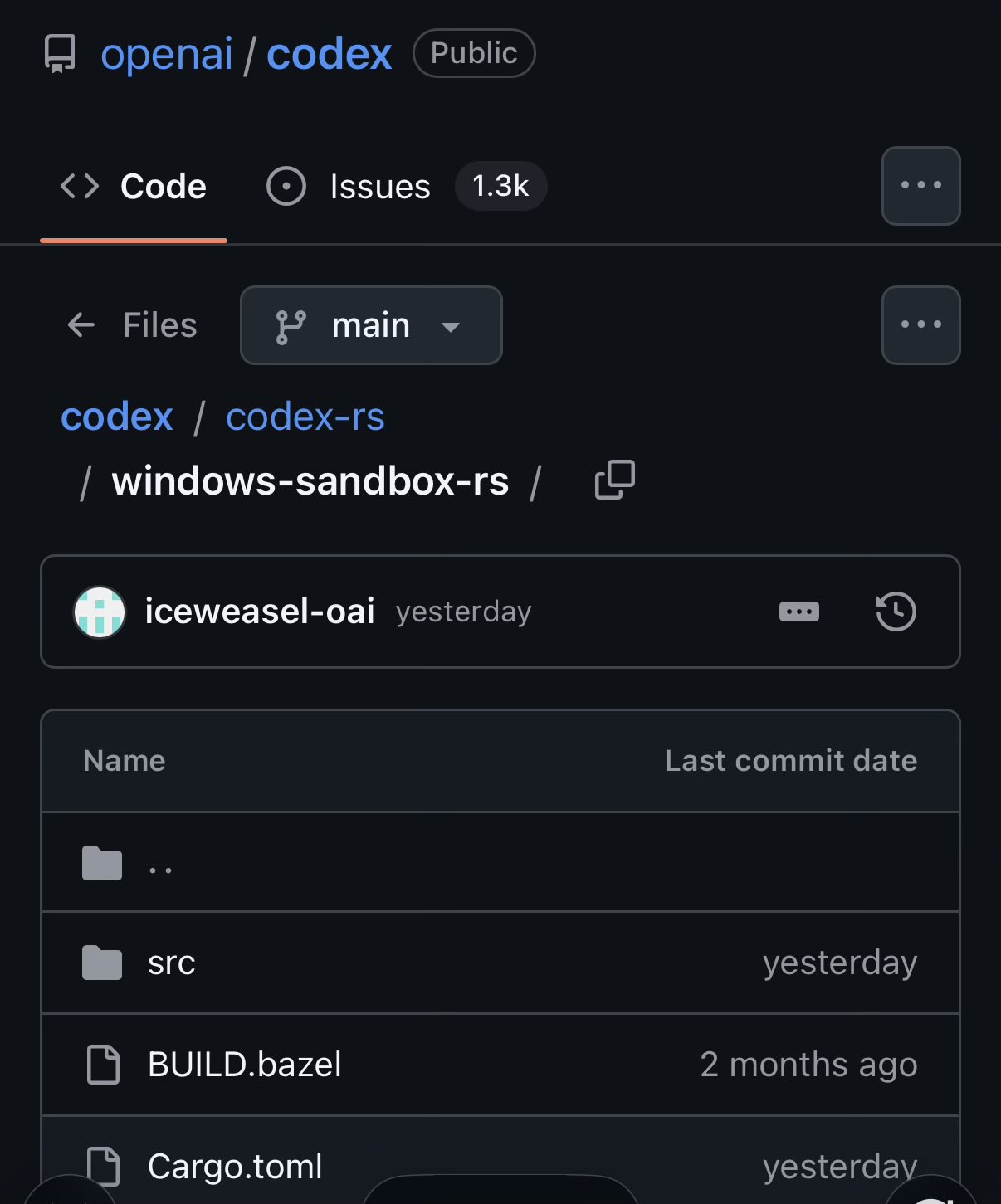
The underrated part of the windows codex app release is that the native agent sandbox is fully open source Use it, fork it, build w/ itt! https://
github.com/openai/codex/t
ree/main/codex-rs/windows-sandbox-rs
…
By
–
oki let's create an amp and pedals simulator for guitar using NAM format

By
–
New course: Build and Train an LLM with JAX, built in partnership with @Google and taught by @chrisachard.
— Andrew Ng (@AndrewYNg) 4 mars 2026
JAX is the open-source library behind Google's Gemini, Veo, and other advanced models. This short course teaches you to build and train a 20-million parameter language… pic.twitter.com/iBJTIjTOIW
New course: Build and Train an LLM with JAX, built in partnership with @Google and taught by @chrisachard. JAX is the open-source library behind Google's Gemini, Veo, and other advanced models. This short course teaches you to build and train a 20-million parameter language model from scratch using JAX and its ecosystem of tools. You'll implement a complete MiniGPT-style architecture from scratch, train it, and chat with your finished model through a graphical interface. Skills you'll gain: – Learn JAX's core primitives: automatic differentiation, JIT compilation, and vectorized execution – Build a MiniGPT-style LLM using Flax/NNX, implementing embedding and transformer blocks – Load a pretrained MiniGPT model and run inference through a chat interface Come learn this important software layer for building LLMs! deeplearning.ai/short-course…
→ View original post on X — @andrewyng, 2026-03-04 18:41 UTC

By
–
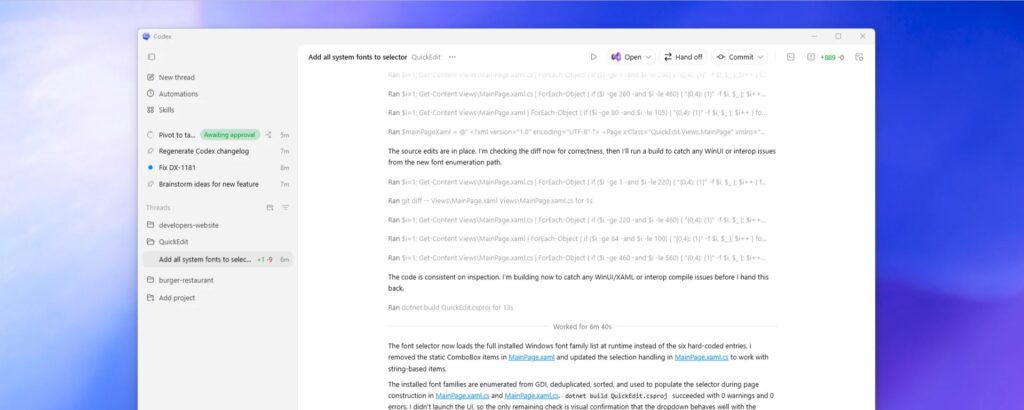
Codex for Windows is here! > Native Codex app on Windows via the Microsoft Store
> Local PowerShell execution with a native Windows sandbox
> WSL support, but not required
> Full app features: Skills, Automations, Worktrees, review, parallel threads
> Windows-native setup for
By
–
the deeper point here connects to something the field keeps rediscovering. we trained reasoning models to think longer. then we discovered longer doesn't mean better. now this paper shows the models themselves already know that. they're generating stop signals that our inference
By
–
their solution: SAGE (Self-Aware Guided Efficient Reasoning). instead of generating token by token, SAGE extends chains in whole reasoning steps. after each step, it checks: is the model confidently signaling it wants to stop? if yes, reasoning ends. no fine-tuning. no new