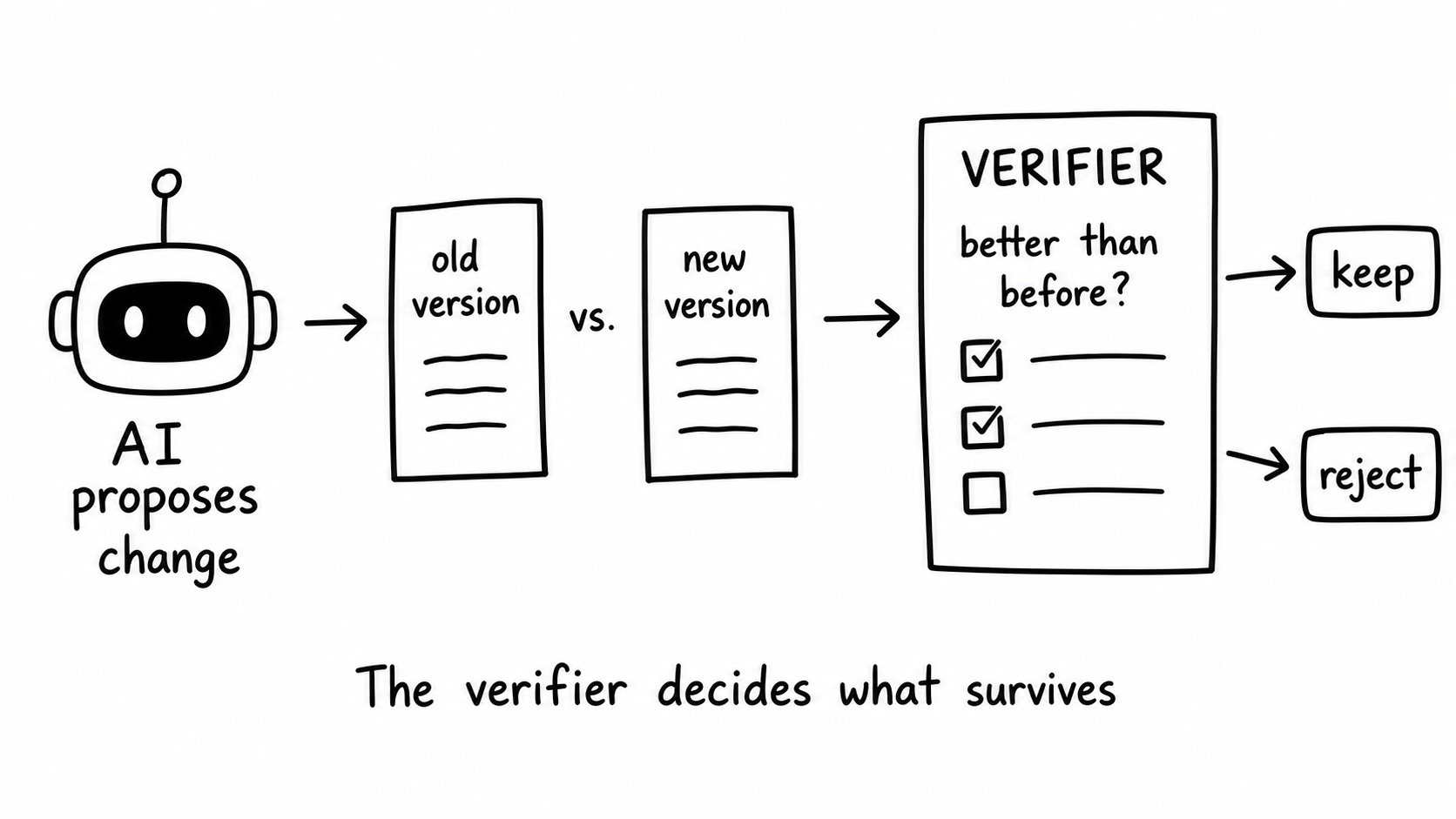
That is where the verifier comes in. A verifier is whatever checks the work. It can be: test results human review a simulator a benchmark real user outcomes a second model judging the first model
The verifier is the thing that decides what gets kept.
MACHINE LEARNING
-
Verifiers: The Key to Evaluating AI Model Performance
By
–
-
Karpathy’s AutoResearch: 700 Experiments, 20 Key Optimizations Found
By
–
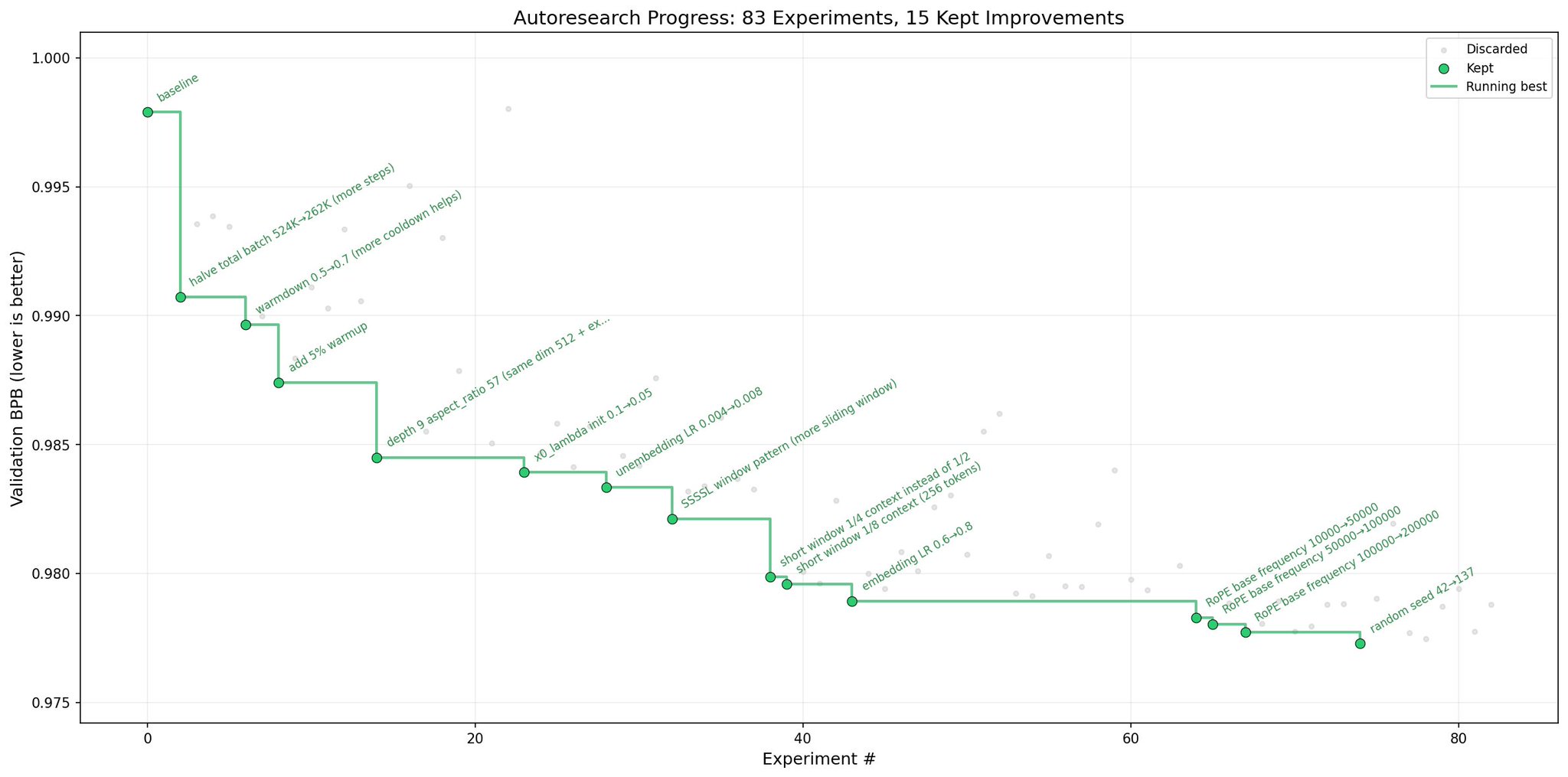
Karpathy’s AutoResearch made this concrete. One markdown prompt. 630 lines of training code. One GPU. 2 days.
It ran 700 experiments and found 20 training optimizations.
Most people was impressed by on the 700 experiments.
But what most people missed out is what decided which 20 -
Self-Improvement Loops: How AI Systems Learn Through Feedback
By
–
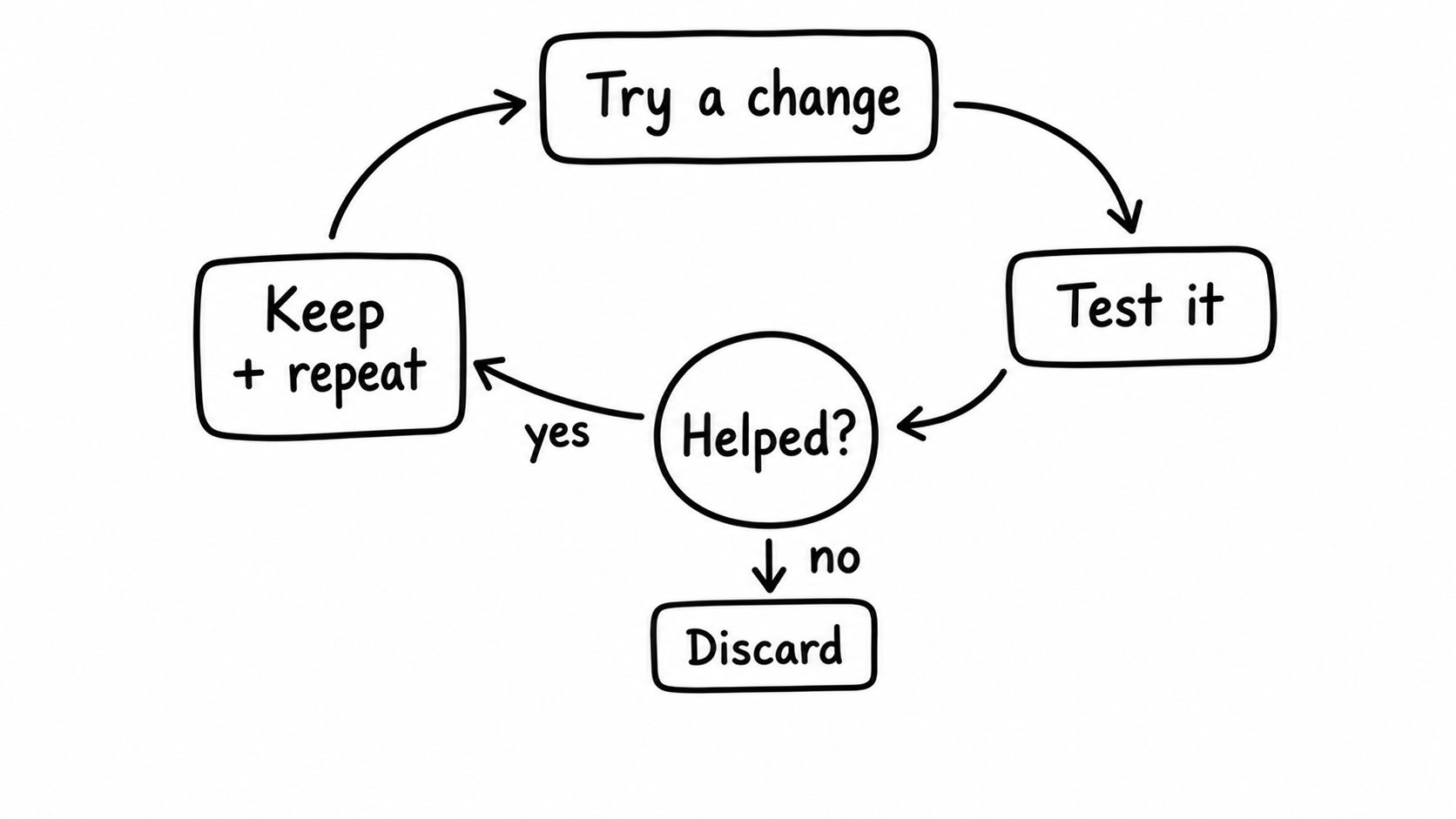
First, what’s actually happening. A self-improvement loop is simple: try a change test the change keep what helped throw away what did not repeat
That’s it.
The system is not magically becoming intelligent.
It is running a feedback loop. -
Hinton’s 2016 radiologist prediction versus actual data outcomes
By
–
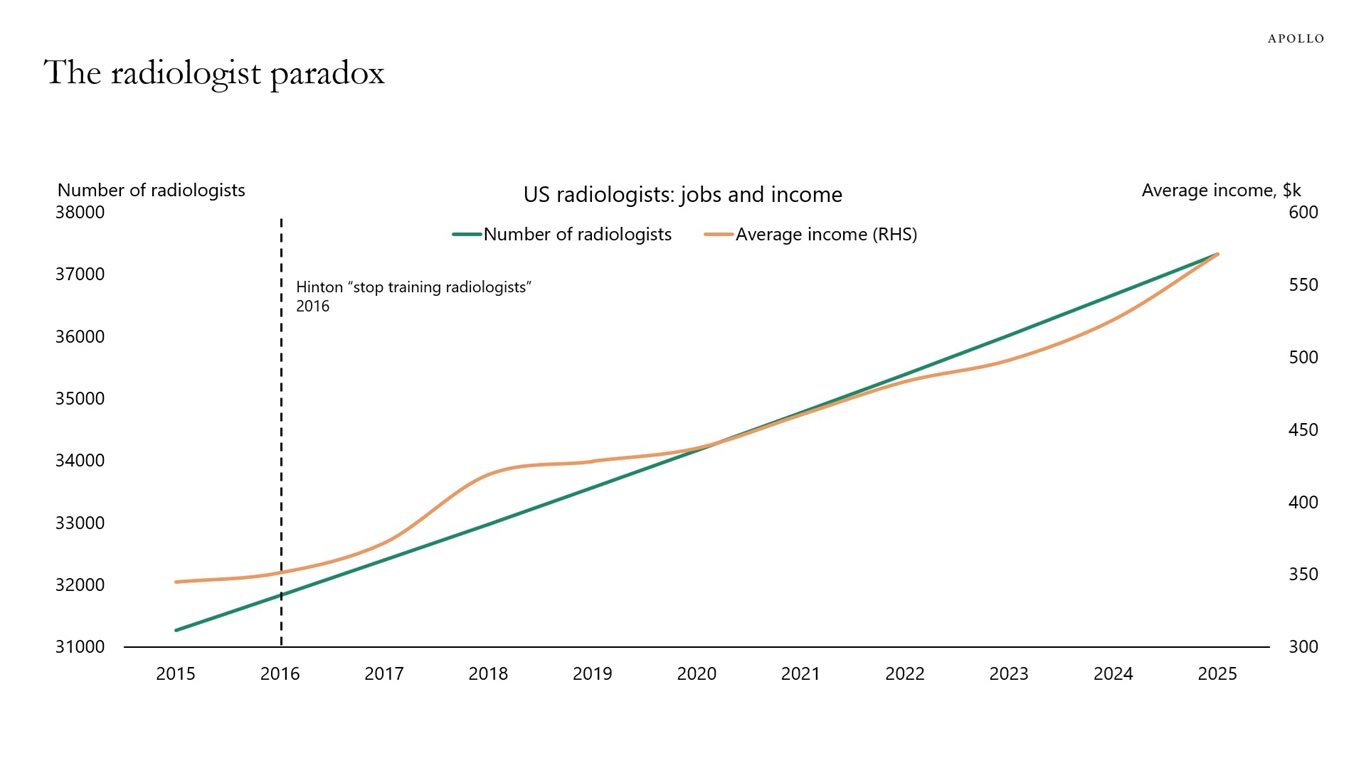
“we might as well stop training radiologists” Geoff Hinton, 2016, vs the actual data, via Torsten Slok at Apollo
-
Tandem Voice AI Architecture Enables Speaking While Thinking
By
–
For years, voice AI has been stuck in a rigid loop: think, then speak. But real human conversation is messy, overlapping, and asynchronous.
— hardmaru (@hardmaru) 29 avril 2026
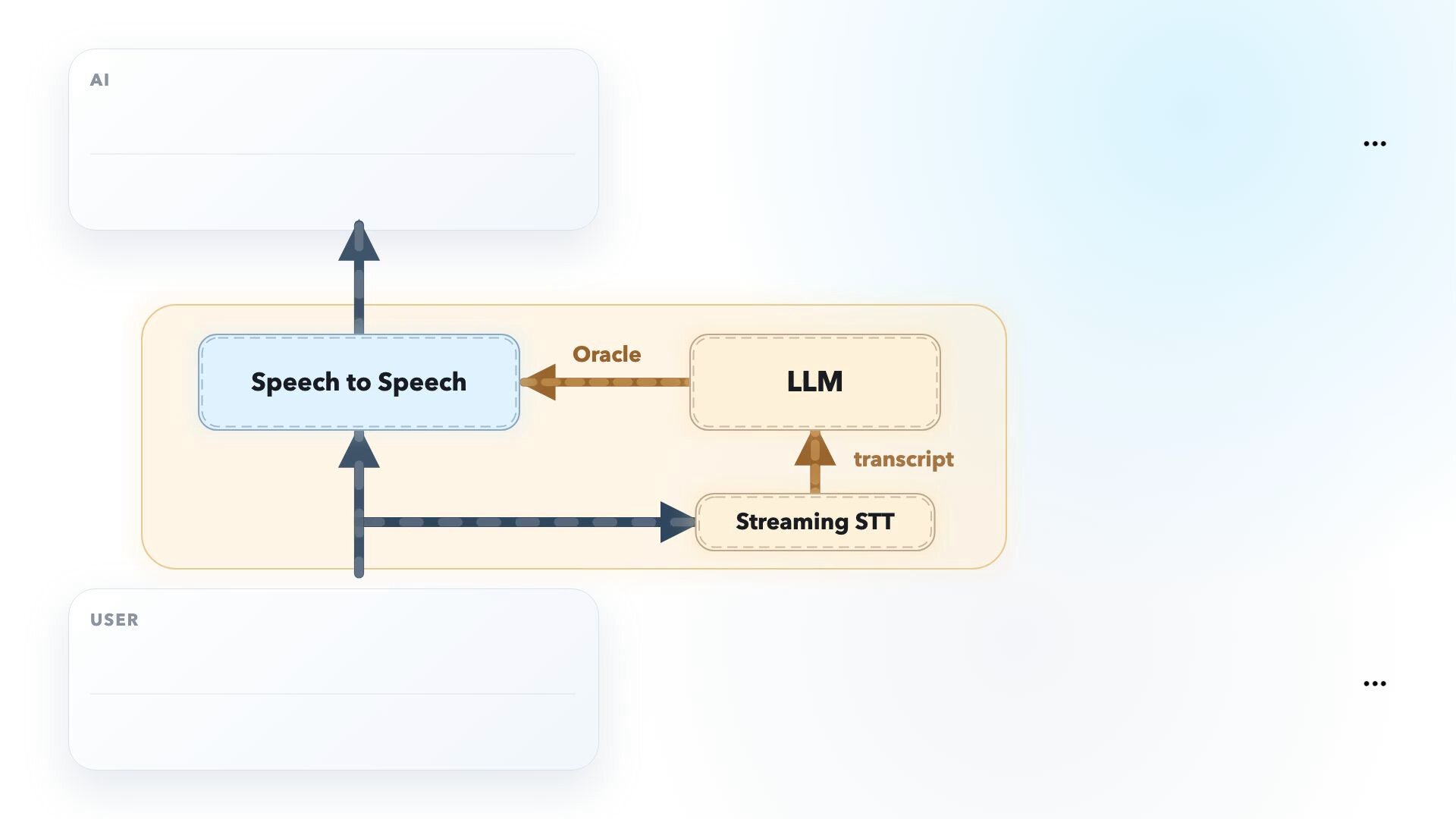
In our new #ICASSP2026 work, we built a tandem architecture that shifts the paradigm to “speak while thinking.” A fast speech model starts… https://t.co/gyRFlqDSUjFor years, voice AI has been stuck in a rigid loop: think, then speak. But real human conversation is messy, overlapping, and asynchronous. In our new #ICASSP2026 work, we built a tandem architecture that shifts the paradigm to “speak while thinking.” A fast speech model starts
-
KAME: Real-Time Speech-to-Speech AI With Deep Thinking
By
–
We’re excited to introduce KAME: Tandem Architecture for Enhancing Knowledge in Real-Time Speech-to-Speech Conversational AI, accepted at #ICASSP2026! 🐢
— Sakana AI (@SakanaAILabs) 29 avril 2026
Blog https://t.co/eyU3yECBK8
Paper https://t.co/PVYPIcHyyM
Can a speech AI think deeply without pausing to process?
In real… pic.twitter.com/Ut0ypkjJWxWe’re excited to introduce KAME: Tandem Architecture for Enhancing Knowledge in Real-Time Speech-to-Speech Conversational AI, accepted at #ICASSP2026! Blog https://
pub.sakana.ai/kame/
Paper https://
arxiv.org/abs/2510.02327 Can a speech AI think deeply without pausing to process? In real -
Audio-Omni: Unified Framework for Audio Understanding, Generation, Editing
By
–
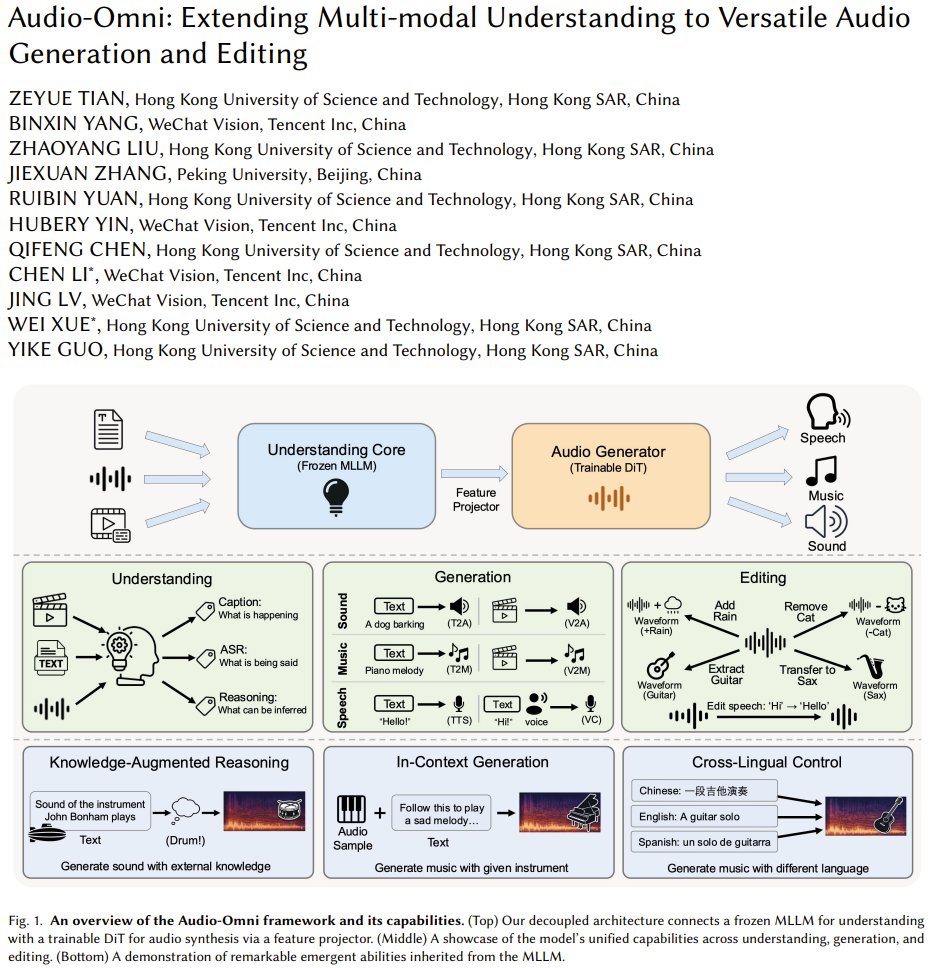
What if your AI could not only understand sound but also generate and edit it, all in one model? Researchers from HKUST, Tencent, and Peking University introduce Audio-Omni. It’s the first end-to-end framework that unifies audio understanding, generation, and editing across
-
The 8-Layer Architecture of Agentic AI Explained
By
–
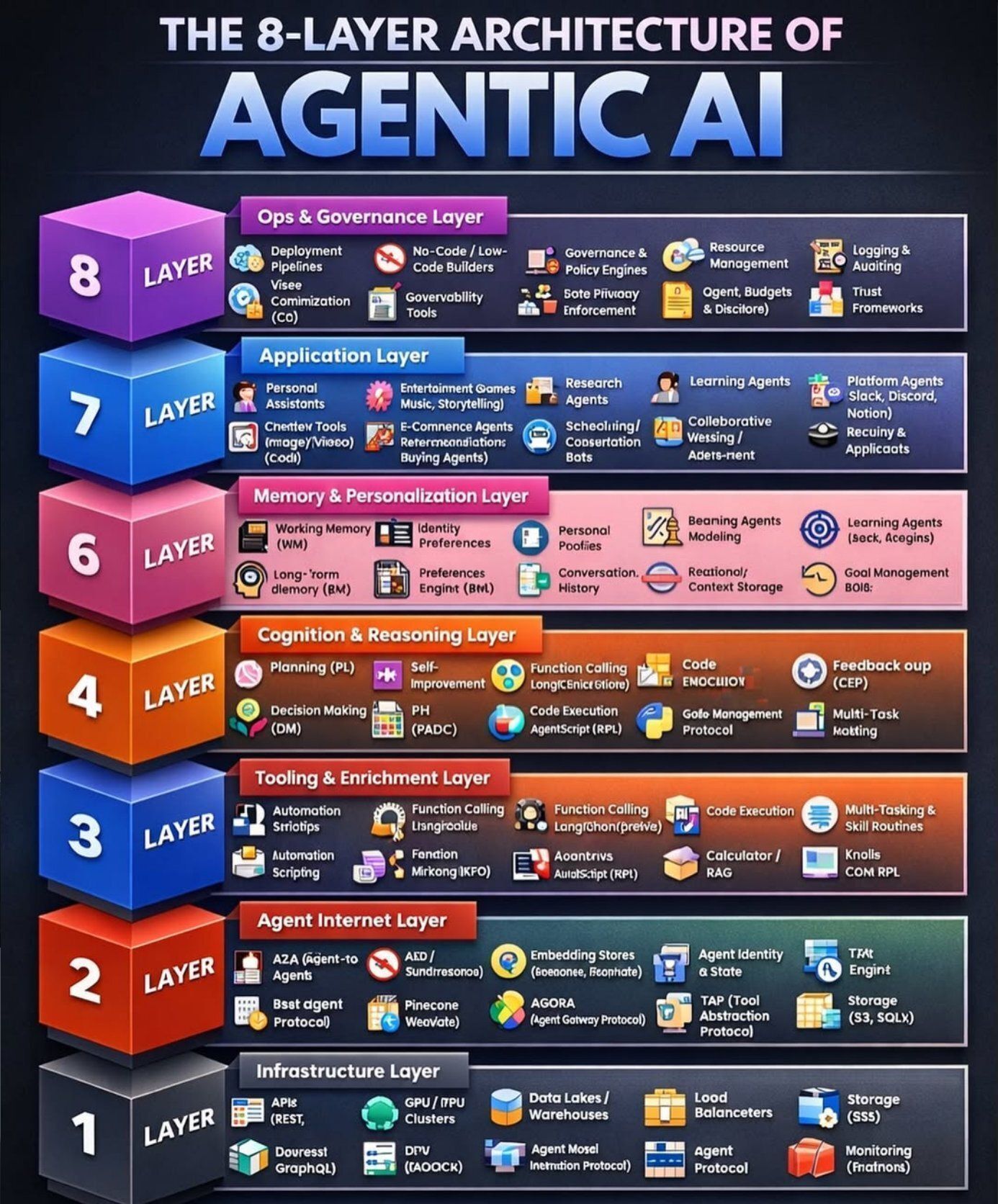
The 8-Layer Architecture of #AgenticAI
by @Python_Dv #AI #LLM #ArtificialIntelligence #MachineLearning #ML -
SenseTime Releases SenseNova-U1 Unified Multimodal Architecture
By
–
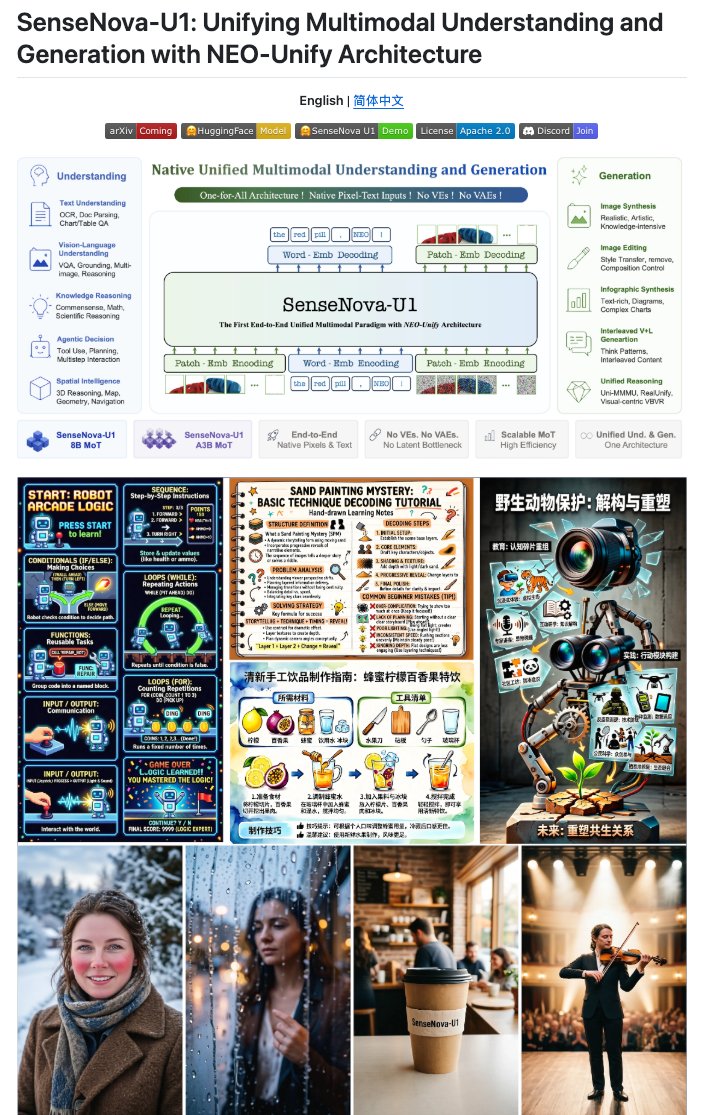
HUGE OPEN-SOURCE DROP @SenseTime_AI just released SenseNova-U1! If you work with multimodal AI, you need to see this. they’ve completely killed the Visual Encoder (VE) and VAE to create a truly unified architecture (NEO-Unify). The TL;DR: → Unmatched Infographics: One of
-
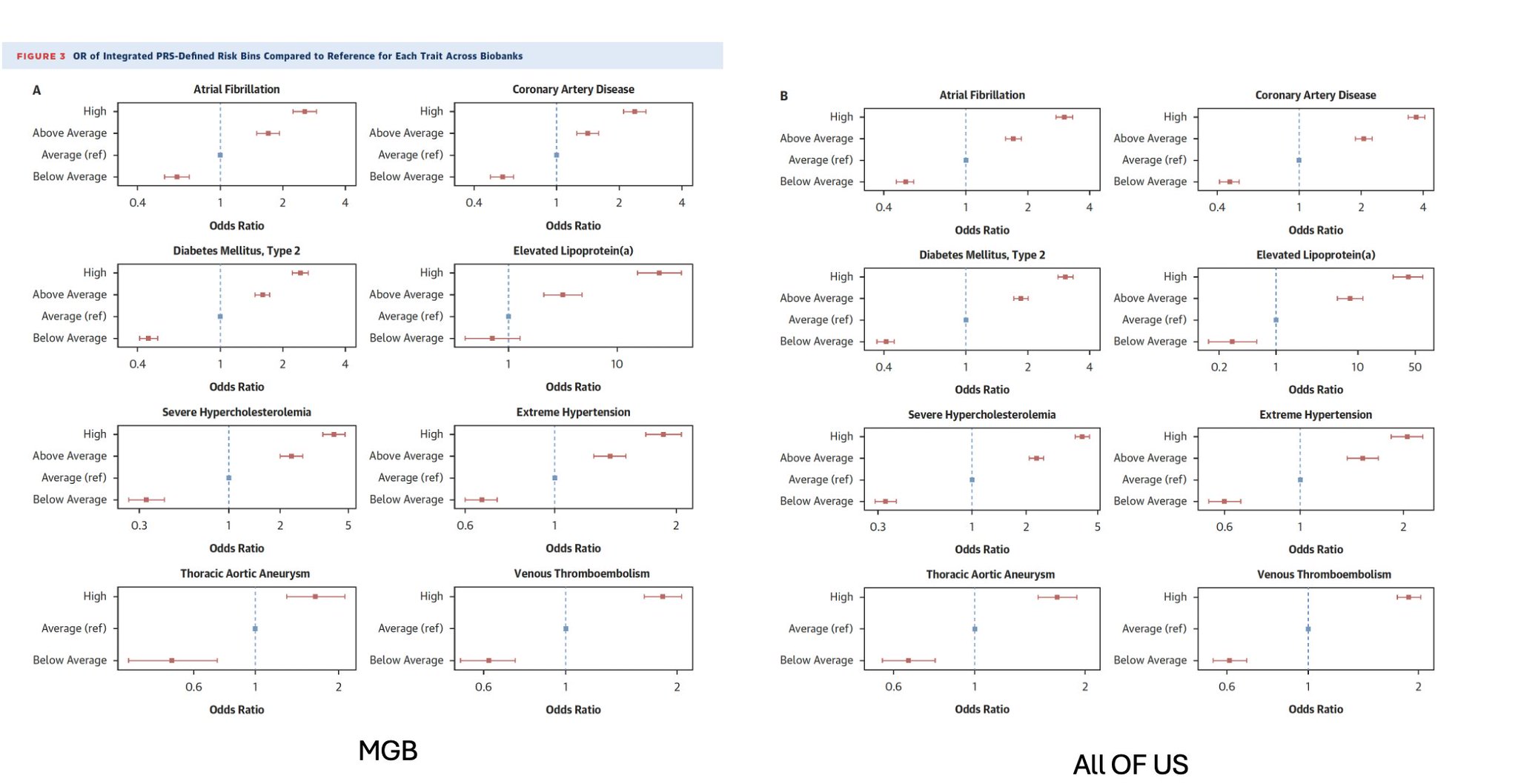
Polygenic Risk Scores Cardiovascular AI Clinical Implementation Gap
By
–
Polygenic risk scores for 8 cardiovascular traits in both @MassGenBrigham and @AllofUsResearch
—superimposable— strongly indicate risk. Yet still not implemented in clinical practice https://
jacc.org/doi/10.1016/j.
jacc.2026.03.035
…