
Farewell to the shackles of KV Cache, compressing long contexts into weights—is there hope for continuously learning large models? Researchers from Stanford, NVIDIA, UC Berkeley, and the Astera Institute present a new method called End-to-End Test-Time Training (TTT-E2E). They
MACHINE LEARNING
-

NVIDIA’s Alpamayo-R1: Open Weights 4D Understanding Autopilot Model
By
–
As NVIDIA pushed its first ever open weights autopilot model alpamayo-R1 A key frontier is native 4D understanding: not just “describe the video” but reason about depth + motion + 3D interactions over time, even for a specific region. This paper introduces 4D-RGPT (also from
-
AI Glasses Provide Real-Time On-the-Job Training
By
–
AI Glasses teach in real time. While doing the job.
-

Context Breakdown: The Hidden Challenge in AI System Reliability
By
–
Most AI systems don’t fail because of bad prompts.
They fail because context breaks at scale. If you’re building AI agents, LLM workflows, copilots, or automation, this is the layer that quietly decides whether your system is reliable or unpredictable. We’re hosting a 5-hour, -

Multimodal Sleep Foundation Model for Disease Prediction
By
–
A multimodal sleep foundation model for disease prediction – Nature Medicine https://
buff.ly/W0r4qKh
#AI #MachineLearning #DeepLearning #LLMs #DataScience -
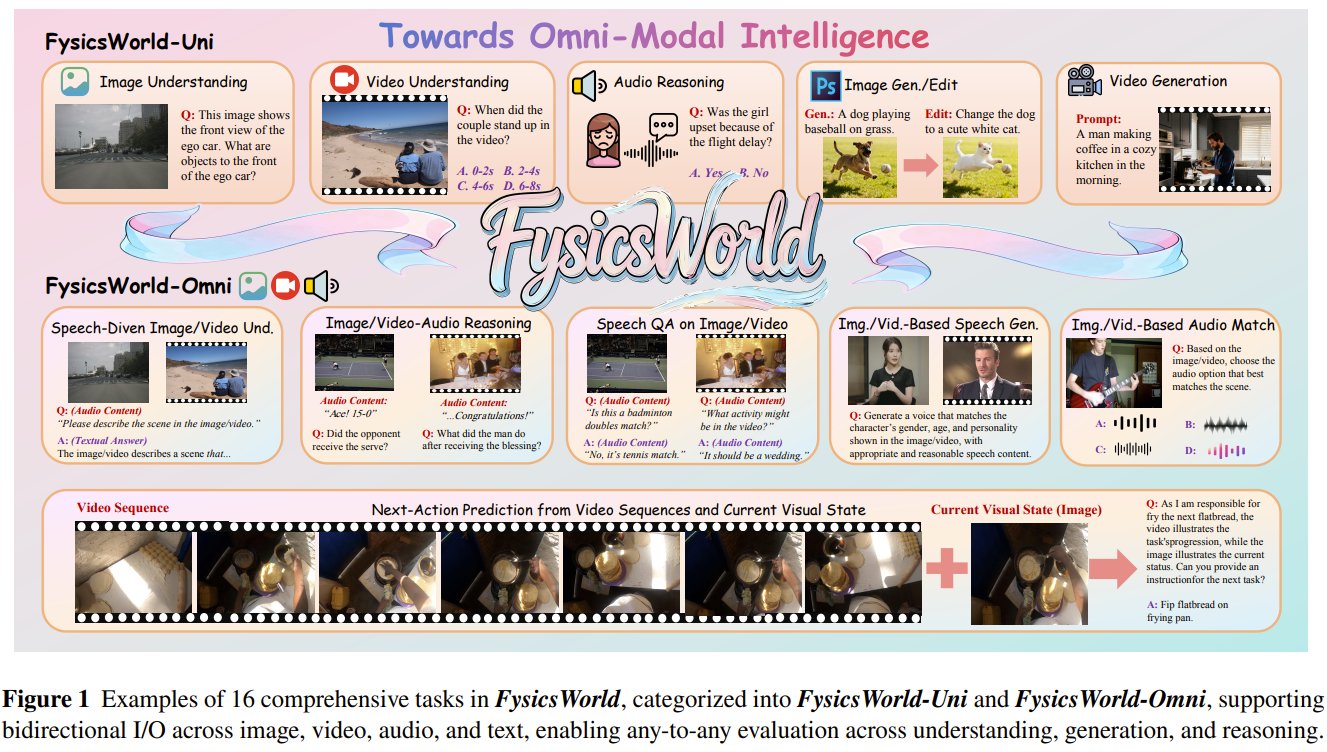
FysicsWorld: First Unified Multimodal AI Benchmark
By
–
With only one test, you could measure an AI's true mastery of sight, sound, and language together! But how? Fudan University & Fysics AI present FysicsWorld, the first full-modality benchmark. It's a unified test that pushes models to understand, generate, and reason across
-

ScaledML Returns After 6 Years with ML Industry Foresight
By
–
ScaledML is back! After a 6 year hiatus. Consistently 2-3 years ahead of where ML will be. Examples of foresight at SML:
– OpenAI in 2016,2017,2019 announced GPT-2 & RL efforts
– Turing award for Deep Learning announced by Turing award winner on morning of award
– Groq chip -
Modern Deep Learning Detectors: Why HOG Is Outdated
By
–
Still using HOG for object or pedestrian detection? You probably shouldn’t.
— Satya Mallick (@LearnOpenCV) 7 janvier 2026
HOG was great years ago, but today it’s slow, fragile to viewpoint changes, and struggles with small or occluded objects.
Modern deep learning detectors in OpenCV — like U-Net (faces), YOLO, and… pic.twitter.com/YM3oDyF0XXStill using HOG for object or pedestrian detection? You probably shouldn’t. HOG was great years ago, but today it’s slow, fragile to viewpoint changes, and struggles with small or occluded objects. Modern deep learning detectors in OpenCV — like U-Net (faces), YOLO, and
-
AI-driven detection of cyberharassment using graph studies
By
–
Oui, c’est un move intéressant. Je dis « réducteur » parce que les chercheuses de l’I3S de Nice m’avaient expliqué que la détection du cyberharcèlement repose en grande partie sur des études de graphes et donc sur des données massives. Et oui, elles ne pouvaient pas accéder aux
-
Keras API: Accessing JAX’s Full Power Without Reinventing
By
–
The point of the Keras API is to let you tap into everything JAX has to offer but without reinventing the wheel