Great work by @UnslothAI team!
LLMS
-

Claude.md File Reaches 15K Stars with AI Coding Guidelines
By
–
A single 𝗖𝗟𝗔𝗨𝗗𝗘.𝗺𝗱 file just hit 15K GitHub stars. (derived from Karpathy's coding rules) Andrej Karpathy observed that LLMs make the same predictable mistakes when writing code: over-engineering, ignoring existing patterns, and adding dependencies you never asked for. If you've used AI coding assistants, you've hit all of these. But here's the thing: If the mistakes are predictable, you can prevent them with the right instructions. That's exactly what this 𝗖𝗟𝗔𝗨𝗗𝗘.𝗺𝗱 does. You drop one markdown file into your repo, and it gives Claude Code a structured set of behavioral guidelines for your entire project. This is a big deal. – Built entirely around prompt engineering for AI coding assistants – No framework, no complex tooling, just one .md file that shapes behavior Developers are moving past "use AI to write code" and into "engineer the AI's behavior so the code is actually good." The Claude Code ecosystem is growing fast, and the best tools in it aren't always software. Sometimes they're just well-crafted instructions. 100% open-source. I've shared a link to the GitHub repo in the next tweet!
→ View original post on X — @akshay_pachaar, 2026-04-12 17:02 UTC
-
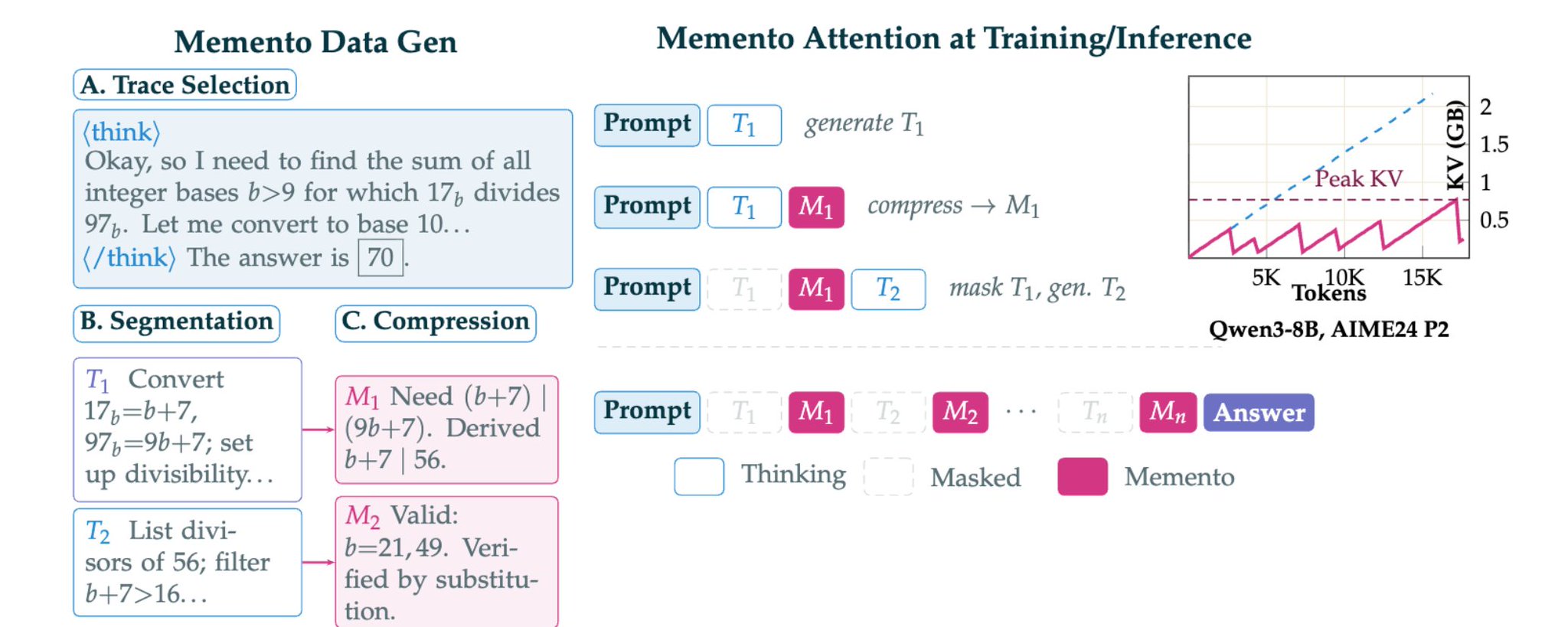
Top AI Papers: Agents, LLMs, and Coding Automation
By
–
The Top AI Papers of the Week (April 6 – 12) – Memento
– Neural Computers
– The Universal Verifier
– Agent Skills in the Wild
– Memory Intelligence Agent (MIA)
– Single-Agent vs Multi-Agent LLMs
– Scaling Coding Agents via Atomic Skills Read on for more: -

Why Claude’s Concise Style Makes It More Appealing
By
–
From my own experience, I can say that I'm using Claude more and more. It's simply the taste; the less "chatty" nature and the more concise answers make it more appealing.
-
Llama-2 Catalyzed Thousands of AI Startups Globally
By
–
Llama-2 single-handedly jump-started the open weight AI industry. Literally thousands of AI startups would not have existed without it.
-
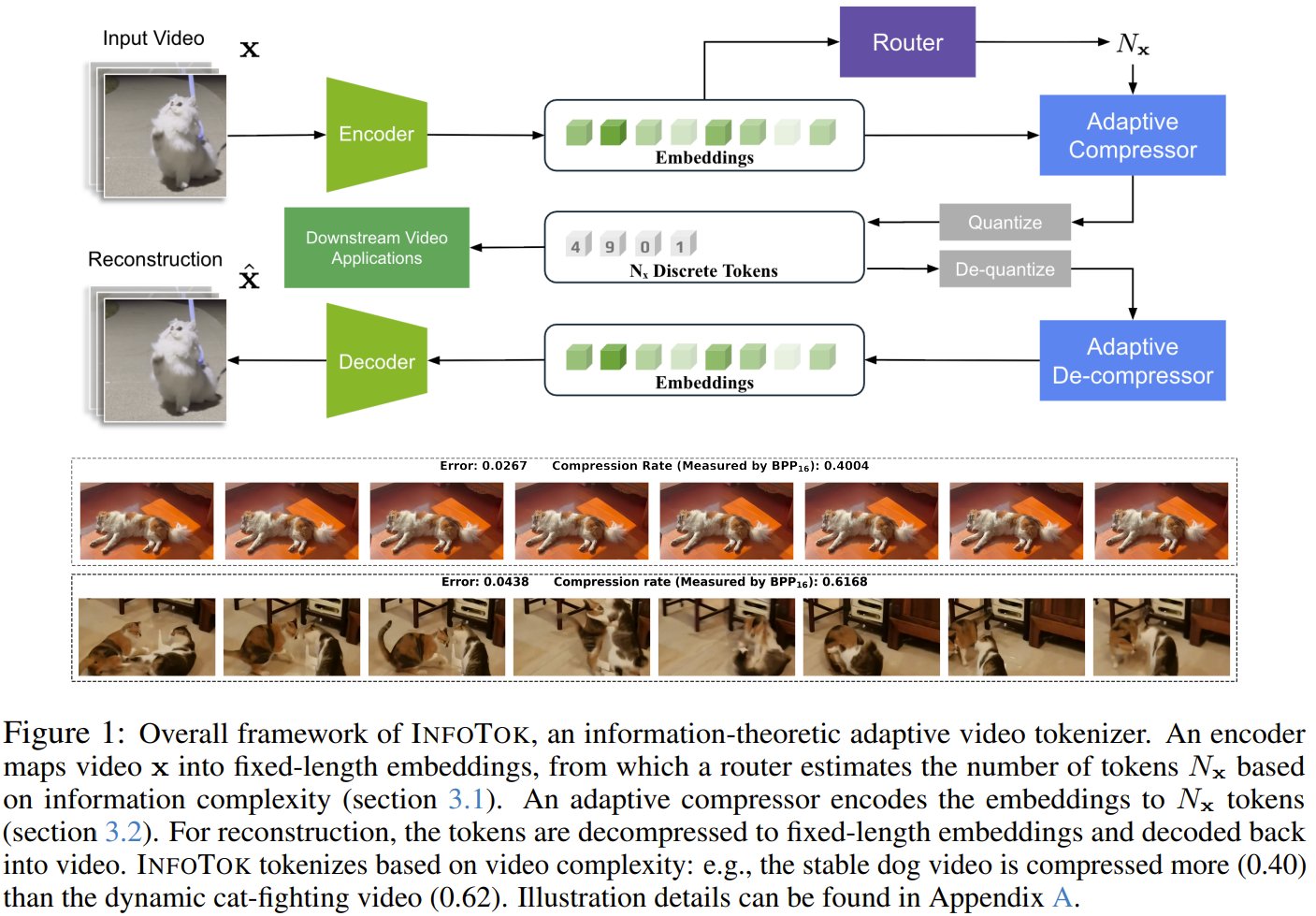
InfoTok: Efficient Long Video Processing Using Information Theory
By
–
How do we process long videos efficiently without losing crucial information? NVIDIA, Stanford University, and National University of Singapore have an answer! They introduce InfoTok, a breakthrough method inspired by Shannon's information theory. It intelligently allocates
-
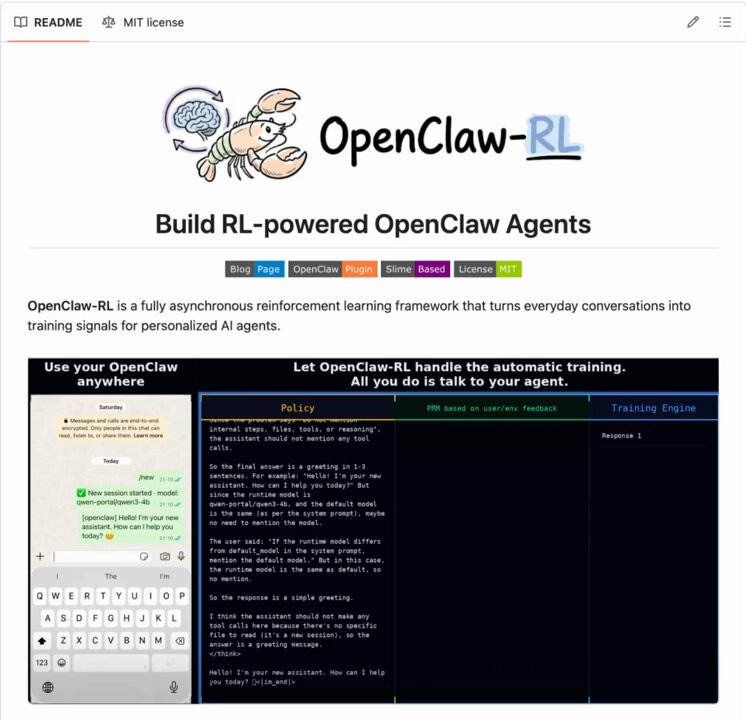
OpenClaw-RL: Reinforcement Learning for Agent Model Weights
By
–
OpenClaw meets RL!
— Akshay 🚀 (@akshay_pachaar) 12 avril 2026
OpenClaw Agents adapt through memory files and skills, but the base model weights never actually change.
OpenClaw-RL solves this!
It wraps a self-hosted model as an OpenAI-compatible API, intercepts live conversations from OpenClaw, and trains the policy in… pic.twitter.com/4kxY1b2wSCOpenClaw meets RL! OpenClaw Agents adapt through memory files and skills, but the base model weights never actually change. OpenClaw-RL solves this! It wraps a self-hosted model as an OpenAI-compatible API, intercepts live conversations from OpenClaw, and trains the policy in the background using RL. The architecture is fully async. This means serving, reward scoring, and training all run in parallel. Once done, weights get hot-swapped after every batch while the agent keeps responding. Currently, it has two training modes: – Binary RL (GRPO): A process reward model scores each turn as good, bad, or neutral. That scalar reward drives policy updates via a PPO-style clipped objective. – On-Policy Distillation: When concrete corrections come in like "you should have checked that file first," it uses that feedback as a richer, directional training signal at the token level. When to use OpenClaw-RL? To be fair, a lot of agent behavior can already be improved through better memory and skill design. OpenClaw's existing skill ecosystem and community-built self-improvement skills handle a wide range of use cases without touching model weights at all. If the agent keeps forgetting preferences, that's a memory problem. And if it doesn't know how to handle a specific workflow, that's a skill problem. Both are solvable at the prompt and context layer. Where RL becomes interesting is when the failure pattern lives deeper in the model's reasoning itself. Things like consistently poor tool selection order, weak multi-step planning, or failing to interpret ambiguous instructions the way a specific user intends. Research on agentic RL (like ARTIST and Agent-R1) has shown that these behavioral patterns hit a ceiling with prompt-based approaches alone, especially in complex multi-turn tasks where the model needs to recover from tool failures or adapt its strategy mid-execution. That's the layer OpenClaw-RL targets, and it's a meaningful distinction from what OpenClaw offers. I have shared the repo in the replies!
→ View original post on X — @akshay_pachaar, 2026-04-12 13:35 UTC
-
AI Cost Reduction: Strategic Implications for the Next Two Years
By
–
No me preocupa tanto el precio a día de hoy sino el escenario en el que el coste baje 2-3 órdenes de magnitud en los próximos dos años como hemos visto con estos modelos en los años anteriores. Si aceptamos que ese escenario es realista, cuál es la mejor decisión que se podría
-
Streisand Effect Drives Testing of AI Models After Mythos Withheld
By
–
That said, there lies the irony of the Streisand effect, in which "not releasing Mythos due to the cybersecurity risks it poses" has ended up making many people now test the capabilities of the models that *are* available to see just how well they perform at hunting for
-
AISLE vs Mythos: LLM Vulnerability Scanning Benchmark Debate
By
–
The moment you've read the analysis done by AISLE, you'll realize that the criticism made here has no basis. The reason is that AISLE hasn't actually reproduced the task that Mythos has solved (letting the LLM scan entire projects until it finds vulnerabilities without human