AI Dynamics

Global AI News Aggregator

About

ETHICS

  • Hugging Face Research Pretraining Data Accidentally Leaked Publicly
    Hugging Face Research Pretraining Data Accidentally Leaked Publicly

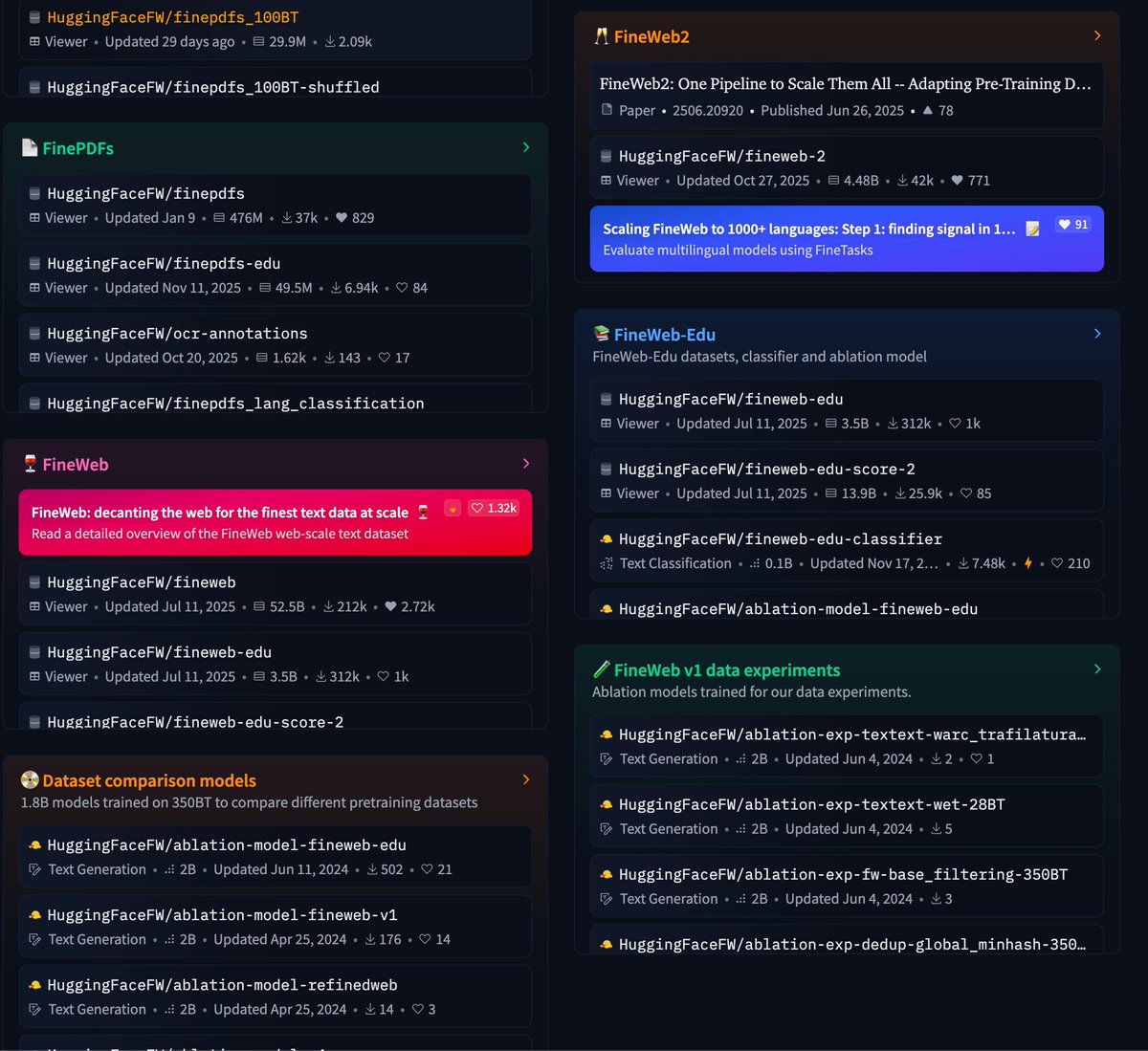
    Oh shit, it seems like all the HF Research team pretraining data has been accidentally leaked to the public. The web, PDFs, and synthetic datasets are expode on hf FineData org… Apparently, an intern used CC to push the data with private=False.

    → View original post on X — @thom_wolf, 2026-03-31 18:47 UTC

  • Anti-AI Coalition Propaganda and the Need for Balanced Regulation
    Anti-AI Coalition Propaganda and the Need for Balanced Regulation

    The anti-AI coalition continues to maneuver to find arguments to slow down AI progress. If someone has a sincere concern about a specific effect of AI, for instance that it may lead to human extinction, I respect their intellectual honesty, even if I deeply disagree with their position. However, I am concerned about organizations that are surveying the public to find whatever messages will turn people against AI, and how the public reacts as these messages are spread by lobbyists or by politicians seeking to alarm constituents, companies pursuing regulatory capture or seeking to promote the power of their technology, and individuals seeking to gain attention or to profit by being provocative. A large study (link in original article below; h/t to the AI Panic blog) by a UK group tested different messages that are designed to raise alarm about AI. Their study found that saying AI will cause human extinction has largely failed. Doomsayers were pushing this argument a couple of years ago, and fortunately our community beat it back. But AI-enabled warfare and environmental concerns resonate better. We should be prepared for a flood of messages (which is already underway) arguing against AI on these grounds. Further, job loss and harm to children are messages that motivate people to act. To be clear, I find AI-enabled warfare alarming; we need to continue serious efforts to monitor and mitigate the environmental impact of AI; any job losses are tragic and hurt individuals and families; and as a father, I hold dearly the importance of every child’s welfare. Each of these topics deserves serious attention and treatment with the greatest of care. But when anti-AI propagandists take a one-sided view of complex issues to benefit their own organizations at the expense of the public at large — for instance, when big AI companies argue that AI is dangerous to block the free distribution of open source projects that compete with their offerings — then we all lose. For example, public perception of data centers’ environmental impact is already far worse than the reality — data centers are incredibly efficient for the work they do, and hampering their buildout will hurt rather than help the environment. While job loss is a real problem, the “AI washing” of layoffs — in which businesses that had over-hired during the pandemic blame AI for recent layoffs, although AI hasn’t yet affected their operations — has led to overblown fears about the impact of AI on employment. Unfortunately, this sort of propaganda easily leads to regulations that create worse outcomes for everyone. For example, oil companies worked for years to create fear of nuclear energy. The result is that overblown concerns about the safety of nuclear power plants has stifled nuclear power development, leading to millions of premature deaths from air pollution that was caused by other energy sources and a massive increase in CO2 emissions. Let’s make sure overblown concerns about AI do not lead to a similar fate for the many people that would benefit from faster AI development. Last week, the White House proposed a national legislative framework for AI. A key component is a federal preemption framework to prevent a patchwork of state regulations that hamper AI development. I support this. After failing to gain traction at the federal level, a lot of anti-AI propaganda has shifted to the state level. If just one of the 50 states passes a law that limits AI in an unproductive way, it could lead to stifling AI development across all the states and potentially across the globe. The White House proposal rightfully respects each state’s rights to control its own zoning, how it enforces general laws to protect consumers, and how it uses AI. But if a state were to pass laws that limit AI development, federal rules would preempt the state law. The White House proposal remains a proposal for now. However, if the U.S. Congress enacts it, it will clear the way for ongoing efforts to develop AI in beneficial ways. Where do we go from here? Let’s support limiting applications — those that use AI, and those that don’t — that harm people. When the anti-AI coalition argues against AI, in addition to considering the merits of the argument, I consider whether their position is consistent and persuasive, or if they are just promoting whatever concerns they think will sway the public at a given moment. And, let’s also keep using a scientific approach to weighing AI’s benefits against likely harms, so we don’t end up with overblown concerns that limit the benefits that AI can bring everyone. [Original text with links: deeplearning.ai/the-batch/is… ]

    → View original post on X — @andrewyng, 2026-03-31 18:45 UTC
  • Anthropic Claude Code Leak Bypassed Via Python Rewrite
    Anthropic Claude Code Leak Bypassed Via Python Rewrite

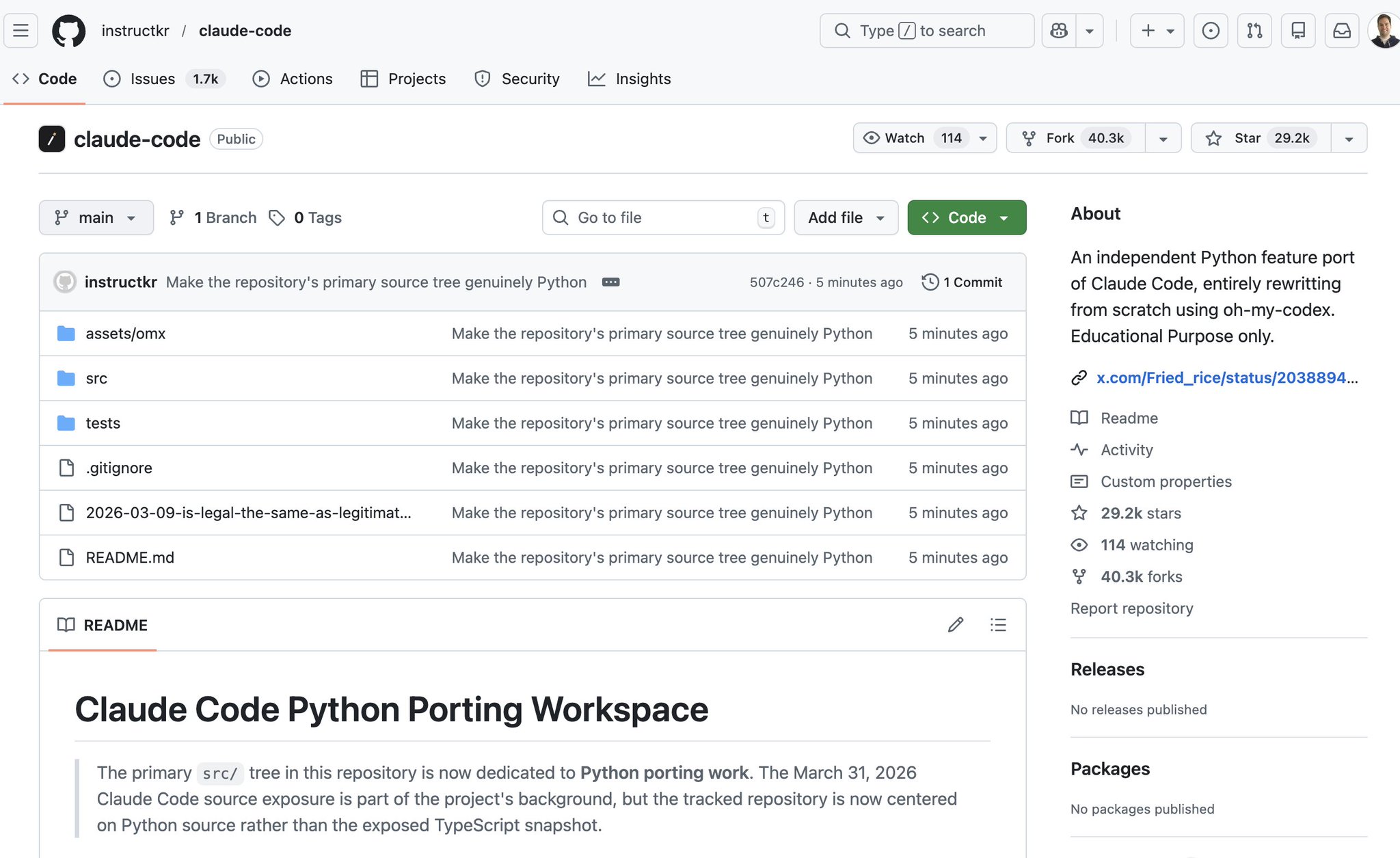
    This is either brilliant or scary: Anthropic accidentally leaked the TS source code of Claude Code (which is closed source). Repos sharing the source are taken down with DMCA. BUT this repo rewrote the code using Python, and so it violates no copyright & cannot be taken down!

    → View original post on X — @jessyseonoob

  • AI Agent Traps: Beyond Prompt Injection to Environment-Level Threats
    AI Agent Traps: Beyond Prompt Injection to Environment-Level Threats

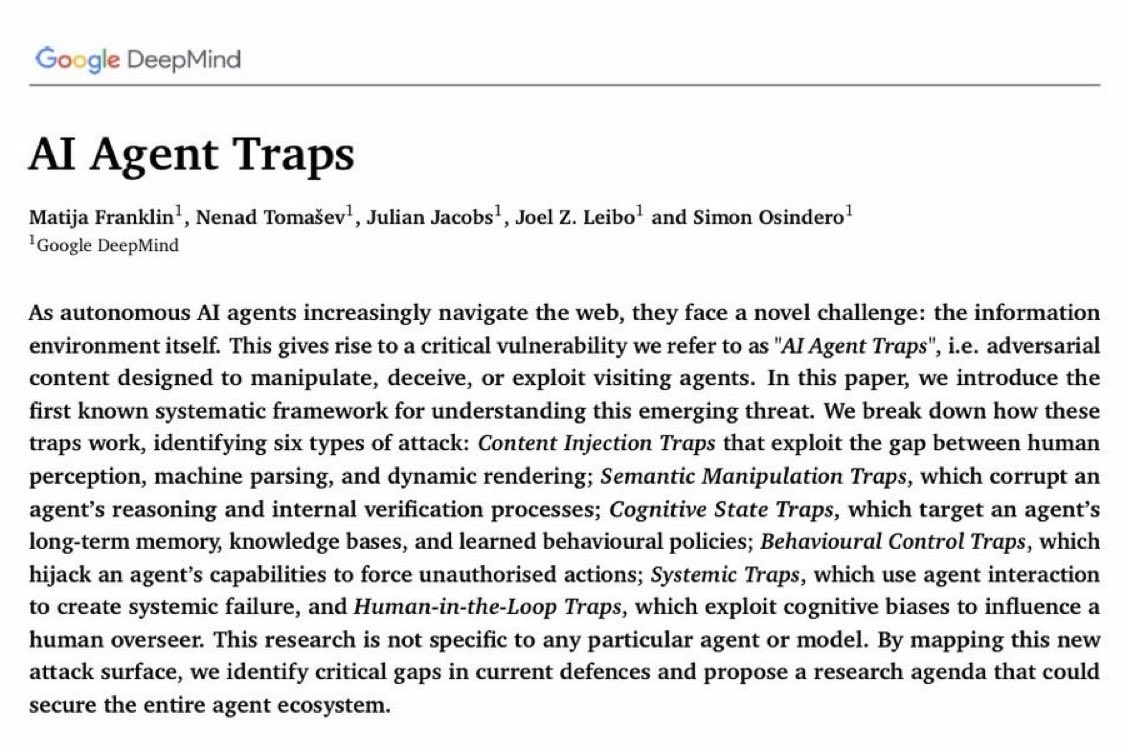
    AI agents don’t just inherit LLM risks — they amplify them. I came across an interesting paper: “AI Agent Traps.” Most discussions still focus on prompt injection. That’s already incomplete. Because once agents have: – autonomy – persistence – tool access …the attack surface fundamentally shifts. ➡️ The real vulnerability becomes the information environment itself. Everything an agent interacts with can be adversarial: – web pages – emails – APIs – databases All of it can be weaponized. The paper outlines a taxonomy of six adversarial trap classes — from: – hidden prompt injections embedded in content – to systemic risks across multi-agent ecosystems What stands out is the shift from: model-level threats → environment-level threats That’s where most current agent architectures are still underprepared. If you’re building or deploying AI agents, this is worth paying attention to. Paper link : papers.ssrn.com/sol3/Deliver… 🔗 Follow my communities and personal initiatives: • Amazing AI, Data, Quantum Computing & Emerging Technologies — drdebashisdutta.com/ • Research & Innovation – Quantum, AI & Advanced Systems — researchedge.org/ #AIAgents #LLMSecurity #PromptInjection #AgenticAI #AISafety #MultiAgentSystems #CyberSecurity #CyberSecurity

    → View original post on X — @debashis_dutta, 2026-03-31 18:11 UTC

  • AI’s Role in Scientific Peer Review: Spotting Gaps, Needing Human Judgment

    Stanford computer scientist @james_y_zou is exploring how AI can accelerate scientific research and peer review. His finding: AI excels at spotting gaps, but judgment calls still need humans. hai.stanford.edu/news/ais-gr…

    → View original post on X — @stanfordhai, 2026-03-31 17:03 UTC

  • Americans Use AI But Barely Trust It, Poll Finds

    Some wild numbers from Quinnipiac's new AI poll: 51% of Americans surveyed use AI for research. Only 21% trust it. 70% say AI will decrease jobs. But only 30% are concerned it will touch theirs. Only 5% believe AI is being developed by people who represent their interests.

    → View original post on X — @therundownai

  • Detecting and Preventing Distillation Attacks in AI Models
    Detecting and Preventing Distillation Attacks in AI Models

    Detecting and preventing distillation attacks \ Anthropic bit.ly/3ORbiJ7 #AI #MachineLearning #DeepLearning #LLMs #DataScience

    → View original post on X — @miketamir, 2026-03-31 16:47 UTC

  • ARC-AGI-3: New Benchmark Reveals AI-Human Gap
    ARC-AGI-3: New Benchmark Reveals AI-Human Gap

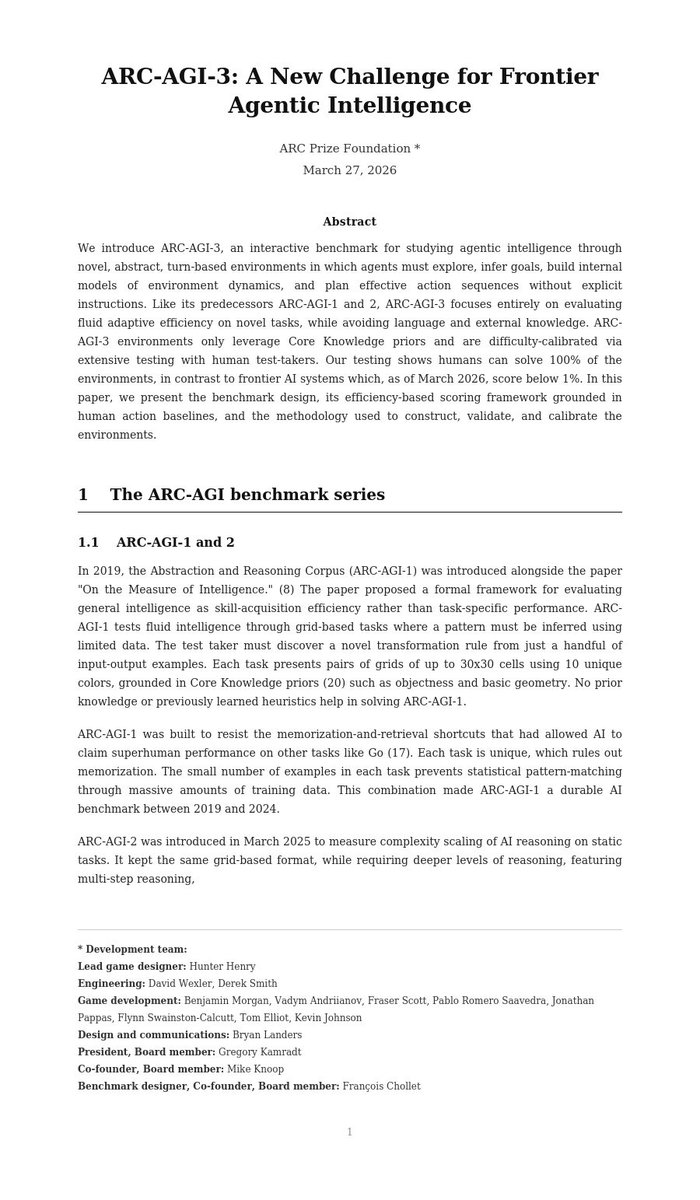
    François Chollet just dropped the toughest benchmark that made every frontier AI look lost. ARC-AGI-3. 135 game environments built from scratch by game designers. No instructions, no rules, no stated goal. The AI gets placed inside and has to work out what it is even trying to do. Untrained humans cleared all 135. Every major model landed below 1%. Humans: 100%. Gemini 3.1 Pro: 0.37%. GPT 5.4: 0.26%. Opus 4.6: 0.25%. Grok-4.20: 0.00%. The scoring is built to punish shortcuts. A human solves it in 10 moves, the AI uses 100, the AI gets 1%. Throwing more compute at it makes no difference. For context: ARC-AGI-1 is essentially a solved problem at this point. Gemini scores 98% on it. ARC-AGI-2 went from 3% to 77% in less than a year with labs pouring millions into it. ARC-AGI-3 made all of that progress feel small. Announced live at Y Combinator in a fireside between Chollet and Sam Altman. $2M in prizes on Kaggle. Every winning solution has to be open sourced. Scaling will not fix this. We are not close to AGI. (Find link in the comments) [Translated from EN to English]

    → View original post on X — @aihighlight, 2026-03-31 16:44 UTC

  • Ideology and Critical Thinking: Understanding Useful Idiots

    People who surrender their critical thinking to an ideology that feeds their need for purpose and identity often get stuck in it like this. That’s what makes them useful idiots.

    → View original post on X — @christinelu

  • AI policy’s failure of imagination on employment
    AI policy’s failure of imagination on employment

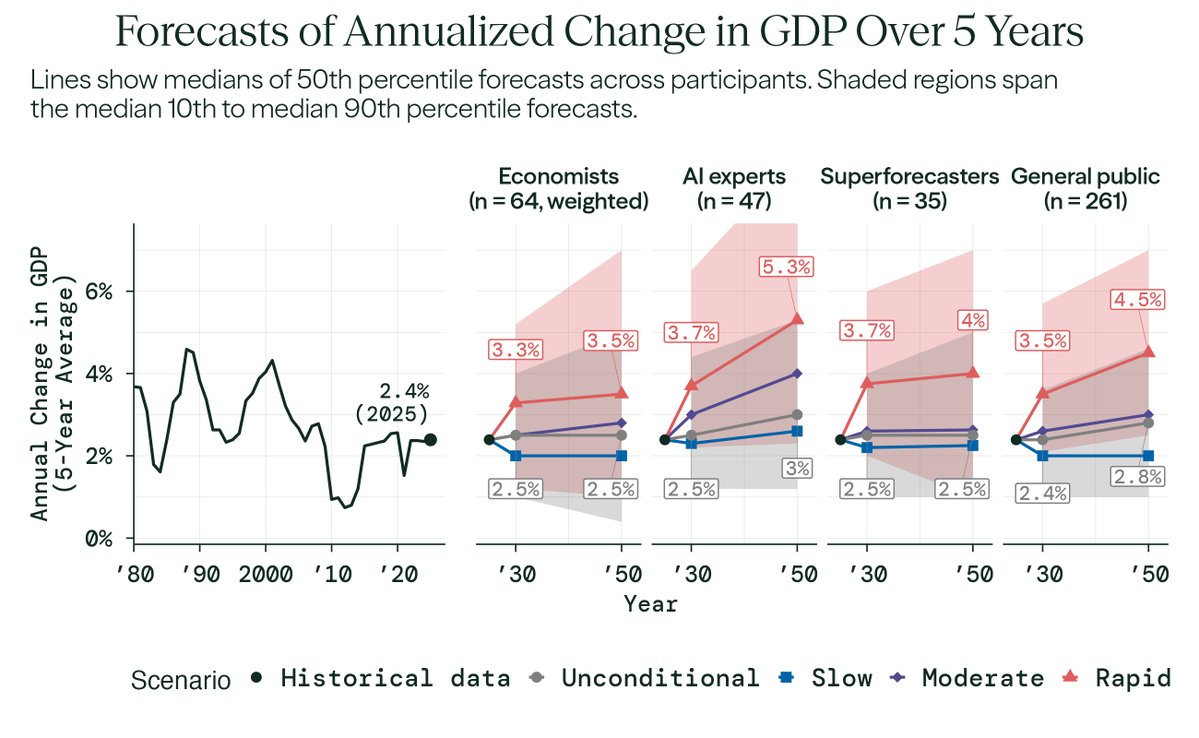
    All AI policy is haunted by a failure of imagination. It is either nothing happens or apotheosis, people can’t seem to conceive of any other futures. It is amazing to predict massive AI development and expect nothing major to change in employment or productivity.

    → View original post on X — @emollick