AI Dynamics

Global AI News Aggregator

About

CODE

  • Building AI Apps with Pokee_AI and Replit Tools

    I didn’t make it clear. Built the two apps with @Pokee_AI Replit does a bunch of other stuff. The more tools we learn the more we are able to build.

    → View original post on X — @scobleizer

  • Building Weather Apps with X API and Replit
    Building Weather Apps with X API and Replit

    Met a founding engineer today from @Replit
    . Jen Li. We were both judging the @Pokee_AI hackathon. They have me some credits and I built two apps in 20 minutes using the X API:a weather one which mapped storms being reported in by my climate scientist list and another monitoring

    → View original post on X — @scobleizer

  • Karpathy’s LLM Knowledge Base System and the Future of Memory Infrastructure

    Karpathy posted a long thread about his most frequent use cases with LLMs recently. Not writing code, but building knowledge bases. The approach is quite hardcore: he dumps papers, articles, code repositories and other materials into a folder, then lets an LLM "compile" them into a Markdown wiki. The wiki includes summaries, backlinks, concept categorization, and articles linked to each other. The frontend uses Obsidian for viewing, and Q&A also has the LLM retrieve against the wiki. In his own words, most token consumption now isn't in manipulating code, but in manipulating knowledge. This shift is quite interesting. The entire system can also maintain itself. He wrote some LLM "health check" scripts that periodically scan the wiki for contradictory data, missing information, and potential connections, letting the LLM patch itself. The results from each Q&A can also be archived back into the wiki, making it thicker with each use. Actually, Karpathy clarified something that's happening right now: the greatest value of LLMs might not be helping you generate content, but helping you manage knowledge. But the last sentence of his post is the most worth pondering: "I think there is room here for an incredible new product instead of a hacky collection of scripts." He himself knows this system is hacked together from scripts. Obsidian + command line + manual processes—it works, but it's just a demo. And there are several problems he probably felt:
    The wiki is local Markdown files, tied to the computer—it breaks when you switch machines. Retrieval relies on the LLM's own maintained indexes and summaries; he said around 400K words it still holds up, but beyond that? He even said "I thought I had to reach for fancy RAG," just that the scale hasn't reached that point yet. A more fundamental problem is that the wiki stores knowledge, but not memory. What does that mean? Knowledge is "domain X has these concepts, and their relationships are like this." Memory is "I just read a paper last week that refutes this viewpoint, and my judgment on this direction changed." One is static, one walks with you. Karpathy's system can help you store things and search things, but it doesn't know you've changed.
    This is actually the difference between a knowledge base and a memory system. The gap isn't a better script—it's an entire architecture. The model can't just "store" and "search"; it needs to sense which information is relevant to who you are now, needs to evolve itself as you use it, needs to maintain coherence across projects and timelines. Karpathy proved with a hand-rolled solution that this direction is right. But he also proved firsthand that you can't go far with just file systems and prompts. Memory needs to be infrastructure, not a collection of scripts. [Translated from EN to English]

    → View original post on X — @elliotchen100, 2026-04-05 04:31 UTC

  • README-Driven Development with Claude Code for Tool Building

    I built this one using README-driven-development: I hand crafted a detailed README describing exactly how the tool should work… then dumped that into Claude Code and told it to build it gisthost.github.io/?d4b1a398…

    → View original post on X — @simonw, 2026-04-05 04:20 UTC

  • SWE-MiniSandbox: Container-Free RL for Software Engineering Agents
    SWE-MiniSandbox: Container-Free RL for Software Engineering Agents

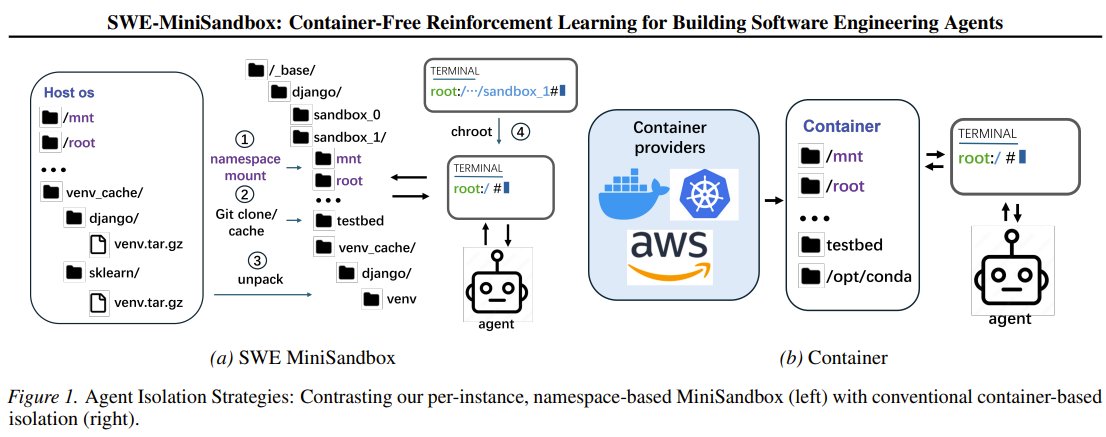
    What if you could train AI software engineers faster, without the heavy overhead of containers? Researchers from Peking University, Ant Groupe, and The University of Hong Kong present SWE-MiniSandbox. This novel, container-free method uses kernel-level isolation and lightweight pre-caching, eliminating bulky container images for reinforcement learning. It achieves comparable performance to container-based pipelines while reducing disk usage by 95% and environment setup time by 75%, making scalable RL training far more accessible for software engineering agents. SWE-MiniSandbox: Container-Free Reinforcement Learning for Building Software Engineering Agents Paper: arxiv.org/abs/2602.11210 Code: github.com/lblankl/SWE-MiniS… Docs: lblankl.github.io/SWE-MiniSa… Our report: mp.weixin.qq.com/s/NlQLprZmM… 📬 #PapersAccepted by Jiqizhixin

    → View original post on X — @jiqizhixin, 2026-04-05 04:00 UTC

  • Codex App Server Enables Easy Agentic App Development

    Codex app server makes it easy to build your own agentic apps: am.will (@LLMJunky) The Codex app server was such a brilliant stroke of foresight that really doesn't get enough love Not only are you allowed to use your chatgpt account with any harness, but you can build your own apps directly on top of theirs. They just make building on and with codex such a great experience To demonstrate this utility, I want to highlight the kitty litter app, made by @SIGKITTEN. Instead of having to build the entire harness, and all the infrastructure, he's plugged into the app server for a unified experience between mobile and dev machine. When I create a session on my computer, it's automatically available on my phone. All of the chats you see in this video automatically populated when we connected to the app server. All my skills. My agents. My sessions. My folders. My prompts. They're all ready to use – automatically. Because they're exposed by the app server, along with many other endpoints. It's a great ux/dx that really deserves some love. It's almost like they want you to build on top of their products 😉 Btw Litter is great 👍 — https://nitter.net/LLMJunky/status/2040506388292546761#m

    → View original post on X — @gdb, 2026-04-05 03:18 UTC

  • Codex and Claude Agent SDK Server Limitations Discussed

    Codex app server is limited in its own ways, unfortunately – it does too much server-side which limits what one can do with it. (Claude Agent SDK has it's own silly limitations too; no-one has actually got this right yet.)

    → View original post on X — @jeremyphoward

  • chat.sakana.ai Weekend Usage Report and Creative Applications
    chat.sakana.ai Weekend Usage Report and Creative Applications

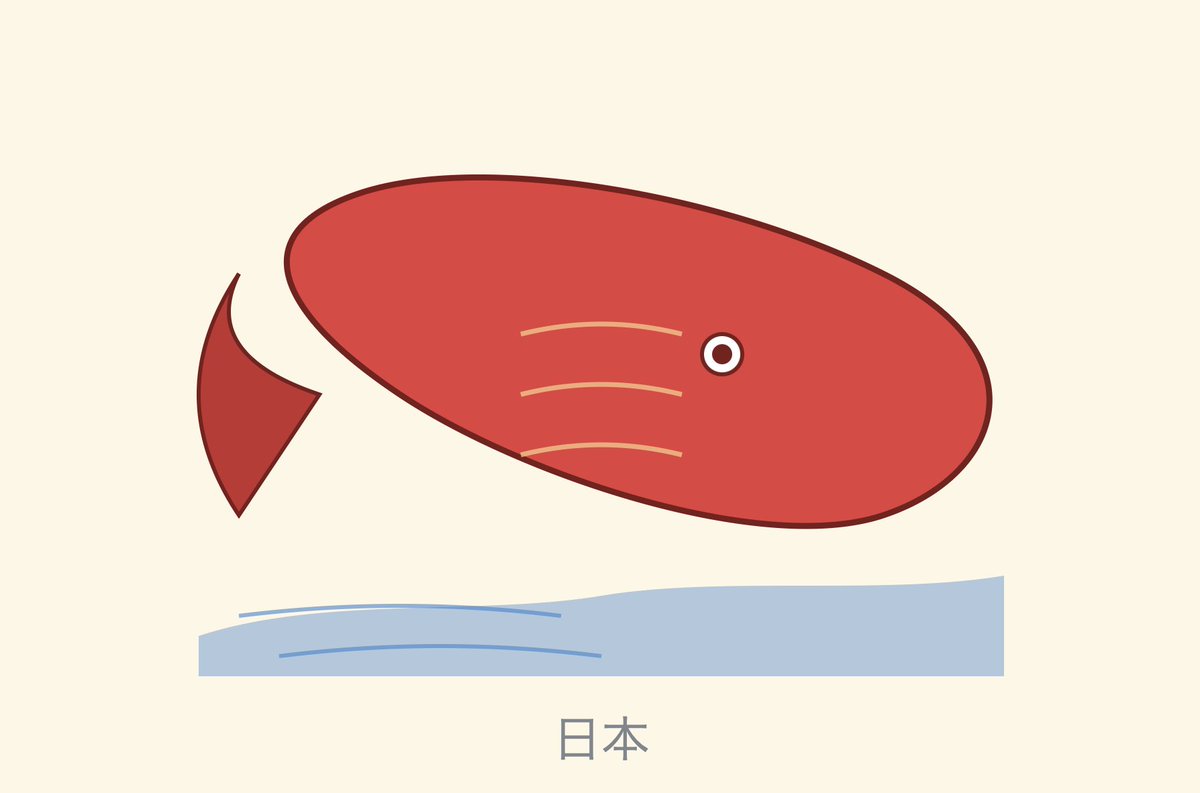
    Thank you so much for using chat.sakana.ai over the weekend! 🐟 From everyday research to programming rubber-ducking, and even creative uses like "having it write SVG code for an abstract Japanese fish" as shown in the attachment, it seems everyone is using it in various ways. (The image is the rendering result of code written by Namazu 🎨) If you have any helpful answers or interesting use cases like "this response was convenient!" or "this was a fun way to use it!", please let us know with a screenshot via reply or quote repost! ✨ [Translated from EN to English]

    → View original post on X — @sakanaailabs, 2026-04-05 02:23 UTC

  • Liberate OpenClaw with Open and Local Models from Hugging Face

    Liberate your @openclaw with an open model or local model with these tools from our friend @ClementDelangue and team at @huggingface 🦞 huggingface.co/blog/liberate…

    → View original post on X — @ceobillionaire, 2026-04-05 01:08 UTC

  • Abstract Fish in Japan Generated in Pure SVG Code
    Abstract Fish in Japan Generated in Pure SVG Code

    "An Abstract Fish in Japan" (Pure SVG code generated by Sakana Chat) [Translated from EN to English]

    → View original post on X — @hardmaru, 2026-04-05 00:32 UTC