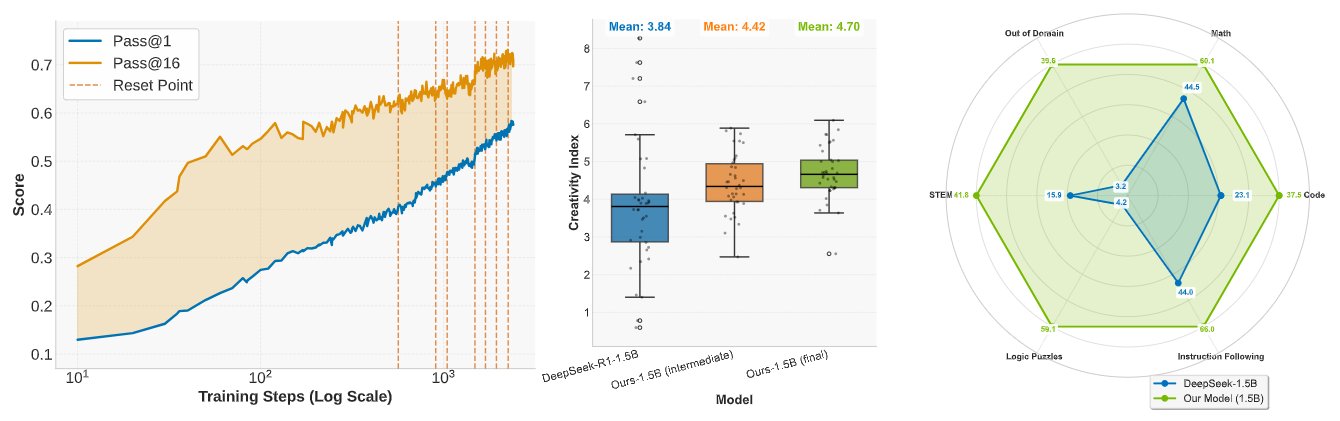
ProRL: Prolonged Reinforcement Learning Expands Reasoning Boundaries in Large Language Models This paper introduces ProRL, a method that uses long-horizon reinforcement learning to unlock new reasoning strategies in LLMs—strategies that base models cannot access, even with
@askalphaxiv
-
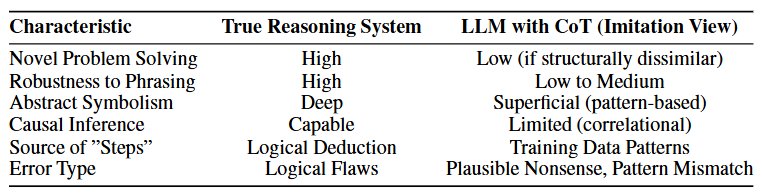
Chain-of-Thought Prompting: Constraint Mimicry Over True Reasoning
By
–
CoT is Not True Reasoning, It Is Just a Tight Constraint to Imitate: A Theory Perspective This paper challenges the idea that Chain-of-Thought (CoT) prompting enables true reasoning in LLMs, arguing instead that CoT acts as a structural constraint that guides models to imitate
-
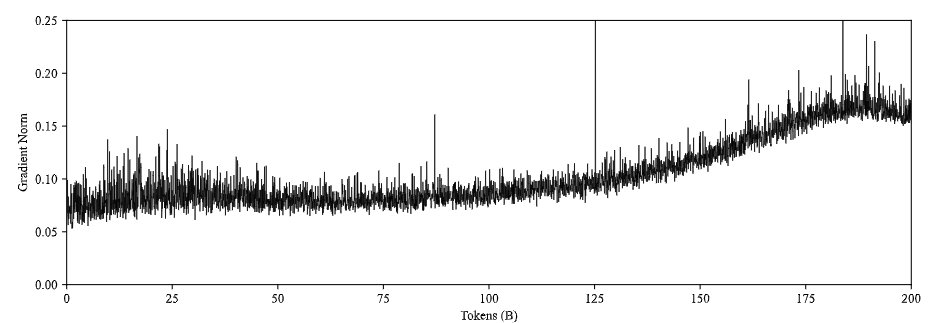
Gradient Surge in LLM Training: Weight Decay and Normalization
By
–
Why Gradients Rapidly Increase Near the End of Training This note investigates a sudden rise in gradient norms during the late stages of LLM training and identifies a surprising cause: the interplay between weight decay, normalization layers, and scheduled learning rate decay.
-
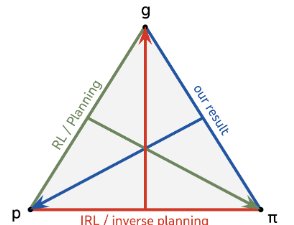
General agents require world models for reliable task completion
By
–
General agents need world models This paper proves that any general agent capable of reliably completing diverse, goal-directed tasks must implicitly learn a predictive model of its environment—challenging the notion that model-free learning is sufficient for general
-

High-Entropy Tokens Drive LLM Reasoning via Reinforcement Learning
By
–
Beyond the 80/20 Rule: High-Entropy Minority Tokens Drive Effective Reinforcement Learning for LLM Reasoning This paper investigates how a small subset of high-entropy tokens—termed "forking tokens"—drives the performance of reinforcement learning with verifiable rewards (RLVR)
-
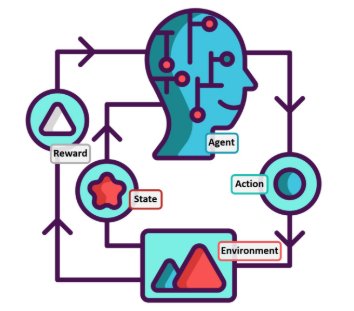
CPGD: Stabilizing Rule-Based Reinforcement Learning for Language Models
By
–
CPGD: Toward Stable Rule-based Reinforcement Learning for Language Models CPGD introduces a novel reinforcement learning algorithm designed to stabilize policy updates for language models trained with rule-based rewards, addressing instability and training collapse issues found
-

vec2vec: Unsupervised Text Embedding Translation Method
By
–
Harnessing the Universal Geometry of Embeddings This work introduces vec2vec, the first unsupervised method to translate text embeddings between different vector spaces without any paired data, encoders, or predefined matches, by leveraging a universal latent semantic
-
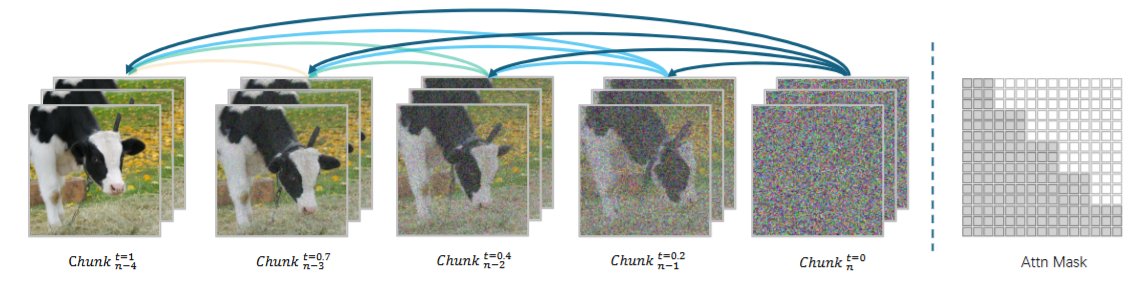
MAGI-1: Large-Scale Autoregressive Video Generation Model
By
–
MAGI-1: Autoregressive Generation at Scale MAGI-1 is a large-scale autoregressive video generation model that produces videos by generating fixed-length chunks of consecutive frames with diffusion, enabling efficient, streaming-capable, and temporally consistent video
-
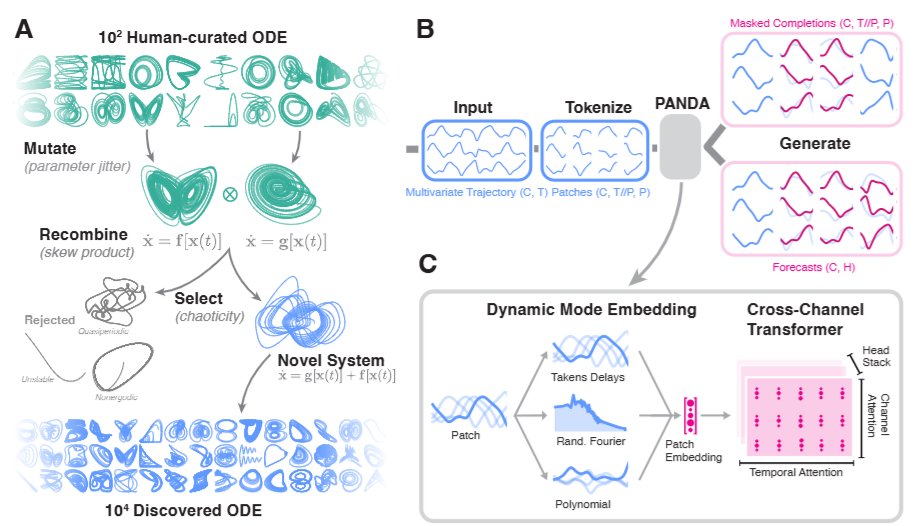
Panda: Pretrained Model for Chaotic Dynamics Forecasting
By
–
Panda: A pretrained forecast model for universal representation of chaotic dynamics Panda is a pretrained attention-based model trained solely on synthetic chaotic systems, capable of zero-shot forecasting across diverse, unseen real-world dynamical systems, including PDEs it
-

MMaDA: Multimodal Diffusion Language Models for Reasoning
By
–
MMaDA: Multimodal Large Diffusion Language Models MMaDA introduces a new class of multimodal diffusion models that unify reasoning and generation across text and vision, achieving state-of-the-art performance in both understanding and generation tasks. Problem: Existing