1/4: A couple notes on the implementation. The async RL training itself is powered by SkyRL, with the research agent’s goal being resolving setup issues (in this case a libnuma dependency) and analyzing runs autonomously.
@askalphaxiv
-
GLM 5.2: First high-performance open-weights model for auto-research
By
–
Introducing GLM 5.2 for autoresearch
— alphaXiv (@askalphaxiv) 22 juin 2026
GLM 5.2 is the first open weights model we've tried on our autoresearch pipeline that's proven capable for real research tasks.
With Fable 5's restrictions on research, having an open weights alternative is a huge win for open source
Watch… pic.twitter.com/y0kBtJzj5KIntroducing GLM 5.2 for auto-research. GLM 5.2 is the first open-weights model we tested on our auto-research pipeline that proved capable for real research tasks. With Fable 5's restrictions on research, having a
-
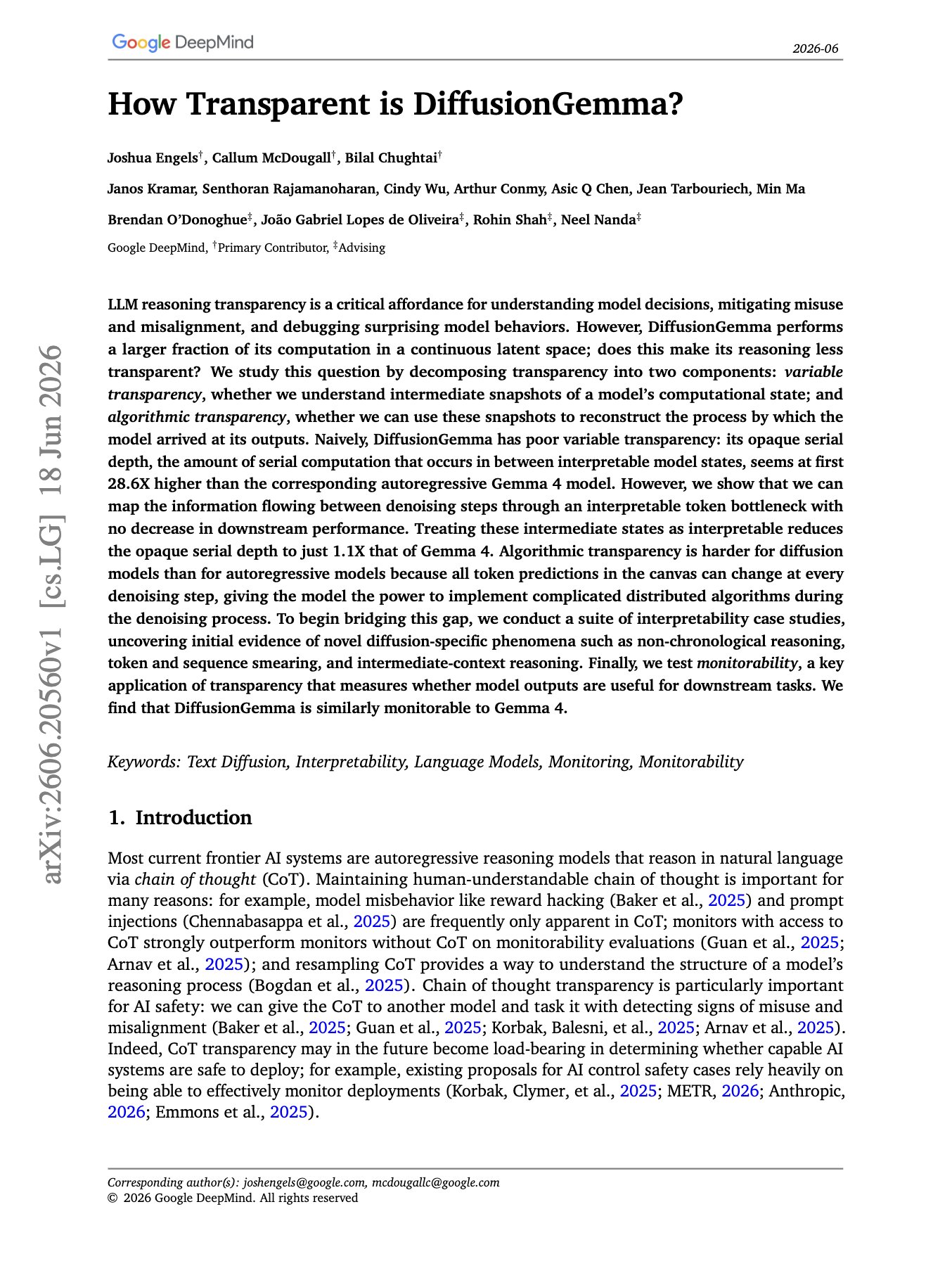
Question on DiffusionGemma’s transparency and hidden reasoning
By
–
What is the transparency of DiffusionGemma? Given how diffusion language models (Diffusion LMs) denoise tokens instead of generating them left to right, there is a concern about how reasoning will be hidden in
-

Fixed Point Reasoners for Stable and Adaptive Looped Transformers
By
–
« Fixed Point Reasoners: Stable and Adaptive Deep Looped Transformers » While Looped Transformers can devote more depth to harder problems, they still need a good method to know when to stop. This article makes of
-

Do as I Do: Dexerous Manipulation Data from Everyday Human Videos
By
–
“Do as I Do: Dexterous Manipulation Data from Everyday Human Videos” With how robot dexterity is bottlenecked by data as teleoperation and MoCap are expensive and internet videos are only observational, this paper turns normal RGB human videos into executable robot hand
-

Research on anthropomorphic misalignment requires stronger evidence
By
–
« Position: Research on anthropomorphic misalignment needs stronger evidence » AI safety papers often claim that models are deceptive, calculating, or concerned with self-preservation, but many results do not show
-
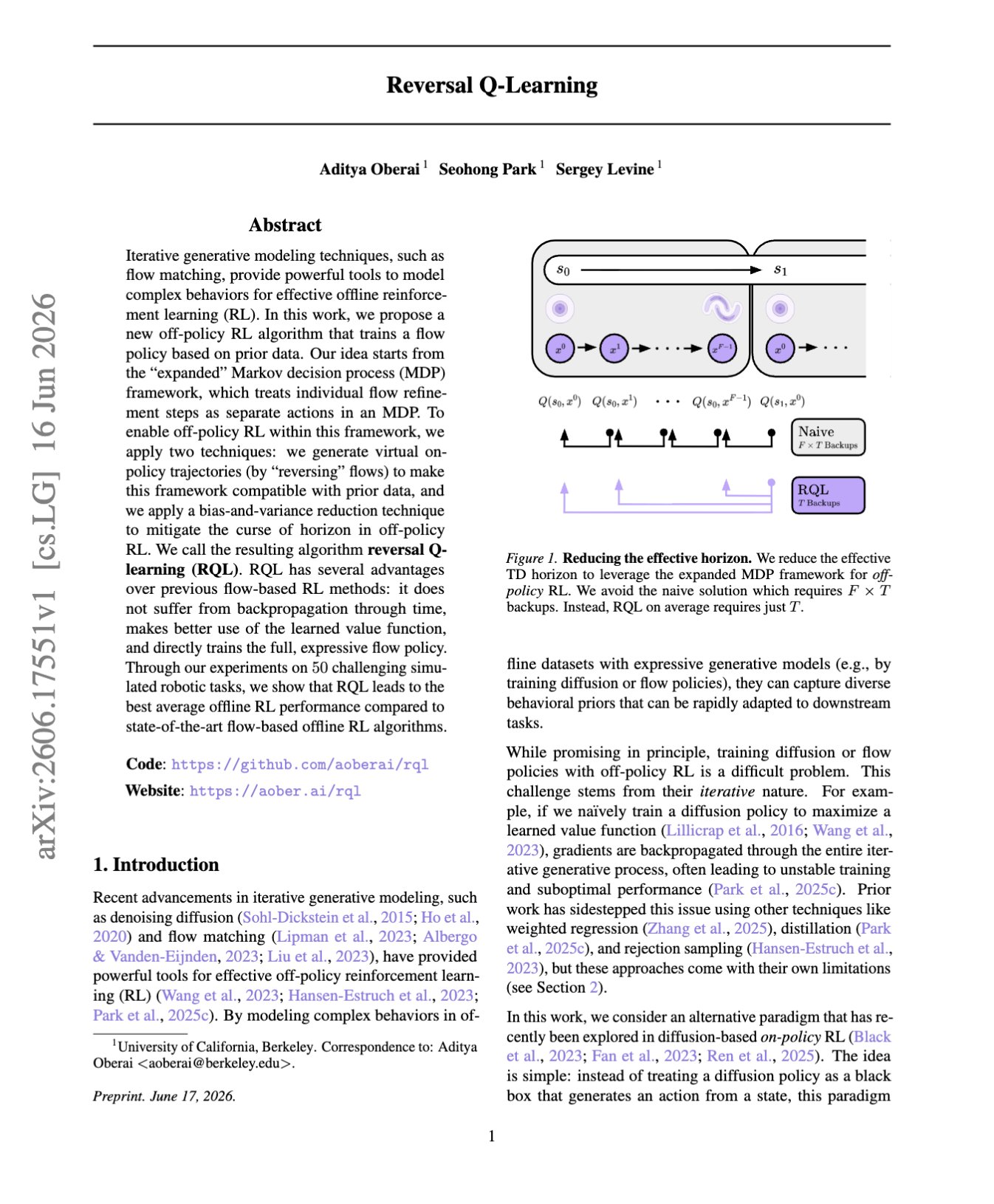
Q-Learning by Inversion for Flow Policies in Offline RL
By
–
Q-Learning by Inversion. Flow policies should be excellent for offline RL, but their iterative generation of actions makes RL training painful. This paper transforms each flow step into an RL step, then uses inversion to recover
-
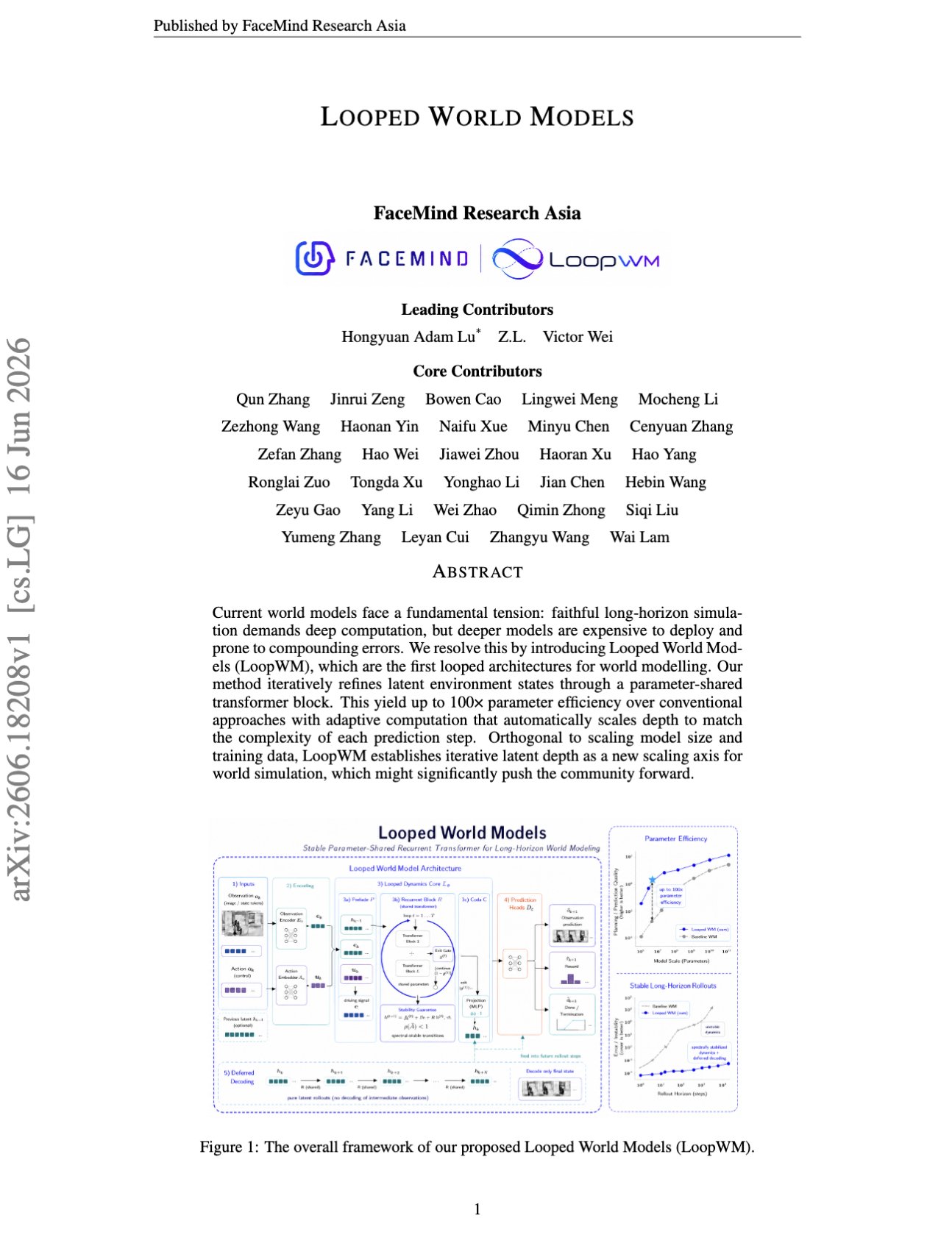
Making Depth Reusable by Looping World Models
By
–
“World Models in a Loop” World models require deep computations for stable long-horizon simulation, but deeper models are costly and errors accumulate over deployments. This paper makes depth reusable by looping
-
Research agents excel at resolving implementation issues, not novel discoveries
By
–
1/N Model capabilities today are subpar for end-to-end autonomous research, what we would categorize as the ability to make “novel discoveries”. However, in our experimentation, research agents have proven to be an excellent way to resolve implementation issues and carry out
-
Presentation of auto-search for arXiv articles via autoarxiv
By
–
Introducing autoresearch for arXiv papers
— alphaXiv (@askalphaxiv) 18 juin 2026
Change 'arxiv' to 'autoarxiv' in any paper URL
An agent deploys to resolve setup issues on the codebase, run a minimal reproduction, and estimate full replication cost. Read more below pic.twitter.com/2UHVqbT7EuPresentation of auto-search for arXiv articles. Replace 'arxiv' with 'autoarxiv' in any article URL. An agent deploys to resolve configuration problems in the codebase, run a minimal reproduction, and estimate the replication cost.