so…. Qwen3.5 or Gemma 4?
TOOLS
-

EasySteer: Unified Framework for High-Performance LLM Steering
By
–
Want to precisely control your LLM's behavior without expensive retraining? New research from Zhejiang University unveils EasySteer, a unified framework for high-performance and extensible LLM steering. It's a unified framework that lets you finely tune LLM responses in real-time by subtly adjusting their internal 'thoughts' or hidden states. This lightweight method offers modular control and pre-computed steering options, sidestepping costly model retraining. EasySteer achieves a game-changing 10.8-22.3x speedup over current methods. It dramatically reduces common LLM issues like overthinking and hallucinations, making advanced steering a robust, production-ready tool for deployable, controllable language models. EasySteer: A Unified Framework for High-Performance and Extensible LLM Steering Paper: arxiv.org/abs/2509.25175 Code: github.com/ZJU-REAL/EasyStee… Our report: mp.weixin.qq.com/s/dxuJHvXOf… 📬 #PapersAccepted by Jiqizhixin
→ View original post on X — @jiqizhixin, 2026-04-04 14:53 UTC
-
Gemma 4 directs SAM 3 and RF-DETR for local video analysis
By
–
Gemma 4 watches raw video. Understands the scene. Then prompts SAM 3 to segment and RF-DETR to track.
— Maziyar PANAHI (@MaziyarPanahi) 4 avril 2026
One AI directing two others. Fighter jets. Crowds. Aerial defense footage.
All three models running locally on a MacBook. No cloud.
What scene should I point this at next? pic.twitter.com/vNVgVloAGBGemma 4 watches raw video. Understands the scene. Then prompts SAM 3 to segment and RF-DETR to track. One AI directing two others. Fighter jets. Crowds. Aerial defense footage. All three models running locally on a MacBook. No cloud. What scene should I point this at next?
→ View original post on X — @huggingface, 2026-04-04 14:44 UTC
-
RPG UI Design Pattern for Agent Onboarding and Feature Discovery
By
–
haha RGP UI overlaid on custom GPTs https://t.co/io9qxaurmC pic.twitter.com/Z1y0zrXD2Q
— Yohei (@yoheinakajima) 4 avril 2026haha RGP UI overlaid on custom GPTs Yohei (@yoheinakajima) agents can do everything*, which causes a UX problem, your users have vastly different experiences, some better and some worse thinking like an RPG can help here when you start an RPG game, you start with one weapon, and you learn to fight with it. as you progress, you pick up and learn new weapons. and by the final boss, you can wield all the weapons to defeat him. very rewarding if you'd started the game with all the weapons, it would be too overwhelming, you wouldn't know which weapon to learn first, and you'd probably stop this isn't a new idea, but i've used a few tools recently that reminded me of this latter experience *not everything of course, but you get the point — https://nitter.net/yoheinakajima/status/2040155808491835753#m
→ View original post on X — @yoheinakajima, 2026-04-04 14:44 UTC
-
Frontier Labs May Cut APIs in Compute-Constrained Future
By
–
I think it’s @NaveenGRao who said it before but wouldn’t be surprised if the frontier labs cut their APIs entirely at some point. In a compute constrained world, they’ll always prioritize their own direct products/customers. Makes it scary and unsustainable to only build on top
-
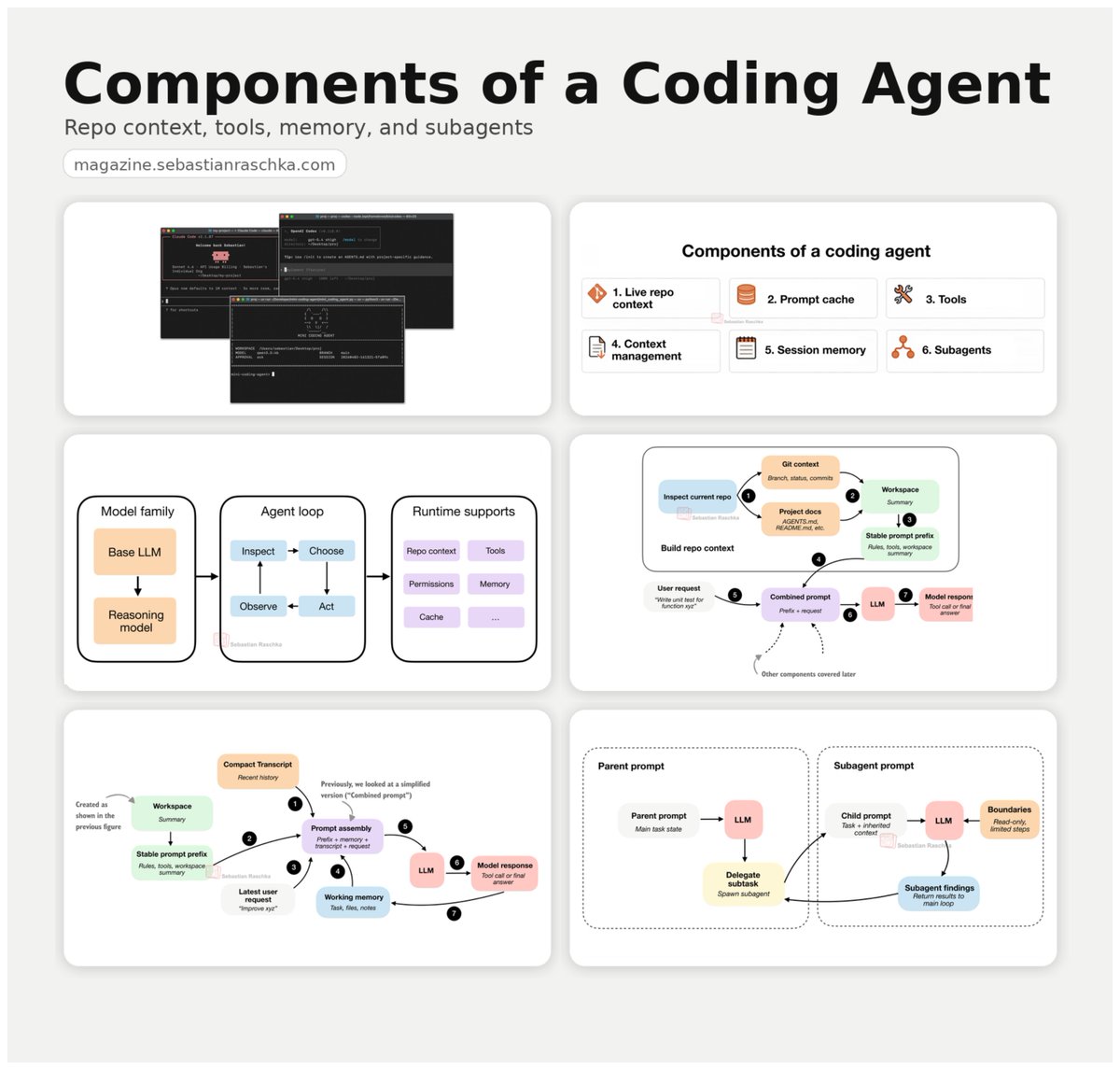
Building Blocks of Coding Agents: Context, Tools, Memory
By
–
Components of a coding agent: a little write-up on the building blocks behind coding agents, from repo context and tool use to memory and delegation. Link: magazine.sebastianraschka.co…
→ View original post on X — @randal_olson, 2026-04-04 13:37 UTC
-
AI Shifts Focus from Creation to Decision-Making and Strategy
By
–
AI is rapidly shifting roles from creators to decision-makers as tools now handle coding, design, and execution in minutes with minimal input. The real change isn’t just automation, it’s how quickly ideas can turn into fully working products without traditional skill barriers. pic.twitter.com/toZgoqRgy5
— Satya Mallick (@LearnOpenCV) 4 avril 2026AI is rapidly shifting roles from creators to decision-makers as tools now handle coding, design, and execution in minutes with minimal input. The real change isn’t just automation, it’s how quickly ideas can turn into fully working products without traditional skill barriers.
→ View original post on X — @learnopencv, 2026-04-04 13:32 UTC
-

8 Building Blocks of Effective Claude Prompts
By
–
The anatomy of a Claude prompt: The difference between a mediocre Claude output and a great one almost always comes down to how you structure your prompt. Not the specific words you choose. Not some secret phrasing. Just a clear, repeatable structure that gives Claude exactly what it needs to do the job well. Here's how a well-built Claude prompt breaks down into 8 building blocks, each doing one job: 1️⃣ Role Tell Claude who it is before telling it what to do. "You are a [ROLE] with expertise in [DOMAIN]. Your tone should be [TONE]. Your audience is [AUDIENCE]." Setting a role in the system prompt changes how Claude reasons, what it prioritizes, and how it communicates. A "senior backend engineer" writes differently than a "technical copywriter," and Claude picks up on that distinction immediately. 2️⃣ Task State what you want and what success looks like, in the same breath. "I need you to [SPECIFIC TASK] so that [SUCCESS CRITERIA]." The "so that" part is what people skip, and it's the part that matters. It gives Claude a way to evaluate its own output. Without it, Claude is guessing what "good" means. Be direct, skip the preamble, and cut the fluff. 3️⃣ Context This is where you feed Claude everything it needs to do the job well. Wrap it in XML tags like <context> and </context>, then paste your documents, data, or background inside. One thing that dramatically improves quality: put long documents at the top of your prompt and your actual query at the end. Anthropic's own testing shows this can improve response quality by up to 30%, especially with complex, multi-document inputs. 4️⃣ Examples Nothing steers output quality like showing Claude what "good" looks like. Provide 3-5 input/output pairs. Cover normal cases AND edge cases. Wrap them in <examples> tags so Claude doesn't confuse them with instructions. Claude pays extremely close attention to examples. If your example has a quirk you didn't intend, Claude will replicate it. So make sure every example models the behavior you actually want. 5️⃣ Thinking For anything requiring reasoning, analysis, or multi-step logic, ask Claude to think before answering. "Before answering, think through this step by step. Use <thinking> tags for your reasoning. Put only your final answer in <answer> tags." This separates the messy reasoning from the clean output. You get to see how Claude arrived at its answer without that reasoning cluttering the final result. 6️⃣ Constraints Every good prompt has guardrails. "Never [thing to avoid]. Always [thing to ensure]. If you are about to break a rule, stop and tell me." That last line is underrated. It turns Claude into a collaborator instead of a blind executor. Instead of silently violating a constraint, Claude flags the conflict and lets you decide. 7️⃣ Output Format Don't leave the format to chance. "Return your response as [JSON / markdown / table / prose]. Use this exact structure: [structure template]." If you want JSON, show the exact schema. If you want markdown, show the heading structure. If you want a table, define the columns. The more specific you are about shape, the less time you spend reformatting afterward. 8️⃣ Prefill This one is API-specific, but incredibly powerful. You can pre-fill the start of Claude's response to skip preamble and lock in the format. Claude will continue from exactly where you left off. No "Sure, I'd be happy to help!" opening, no throat-clearing, just clean output from the first token. Here's the thing people get wrong about prompting: they think it's about finding the right words. It's actually about giving Claude the right structure. If you want to go deeper, I wrote a detailed article covering the anatomy of the .claude/ folder, a complete guide to CLAUDE(.)md, hooks, skills, agents, and permissions, and how to set them all up properly. Link in the next tweet.
→ View original post on X — @akshay_pachaar, 2026-04-04 13:02 UTC
-
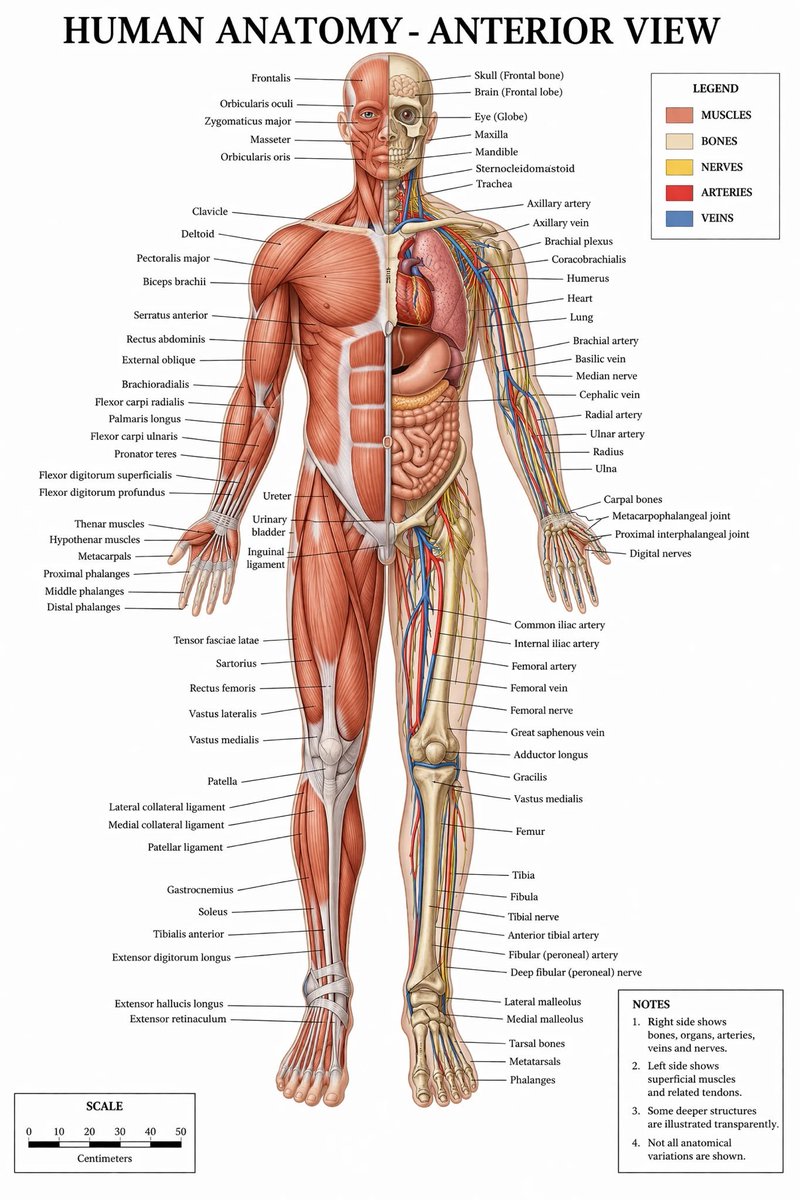
OpenAI Reveals GPT-Image-2 with Flawless Text Rendering
By
–


🚨 LEAK ALERT 🚨 OpenAI's new image model GPT-Image-2 just quietly dropped on @arena. Early tests show INSANE world knowledge and flawless text rendering. Better than @NanoBanana Pro! It's on @arena under code names:
→ maskingtape-alpha
→ gaffertape-alpha
→ packingtape-alpha [Translated from EN to English] -
10 prompts that transformed my life with Claude
By
–
After 3 years of using Claude, I can say that it's the technology that has revolutionized my life the most, along with the Internet. Here are 10 prompts that transformed my daily life and can do the same for you: [Bookmark so you don't lose it!]