Flexibility is becoming the real bottleneck in automation – not speed. Watching systems like this in action makes it clear:
Robots can already move with incredible precision and velocity.
What’s harder is designing operations, software, and infrastructure that can adapt just as
SYSTEMS
-

Flexibility, Not Speed, Is Automation’s Real Bottleneck
By
–
-

RL Environments Critical as Agents Move to Production
By
–
🤿 ICYMI: Agents don’t learn in the abstract — they learn by interacting with environments.
— Snorkel AI (@SnorkelAI) 12 décembre 2025
This post on RL environments is more relevant than ever as agents move into production and evaluation gets harder. pic.twitter.com/P96EfkYyBcICYMI: Agents don’t learn in the abstract — they learn by interacting with environments. This post on RL environments is more relevant than ever as agents move into production and evaluation gets harder.
-
Early adopters beat better chips through better data
By
–
Early adopters beat better chips. Early adopters fed better data to systems. Something I have known for a long time. Open AI has better users. It has better data.
-
FSD works without headlights because cameras see better at night
By
–
FSD works just fine without headlights. Cameras can see way more than you can at night. Take your iPhone out at night. You will see far more in the screen than your eyes can perceive.
-
Odyssey-2 Pro: Intelligent Interactive Real-Time World Model Available Soon
By
–
https://t.co/IrMUUAtjfg https://t.co/8fazB7BxN6
— Robert Scoble (@Scobleizer) 12 décembre 2025Say hi to Odyssey-2 Pro—our most intelligent, interactive, and general-purpose world model yet. Every pixel is generated in real-time, and frame-by-frame the model simulates the world forward. Today for minutes, soon for hours. Available to developers and our API very soon.
-
NeurIPS 2025 Breakdown: Papers, Datasets, Workshops, Environments
By
–
Dive into the full #NeurIPS2025 breakdown — papers, datasets, workshop moments, and why environments will define 2026.
-
Scobleizer uses AI to analyze news feeds for media business insights
By
–
How can AI (er, a cognitive architecture) analyze the news? I had @blevlabs analyze my three news feeds just now. Wow. Brayden and I are analyzing the 61 lists to see what value is there for building a new kind of media business. Next I'm taking the PDF over to @NotebookLM
-
AI run operating system controls Mac, Windows, Linux like a human
By
–
The AI run operating system.@qinzytech shows me how AI will control our computers and bring a new way of computing to our homes and businesses.
— Robert Scoble (@Scobleizer) 10 décembre 2025
Such an honor to have him in my home yesterday.
It lets AI agents run Macintosh, Windows, and Linux boxes like a human can.
But I… pic.twitter.com/QZ4HohVodCThe AI run operating system. @qinzytech shows me how AI will control our computers and bring a new way of computing to our homes and businesses. Such an honor to have him in my home yesterday. It lets AI agents run Macintosh, Windows, and Linux boxes like a human can. But I
-
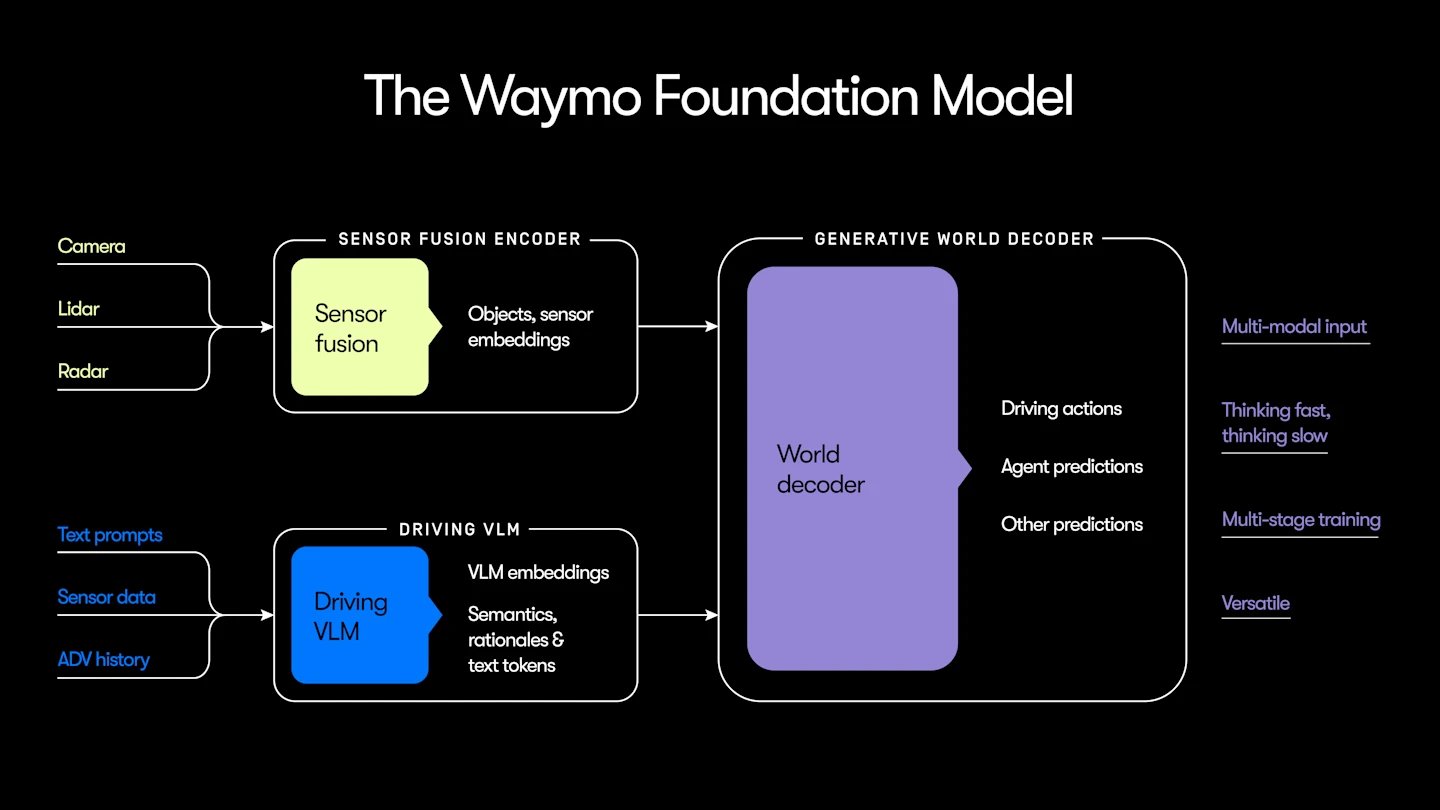
Waymo’s Use of Large Models and GOFE in Autonomous Driving
By
–
My sense is that @Waymo has been using large models for awhile (plus lots of GOFE for sensor pre-processing, system bootstrapping, data avalanching, and ongoing safety). One clue is the “thinking fast and slow” note on the image.
-
Linker Vision Builds Smart Cities with NVIDIA AI Technology
By
–
🏙️ Smart cities don’t happen by accident. They’re built with data.
— NVIDIA AI (@NVIDIAAI) 9 décembre 2025
Linker Vision is helping cities become smarter and more connected using NVIDIA Metropolis, NVIDIA Cosmos, and @nvidiaomniverse, following a simulate-train-deploy workflow – from simulation to AI agents delivering… pic.twitter.com/yfQEOn7KY6Smart cities don’t happen by accident. They’re built with data. Linker Vision is helping cities become smarter and more connected using NVIDIA Metropolis, NVIDIA Cosmos, and @nvidiaomniverse
, following a simulate-train-deploy workflow – from simulation to AI agents delivering