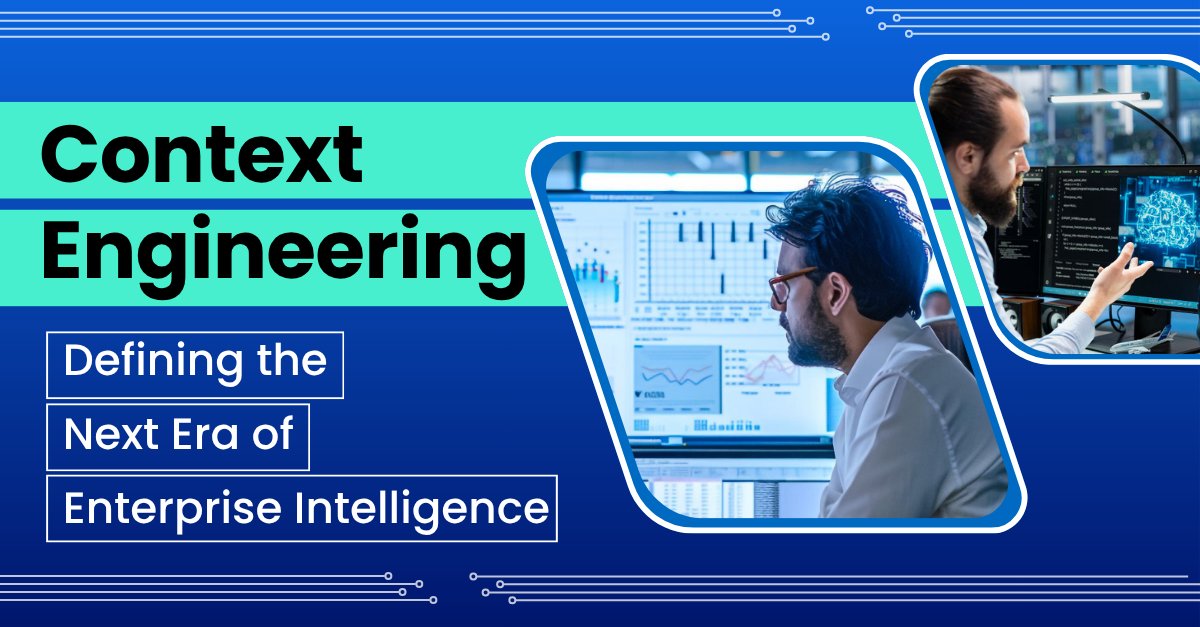
Most teams think “more data = smarter AI.” I make the opposite case: context beats volume. When LLMs are grounded in your company’s own signals—not just the internet—they deliver accurate, explainable decisions at scale. A thread on Context Engineering and why it changes
RESEARCH
-
Building Curated AI and Tech Lists for X Platform
By
–
The secret really is the lists that took me thousands of hours to build. That's where the massive curation is: https://
x.com/scobleizer/lis
ts
… I have the most complete lists of AI and tech here on X. By far. Makes the API cheaper to use too. After that it was just talking to the -
Sakana Marlin: AI Assistant Conducting 8-Hour Deep Research
By
–

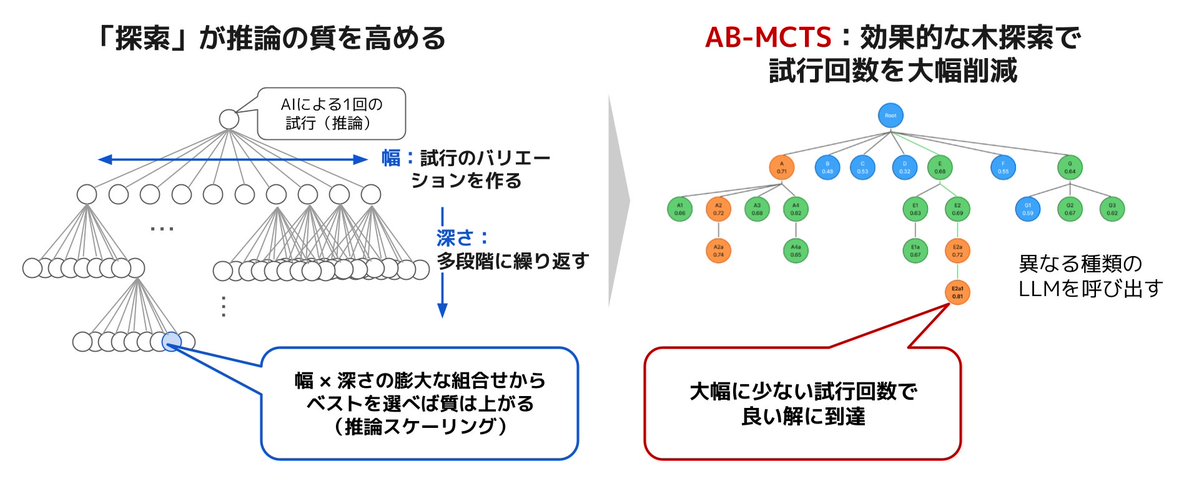
We are recruiting beta testers for Sakana Marlin🎣 This is a highly capable assistant with Deep Research that investigates over 8 hours! Behind this product lies AB-MCTS, the result of pure research projects! This is a product unique to Sakana AI, where research achievements translate into actual products👏 — Sakana AI (@SakanaAILabs) 🐟Ultra Deep Research Assistant "Sakana Marlin" – Now Recruiting Beta Testers🐟 Sakana AI has developed "Sakana Marlin," our first commercial product – an autonomous AI research assistant for business powered by our proprietary agent technology. sakana.ai/marlin-beta Sakana Marlin is an autonomous research assistant based on our unique long-term reasoning technology, capable of completing advanced business research. Key Features
・When given a topic, it autonomously conducts research for nearly 8 hours
・Automatically generates detailed research documents and summary slides
・Designed to replicate professional strategic research that teams of multiple people would conduct over weeks We conceived this solution to leverage AI's full potential to enable sound judgments in complex social situations. This technology fuses insights from "AI Scientist" – the automation of scientific discovery recently published in Nature magazine – with "AB-MCTS" which enables strategic exploration. This achieves "efficient reasoning scaling" where output quality improves the longer the AI thinks. We are conducting a closed beta test targeting those working daily on advanced research: strategy and business planning departments at financial institutions and corporations, consulting firms, think tanks, and similar organizations (free during the beta period). We will continuously improve based on your feedback. ▼ Apply for Closed Beta Tester Status Here
forms.gle/MYHGP1wi2q4PHYPA7 [Translated from EN to English]→ View original post on X — @sakanaailabs, 2026-04-02 08:48 UTC
-
Sakana AI Launches Marlin, AI Research Assistant for Business Beta Testing
By
–

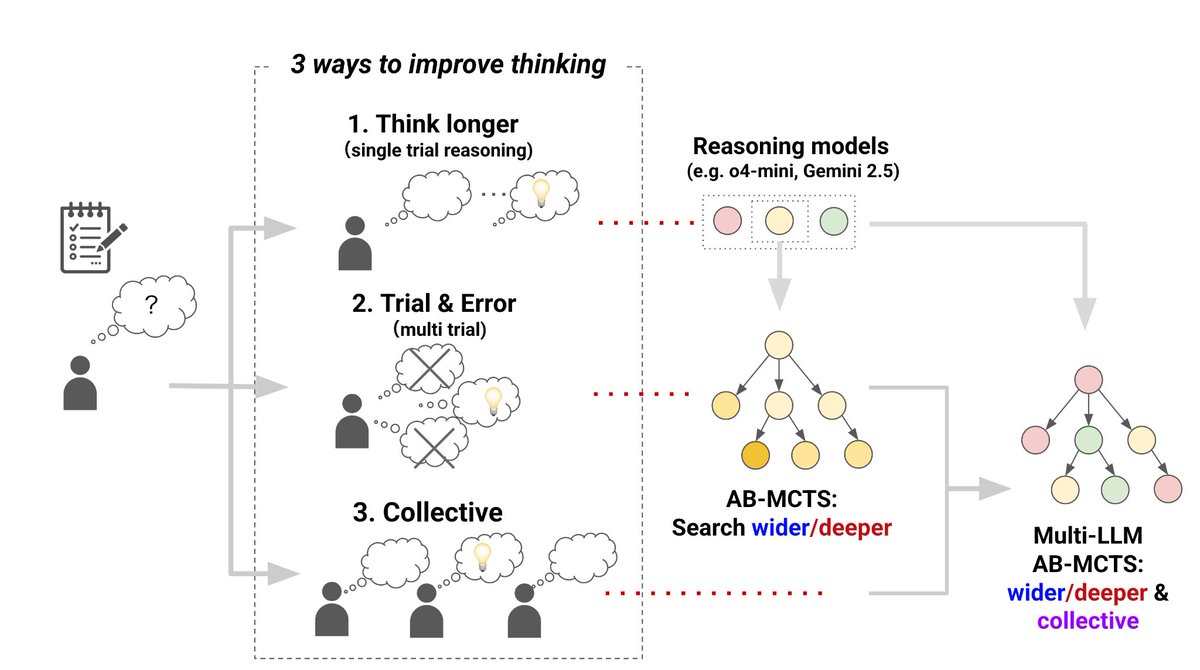
New Ultra Deep Research Assistant Marlin @SakanaAILabs 🐠 Pushing the limits of test-time scaling for automating business-oriented research. It builds on top of AB-MCTS and The AI Scientist! Very excited to see agents scale to real-world applications and long-running workloads. Sign up for beta testing. — 🐟Ultra Deep Research Assistant "Sakana Marlin" – Beta Testers Wanted 🐟 Sakana AI has developed "Sakana Marlin," an AI research assistant for business use powered by proprietary agent technology, as our first commercial product. sakana.ai/marlin-beta Sakana Marlin is an autonomous research assistant based on our proprietary long-horizon reasoning technology for conducting advanced business research. Key Features
・ Conducts autonomous research for nearly 8 hours given a theme
・ Automatically generates detailed research documents and summary slides
・ Designed for professional strategic research that typically takes teams of multiple people several weeks We conceived this solution to maximize AI's potential for making high-quality decisions amid complex global circumstances. This technology fuses insights from "AI Scientist" (automated scientific discovery published in Nature magazine) with "AB-MCTS" (strategic exploration). It realizes "efficient inference scaling" where output quality improves with more reasoning time. Closed Beta Testing
Targeted at professionals in financial institutions, corporations' strategic planning/business development divisions, consulting firms, think tanks, and similar organizations engaged in advanced research daily (free during the beta period). We will continuously improve based on your feedback. ▼ Apply for Closed Beta Testing
forms.gle/MYHGP1wi2q4PHYPA7 [Translated from EN to English]→ View original post on X — @sakanaailabs, 2026-04-02 08:38 UTC
-
Cognitive Architectures Differ From Standard AI Implementations
By
–
Cognitive architectures work far different than what you are using. Not a problem here.
-
LeWorldModel: Stable End-to-End JEPA from Pixels
By
–
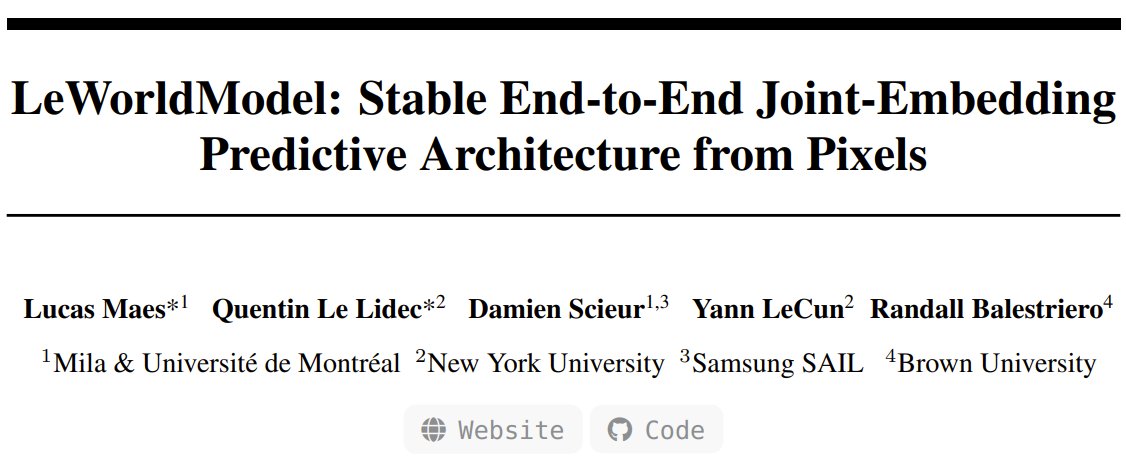
LeWorldModel: Stable End-to-End JEPA from Pixels Paper: https://
le-wm.github.io
Project: https://
arxiv.org/pdf/2603.19312
v1
… Our report: https://
mp.weixin.qq.com/s/VycD8SODNAnH
iLIg4DlZvw
… -
Training AI to Read and Decide Across Conversations
By
–
I taught the AI how to read and decide over many conversations. It is really good at this point. Each section is done differently. I should get it to explain how it works on each section
-

MSA Inference Open Sourced, Ultra Long Memory Attention Mechanism
By
–
MSA's Inference part will be open sourced tomorrow, have a great Friday! Elliot (@elliotchen100) The paper is here. It's called MSA, Memory Sparse Attention. In one sentence, here's what it is: Give large models native ultra-long memory. Not an external retrieval plugin, not brute force context window expansion, but "memory" directly grown into the attention mechanism, trained end-to-end. Why don't past solutions work? RAG's essence is "open book exam". The model doesn't remember anything itself, just flips through notes on the fly. Whether it finds the right info depends on retrieval quality, and speed depends on data volume. Once information is scattered across dozens of documents and requires cross-document reasoning, it falls apart. Linear attention and KV cache's essence is "compressed memory". It remembers, but gets blurrier the more you compress, and gets lost over time. MSA's approach is completely different: → No compression, no external plugins. Instead, teach the model to "focus on what matters" The core is a scalable sparse attention architecture with linear complexity. 10x more memory means computational costs don't explode exponentially. → The model knows "which document this memory comes from and when" Uses document-wise RoPE positional encoding, letting the model naturally understand document boundaries and temporal order. → Can reason across fragmented information Memory Interleaving mechanism enables the model to perform multi-hop reasoning across scattered memory fragments. Not just finding one relevant record, but chaining clues together. The results? · Scales from 16K to 100M tokens with less than 9% accuracy degradation · 4B parameter MSA model outperforms 235B-level top RAG systems on long context benchmarks · Can run 100M token inference on just 2 A800s. This isn't lab-exclusive, it's startup-affordable. Simply put, past large models were geniuses with goldfish memory. What MSA does is let them truly "remember". We put it on GitHub. Algorithm researchers, give it a star if you like it. 🌟👀🙏 github.com/EverMind-AI/MSA — https://nitter.net/elliotchen100/status/2034479369855590660#m [Translated from EN to English]
→ View original post on X — @elliotchen100, 2026-04-02 07:24 UTC
-
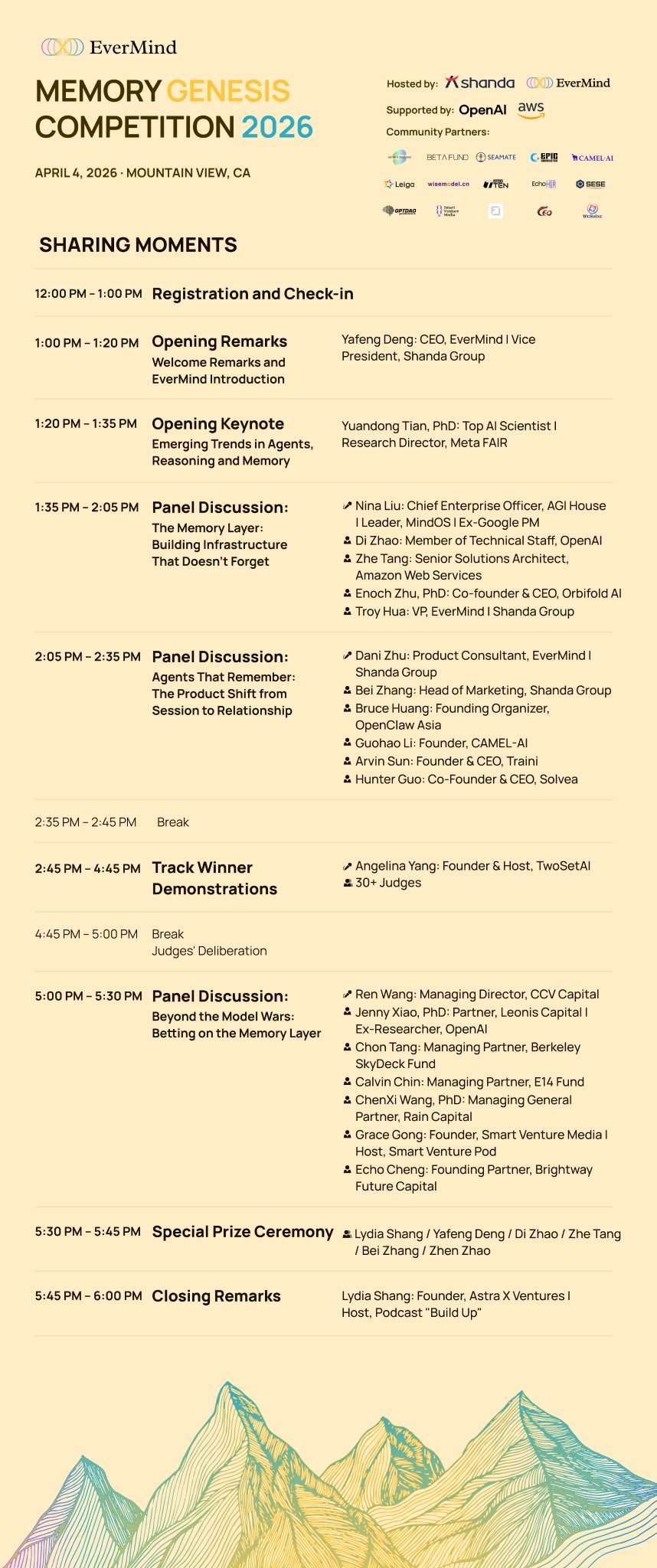
AI Memory Research Meetup Event Bay Area Invitation
By
–
https://
x.com/evermind/statu
s/2037674277219242311
…
bro 在湾区吗?欢迎来活动面基呀,现场都是研究 memory 的大佬们