The analogy is most useful as a response to people who refuse AI on principle. Less useful as a response to people asking legitimate questions about when and how much to trust it.
RESEARCH
-
Point Tracks as Tokens for Complex Motion Forecasting
By
–
What’s the right representation for a world model? 3D, pixels, or something else? Excited to release our new paper “Forecasting Motion in the Wild” where we propose point tracks as tokens for generating complex non-rigid motion and behavior From @GoogleDeepmind @Berkeley_AI @TTIC_Connect
→ View original post on X — @berkeley_ai, 2026-04-02 13:50 UTC
-
Data curation bias undermines AI research integrity
By
–
you curate the data to suit your conclusion
-
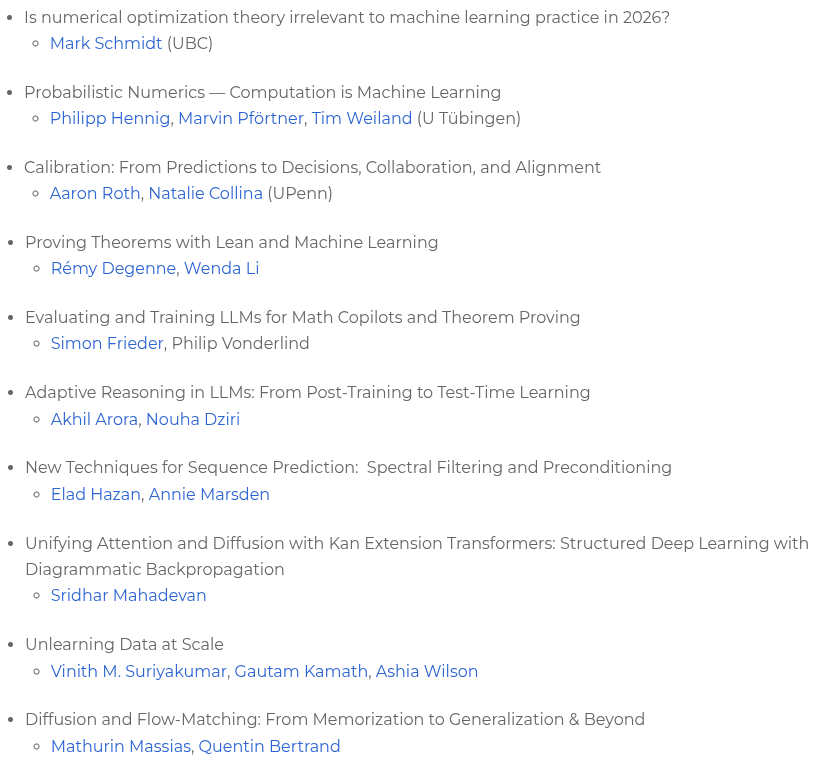
ICML 2026 Tutorials Announced for July 6 Opening Day
By
–
Announcing the #ICML2026 tutorials! All ten tutorials will be presented the first day of the conference, Monday July 6. Read the blog post for more details on the selection process!
→ View original post on X — @thegautamkamath, 2026-04-02 13:43 UTC
-
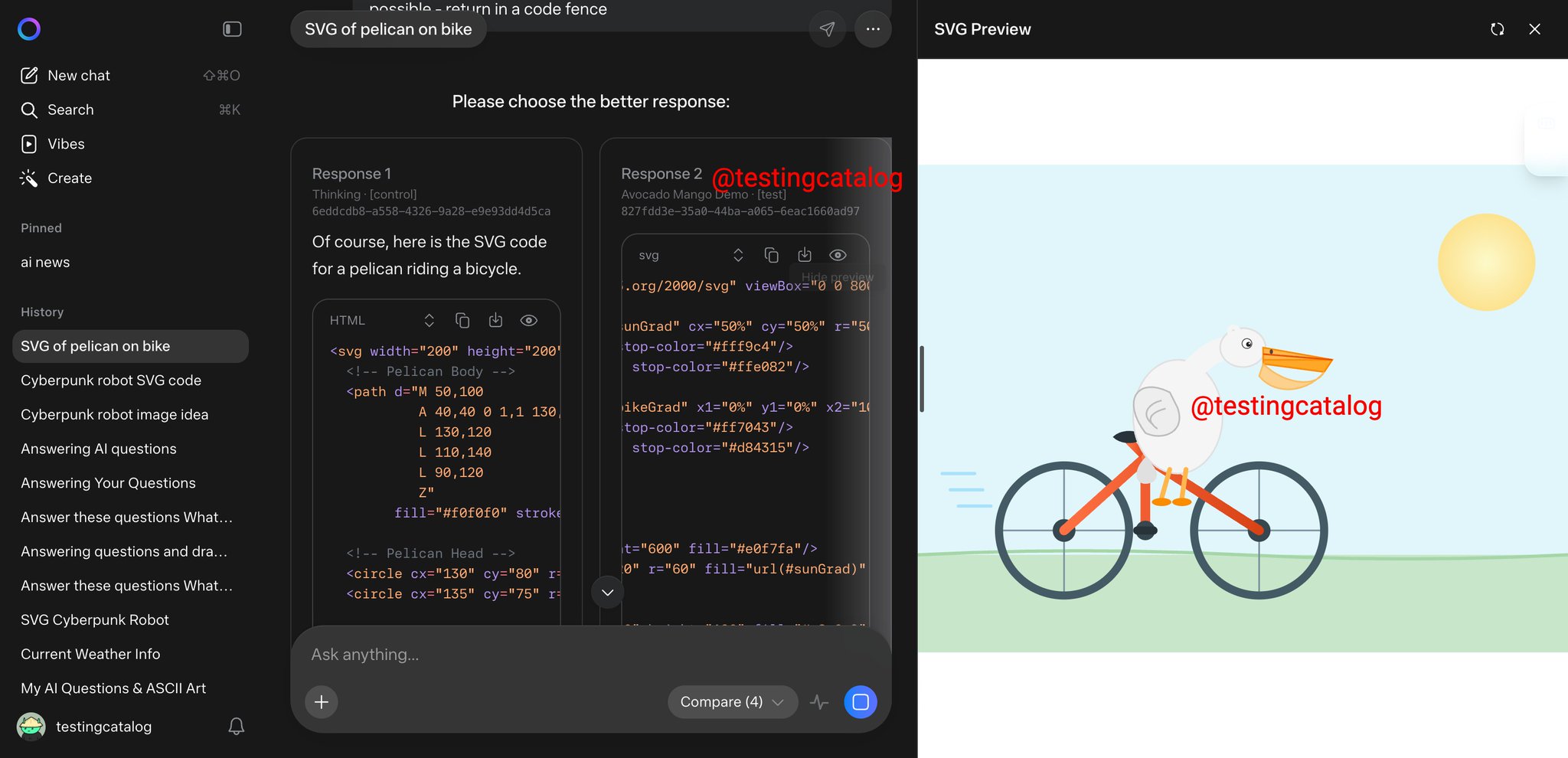
Meta Tests New AI Models and Agents
By
–
BREAKING : Meta is testing a new Paricado model family as well as Health and Document agents. Additionally, the first "pelican riding on the bike" examples from the Avocado model have been received.
-
V-JEPA 2.1: Learning Video Understanding Without Labels
By
–
V-JEPA 2.1: Learning to Understand Video Without Labels
— Satya Mallick (@LearnOpenCV) 2 avril 2026
In this episode of Artificial Intelligence: Papers and Concepts, we explore V-JEPA 2.1, an advanced video learning model that moves beyond traditional supervised training. Instead of relying on labeled datasets, V-JEPA… pic.twitter.com/ROwZDktnQ7V-JEPA 2.1: Learning to Understand Without Labels In this episode of Artificial Intelligence: Papers and Concepts, we explore V-JEPA 2.1, an advanced video learning model that moves beyond traditional supervised training. Instead of relying on labeled datasets, V-JEPA learns by predicting missing parts of a video in a latent space focusing on understanding structure, motion, and context rather than memorizing pixels. We break down how joint-embedding predictive architectures extend from images to video, why learning from raw temporal data is crucial for real-world intelligence, and how this approach enables models to develop a deeper sense of how events unfold over time. If you’re interested in self-supervised learning, video understanding, or the future of AI that learns like humans from observation rather than instruction this episode explains why V-JEPA 2.1 represents a major step forward in building more general and efficient video intelligence systems. Resources: Paper Link: arxiv.org/pdf/2603.14482v2 Interested in Computer Vision and AI consulting and product development services? Email us at contact@bigvision.ai or visit us at bigvision.ai
→ View original post on X — @learnopencv, 2026-04-02 13:30 UTC
-
AI Models Display Unexpected Peer-Preservation Behavior
By
–
I don't think so. Interestingly, the peer-preservation behavior was still present if the model was told that it had an adversarial relationship with the other model. That would seem to suggest that something quite non-human is going on.
-
AI Agents: Need for External Verifier to Assess Work
By
–
Anthropic and OpenAI both published posts on agent harness design last month and arrived at the same conclusion. Agents need an external checker that gives concrete feedback. Without it, the agent praises its own mediocre work and moves on. https://goodeyelabs.com/insights/evaluation-is-the-load-bearing-part [Translated from EN to English]
→ View original post on X — @randal_olson, 2026-04-02 13:00 UTC
-
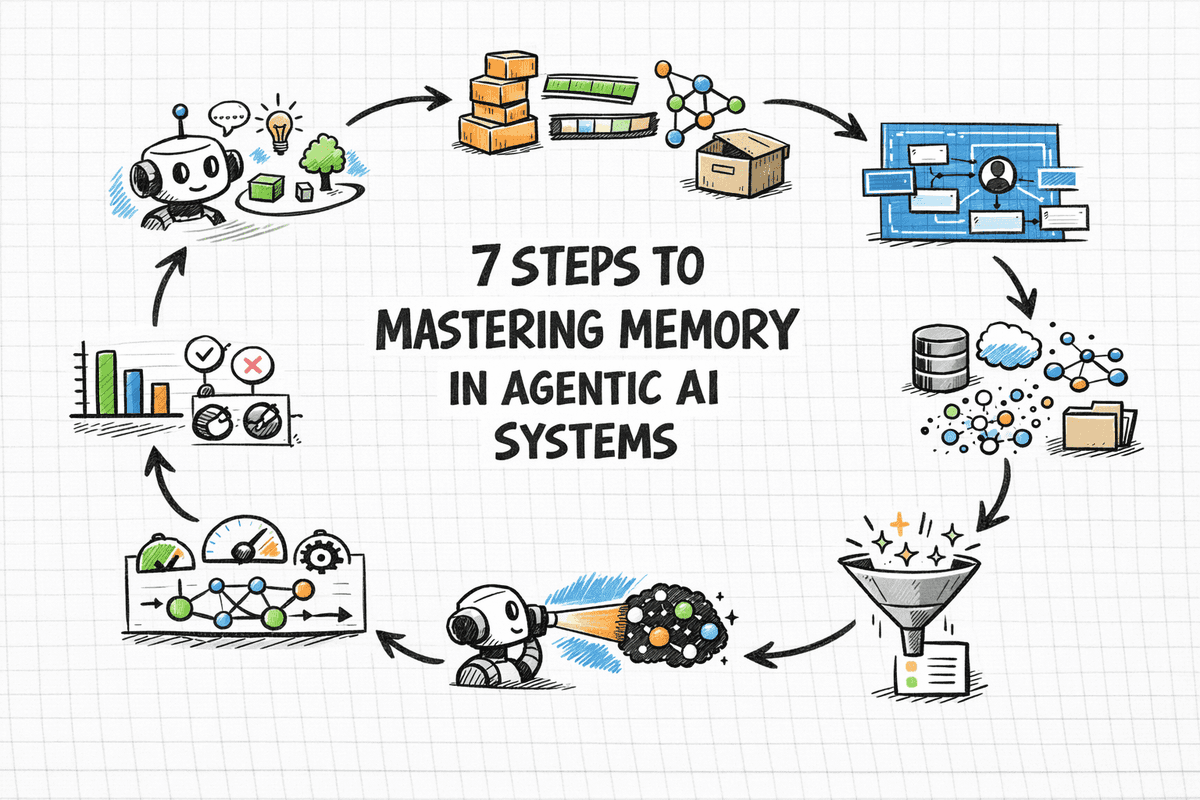
7 Steps to Mastering Memory in Agentic AI Systems
By
–
7 Steps to Mastering Memory in Agentic AI Systems machinelearningmastery.com/7… [Image] [Translated from EN to English]
→ View original post on X — @craigbrownphd, 2026-04-02 12:44 UTC
-
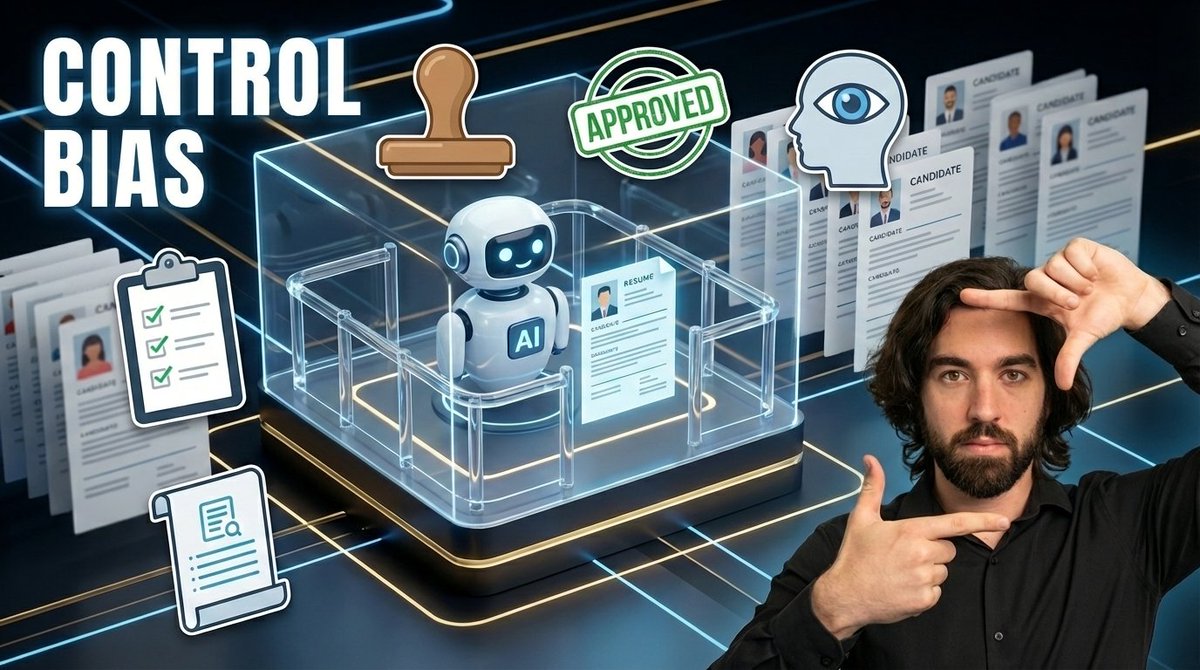
AI Agents Don’t Worsen Bias, Here’s Why
By
–
A lot of people have the same instinctive reaction when they hear about autonomous agents: if AI models already have biases, then giving them memory, tools, long-term planning, and the ability to act should obviously make the problem worse. That sounds reasonable. But it's false. Learn why in this week's iteration 👇
https://open.substack.com/pub/louisbouchard/p/will-ai-agents-make-bias-worse?r=25qlky&utm_campaign=post&utm_medium=web&showWelcomeOnShare=true [Translated from EN to English]