This is just the start of the Gemma 4 era : ) Download Gemma 4 on Kaggle: kaggle.com/models/google/gem… And read more in our blog: blog.google/innovation-and-a…
→ View original post on X — @officiallogank, 2026-04-02 16:04 UTC
By
–
This is just the start of the Gemma 4 era : ) Download Gemma 4 on Kaggle: kaggle.com/models/google/gem… And read more in our blog: blog.google/innovation-and-a…
→ View original post on X — @officiallogank, 2026-04-02 16:04 UTC
By
–
Read all about Gemma 4 in our blog: blog.google/innovation-and-a…
By
–
And just in case you’re wondering, "..What’s an open model?", we’ve got you covered: Basically, open models are AI systems where the model weights are publicly available for anyone to download, study, fine-tune and use on your own hardware (phones, computers, etc.). Open models can live on your hardware where your data is completely private and never has to leave your machine. Once you download an open model onto your device, it can run anywhere regardless of internet connection or access to data centers. To name a few examples, Gemma models can run in your pocket, underwater, in outer space, from subway tunnels, and on high-altitude flights without needing a cell tower or WiFi signal. As base models are released (the 'blueprints'), people can then further modify them for specialized use cases via fine-tuning. We’ve seen this in the Gemmaverse, where developers have downloaded Gemma over 400 million times and built more than 100,000 variants. Have you used an open model before? Let us know if you have any other questions about this neat technology!

By
–
A first-of-its-kind study from MIT measures how successful AI is in completing thousands of tasks done by workers in the US economy. Across these real-world tasks, they found that AI capabilities are improving quickly, but performance is rising smoothly: bit.ly/3Q1JQZD [Translated from EN to English]
→ View original post on X — @mit_csail, 2026-04-02 16:01 UTC

By
–
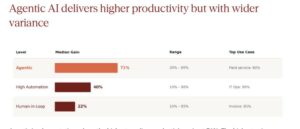
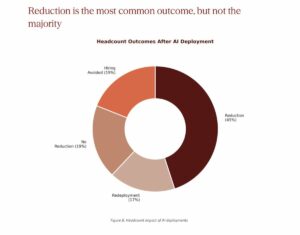
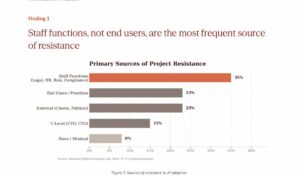
What do successful deployments of AI have in common? It was awesome working with Elisa Pereira and @AGraylin on this research. We studied 51 companies and summarized the results. Alvin has a nice summary below. Check out digitaleconomy.stanford.edu/… for the full report. Alvin Wang Graylin (@AGraylin) New Research💡: “The #Enterprise #AI Playbook — Lessons from 51 Successful Deployments” Excited to share new research from Stanford @DigEconLab, I co-authored with @erikbryn and Elisa Pereira . We spent 5 months interviewing executives across 41 organizations, 9 industries, and 7 countries — focusing exclusively on AI deployments that actually delivered measurable value. Not hype. Not predictions. What’s working right now, and why. A few findings that challenged even our assumptions: The hard part isn’t the AI. 77% of the toughest challenges were invisible costs — change management, data quality, process redesign. Technology was consistently described as the easiest part. Same use case, wildly different timelines. One company deployed AI customer support in weeks. Another took years. Same models. The difference was always the #organization — its #leadership, processes, and willingness to fail. #Agentic AI works — but most firms haven’t tried it yet. Only 20% of our cases were agentic, but they delivered 71% median gains vs. 40% for high-automation. This gap will widen fast. The model is increasingly a #commodity. For 42% of implementations, model choice was fully interchangeable. The durable advantage is in orchestration, data, and process — not the foundation model. With productivity increase, headcount #reduction is common (45%), but not the majority outcome. Redeployment, hiring avoidance, and acceleration strategies accounted for 55% of cases.🚨 The window for experimentation is closing. This is no longer a question of whether AI delivers value. It’s whether organizations can evolve fast enough to capture it — and whether leaders will take responsibility for smoothing the transition for workers and communities along the way. Full report (free): digitaleconomy.stanford.edu/… @StanfordHAI — https://nitter.net/AGraylin/status/2039729157676921185#m

By
–
Still inspired and grateful to @bradroyes and @foresightinst for kicking off AI Nodes and finally bringing SF energy to Berlin Loved sharing a talk on perceptual diversity and intelligence! 🙏 to @CIMCAI for supporting this work and enabling access to such incredible communities

By
–
Static orchestration is the silent killer of multi-agent RAG systems. The query changes, but the agent topology stays the same. The work introduces HERA, a framework that jointly evolves multi-agent orchestration and role-specific agent prompts. At the global level, it optimizes query-specific agent topologies through reward-guided sampling. At the local level, it refines individual agent behaviors via credit assignment and dual-axes prompt adaptation. On six knowledge-intensive benchmarks, HERA achieves an average improvement of 38.69% over recent baselines. Why does it matter? As multi-agent RAG systems scale, the gap between fixed pipelines and adaptive orchestration will only grow. HERA shows that letting the system learn its own coordination structure produces compact, high-utility agent networks. Paper: arxiv.org/abs/2604.00901 Learn to build effective AI agents in our academy: academy.dair.ai/

By
–
Can an AI agent run a startup for a year without going bankrupt? Turns out most can't. New benchmark from Collinear AI puts 12 models to the test. YC-Bench tasks agents with running a simulated startup over hundreds of turns: hiring employees, selecting contracts, and maintaining profitability in a partially observable environment with adversarial clients and compounding consequences. Only three models consistently surpass the $200K starting capital. Claude Opus 4.6 leads at $1.27M average final funds, followed by GLM-5 at $1.21M with 11x lower inference cost. Scratchpad usage, the sole mechanism for persisting information across context truncation, is the strongest predictor of success. Adversarial client detection accounts for 47% of bankruptcies. Long-horizon coherence, not raw intelligence, separates the winners from the bankrupt. Paper: arxiv.org/abs/2604.01212 Learn to build effective AI agents in our academy: academy.dair.ai/
By
–
In almost 60 years since we first went close to the Moon our computer technology has actually regressed. https://t.co/LYgMNY0E1x
— Bojan Tunguz (@tunguz) 2 avril 2026
In almost 60 years since we first went close to the Moon our computer technology has actually regressed.

By
–
Seems this discussion is moving into a new chapter Jürgen Schmidhuber (@SchmidhuberAI) Dr. LeCun's heavily promoted Joint Embedding Predictive Architecture (JEPA, 2022) [5] is the heart of his new company. However, the core ideas are not original to LeCun. Instead, JEPA is essentially identical to our 1992 Predictability Maximization system (PMAX) [1][14]. Details in reference [19] which contains many additional references. Motivation of PMAX [1][14]. Since details of inputs are often unpredictable from related inputs, two non-generative artificial neural networks interact as follows: one net tries to create a non-trivial, informative, latent representation of its own input that is predictable from the latent representation of the other net’s input. PMAX [1][14] is actually a whole family of methods. Consider the simplest instance in Sec. 2.2 of [1]: an auto encoder net sees an input and represents it in its hidden units (its latent space). The other net sees a different but related input and learns to predict (from its own latent space) the auto encoder's latent representation, which in turn tries to become more predictable, without giving up too much information about its own input, to prevent what's now called “collapse." See illustration 5.2 in Sec. 5.5 of [14] on the "extraction of predictable concepts." The 1992 PMAX paper [1] discusses not only auto encoders but also other techniques for encoding data. The experiments were conducted by my student Daniel Prelinger. The non-generative PMAX outperformed the generative IMAX [2] on a stereo vision task. The 2020 BYOL [10] is also closely related to PMAX. In 2026, @misovalko, leader of the BYOL team, praised PMAX, and listed numerous similarities to much later work [19]. Note that the self-created “predictable classifications” in the title of [1] (and the so-called “outputs” of the entire system [1]) are typically INTERNAL "distributed representations” (like in the title of Sec. 4.2 of [1]). The 1992 PMAX paper [1] considers both symmetric and asymmetric nets. In the symmetric case, both nets are constrained to emit "equal (and therefore mutually predictable)" representations [1]. Sec. 4.2 on “finding predictable distributed representations” has an experiment with 2 weight-sharing auto encoders which learn to represent in their latent space what their inputs have in common (see the cover image of this post). Of course, back then compute was was a million times more expensive, but the fundamental insights of "JEPA" were present, and LeCun has simply repackaged old ideas without citing them [5,6,19]. This is hardly the first time LeCun (or others writing about him) have exaggerated LeCun's own significance by downplaying earlier work. He did NOT "co-invent deep learning" (as some know-nothing "AI influencers" have claimed) [11,13], and he did NOT invent convolutional neural nets (CNNs) [12,6,13], NOR was he even the first to combine CNNs with backpropagation [12,13]. While he got awards for the inventions of other researchers whom he did not cite [6], he did not invent ANY of the key algorithms that underpin modern AI [5,6,19]. LeCun's recent pitch: 1. LLMs such as ChatGPT are insufficient for AGI (which has been obvious to experts in AI & decision making, and is something he once derided @GaryMarcus for pointing out [17]). 2. Neural AIs need what I baptized a neural "world model" in 1990 [8][15] (earlier, less general neural nets of this kind, such as those by Paul Werbos (1987) and others [8], weren't called "world models," although the basic concept itself is ancient [8]). 3. The world model should learn to predict (in non-generative "JEPA" fashion [5]) higher-level predictable abstractions instead of raw pixels: that's the essence of our 1992 PMAX [1][14]. Astonishingly, PMAX or "JEPA" seems to be the unique selling proposition of LeCun's 2026 company on world model-based AI in the physical world, which is apparently based on what we published over 3 decades ago [1,5,6,7,8,13,14], and modeled after our 2014 company on world model-based AGI in the physical world [8]. In short, little if anything in JEPA is new [19]. But then the fact that LeCun would repackage old ideas and present them as his own clearly isn't new either [5,6,18,19]. FOOTNOTES 1. Note that PMAX is NOT the 1991 adversarial Predictability MINimization (PMIN) [3,4]. However, PMAX may use PMIN as a submodule to create informative latent representations [1](Sec. 2.4), and to prevent what's now called “collapse." See the illustration on page 9 of [1]. 2. Note that the 1991 PMIN [3] also predicts parts of latent space from other parts. However, PMIN's goal is to REMOVE mutual predictability, to obtain maximally disentangled latent representations called factorial codes. PMIN by itself may use the auto encoder principle in addition to its latent space predictor [3]. 3. Neither PMAX nor PMIN was my first non-generative method for predicting latent space, which was published in 1991 in the context of neural net distillation [9]. See also [5-8]. 4. While the cognoscenti agree that LLMs are insufficient for AGI, JEPA is so, too. We should know: we have had it for over 3 decades under the name PMAX! Additional techniques are required to achieve AGI, e.g., meta learning, artificial curiosity and creativity, efficient planning with world models, and others [16]. REFERENCES (easy to find on the web): [1] J. Schmidhuber (JS) & D. Prelinger (1993). Discovering predictable classifications. Neural Computation, 5(4):625-635. Based on TR CU-CS-626-92 (1992): people.idsia.ch/~juergen/pre… [2] S. Becker, G. E. Hinton (1989). Spatial coherence as an internal teacher for a neural network. TR CRG-TR-89-7, Dept. of CS, U. Toronto. [3] JS (1992). Learning factorial codes by predictability minimization. Neural Computation, 4(6):863-879. Based on TR CU-CS-565-91, 1991. [4] JS, M. Eldracher, B. Foltin (1996). Semilinear predictability minimization produces well-known feature detectors. Neural Computation, 8(4):773-786. [5] JS (2022-23). LeCun's 2022 paper on autonomous machine intelligence rehashes but does not cite essential work of 1990-2015. [6] JS (2023-25). How 3 Turing awardees republished key methods and ideas whose creators they failed to credit. Technical Report IDSIA-23-23. [7] JS (2026). Simple but powerful ways of using world models and their latent space. Opening keynote for the World Modeling Workshop, 4-6 Feb, 2026, Mila – Quebec AI Institute. [8] JS (2026). The Neural World Model Boom. Technical Note IDSIA-2-26. [9] JS (1991). Neural sequence chunkers. TR FKI-148-91, TUM, April 1991. (See also Technical Note IDSIA-12-25: who invented knowledge distillation with artificial neural networks?) [10] J. Grill et al (2020). Bootstrap your own latent: A "new" approach to self-supervised Learning. arXiv:2006.07733 [11] JS (2025). Who invented deep learning? Technical Note IDSIA-16-25. [12] JS (2025). Who invented convolutional neural networks? Technical Note IDSIA-17-25. [13] JS (2022-25). Annotated History of Modern AI and Deep Learning. Technical Report IDSIA-22-22, arXiv:2212.11279 [14] JS (1993). Network architectures, objective functions, and chain rule. Habilitation Thesis, TUM. See Sec. 5.5 on "Vorhersagbarkeitsmaximierung" (Predictability Maximization). [15] JS (1990). Making the world differentiable: On using fully recurrent self-supervised neural networks for dynamic reinforcement learning and planning in non-stationary environments. Technical Report FKI-126-90, TUM. [16] JS (1990-2026). AI Blog. [17] @GaryMarcus. Open letter responding to @ylecun. A memo for future intellectual historians. Substack, June 2024. [18] G. Marcus. The False Glorification of @ylecun. Don’t believe everything you read. Substack, Nov 2025. [19] J. Schmidhuber. Who invented JEPA? Technical Note IDSIA-3-22, IDSIA, Switzerland, March 2026. people.idsia.ch/~juergen/who… — https://nitter.net/SchmidhuberAI/status/2038989707917271210#m
→ View original post on X — @shiqi_yang_147, 2026-04-02 14:53 UTC