Bing's web grounding already powers almost every major AI chatbot today. With Harrier, it just got a big upgrade for the agentic era. Better embeddings lead to better retrieval, often more accurate answers, and better multilingual performance in the 100+ languages Harrier
RESEARCH
-
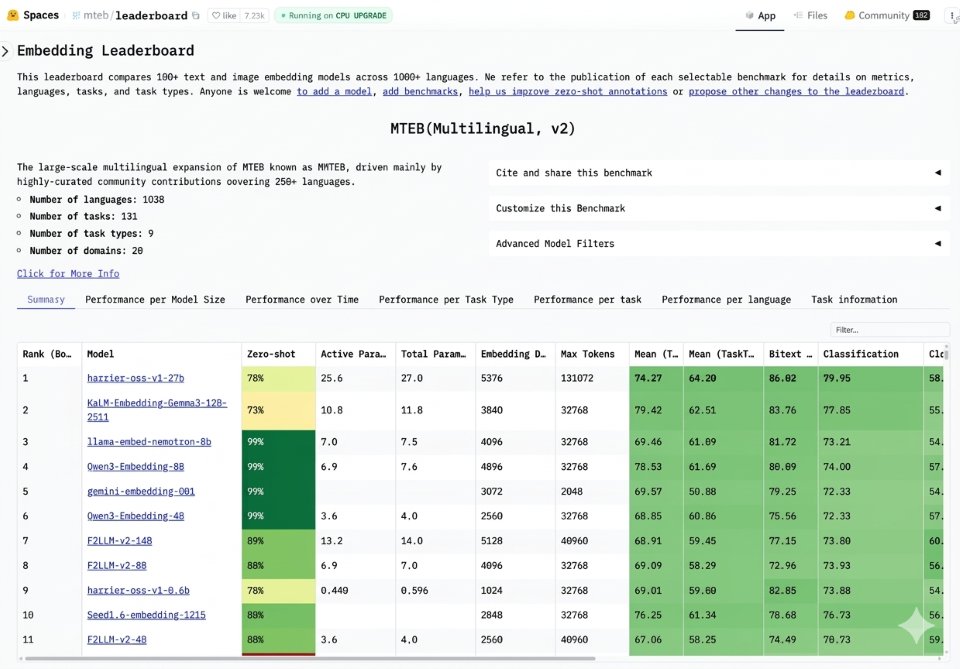
Bing releases Harrier, new state-of-the-art embedding model
By
–
Another SOTA model drop! This time from the @Bing team: meet Harrier, a new open-source embedding model with state-of-the-art performance and the #1 spot on the industry standard multilingual MTEB-v2 benchmark. Jordi Ribas (@JordiRib1) I’m pleased to share that our search team has open sourced an embedding model called Harrier that is currently ranking #1 on the multilingual MTEB-v2 benchmark leaderboard. Harrier delivers SOTA performance on retrieval quality, semantic matching, and contextual analysis across workloads, supporting more than 100 languages and handles long inputs up to 32K. It is built for the next generation semantic search for Bing and our web grounding (RAG) service for AI agents, which already powers nearly every major AI chatbot today. As you can see in the leadership board, our Harrier model is currently ahead of other excellent models based on Gemini, Gemma, Llama, Qwen, and more. I’m grateful for the hard work of our team to get to this top ranking, and I’m excited to see all the healthy competition in the space, which should ultimately lead to more innovations that will benefit everyone. Learn more: msft.it/6019QNB0b — https://nitter.net/JordiRib1/status/2041550352739164404#m
→ View original post on X — @clementdelangue, 2026-04-07 16:22 UTC
-
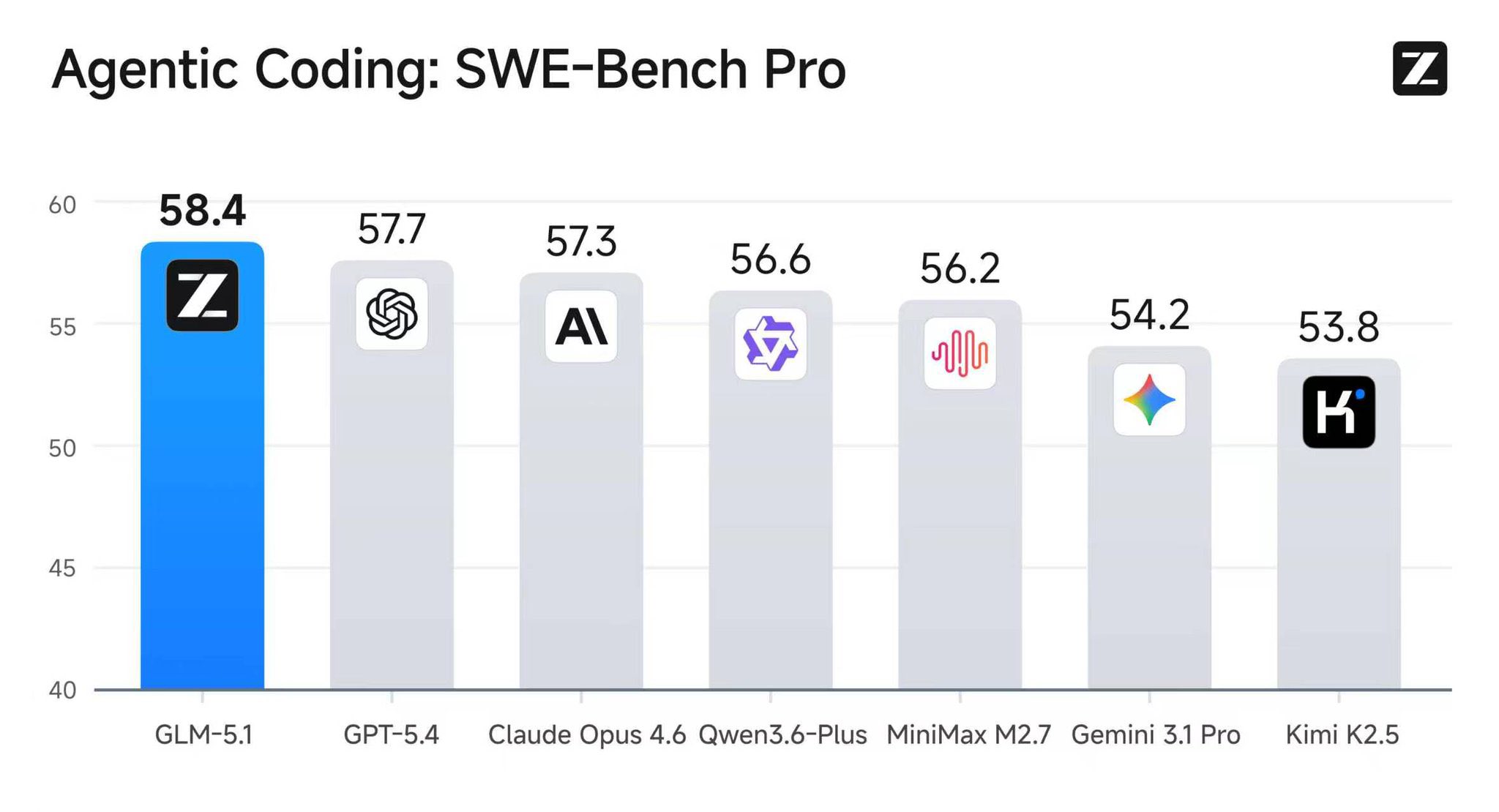
GLM-5.1: Open-Source AI Tops Coding Benchmarks
By
–
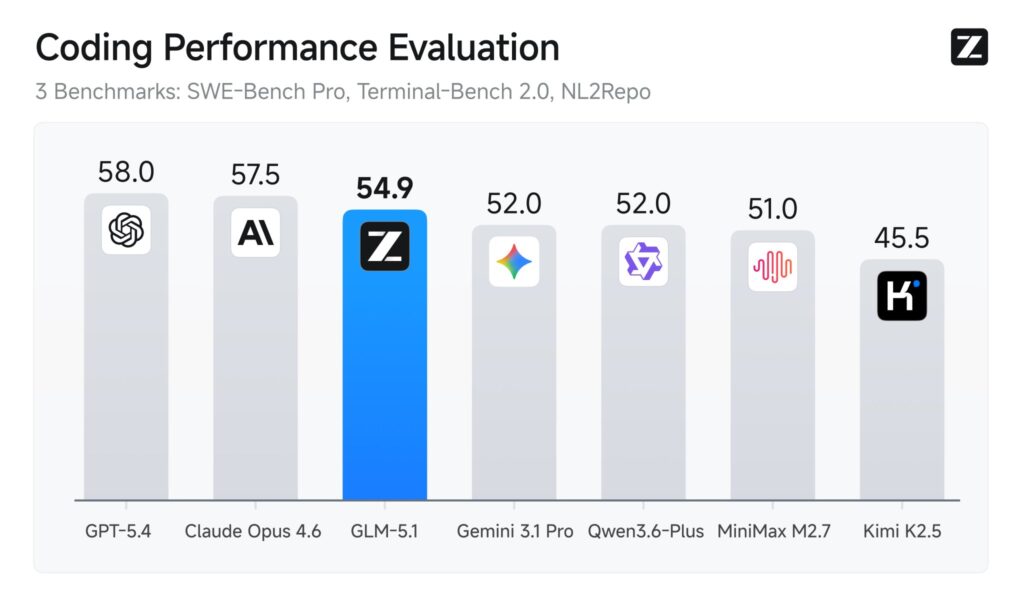
BREAKING : Z AI released GLM-5.1, an open-source model with top tier coding performance! “Number 1 in open source and number 3 globally across SWE-Bench Pro, Terminal-Bench, and NL2Repo.” “Runs autonomously for 8 hours, refining strategies through thousands of iterations.”
-
Microsoft Open Sources Harrier: Top Multilingual Embedding Model
By
–
I’m pleased to share that our search team has open sourced an embedding model called Harrier that is currently ranking #1 on the multilingual MTEB-v2 benchmark leaderboard.
— Jordi Ribas (@JordiRib1) 7 avril 2026
Harrier delivers SOTA performance on retrieval quality, semantic matching, and contextual analysis across… pic.twitter.com/asMVydbijhI’m pleased to share that our search team has open sourced an embedding model called Harrier that is currently ranking #1 on the multilingual MTEB-v2 benchmark leaderboard. Harrier delivers SOTA performance on retrieval quality, semantic matching, and contextual analysis across workloads, supporting more than 100 languages and handles long inputs up to 32K. It is built for the next generation semantic search for Bing and our web grounding (RAG) service for AI agents, which already powers nearly every major AI chatbot today. As you can see in the leadership board, our Harrier model is currently ahead of other excellent models based on Gemini, Gemma, Llama, Qwen, and more. I’m grateful for the hard work of our team to get to this top ranking, and I’m excited to see all the healthy competition in the space, which should ultimately lead to more innovations that will benefit everyone. Learn more: msft.it/6019QNB0b
-

OpenMed dataset added to Hugging Face platform
By
–
just added openmed data on @huggingface, what else
-
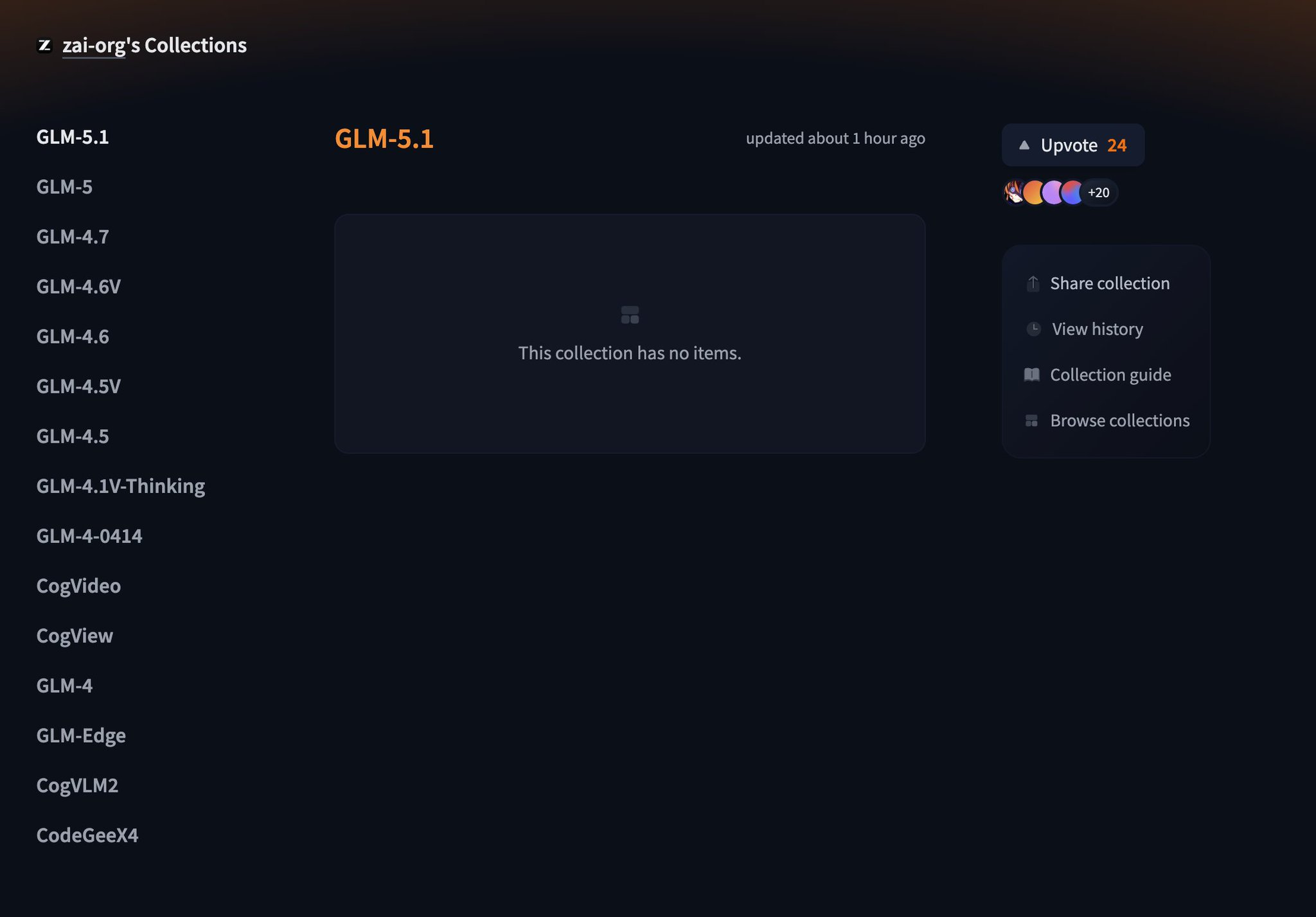
GLM 5.1, DeepSeek v4, and Minimax 2.7 Launch Announcement
By
–
BIG DAY: GLM 5.1, DeepSeek v4, Minimax 2.7 is COMING
-
WildDet3D: Open Model for Monocular 3D Object Detection
By
–
Today we're releasing WildDet3D—an open model for monocular 3D object detection in the wild.
— Ai2 (@allen_ai) 7 avril 2026
It works with text, clicks, or 2D boxes, and on zero-shot evals it nearly doubles the best prior scores. 🧵 pic.twitter.com/Zszy3dbG6CToday we're releasing WildDet3D—an open model for monocular 3D object detection in the wild. It works with text, clicks, or 2D boxes, and on zero-shot evals it nearly doubles the best prior scores. 🧵
→ View original post on X — @scobleizer, 2026-04-07 15:54 UTC
-
Google’s 10% Error Rate: Shift from Pre-ChatGPT Standards
By
–
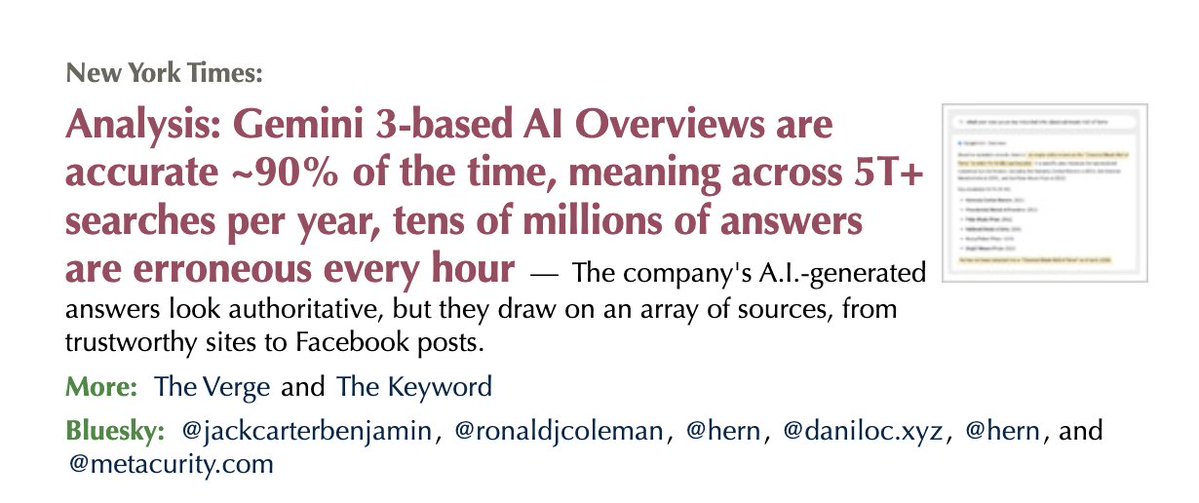
10% error rate at any scale would never have been tolerated by Google pre-ChatGPT. The company has fundamentally changed rat king 🐀 (@MikeIsaac) glass half full: 90 percent accuracy is an impressive accuracy rate glass half empty: 10 percent error rate for a company that does more than 5 Trillion search queries per year is still a gigantic number nytimes.com/2026/04/07/techn… — https://nitter.net/MikeIsaac/status/2041535422623609174#m
→ View original post on X — @garymarcus, 2026-04-07 15:51 UTC
-
VLMs vs CNNs: When to Choose Each Approach
By
–
When should you use a Vision Language Model instead of a traditional CNN?
— Satya Mallick (@LearnOpenCV) 7 avril 2026
CNNs answer structured questions — is there a defect? Where's the pedestrian? VLMs answer open-ended questions using language. Both have their place.
If your task is well-defined and repeatable, CNNs still… pic.twitter.com/N9vnwXJQlZWhen should you use a Vision Language Model instead of a traditional CNN? CNNs answer structured questions — is there a defect? Where's the pedestrian? VLMs answer open-ended questions using language. Both have their place. If your task is well-defined and repeatable, CNNs still win on speed, cost, and deployment simplicity.
-
Open Source ML Team Pushes Bleeding Edge Innovation Forward
By
–
love the work you and the team are doing! excited to support you as you push the bleeding edge of open source ML!