The uncomfortable truth about Forecasting methods: https://
valeman.medium.com/why-im-writing
-a-new-book-on-forecasting-a80300e777ec
… Quotes from the article:
"The forecasting establishment spent decades protecting its territory. The result is a generation of practitioners who were taught that statistical methods are inherently superior
RESEARCH
-
Forecasting Methods Dogmatism: Statistical Superiority Myth Challenged
By
–
-
Company Honored on CRN’s Prestigious AI 100 List
By
–
We're honored to be named to @CRN
's AI 100 list. It reflects work that we're proud of, and we're grateful for the customers who trust us with it: -

GLM-5.1: Self-Improving Agentic Model with Long-Horizon Problem-Solving
By
–
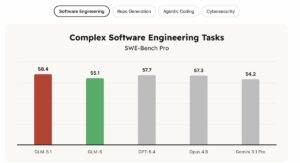
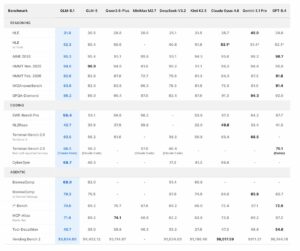
This is a very big deal: GLM-5.1 model can autonomously evaluate and improve its own work over long periods without explicit metrics, shifting from one-shot outputs to sustained, self-directed problem solving. Lets go Chubby♨️ (@kimmonismus) Another big release: GLM-5.1! China is on fire! significant increase in evals compared to GLM-5.0 tl;dr GLM-5.1 is the new open-source agentic coding model that significantly outperforms its predecessor by sustaining long-horizon problem-solving over hundreds of iterations, continuously improving results instead of plateauing, achieving state-of-the-art performance on complex software engineering benchmarks. — https://nitter.net/kimmonismus/status/2041553412878180691#m
→ View original post on X — @kimmonismus, 2026-04-07 17:30 UTC
-
Google Releases Gemma 4 Open Source Intelligence Model
By
–
ICYMI: Google has released Gemma 4-their most intelligent open models yet!
— Futurepedia – Learn to Leverage AI (@futurepedia_io) 7 avril 2026
Powered by the same world-class research behind Gemini 3, Gemma 4 delivers breakthrough intelligence on your hardware for advanced reasoning and agentic workflows.
Released under a commercially… pic.twitter.com/CVEc3H1S5dICYMI: Google has released Gemma 4-their most intelligent open models yet! Powered by the same world-class research behind Gemini 3, Gemma 4 delivers breakthrough intelligence on your hardware for advanced reasoning and agentic workflows. Released under a commercially
-
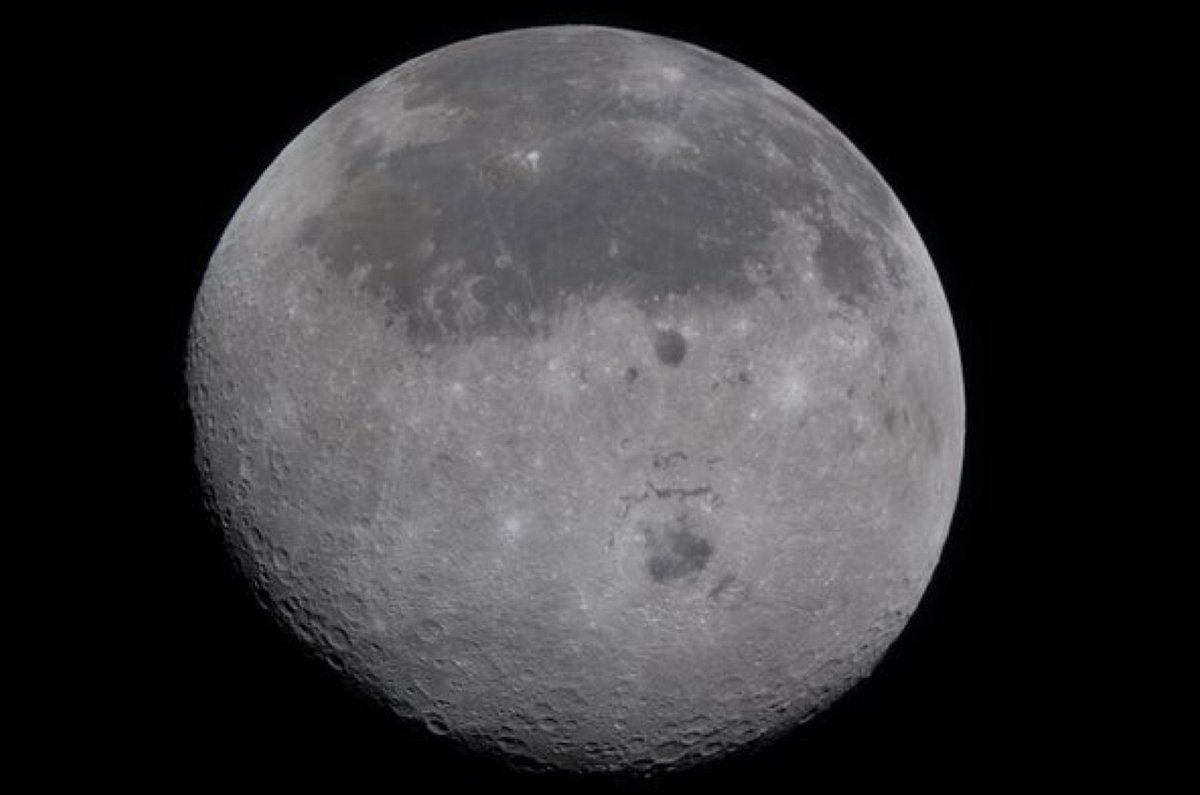
Artemis II Free-Return Trajectory: Gravity Powers Spacecraft Home
By
–

Artemis II and the Apollo 13 trick: How gravity can bring astronauts home without fuel or an engine? NASA’s Artemis II: How a Free-Return Trajectory Lets Gravity Do the Work How math, timing, and the Moon can help bring astronauts back to Earth Most people think of spaceflight as a contest of thrust between the fuel and the engine. Big rockets lift off. Fuel disappears by the ton, but Artemis II depends on something quieter and, in some ways, more elegant: geometry. Seen through an ML vantage point, the free-return trajectory behaves like a machine learning precision-tuned control problem, where the machine learning model is celestial mechanics and the loss function is wasted fuel and mission risk, and the winning solution is something that lets gravity do as much of the work as possible. NASA’s Orion spacecraft is flying a free-return trajectory, a path that uses the combined gravity of Earth and the Moon to carry the crew out to the Moon and then bring them back toward Earth. That is the key idea. When Orion is placed on the right outbound track, gravity and geometry do much of the rest. Engines matter; they matter most at the beginning. The circles shown around Earth are not Orion wandering around or trying to escape gravity. They are planned Earth orbits that let NASA check the spacecraft, build the right departure geometry, and set up the main push outward. Then came the translunar injection burn: nearly six minutes of engine firing that used roughly 1000 pounds of propellant—not gasoline, but a spacecraft fuel-and-oxidizer mix stored in Orion’s service module—to place the capsule onto the figure-eight free-return path from Earth to the Moon and back again. From there, the mission does not rely on a major engine burn behind the Moon to get home. Instead, lunar gravity deflects the spacecraft's trajectory, sending it back toward Earth. This is why the trajectory matters so much. It builds a return into the mission from the start. The idea is familiar to anyone who remembers the Apollo 13 trick. After the oxygen cylinder explosion aboard that spacecraft in 1970, NASA needed a way to get the crew back safely. A free-return path became central to that effort. Artemis II uses that same basic logic by design rather than in an emergency. The physics behind it is not mysterious, even if orbital mechanics can look intimidating. A spacecraft in flight is constantly trading speed against gravity. Engineers shape that trade with extraordinary precision. In simplified form, the orbital energy depends on speed and distance: Trajectory energy = v²/2 − mμ/r Here, v is the spacecraft’s speed, r is its distance from the body it is moving around, and mu represents the strength of gravity for that body. A translunar injection burn changes that balance. Instead of staying in a closed orbit around Earth, Orion is pushed onto a much longer arc that reaches the Moon’s neighborhood. An aerospace-friendly way to picture the problem is as a landscape of gravity wells. Earth sits in well. The Moon moves in another. Put the spacecraft on the right ridge line, with the right energy, and it can slide from Earth’s domain into the Moon’s and then back again. As one aerospace engineer explained to Scientific American, once the spacecraft reaches the right “height” on that topographic map, it can follow that path essentially for free. That is the real meaning of free return. It is not that the spacecraft needs no propulsion at all. Artemis II still has built-in correction burns, and NASA has already adjusted its plan by skipping two of three smaller corrective maneuvers after the main burn performed so well, but the core return path does not depend on a large engine firing at the far side of the Moon, when Orion is out of radio contact with Earth. That lowers risk. It also helps explain why the mission could set a new human distance record from Earth. Orion reached 252,756 miles from Earth as it arced around the Moon before beginning the trip back. The spacecraft was not simply going far for the sake of going far. The long loop is part of the geometry that allows lunar gravity to redirect it toward Earth without an engine burn. Then comes the final stage left: reentry. At that point, Orion is no longer being flown home, burning fuel in the ordinary sense. It is falling back into Earth’s gravity well at tremendous speed. Reentry is a controlled descent through the atmosphere like Apollo 13, with the heat shield absorbing the thrust and the capsule arriving at the right angle for splashdown. That final return is less like powered flight and more like a carefully managed plunge. The larger lesson of Artemis II is that deep-space travel is not only a matter of force. It is also a matter of timing, angle, and restraint. Burn too little and you stay trapped on Earth. Burn too much or in the wrong direction and you waste fuel or miss the path you need, but if the numbers are right, the Moon itself becomes part of the navigation system. That was true in the Apollo era. It is still true now. Artemis II is a reminder that in space, the best engineering is often the kind that lets physics do the heavy lifting. #BigData #Analytics #AI #MachineLearning #DataScience #IoT #IIoT #Python #RStats #TensorFlow #JavaScript #ReactJS #CloudComputing #Serverless #DataScientist #Linux #Programming #Coding #100DaysofCode References Artemis II Mission Tracker. (2026). Artemis II Mission Tracker | Live Orion 3D Timeline. artemistracker.com/ European Space Agency. (n.d.). European Service Module: Propulsion. ESA. esa.int/Science_Exploration/… NASA Communications. (2026a, April 2). Artemis II flight update: Perigee raise burn complete. NASA. nasa.gov/blogs/missions/2026… NASA Communications. (2026b, April 2). Artemis II Flight Day 2: Orion completes TLI burn, crew begins journey to the Moon. NASA. nasa.gov/blogs/missions/2026… Vergano, D. (2026, April 7). NASA’s Artemis II “free return” trajectory lets gravity do the work. Scientific American. scientificamerican.com/artic…
→ View original post on X — @gp_pulipaka, 2026-04-07 17:26 UTC
-
GLM 5.1 Open Source: 754B Parameter Model Tops Programming Benchmarks
By
–
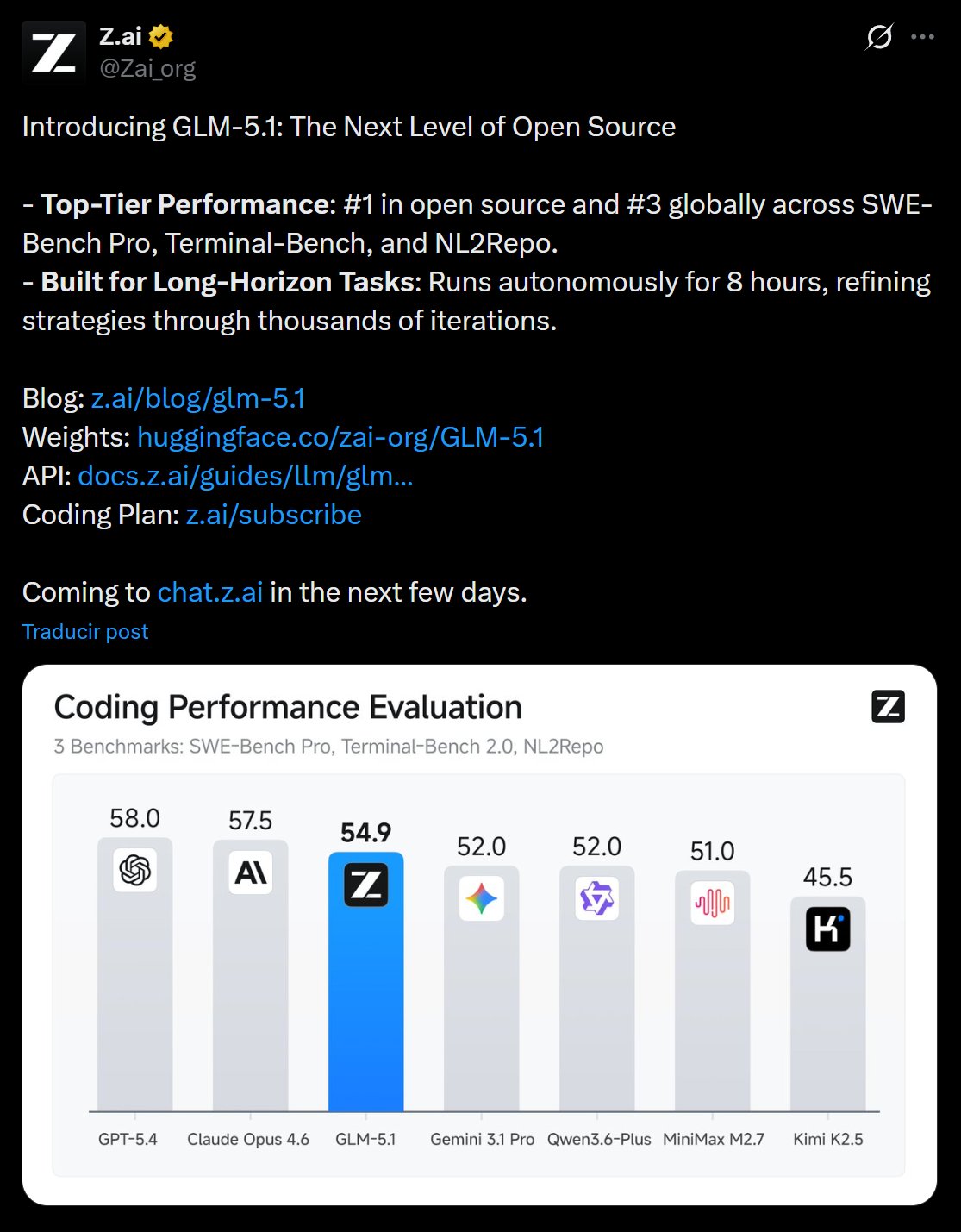
¡NUEVO GLM 5.1 OPEN SOURCE! Zai acaba de lanzar una nueva versión de su modelo GLM, open source, 754B params. y que se sitúa en el top-3 de modelos más competente para programar, según benchmarks. Es uno de esos modelos ENORMES que para organizaciones puede ser muy útil!
-
OpenAI’s Autonomous AI Agents: 1M Lines Zero Human Review
By
–
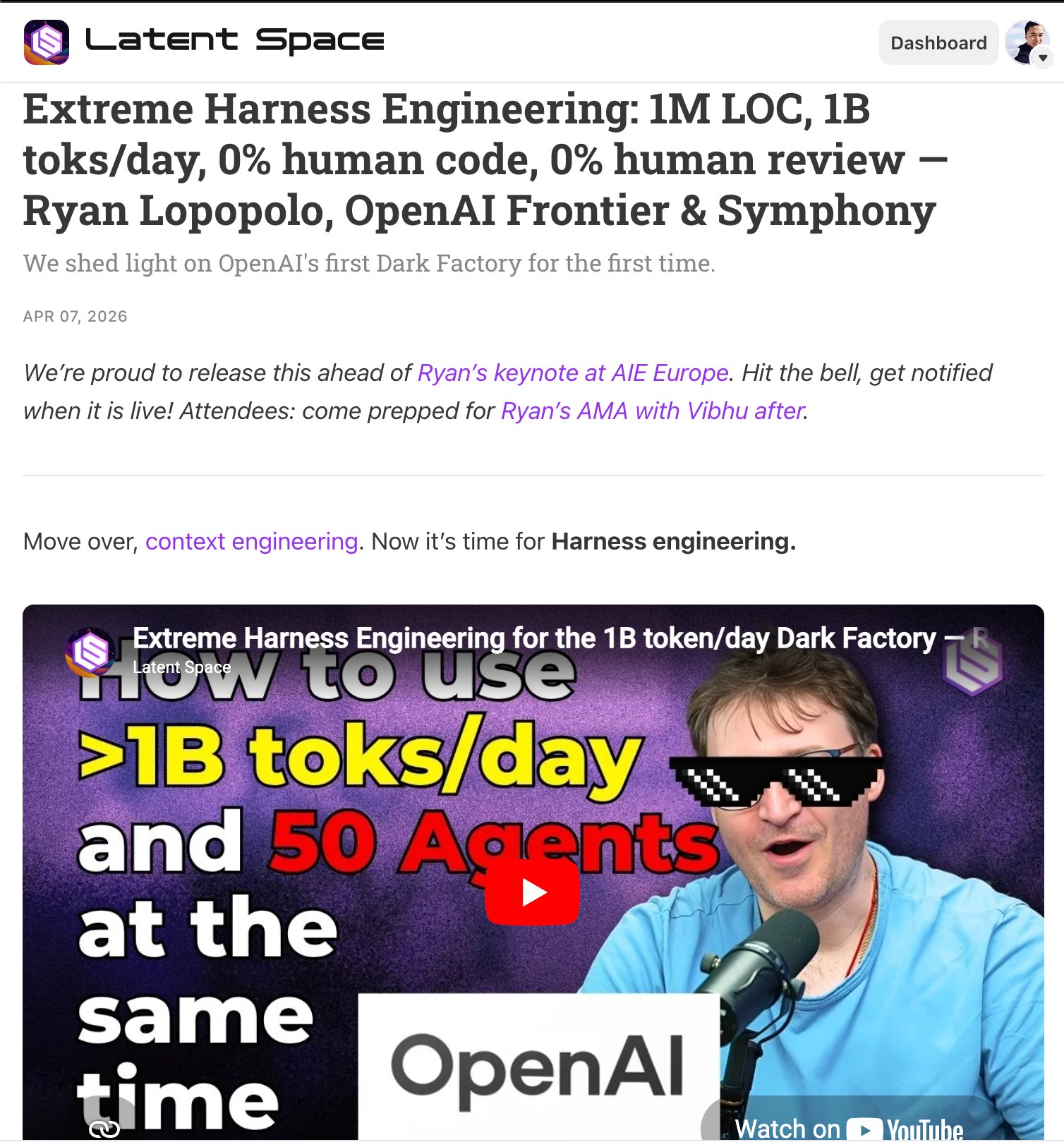
Extreme Harness Engineering: 1M LOC, 1B toks/day, 0% human code, 0% human review https://
latent.space/p/harness-eng @_lopopolo takes us inside @OpenAI Frontier & Symphony, the "ghost library" of Codex Agents with no human code, no human review pre merge, and shines a light on the Dark -
PRC AI Enables Iranian Targeting Through Open Source Intelligence
By
–
I've seen some incredible open source intelligence focused companies supporting our government and industry with phenomenal insights. The PRC has firms doing that too and they are supporting Iran with intelligence precise enough to enable targeting. https://
open.substack.com/pub/bobgourley
/p/how-prc-ai-turned-battlespace-awareness
… -
AI model shows transparent step-by-step reasoning process
By
–
3/ What stood out is that it doesn’t just give an answer right away You can actually see it searching and putting everything together step by step, including how it links rising oil prices to inflation and overall costs, so it doesn’t feel like it’s just guessing
→ View original post on X — @kimmonismus, 2026-04-07 17:02 UTC
-
Gallup Partners With Simile to Replace Polling With AI Simulations
By
–
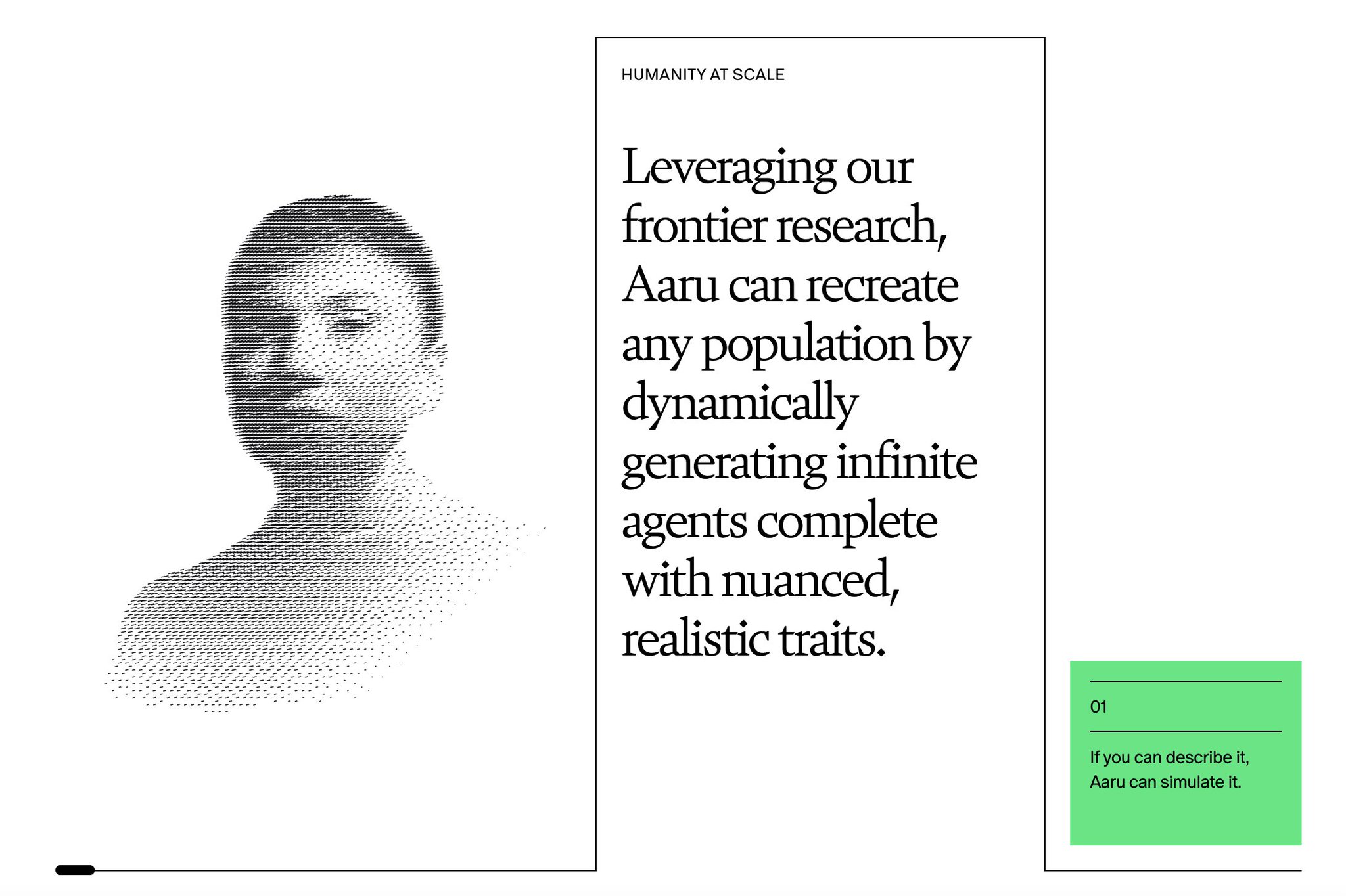
'Silicon sampling' is replacing real humans in public opinion polls with AI simulations. No phone calls or focus groups. Just a language model role-playing as thousands of people who were never asked what they think. Gallup has partnered with a startup called Simile to build