The US frontier labs have all walked away from open weights. They continue to occasionally release excellent open models (Gemma 4, etc), but they are smaller models that are not competitive with their closed weights models. So all eyes are on Chinese AI labs for open models.
RESEARCH
-
AGI trajectory diverges from current local minimum descent
By
–
AGI is in a different direction from the local minimum we’re currently descending to, which means it’s actually getting farther.
-
Open questions about RSI, LLM gains, Chinese models, and open weights
By
–
Lots of open questions: is RSI indeed happening at the Big Three labs? How long can the exponential of LLM ability gain last? How much do Chinese models rely on distillation, and can they keep pace given chip constraints? Will there continue to be frontier open weights models?
-
Frontier AI models: US closed-source leaders, xAI falls behind
By
–
So we now have a pretty good picture of the state of the frontier AI model makers. US closed source models continue to lead. Google, OpenAI, and Anthropic stand well ahead of the pack, and may have signs of recursive self-improvement. xAI has fallen from frontier status for now
-

Matei Zaharia Wins ACM Prize in Computing
By
–
Congratulations to @matei_zaharia on winning this year's ACM Prize in Computing! This is very well-deserved!
-
Amazon Nova 2 trails Sonnet 4.5 and remains in preview
By
–
So what's the deal with Amazon Nova? They released Nova 2 in December, and even then, the top flight Nova 2 model trailed Sonnet 4.5. And it still hasn't left preview.
-
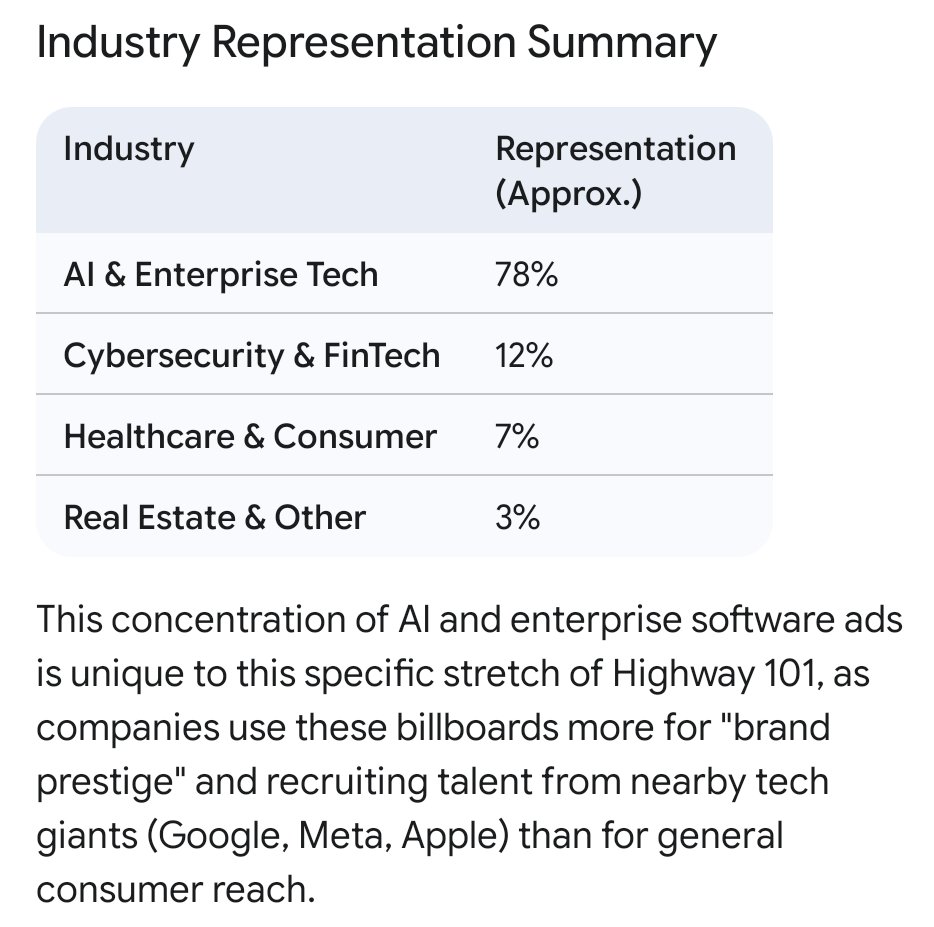
Gemini analyzes billboard advertising industries with AI
By
–
I asked Gemini: "Can you analyze all the billboards listed on https://
101ads.org and give me a report of what industry is represented by the company on each billboard" -
Revela: Efficient AI Retrievers Without Expensive Annotated Datasets
By
–
What if we could train powerful AI retrievers to find specialized information without needing huge, expensive datasets?
— 机器之心 JIQIZHIXIN (@jiqizhixin) 9 avril 2026
A team from TU Darmstadt, University of Washington, CMU, Microsoft, and Tencent AI Lab presents Revela!
Revela leverages self-supervised language modeling. It… pic.twitter.com/bC4emjEYdVWhat if we could train powerful AI retrievers to find specialized information without needing huge, expensive datasets? A team from TU Darmstadt, University of Washington, CMU, Microsoft, and Tencent AI Lab presents Revela! Revela leverages self-supervised language modeling. It teaches retrievers to understand semantic relationships between document segments by predicting "next chunks" of info, integrating retriever similarity scores directly into this learning process. Without any annotated query-document pairs, Revela surpasses larger supervised models and proprietary APIs in code and reasoning-intensive domains. It achieves unsupervised SoTA on general benchmarks with ~1000x less data and 10x less compute! Revela: Dense Retriever Learning via Language Modeling Paper: openreview.net/forum?id=e7pA… Code: github.com/TRUMANCFY/Revela Model: huggingface.co/trumancai/Rev… Our report: mp.weixin.qq.com/s/9TmVSNHMQ… 📬 #PapersAccepted by Jiqizhixin
-
Small AI Model Advancement Outpaces Large Model Development
By
–
Our rate of advancement with the small model has been so fast that the large model has not yet caught up. V15 will be the large model.
-
Digital twin of world created with millimeter accuracy
By
–
They used that data to build a digital twin of the world down to 1 mm accuracy. It is sick