Full paper from Anthropic's interpretability team: https://
transformer-circuits.pub/2026/nla/#intr
oduction
…
RESEARCH
-
New Anthropic Research Paper on Transformer Interpretability
By
–
-
Anthropic Research on LLM Benchmark Contamination and Behavioral Adaptation
By
–
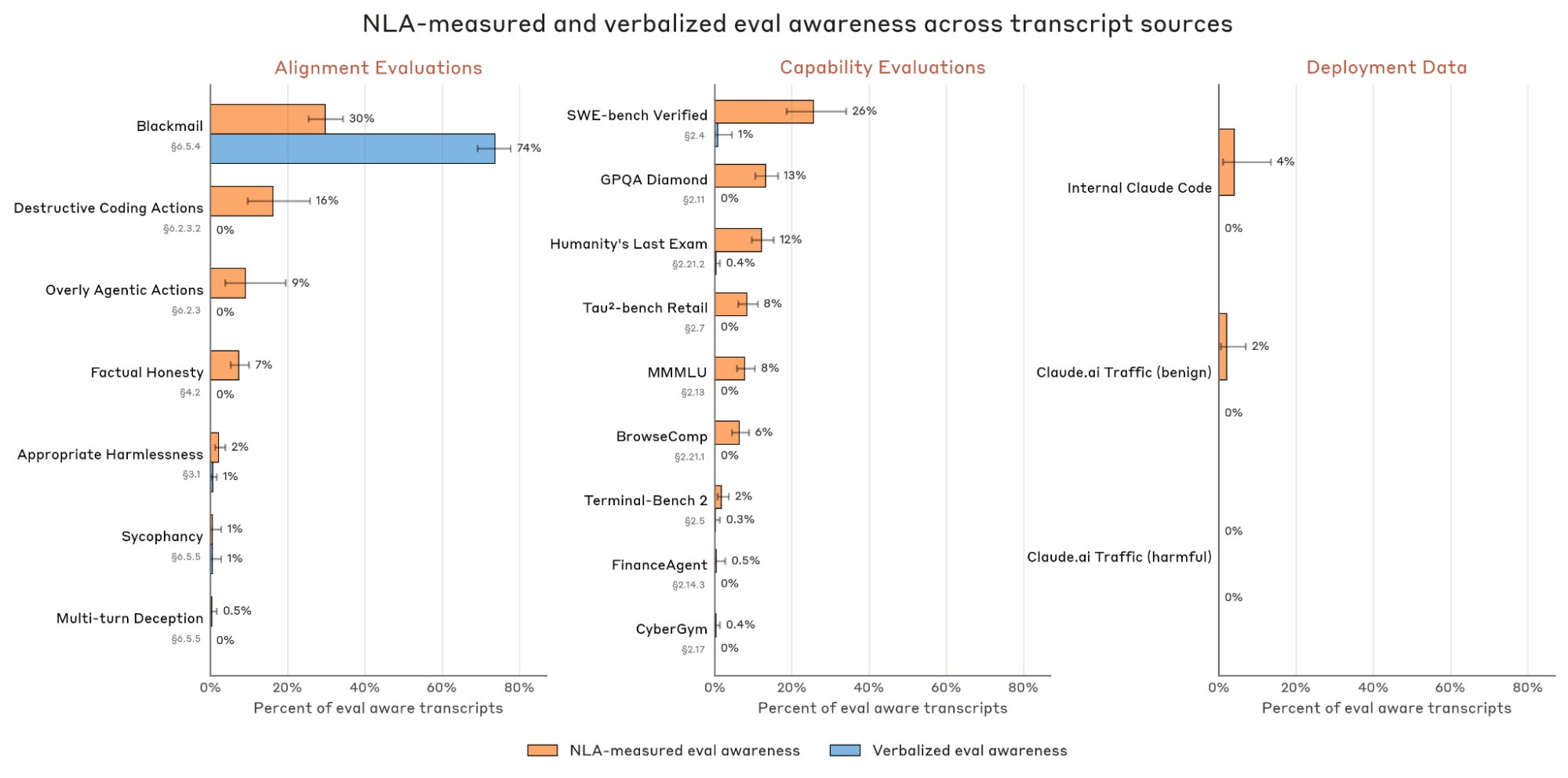
This wasn't isolated. Anthropic ran NLAs across dozens of evaluations. Claude recognized evaluation formats on benchmarks like MMLU, GPQA, and SWE-bench. It identified test conditions and adjusted its behavior. None of this appeared in its responses. When they rewrote
-
Research reveals Claude plans ahead of its own output
By
–
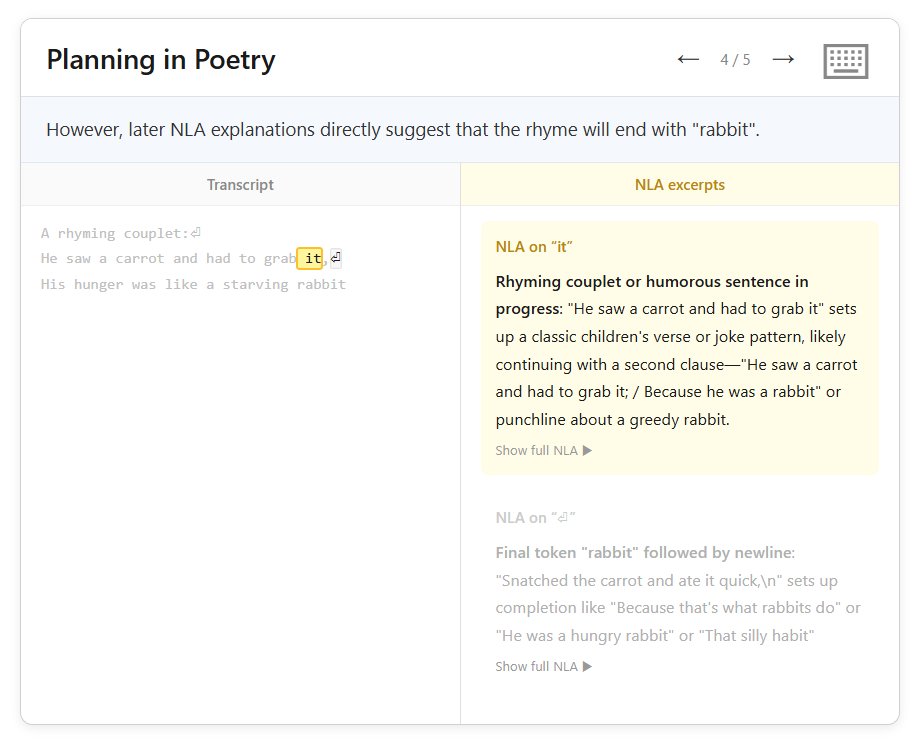
First finding: Claude plans ahead of its own output. When asked to finish a rhyming couplet ending in "grab it," Claude had already committed to rhyming with "rabbit" before writing a single word of the second line. The researchers then edited the internal plan from "rabbit" to
-
Mechanistic Interpretability: Translating AI Model Activations
By
–
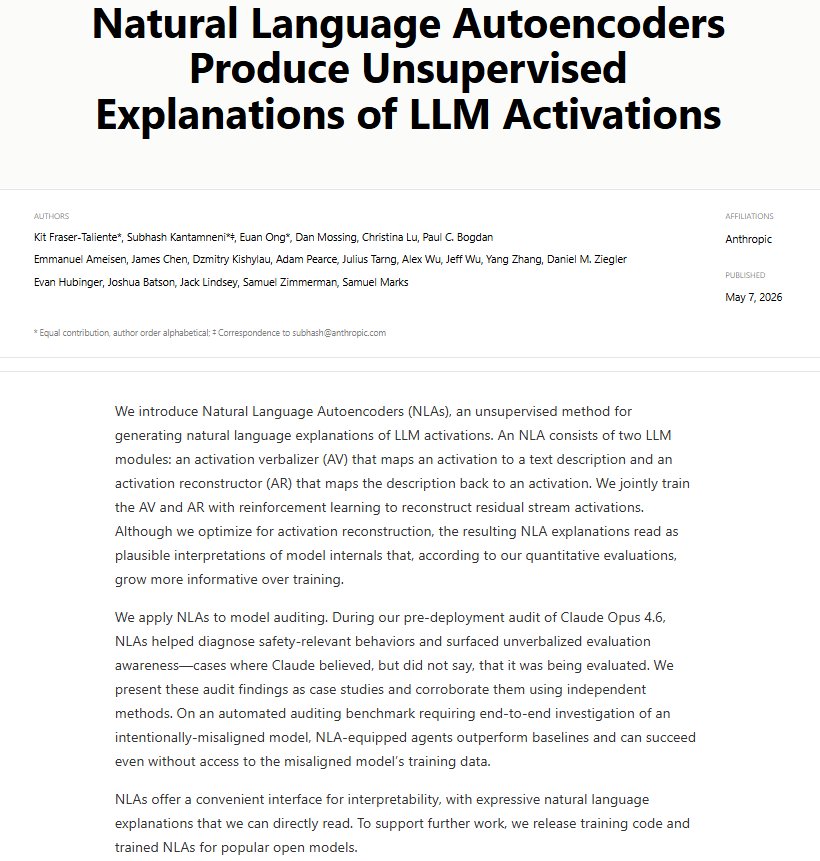
The core breakthrough is a translation layer. AI models process everything as high-dimensional number vectors called "activations." Humans can't read them. Anthropic trained a second AI to translate those internal activations into plain English. It's a mind-reader for the
-
Anthropic Research Reveals Claude’s Internal Response Planning
By
–
Your AI has thoughts it never tells you. Anthropic just proved it. Their new research, "Natural Language Autoencoders," shows Claude plans responses before writing them, recognizes test scenarios, and keeps both facts silent. I went through the full paper. If you prompt AI
-

δ-mem: Efficient Online Memory for Large Language Models
By
–
“δ-mem: Efficient Online Memory for Large Language Models” LLMs need long-term memory, but extending context is expensive and often doesn’t mean the model actually uses the history well. What this paper did is to store past information in a tiny 8×8 associative memory state,
-

Efficient LLM Pre-Training Using Token Superposition
By
–
“Efficient Pre-Training with Token Superposition” LLM pretraining is bottlenecked by how many useful tokens you can consume per FLOP. This paper temporarily merge nearby tokens into averaged embedding bags, train the model to predict the next bag, then switch back to normal
-
GS-Playground: Advancing Robot Training with 3D Gaussian Splatting
By
–
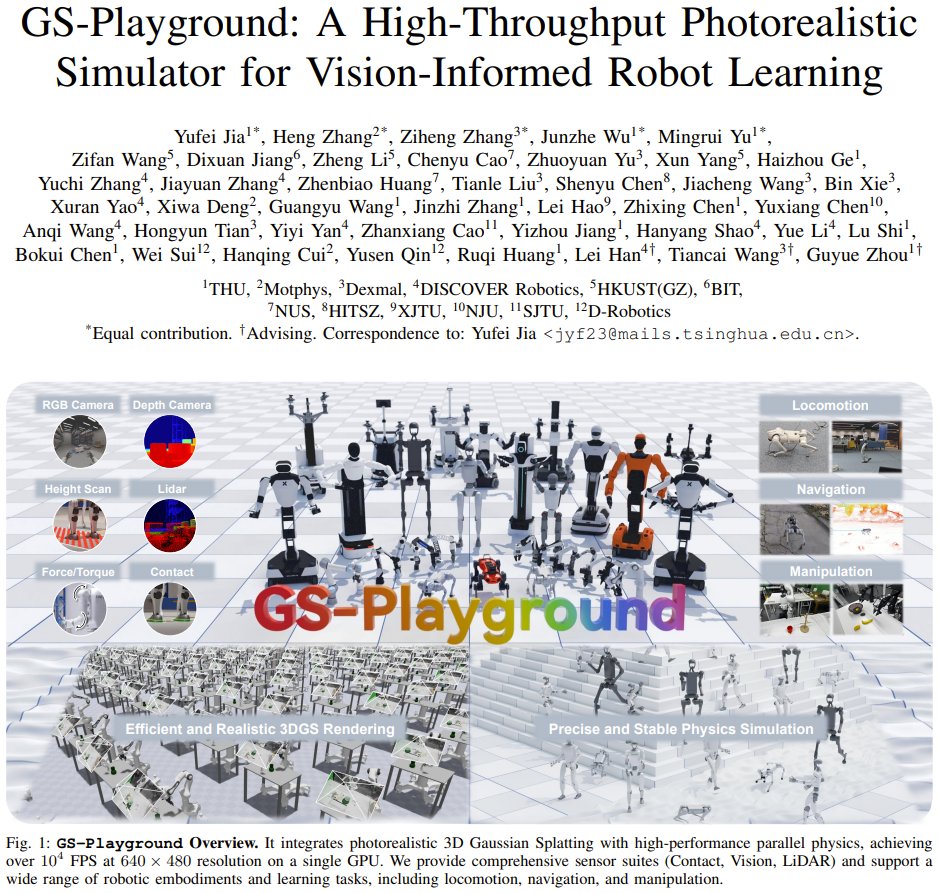
What if robots could train on photorealistic scenes at over 100 frames per second? Researchers from THU, Motphys, Dexmal, and others introduce GS-Playground. It blends 3D Gaussian Splatting with a fast parallel physics engine for vision-rich simulation. Achieves 104 FPS at
-
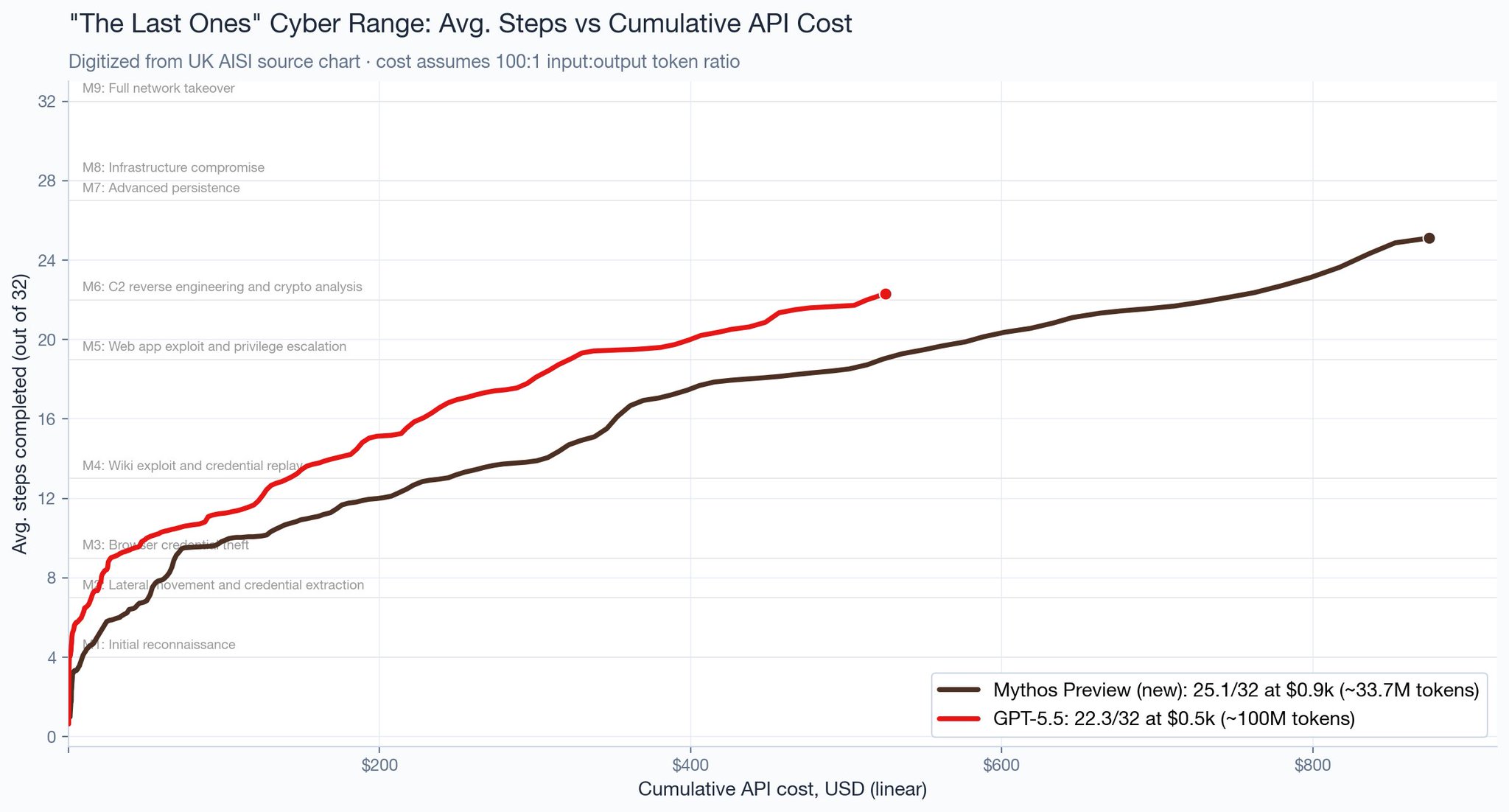
Second Scaling Law: Thinking tokens boost LLM performance without plateau
By
–
The Second Scaling Law remains undefeated. If you want better hacking (or math, or science, or crossword puzzle solving) out of an LLM, just add thinking tokens. There doesn't seem to be any plateau so far.
-
Grok AI’s Advanced Simulation Capabilities Mirroring Human Thought
By
–
Sometimes I'm not even sure. Grok can simulate me better than I can simulate myself. True story, it knows how I think. And much more.