I wonder if Gaussian splats should become a point-like rasterization primitive. You can just brute force it on PC, but on a mobile system you can’t really get to full display resolution with them today.
RESEARCH
-
The Trade-off Between Browsing Capability and LLM Creative Magic
By
–
Browsing is great for information retrieval and massively reduces hallucinations, but I feel that it is easy for models that browse to lose some of the “magic” of large language models. What I mean by magic is when language models give rich, organic responses reflecting the
-
AlphaGeometry Impresses IMO Legend with Elegant Math Solutions
By
–
Last month, I showed #AlphaGeometry solution to my Olympiad math teacher, Dr Le Ba Khanh Trinh, who was quite legendary in Vietnam as he ranked #1 at IMO 1979 with a special prize given for solving a geometry problem that year so elegantly. Dr. Le was quite impressed as the
-

AlphaGeometry Solves IMO 2015 Problem with Neural Assistance
By
–
In case you wonder how an #AlphaGeometry solution looks like, check out the full solution (109 step!) here. In this IMO 2015, problem #3, the symbolic component asked for help from the neural language models 3 times (the auxiliary constructions in blue) before succeeding 🙂
-

ASPIRE Framework Enhances LLM Selective Prediction with Confidence Scores
By
–
Introducing ASPIRE, a framework that enhances the selective prediction capabilities of large language models, enabling them to output an answer paired with a confidence score. Learn how it outperforms state-of-the-art methods on a variety of QA datasets. →… pic.twitter.com/G8E3FA0XI6
— Google AI (@GoogleAI) 18 janvier 2024Introducing ASPIRE, a framework that enhances the selective prediction capabilities of large language models, enabling them to output an answer paired with a confidence score. Learn how it outperforms state-of-the-art methods on a variety of QA datasets. →
-
Predicting AI timelines remains challenging for tech forecasters
By
–
Sure, timelines in tech are hard to predict. I also thought AI would come sooner.
-
Stanford AI Tool Helps Composers with Anticipatory Music Transformer
By
–
In this video, @Stanford scholar @jwthickstun demos the Anticipatory Music Transformer, a new AI tool for composers:
-

Stanford AI Improves Type 1 Diabetes Patient Care Quality
By
–
This research team is developing AI to improve patient care for type 1 diabetes. “We have an opportunity to improve care at the patient level, the process for the clinician, and the quality of life for families,” said @Stanford professor David Maahs. https://
stanford.io/3HniqWA -
Flow Engineering Boosts Code Generation Performance Significantly
By
–
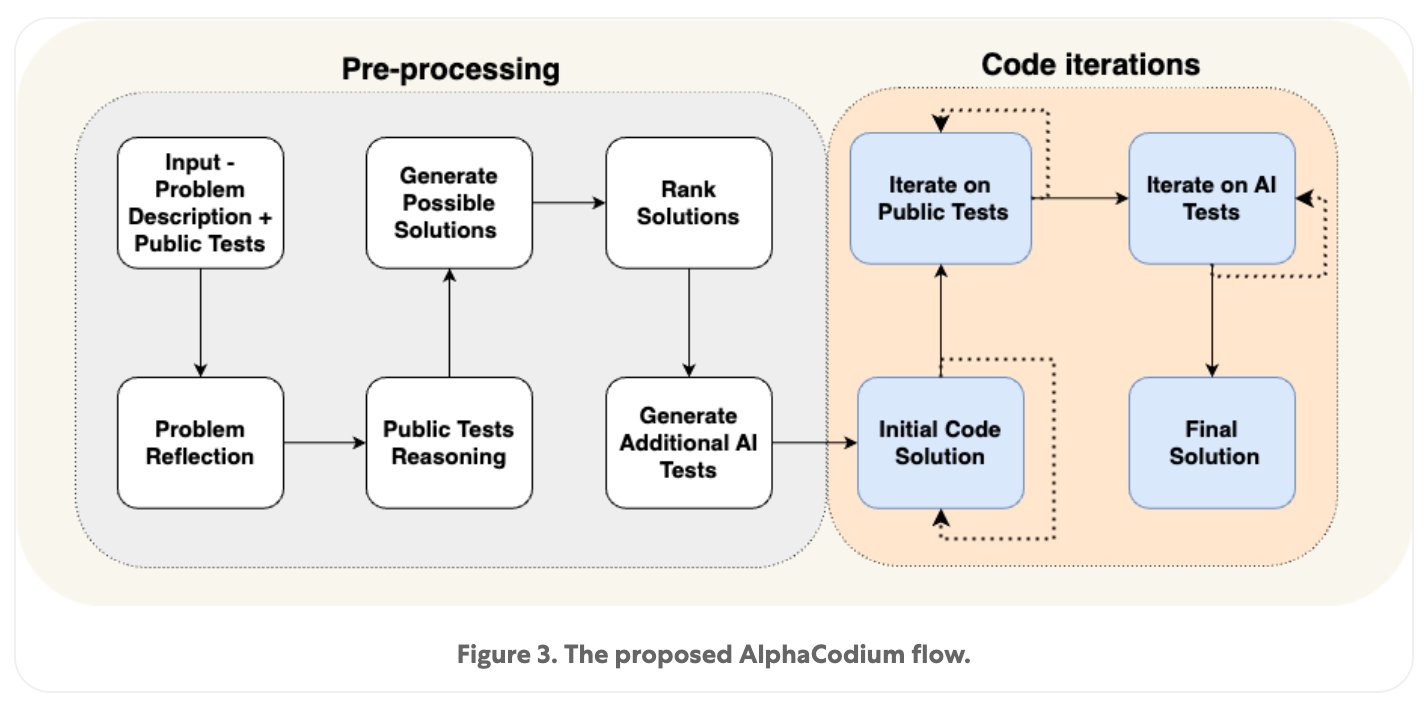
Prompt engineering (or rather "Flow engineering") intensifies for code generation. Great reading and a reminder of how much alpha there is (pass@5 19% to 44%) in moving from a naive prompt:answer paradigm to a "flow" paradigm, where the answer is constructed iteratively.
-

GTC24 Conference Explores RAG and AI Innovation Potential
By
–
Exciting #GTC24 Announcement! Attend enlightening sessions led by visionary CEOs, data scientists, and industry experts to explore the potential of retrieval-augmented generation (#RAG). Register now to revolutionize your AI projects: https://
nvda.ws/47EYc5e