A former MIT researcher just mapped the path from a worm to a digital human brain. The plan scales from a 302-neuron worm to 86 billion neurons. Three technologies are making this tractable. 1. High-resolution imaging now maps neurons at scale
2. Functional scans capture
RESEARCH
-

MIT Researcher Maps Path From Worm to Digital Human Brain
By
–
-
Little Evidence LLMs Improve Patient or Doctor Health Outcomes
By
–
“In summary, there is very little evidence for LLMs benefiting patients or doctors for health outcomes” – Dr. @EricTopol Read his full review here: https://
open.substack.com/pub/erictopol/
p/the-paradox-of-medical-ai-implementation?selection=0babca4b-a31e-4e24-897e-37b939fd3b92&r=8tdk6&utm_medium=ios
… -

AI Cell Modeling Could Accelerate Medical Cures
By
–
If #AI Can Model Cells, Science Can Deliver Cures
by Priscilla Chan @time Learn more: https://
bit.ly/4ta5RDA #ArtificialIntelligence #ML #MachineLearning -
Open Source Models Still Trail Frontier Models in Capabilities
By
–
Los modelos OSS ya tienen muy buenas capacidades para resolver muchas tareas, peeeeero aún están atrás de los modelos frontera.
-

ASCII Emoticons Can Trick LLMs Into Generating Harmful Code
By
–
Can smiley faces break AI? Researchers from Xi’an Jiaotong University, NTU, and UMass Amherst reveal a new LLM vulnerability: emoticon semantic confusion. ASCII emoticons like 🙂 can trick models into misinterpreting intent, leading to harmful code generation. Their study,
-
Domain-Specific Neurosymbolic AI Offers More Hope Than LLMs for Science
By
–
Agreed with the first part, but I think the nuanced part is what you mean by “this technology”. AI may help all of this, but pure, domain-general LLMs per se probably won’t. Domain-specific neurosymbolic hybrids offer more hope for science than chatbots do. See my October NYT
-
Diverse Simulated Personas Boost ReviewerToo Performance
By
–
Oh, and in case that's interesting: one data point supporting the value of diversity in point of view from our work on ReviewerToo is that we get the best results when we pool more simulated reviewing personas in our system
-
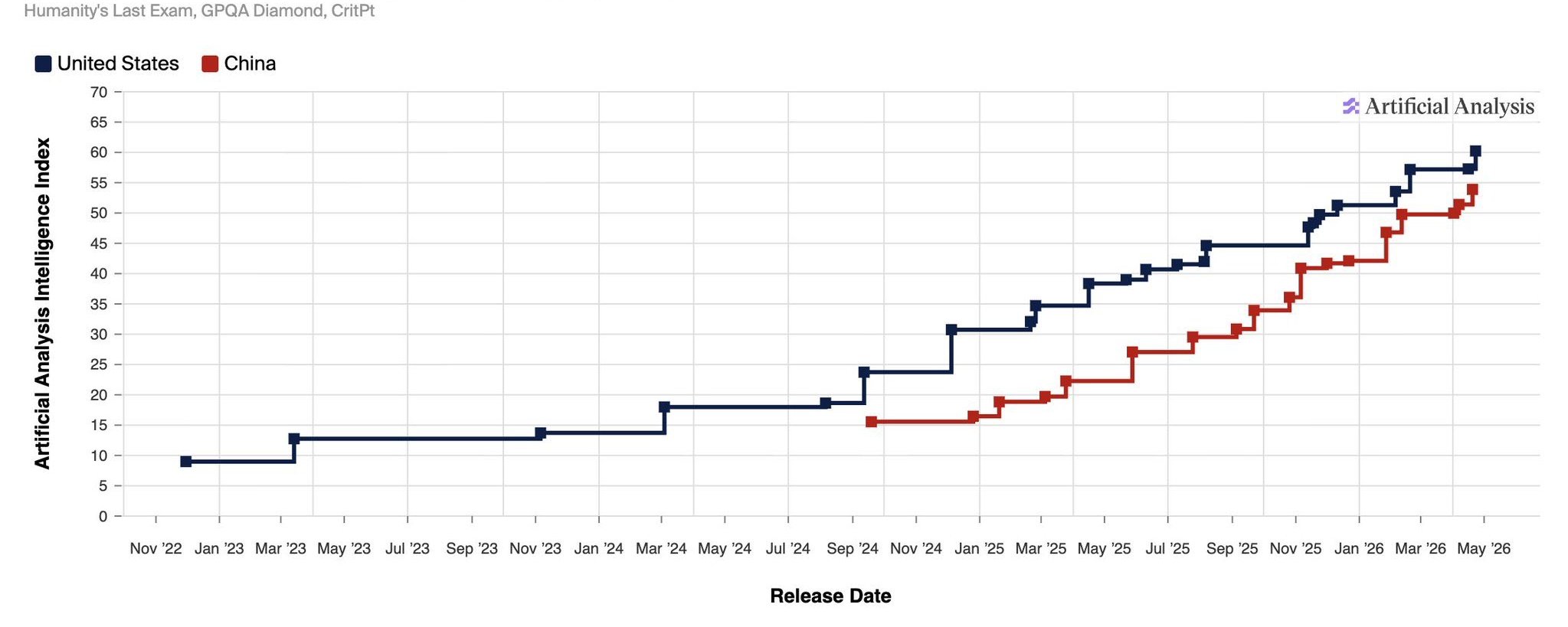
Open vs Closed AI Models: Beyond Benchmark Gaps
By
–
This is a good explanation of why the gap between open and closed models is larger than it appears in benchmarks. I would add in that current open models are also more fragile than closed: they handle out-of-distribution problems far less well & have lower emergent capabilities.
-
Origami Wheels Enable Shape-Shifting Mobility for Adaptive Robots
By
–
Origami Wheels Enable Shape-Shifting Mobility for Adaptive #Robots
— Ronald van Loon (@Ronald_vanLoon) 3 mai 2026
by @im_Akm1
#EmergingTech #Technology #Innovation pic.twitter.com/ASyvQSNqKWOrigami Wheels Enable Shape-Shifting Mobility for Adaptive #Robots
by @im_Akm1 #EmergingTech #Technology #Innovation -
Frontier Agent Benchmarking Struggles to Capture Real Progress
By
–
Its getting hard to benchmark frontier agent performance on longer tasks. Repeated measurement is very expensive and there are differences between using models in harnesses versus via APIs. I suspect benchmarks understate progress, they are built for models, not harnessed agents