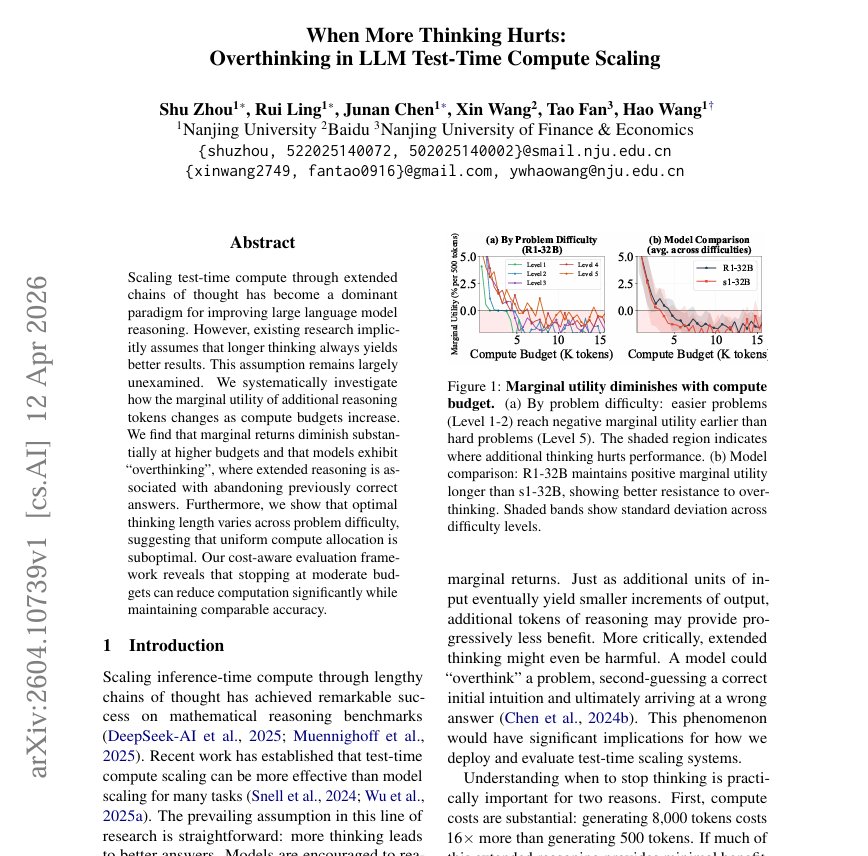
The most useful finding for anyone using AI daily: When they capped reasoning at 60% of the model's natural length, it maintained 97% of peak accuracy. Longer natural outputs also correlated with lower accuracy. 71.9% accuracy under 4K tokens. 44.7% accuracy above 12K. The
RESEARCH
-
Impact of Reasoning Budgets on LLM Prompt Engineering
By
–
Here's what it means for prompt engineering: They tracked individual answers across 32 reasoning budgets from 500 to 16,000 tokens. At ~7,000 tokens, something flips. The model starts abandoning correct answers MORE often than it finds new ones. They call it "negative flips."
-
New research suggests longer chain-of-thought reasoning can degrade AI performance
By
–
RIP "think step by step." Nanjing University and Baidu just published a paper that proves longer AI reasoning actively flips correct answers to wrong ones, and the implications are brutal for every prompt engineer using chain-of-thought.
-
NVIDIA and Oxford Research Propose Non-Backpropagation Learning for Neural Networks
By
–
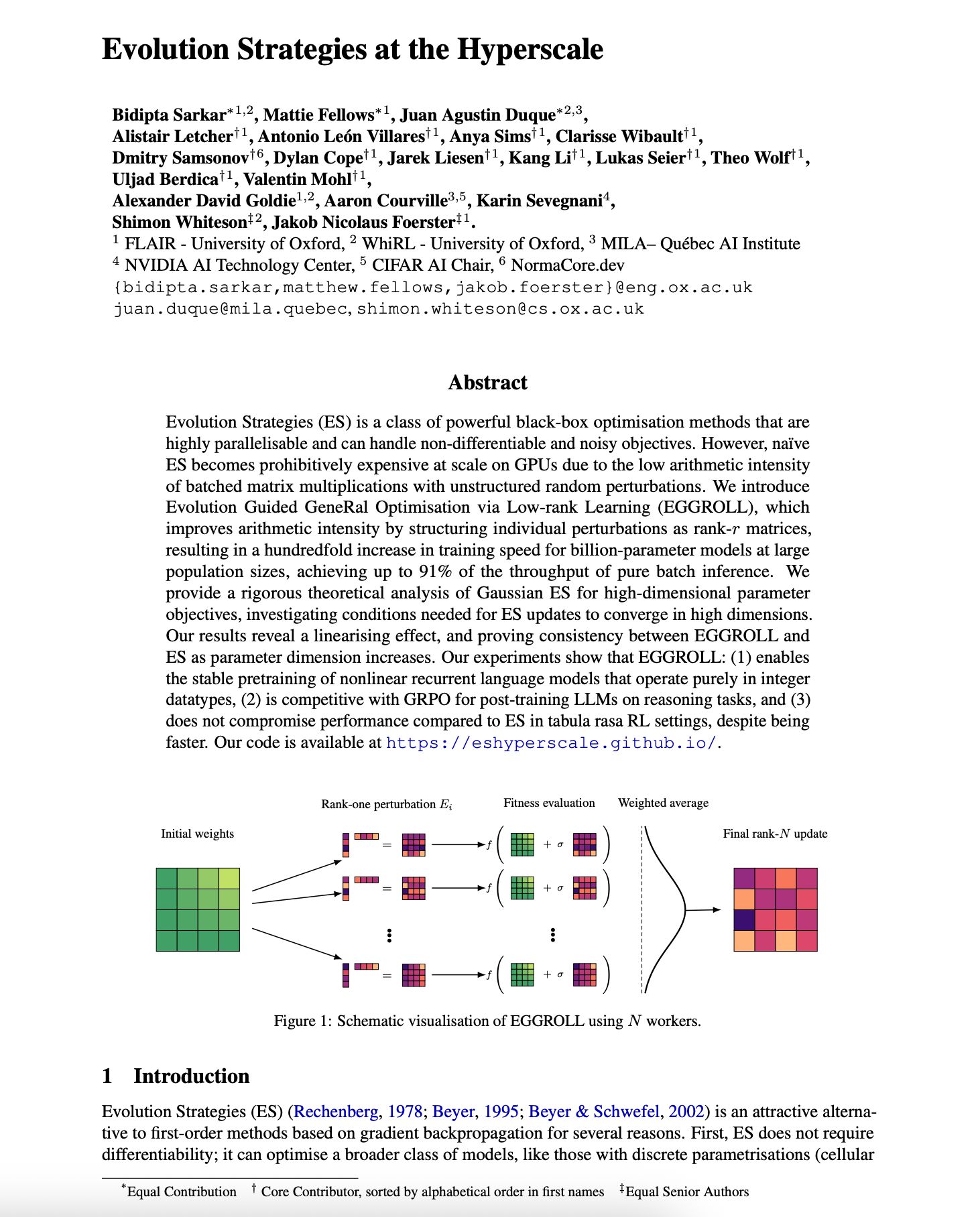
NVIDIA just proved AI doesn't need backpropagation to learn anymore. Training giant neural networks has meant one thing for a decade. You run backpropagation, compute gradients, and update weights with calculus. A new paper from NVIDIA and Oxford breaks that assumption.
-
On agents estimating expectations and the role of rewards
By
–
An agent estimating probabilities on how to act is mathematically estimating expectations over sets. So it can learn expected returns or value signals. But, again, that is NOT how rewards are used in modern AI. In AI rewards are often defined and created by humans. This, at its
-
Elsevier Launches LeapSpace AI for Scientific Research
By
–
The need for purpose-built AI solutions that draw on trusted scientific content and data to support researchers’ critical thinking is growing.
— Catherine Adenle (@CatherineAdenle) 19 mai 2026
Forbes recently highlighted LeapSpace, Elsevier’s research-grade AI-assisted workspace that helps academic and corporate scientists… pic.twitter.com/pw8yFH7ArJThe need for purpose-built AI solutions that draw on trusted scientific content and data to support researchers’ critical thinking is growing. Forbes recently highlighted LeapSpace, Elsevier’s research-grade AI-assisted workspace that helps academic and corporate scientists
-
Professor says transformers paper would fail his student
By
–
If the transformers paper was written by one of my students, I wouldn’t let him graduate until he did a better job.
-
Deep Learning Papers Confusing Because Researchers Are Confused
By
–
Deep learning papers are confusing because deep learning researchers are confused.
-
Instruct vs Thinking Models: Cost, Speed, and Trade-offs
By
–
Instruct vs thinking models, in one line:
— Satya Mallick (@LearnOpenCV) 19 mai 2026
System 1 vs System 2 — with a 5–20x cost-and-speed gap.
If the task doesn't need planning or multi-step reasoning, the thinking model isn't smarter. Just slower, pricier, and more likely to hallucinate.
— Dr. Satya Mallick, CEO @ OpenCV… pic.twitter.com/QcHpeXyVHDInstruct vs thinking models, in one line:
System 1 vs System 2 — with a 5–20x cost-and-speed gap.
If the task doesn't need planning or multi-step reasoning, the thinking model isn't smarter. Just slower, pricier, and more likely to hallucinate.
— Dr. Satya Mallick, CEO @ OpenCV -
Technical Analysis of Optimal Mixture-of-Experts Model Configuration
By
–
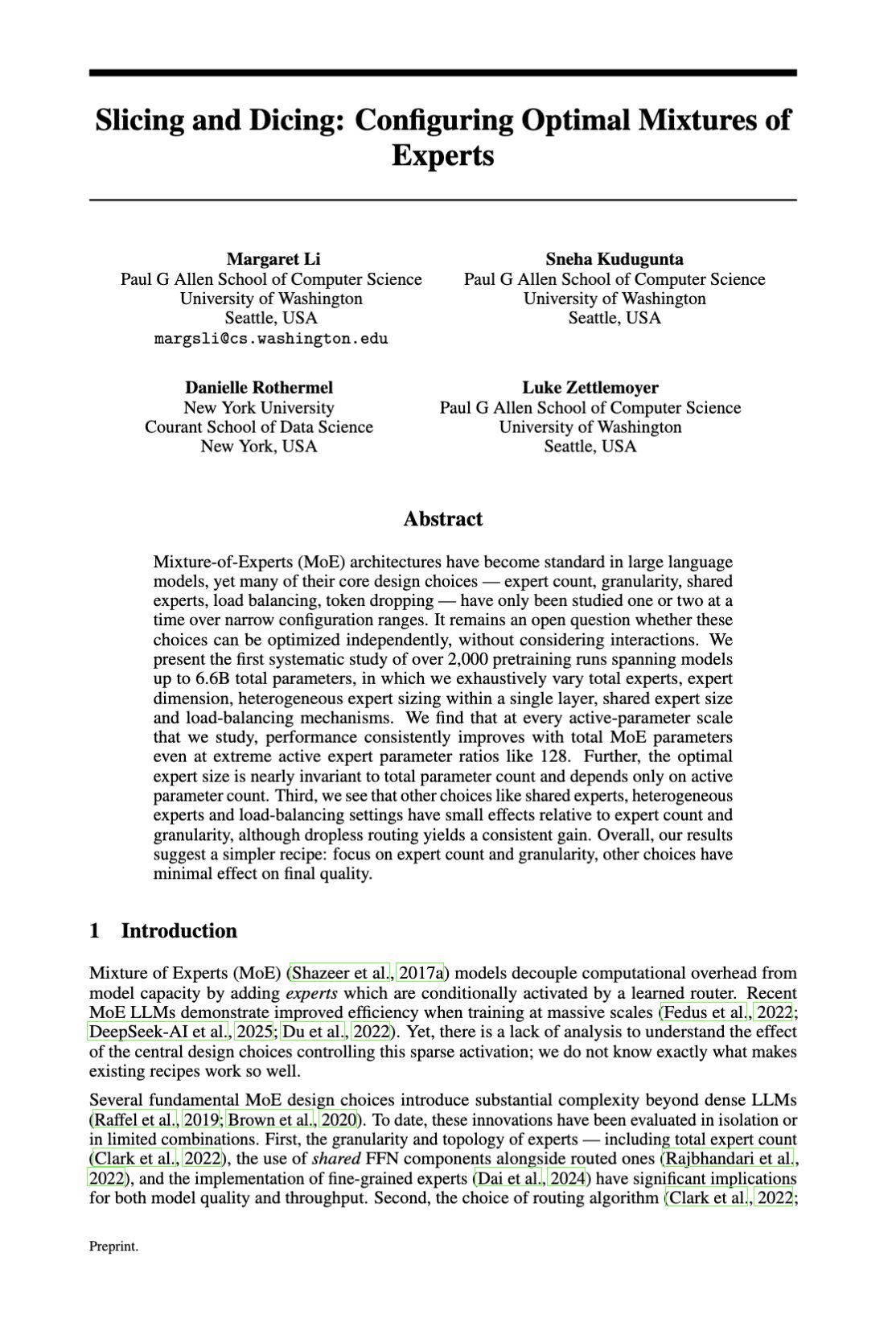
"Slicing and Dicing: Configuring Optimal MoE" MoE models have a huge design space, but most choices are overcomplicated. This paper runs 2,000+ pretraining runs up to 6.6B params and finds the key knobs are mostly expert count and expert granularity. Adding more inactive