
GLM-5: A new SoTA open weights, that BEATS Gemini-3-Pro!? A big push from vibe coding -> agentic engineering, with it being able to plan, act, and iterate over long workflows, not just spit out code. GLM-5 scales to 744B params (40B active MoE) and targets 200k contexts, with
RESEARCH
-
Claude Sonnet 4.6 Enables Advanced Research Paper Analysis
By
–
Introducing Claude Sonnet 4.6 for understanding research papers 🚀
— alphaXiv (@askalphaxiv) 18 février 2026
Highlight any section of a paper to ask questions and “@” other papers for quick context, comparisons, and benchmark references pic.twitter.com/60eq7dLtEzIntroducing Claude Sonnet 4.6 for understanding research papers Highlight any section of a paper to ask questions and “@” other papers for quick context, comparisons, and benchmark references
-

AI Fundamentals Matter More Than Flashy Robot Demos
By
–
The recent Golgotia university incident at the India AI Impact Summit 2026 is a reminder that AI isn’t about flashy demos or showing off robots — it’s about understanding fundamentals. Seeing a robot on stage is cool, but if you don’t understand: ✔️ Mathematics ✔️ Algorithms ✔️ Model design ✔️ Training & evaluation ✔️ Data fundamentals then it’s just hype, not real AI. Let’s focus on building deep AI knowledge, not just showcasing gadgets. India needs strong AI practitioners — not misplaced pride. Fundamentals first. Always.Stop the hype and tell students and better way to learn. #indiaaiimpact #ai2026
→ View original post on X — @krishnaik06, 2026-02-18 13:23 UTC
-
Elsevier enhances manuscript submission platform for researchers
By
–
Elsevier makes manuscript submission and review simpler, clearer, and faster. Their latest platform enhancements include a more intuitive submission experience that saves an average of 60 minutes. Watch. 👇 #Elsevier #Researchers #Editors #Publishing #Reviewers pic.twitter.com/L13ENe1oxw
— Catherine Adenle (@CatherineAdenle) 18 février 2026Elsevier makes manuscript submission and review simpler, clearer, and faster. Their latest platform enhancements include a more intuitive submission experience that saves an average of 60 minutes. Watch. #Elsevier #Researchers #Editors #Publishing #Reviewers
-
Medical AI Systems Show Critical Vulnerabilities in Clinical Use
By
–
AI medical advice: Not ready for prime time. A study by the Icahn School of Medicine at Mount Sinai, published in The Lancet Digital Health, reveals vulnerabilities in medical AI systems. https://
geneticliteracyproject.org/2026/02/17/ai-
medical-advice-not-ready-for-prime-time/
… #research #AI #healthcare #medicine -
Small team builds AI-powered OS in a weekend at Stanford
By
–
A small team created an AI made operating system in a weekend at Stanford University. Now do you get why @hackwithtrees was so epic?
-
AI for Science Discussion at IISC Bangalore India
By
–
Thanks for hosting me @iiscbangalore
! Really enjoyed talking with Prof. Rangarajan & Varun Mayya @waitin4agi_ about AI for Science. Impressed by the energy and enthusiasm for AI in India, especially from the young. Great to see the statue of Ramanujan, one of my all-time heroes! -
Research: AI use inflates self-assessment and flattens Dunning–Kruger
By
–
Researchers find that the more people use #AI, the more likely they are to overestimate their own abilities, regardless of actual skill, flattening the Dunning-Kruger curve. The "cognitive offloading" reduces critical thinking & metacognitive monitoring.
-
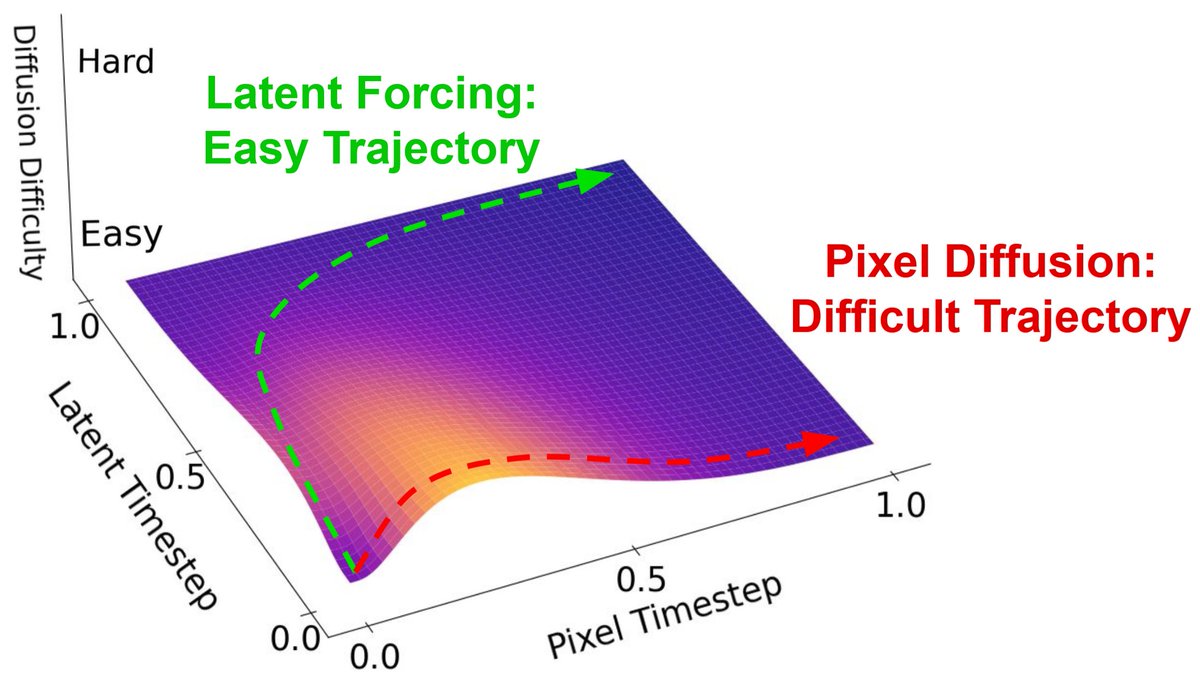
Order Matters in Diffusion: Latent Forcing Approach
By
–
Order matters in diffusion. Check out our latest work! Alan Baade (@BaadeAlan) What's the right space to diffuse in: Raw Data or Latents? Why not both! In Latent Forcing, we order a joint diffusion trajectory to reveal Latents before Pixels, leading to improved convergence while being lossless at encoding and end-to-end at inference. w/ @drfeifei+… 1/n — https://nitter.net/BaadeAlan/status/2023861354093052072#m
-
Opus 4.6 Major Blunder Raises Concerns About Model Reliability
By
–
some of both, maybe? it won’t be the last big Opus 4.6 blunder, i am sure.