
More SotA model architectures on KerasHub…
RESEARCH
-
Profiling Diffusion Pipelines with Claude for torch.compile Optimization
By
–
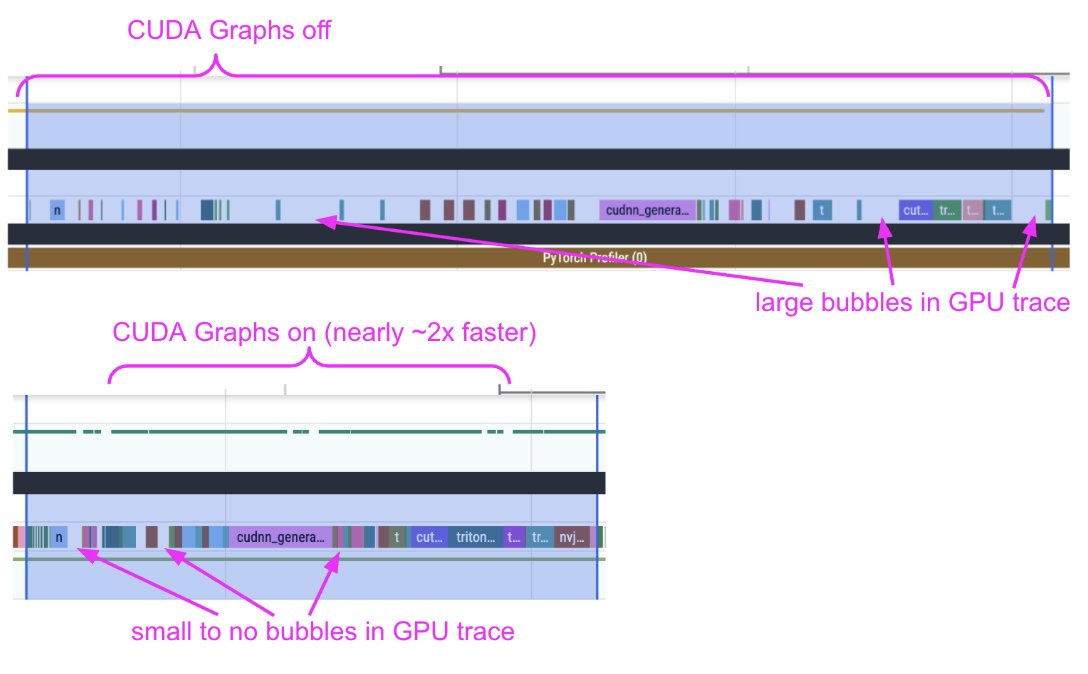
We're shipping an elaborate guide on how to profile diffusion pipelines in Diffusers to set them up for success with `torch.compile` 🔥 We devised a workflow with Claude & it turned out to be quite effective. It served its purpose well. With the help of the trace alone, we uncovered: 1. CPU <-> GPU syncs 2. CPU overheads 3. Kernel launch delays When we provided the profile trace and our observations from the trace to Claude, and helped us get rid of the issues, it did well. However, it did so iteratively. The process was intellectually fun and engaging!
→ View original post on X — @huggingface, 2026-04-03 17:07 UTC
-
Marc Andreessen’s 2026 AI Thesis: Agents and Open Source
By
–
🆕 Marc Andreessen’s 2026 AI Thesis: Agents, Open Source, and Why This Time Is Differenthttps://t.co/wmu0s7vyLn@pmarca of @a16z says AI people keep swinging between utopian and apocalyptic for one simple reason: this field has been “almost here” for 80 years. But now, the… pic.twitter.com/kYnLP5jZh1
— Latent.Space (@latentspacepod) 3 avril 2026🆕 Marc Andreessen’s 2026 AI Thesis: Agents, Open Source, and Why This Time Is Different latent.space/p/pmarca @pmarca of @a16z says AI people keep swinging between utopian and apocalyptic for one simple reason: this field has been “almost here” for 80 years. But now, the breakthroughs are no longer theoretical. Reasoning, coding, agents, and self-improvement are all starting to work at once. This episode goes deep on AI winters, OpenAI + OpenClaw, infrastructure overbuild risk, proof-of-human, why software may soon be written mostly for bots, and why the real bottleneck may be society adopting AI rather than the models improving.
-

CS231N’s 11th Year: AI Attracts Students Across All Stanford Schools
By
–

It’s 11th year and counting! Teaching the first lecture of @cs231n every year has been a highlight of my spring seasons. As usual, I asked students which departments or schools they come from @Stanford . Increasingly, students raise their hands to indicate that they come from all seven schools on campus, from @StanfordEng to @StanfordMed @StanfordHumSci @StanfordGSB @StanfordLaw @StanfordEd @stanforddoerr . AI is truly a horizontal technology that excites students across all backgrounds and disciplines!🤩
-
Clarifying the Definition of RAG in AI
By
–
From the replies it is clear there is still no agreement what RAG is, so I guess the truth of my statement depends on your definition of RAG.
-

Teaching LLMs to Reason Like Bayesians
By
–
Teaching LLMs to reason like Bayesians buff.ly/oZEF0YH #AI #MachineLearning #DeepLearning #LLMs #DataScience
→ View original post on X — @miketamir, 2026-04-03 16:49 UTC
-
Gemma 4 Checkpoints Available on Hugging Face with Apache License
By
–
Thanks for following us!
— Google Gemma (@googlegemma) 3 avril 2026
We're excited to see what you all build with Gemma 4!
In case you missed it, you can find all our checkpoints, with an Apache 2.0 License, on Hugging Face: pic.twitter.com/64t6fSefw4Thanks for following us! We're excited to see what you all build with Gemma 4! In case you missed it, you can find all our checkpoints, with an Apache 2.0 License, on Hugging Face:
→ View original post on X — @huggingface, 2026-04-03 16:43 UTC
-
METR Study Shows Mixed Results on AI Model Capabilities
By
–
most recent, somewhat mixed METR study below (and Claude Code may change things):
-
MultiGen: Level Design for Editable Multiplayer Worlds in Diffusion Engines
By
–
MultiGen
— AK (@_akhaliq) 3 avril 2026
Level-Design for Editable Multiplayer Worlds in Diffusion Game Engines
paper: https://t.co/UT01uUYBxj pic.twitter.com/AMY0bDusAjMultiGen Level-Design for Editable Multiplayer Worlds in Diffusion Game Engines paper: huggingface.co/papers/2603.0…
-
Frozen Data Limitations in LLM Reasoning Systems
By
–
it’s an issue of using frozen data in lieu of reasoning etc