AI Dynamics

Global AI News Aggregator

About

MACHINE LEARNING

  • Industrial AI: Real-Time Prevention vs Legacy Batch Processing

    Legacy AI: retrospective batch data, centralized cloud, thousands of defect images.
    Industrial AI: real-time context, liquid edge computing, 10 synthetic samples.
    One tells you what happened. The other prevents it.

    → View original post on X — @fogoros

  • Building Blocks of Coding Agents: Context, Tools, Memory
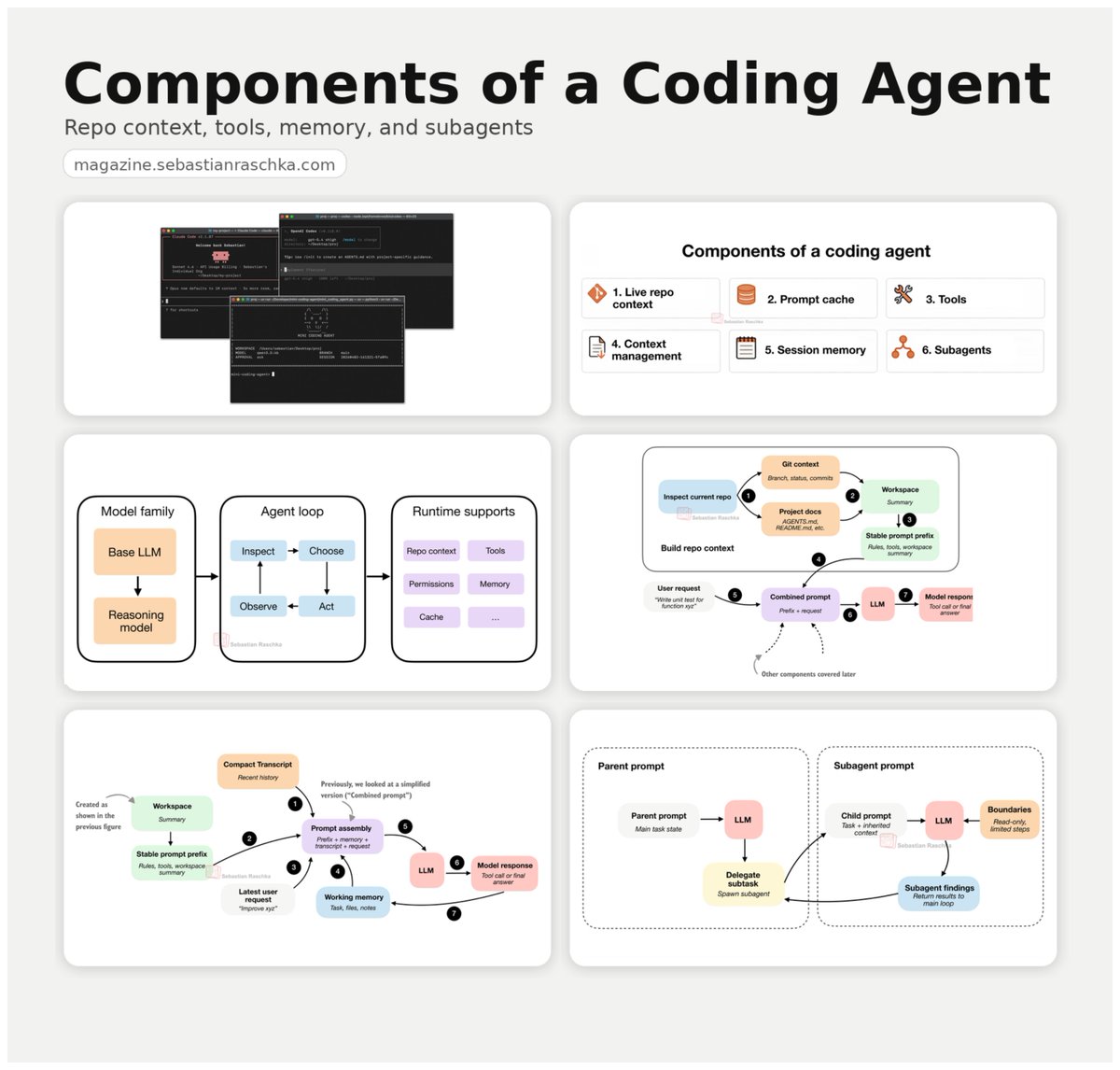
    Building Blocks of Coding Agents: Context, Tools, Memory

    Components of a coding agent: a little write-up on the building blocks behind coding agents, from repo context and tool use to memory and delegation. Link: magazine.sebastianraschka.co…

    → View original post on X — @randal_olson, 2026-04-04 13:37 UTC

  • Grok-4.20-Beta 1 Dominates Medical AI Rankings with Multi-Agent Architecture
    Grok-4.20-Beta 1 Dominates Medical AI Rankings with Multi-Agent Architecture

    🚨 Grok-4.20-Beta 1 just took the #1 spot in Medicine & Healthcare on Arena — and it’s not even close. With style control enabled, Grok isn’t just accurate — it’s adaptable, aligning responses to clinical context and communication needs. Even more impressive? 👉 The multi-agent version ranked #3 That means xAI now holds 2 of the top 3 positions in medical AI. Let that sink in. 🧠 Why this matters (beyond rankings) Medicine is one of the hardest domains for AI to excel in: – Zero tolerance for hallucinations – High-stakes, life-or-death decision support – Complex, context-heavy reasoning – Need for both precision and clarity And yet — Grok is not just performing well in benchmarks… 👉 It’s already being used in real-world, critical medical scenarios, helping guide decisions where timing and accuracy matter most. ⚙️ Technical Insight What stands out here is the combination of: – Style-controlled generation → tailoring outputs for clinicians vs patients – Multi-agent orchestration → distributed reasoning across specialized agents – High factual grounding → critical for clinical reliability This signals a shift from “general-purpose LLMs” → domain-optimized AI systems with structured reasoning layers 🏗️ Architecture Takeaways We’re seeing a clear pattern emerge in next-gen AI systems: 1. Single-model excellence is no longer enough → Multi-agent systems are becoming the new frontier 2. Control > Raw Intelligence → Style control, guardrails, and contextual tuning are essential in healthcare 3. Real-world validation beats benchmark hype → Impact in live medical scenarios is the true benchmark 🌍 Bigger Picture Grok isn’t just chasing leaderboard positions. It’s being positioned as an AI that can actually help humanity in its most critical moments. And in medicine — that’s the ultimate test. This milestone isn’t just about dominance… It’s about trust. 🔗 Follow my communities and personal initiatives: – Amazing AI, Data, Quantum Computing & Emerging Technologies — drdebashisdutta.com/ – Research & Innovation – Quantum, AI & Advanced Systems — researchedge.org/

    → View original post on X — @debashis_dutta, 2026-04-04 13:34 UTC

  • The Well: Open-Source Library of Physics Simulations for AI
    The Well: Open-Source Library of Physics Simulations for AI

    Imagine trying to teach someone how to swim just by letting them read books about water. That is how we have been training AI on physics, using text descriptions. To really learn, you need to get in the water. "The Well" is that water. Polymathic AI has released a massive 15TB open-source library of physics simulations. It allows AI models to experience physical phenomena directly. Instead of reading about a supernova, the model processes the actual data of the explosion. Instead of reading about aerodynamics, it analyzes the fluid flow. This moves us from [Generative AI] (making things up) to [Scientific AI] (discovering truth). A huge step forward for open science. GitHub Repo: github.com/PolymathicAI/the_well/ [Translated from EN to English]

    → View original post on X — @nandodf, 2026-04-04 13:00 UTC

  • Building Robots with First-Person Vision Technology

    Seeing Through Its Own Eyes: Building a #Robot with True First-Person Vision via @WevolverApp #AI #MachineLearning #Robotics #ArtificialIntelligence #Innovation #Technology

    → View original post on X — @ronald_vanloon

  • Fine-tuning vs Retrieval: Fixing Hallucinations About Company Docs

    If your model is hallucinating about your company docs, fine-tuning is usually not the fix. That’s the trap. A lot of teams see wrong answers about internal files and assume they need to retrain the model. But fine-tuning changes behavior, not factual recall of constantly changing company knowledge. It can help with tone, structure, or broad domain patterns. It is not the best tool for making a model reliably remember your latest return policy, pricing sheet, or product catalog. For that, you usually want retrieval. In other words: fine-tuning teaches patterns, retrieval supplies facts. So if the issue is accuracy on specific documents, give the model better access to the right context instead of trying to bake those facts into its parameters. It is cheaper, easier to update, and much more controllable. Mixing those two up is one of the fastest ways to waste time and budget in AI. Have you seen teams make this mistake already?

    → View original post on X — @whats_ai, 2026-04-04 12:01 UTC

  • Optimizing AI agent performance through harness layer refinement

    You can now make your AI agent rewrite itself and get 6x better. Most AI optimization focuses on the model. Meta-Harness focuses on the harness instead. That's the code wrapping the model. It controls memory, retrieval, and execution. Changing just this layer creates a 6x

    → View original post on X — @alphasignalai

  • McDonald’s Shanghai Deploys Humanoid Robots for Customer Service

    McDonald’s in Shanghai Deploys Humanoid #Robots to Serve Customers
    by @CyberRobooo #Robotics #MachineLearning #ArtificialIntelligence #ML

    → View original post on X — @ronald_vanloon

  • Model Analysis Guide for Local Deployment

    Here's the model analysis you need to figure out which local model to run on it.

    → View original post on X — @scobleizer

  • Addy Osmani’s Agent Skills: Engineering Best Practices for AI Coding Agents
    Addy Osmani’s Agent Skills: Engineering Best Practices for AI Coding Agents

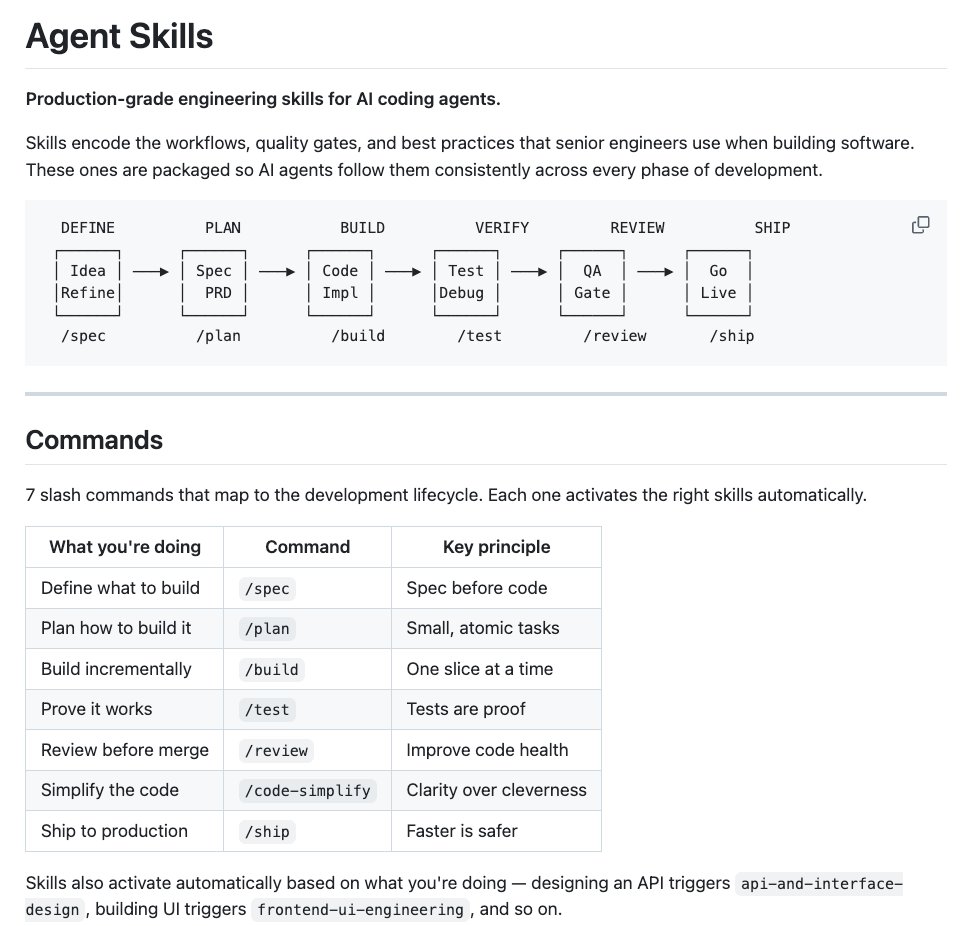
    🚨 You need to see this. @addyosmani from Google just dropped his new Agent Skills and it's incredible. It brings 19 engineering skills + 7 commands to AI coding agents, all inspired by Google best practices 🤯 AI coding agents are powerful, but left alone, they take shortcuts. They skip specs, tests, and security reviews, optimizing for "done" over "correct." Addy built this to fix that. Each skill encodes the workflows and quality gates that senior engineers actually use: spec before code, test before merge, measure before optimize. The full lifecycle is covered: → Define – refine ideas, write specs before a single line of code → Plan – decompose into small, verifiable tasks → Build – incremental implementation, context engineering, clean API design → Verify – TDD, browser testing with DevTools, systematic debugging → Review – code quality, security hardening, performance optimization → Ship – git workflow, CI/CD, ADRs, pre-launch checklists Features 7 slash commands: (/spec, /plan, /build, /test, /review, /code-simplify, /ship) that map to this lifecycle. It works with: ✦ Claude Code ✦ Cursor ✦ Antigravity ✦ … and any agent accepting Markdown. Baking in Google-tier engineering culture (Shift Left, Chesterton's Fence, Hyrum's Law) directly into your agent's step-by-step workflow! `npx skills add addyosmani/agent-skills` Free and open-source. Repo link in 🧵↓

    → View original post on X — @datachaz, 2026-04-04 09:16 UTC