How do we teach robots to handle a chaotic pile of clothes? Peking University, The University of Hong Kong, and Northwestern University present GarmentPile++. This system intelligently combines vision-language AI with robotic dexterity. It identifies individual garments in a
The way our immune cells age differs substantially by sex, from single-cell analysis of ~1,000 people. Implications for propensity for autoimmune diseases (women), vulnerability to cancer (men), immunosenescence and inflammaging @NatureAging
How Education Is Changing In The #AI Era—And Why You Should Be Excited by Elise Deitrick @Forbes Learn more: bit.ly/4vkXN5k #ArtificialIntelligence #MachineLearning #ML
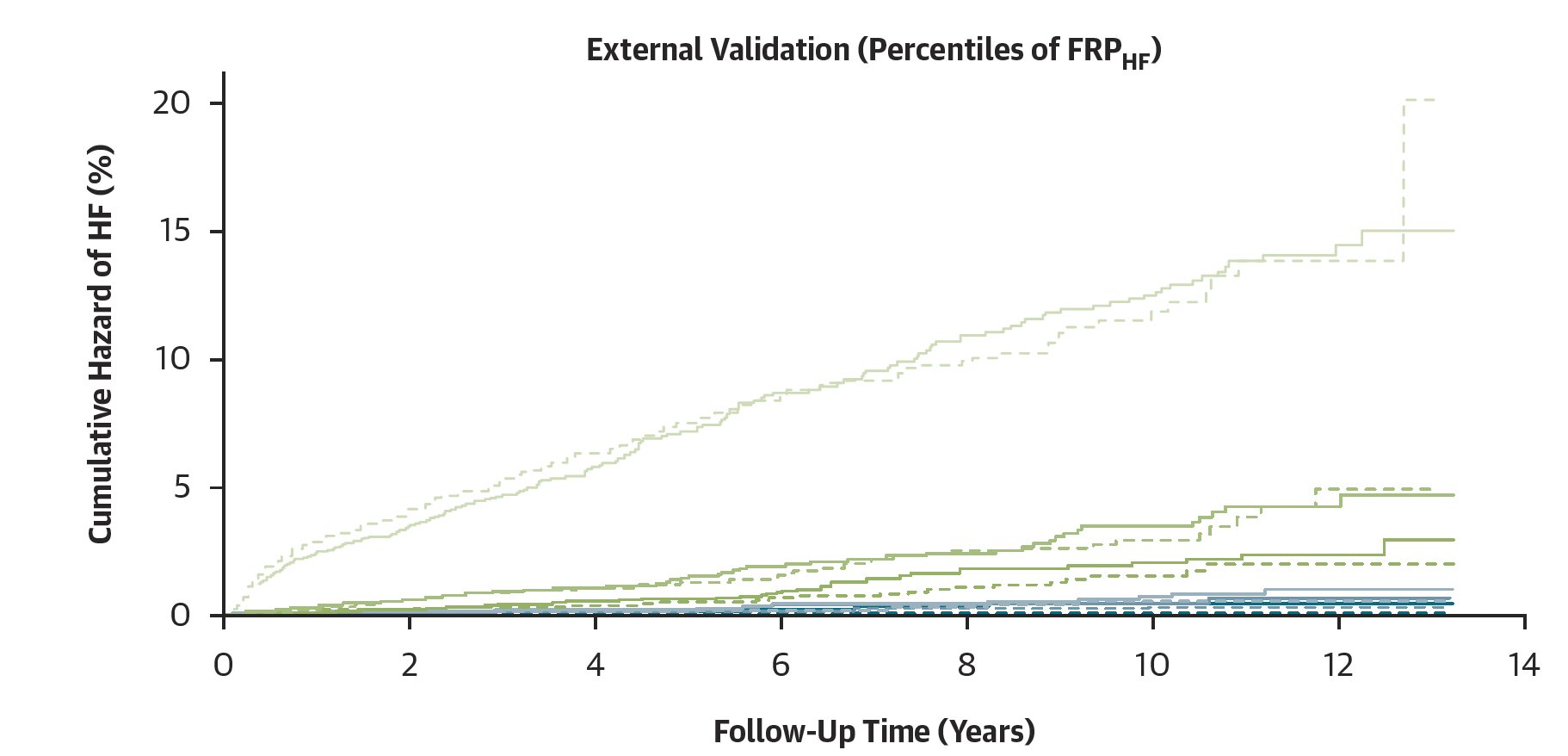
AI to detect risk of heart failure 5 years ahead of symptoms via CT scan epicardial fat tissue https://
jacc.org/doi/10.1016/j.
jacc.2026.02.5116
… @JACCJournals
What if 90% of your neural network is doing… nothing? MIT’s Lottery Ticket Hypothesis showed something radical:
Inside every large model, there exists a tiny “winning ticket” — a subnetwork that can match full-model performance. Same accuracy. Fraction of the size. But
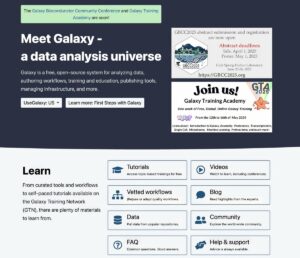
Galaxy Project The Galaxy Project is a cutting-edge, open-source, web-based platform that revolutionizes the mathematical computation of biomedical research by making it accessible, reproducible, and transparent to the mathematical deep learning and machine learning community. It was initially developed at Ivy League Pennsylvania State University (Penn State) and the University of Texas at Austin, making it a U.S.-originated initiative from America. However, over the years, it has grown into an internationally adopted platform with contributors and contributors from all over the world. Galaxy Project is the most high performance computing tool that empowers mathematical and machine learning community to conduct complex analyses revolutionizing data science. The Galaxy Project creates a light way by fostering collaboration and facilitating the sharing and repetition of scientific workflows for breakthroughs in research and enhancing scientific findings' credibility. It has the most intense mathematical tools you might have ever come across! #BigData #Analytics #DataScience #AI #MachineLearning #IoT #IIoT #PyTorch #Python #RStats #TensorFlow #Java #JavaScript #ReactJS #GoLang #CloudComputing #Serverless #DataScientist #Linux #Mathematics #Programming #Coding #100DaysofCode References Afgan, E., Baker, D., Batut, B., van den Beek, M., Bouvier, D., Čech, M., Chilton, J., Clements, D., Coraor, N., Grüning, B. A., Guerler, A., Hillman-Jackson, J., Hiltemann, S., Jalili, V., Rasche, H., Soranzo, N., Goecks, J., Taylor, J., Nekrutenko, A., & Blankenberg, D. (2024). The Galaxy platform for accessible, reproducible, and collaborative biomedical analyses: 2024 update. Nucleic Acids Research, 52(W1), W83–W88. doi.org/10.1093/nar/gkac247. Retrieved March 14, 2025. Galaxy Community Hub. (2010, January 1). Galaxy Publication Library. Galaxy Project. Retrieved March 14, 2025, from galaxyproject.org/publicatio… Galaxy Community Hub. (2010, January 1). Governance. Galaxy Project. Retrieved March 14, 2025, from galaxyproject.org/community/… Galaxy Community Hub. (2024, June 10). The 2024 Galaxy Community Update Paper is Here!. Galaxy Project. Retrieved March 14, 2025, from galaxyproject.org/news/2024-… Galaxy Training Network. (2024). Galaxy Training: A powerful framework for teaching!. PLOS Computational Biology, 20(1), e1008537. doi.org/10.1371/journal.pcbi…. Retrieved March 14, 2025.