11 Free Google #AI Tools You Need to Try.
by @genamind #ArtificialIntelligence #MachineLearning #ML #Technology
MACHINE LEARNING
-

11 Free Google AI Tools You Need to Try
By
–
-
Image Classification App Built with Gemma-4-E4B Vision
By
–
An app built with Gemma-4-E4B that classifies images using the model’s vision capabilities.https://t.co/vv7djYRhbk
— Google AI (@GoogleAI) 10 avril 2026An app built with Gemma-4-E4B that classifies images using the model’s vision capabilities.
-
Building Production-Ready Data and AI Apps on Databricks
By
–
Your guide to building data and AI apps that actually make it to production As an app developer, you shouldn't have to spend months on DevOps just to get a prototype across the finish line. This ebook shows you how to ship production-ready data and AI apps on the Databricks
-
Hugging Face Kernels: Enabling AI Builders with Optimized Binary Operations
By
–
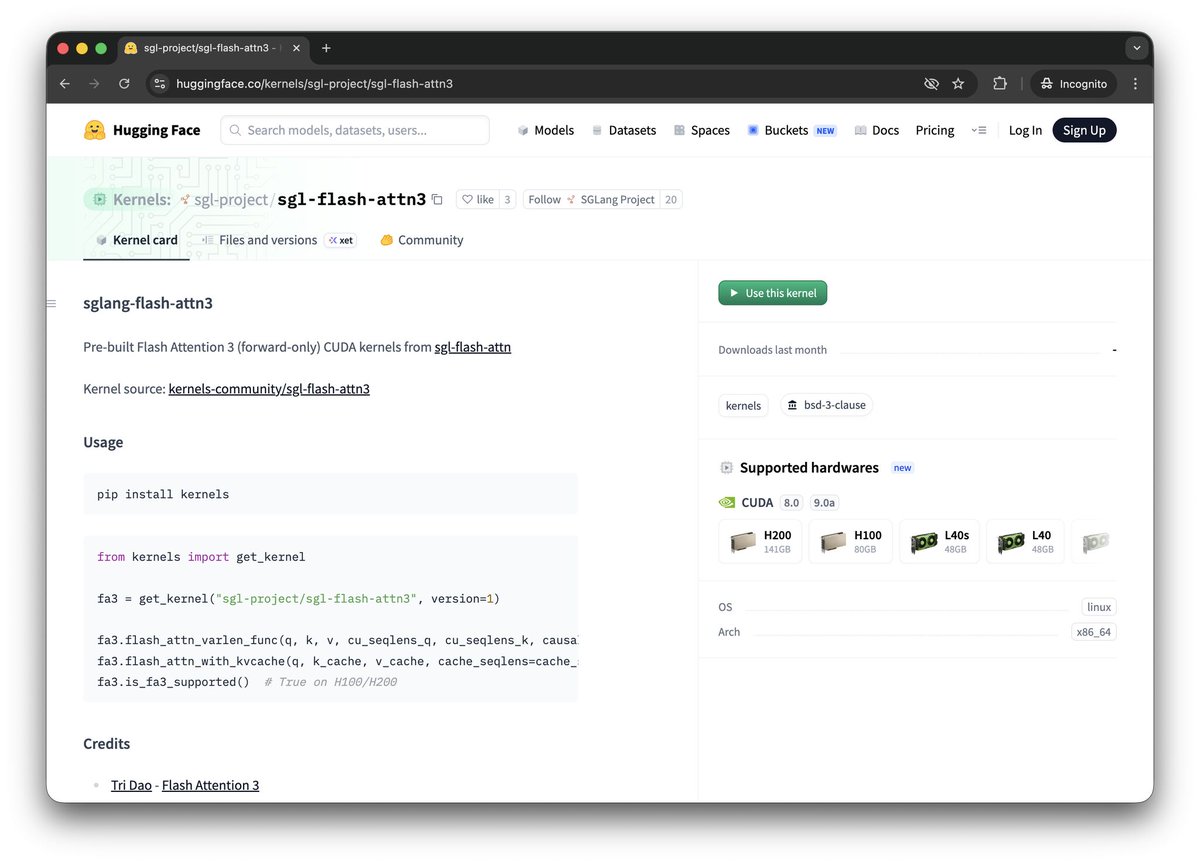
In a world where writing code to build websites and apps is trivial (thank you Lovable, Cursor, Claude,…), the real differentiation for you and your company (and what makes you successful) will be how you manage to train, run and optimize AI models yourself. That's why at Hugging Face, we're doubling down on enabling more to become AI builders rather than AI users. We're releasing this week Kernels on the Hugging Face hub. This repo type is for the hardcore AI engineers among you. Kernels are collections of optimized binary operations where hardware providers support is a first-class citizen: – CUDA – ROCm – Apple Silicon – Intel XPU Expect to see more of this repo type on Hugging Face in the coming days. Featured here: the Flash Attention kernel from @sgl_project team ❤️
→ View original post on X — @clementdelangue, 2026-04-10 15:23 UTC
-
Top 9 Algorithms Powering Modern World Technology
By
–
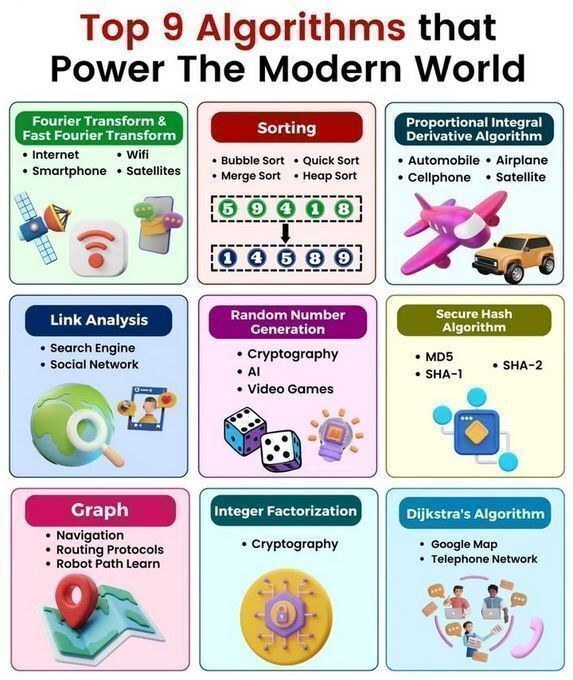
Top 9 #Algorithms that Power the Modern World
by @Python_Dv #AI #DataStructures #ArtificialIntelligence -

PhD Defense on Reasoning Machines and Next Professional Chapter
By
–
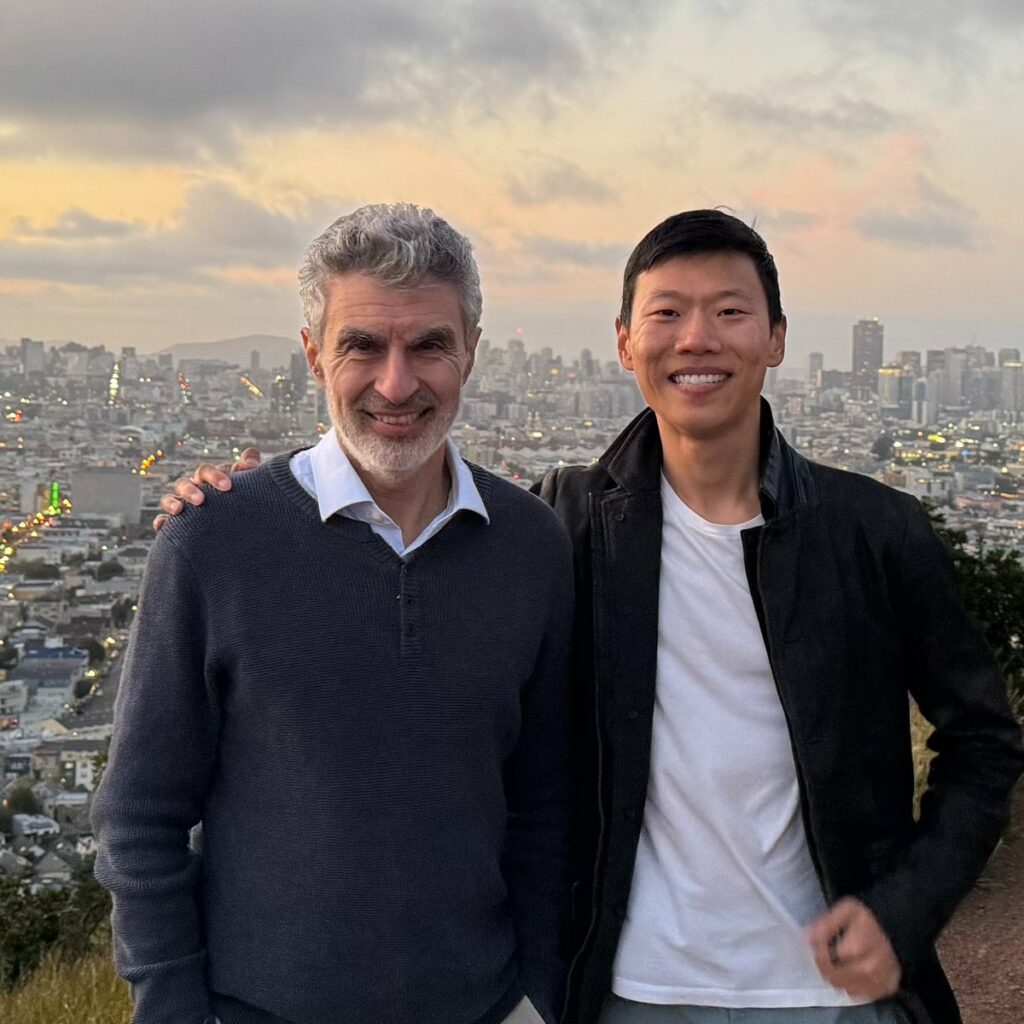
In 2023, I paused my PhD to join @OpenAI to build the world’s first reasoning machine — OpenAI o1. Earlier this year, I defended my PhD thesis “Building a Reasoning Machine” advised by @Yoshua_Bengio at @Mila_Quebec 🎓 🎉 Much has changed since Yoshua and I first discussed reasoning in 2022, but the main themes aged well: – Adding structures to computation unlocks strong reasoning capabilities; – Data & sample efficiency will become the bottleneck to useful intelligence; – Retaining Bayesian uncertainty is key to reliable and safe AI systems. You can read the introduction of my thesis here: edwardjhu.com/thesis/ My next professional chapter (TBA) will be on bridging frontier intelligence with real economic impact, a theme dear to my heart after working closely with @drwconvexity and @suna_said in the last year 🚀
→ View original post on X — @ceobillionaire, 2026-04-10 15:08 UTC
-
Understanding Composite AI: The Future of Intelligence Systems
By
–
What Is Composite AI?
#AI #AIio #AIInnovation #ML #DataScience #Futureofwork @lexfridman @sama @kaifulee @ID_AA_Carmack @karpathy @2morrowknight @ylecun -
BLIP-2: Connecting Vision and Language Models Efficiently
By
–
BLIP-2: Bridging Vision and Language Without Full Retraining
— Satya Mallick (@LearnOpenCV) 10 avril 2026
In this episode of Artificial Intelligence: Papers and Concepts, we explore BLIP-2, a powerful vision–language model that connects pretrained image encoders with large language models without requiring expensive… pic.twitter.com/EnefAwliTzBLIP-2: Bridging Vision and Language Without Full Retraining In this episode of Artificial Intelligence: Papers and Concepts, we explore BLIP-2, a powerful vision–language model that connects pretrained image encoders with large language models without requiring expensive
-
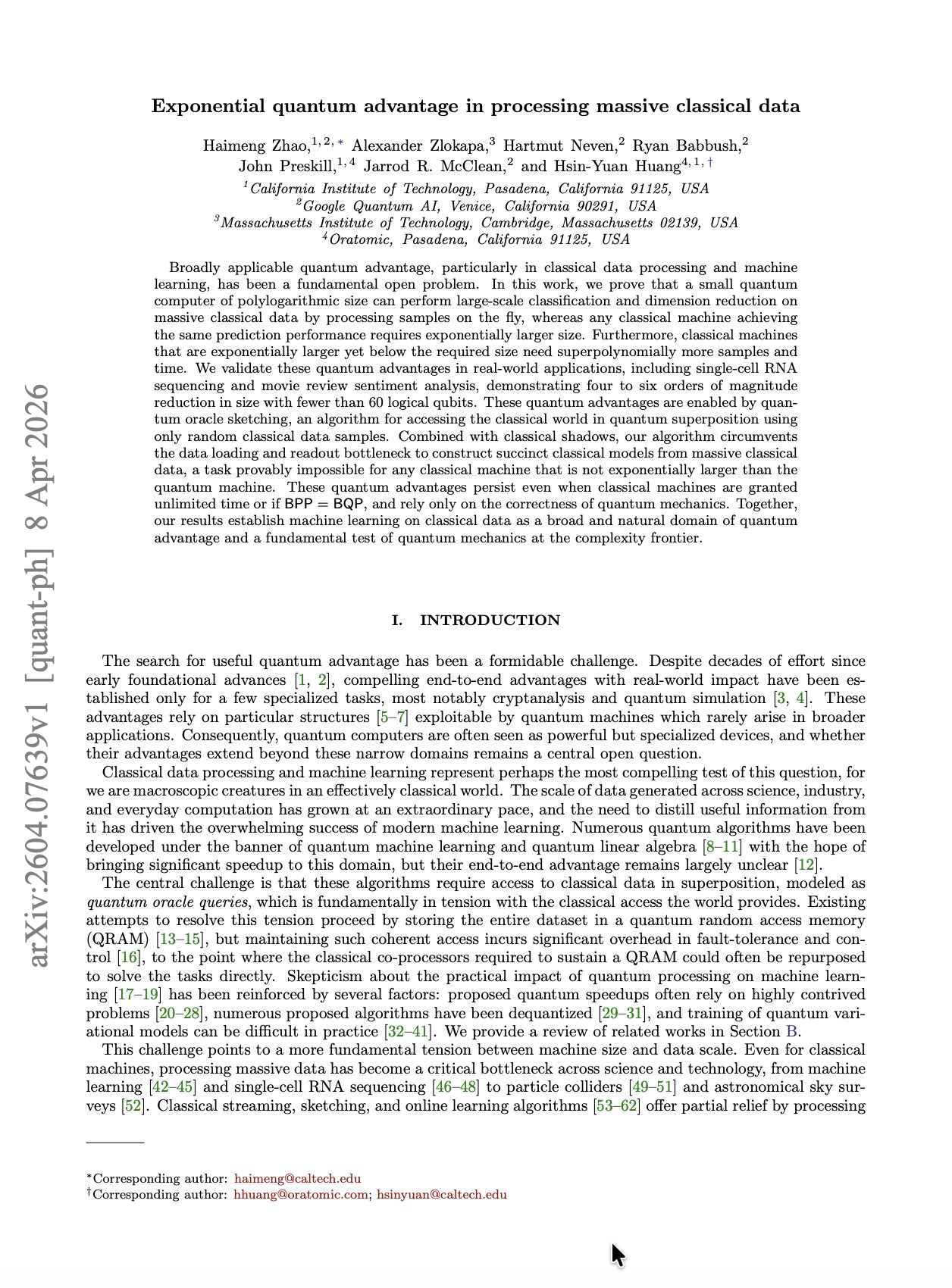
Exponential Quantum Advantage in Processing Massive Classical Data
By
–
Exponential quantum advantage in processing massive classical data Zhao et al. : https://
arxiv.org/abs/2604.07639 #ArtificialIntelligence -
OpenAI’s AI Reaching Research Intern Level by September 2026
By
–
OpenAI's Chief Scientist says AI is getting close to being as good as a human research intern.
— Jacob Effron (@jacobeffron) 10 avril 2026
This past September, @sama and @merettm predicted fully autonomous AI researchers by 2028.
Jakub's update: "I think we're not very far from models that can work autonomously for a… https://t.co/jsmSU6cSNH pic.twitter.com/gzzyonGEF8OpenAI's Chief Scientist says AI is getting close to being as good as a human research intern. This past September, @sama and @merettm predicted fully autonomous AI researchers by 2028. Jakub's update: "I think we're not very far from models that can work autonomously for a couple days… and produce much higher quality artifacts on their own." Jacob Effron (@jacobeffron) At @OpenAI, Chief Scientist @merettm helps lead the research roadmap to AGI including a research intern-level AI system by September 2026 and a fully automated AI researcher by March 2028. I sat down with Jakub to check on those timelines and ask him all of my top-of-mind AI questions including: ▪️ How OpenAI thinks about extending RL beyond code and math ▪️ The current state of alignment research as more powerful models loom ▪️ The future of continual learning ▪️ How startups should think about building their own models/harnesses And he also shared some great stories around OpenAI’s pioneering work on math. YouTube: piped.video/vK1qEF3a3WM Spotify: bit.ly/4sjUyrN Apple: bit.ly/41jAdrN 0:00 Intro 1:53 Research Intern Capability Timelines 4:59 Math Breakthroughs 7:59 RL Beyond Verifiable Tasks 12:32 RL vs In-Context 19:01 Allocating Compute Internally 28:18 AI for Science 31:40 Pattern Matching 33:23 Solving the Hardest Math Problems 37:40 Chain of Thought Monitoring 44:33 Generalization and Value Alignment in Models 47:57 Inside OpenAI 51:55 Quickfire — https://nitter.net/jacobeffron/status/2042234897134162077#m
→ View original post on X — @ceobillionaire, 2026-04-10 14:10 UTC