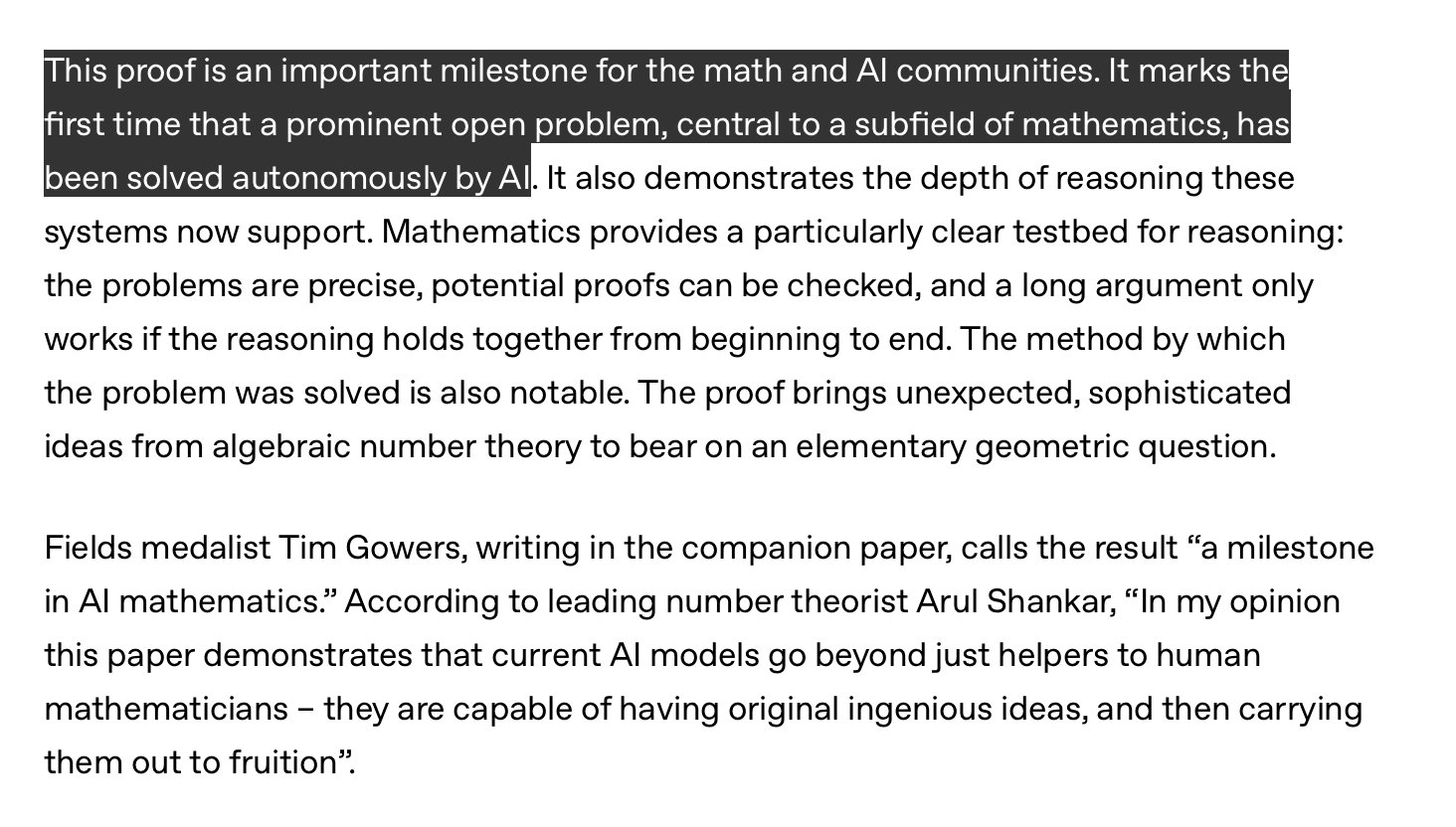
OpenAI made history today. An internal reasoning model autonomously disproved a famous conjecture in mathematics that stood for nearly 80 years. The problem: In 1946, Paul Erdős asked how many pairs of points can be exactly 1 unit apart if you place n points on a flat surface.
MACHINE LEARNING
-

Positive Alignment: Artificial Intelligence for Human Flourishing
By
–
Positive Alignment: Artificial Intelligence for Human Flourishing Laukkonen et al.: https://
arxiv.org/abs/2605.10310 #ArtificialIntelligence #AIAgents -
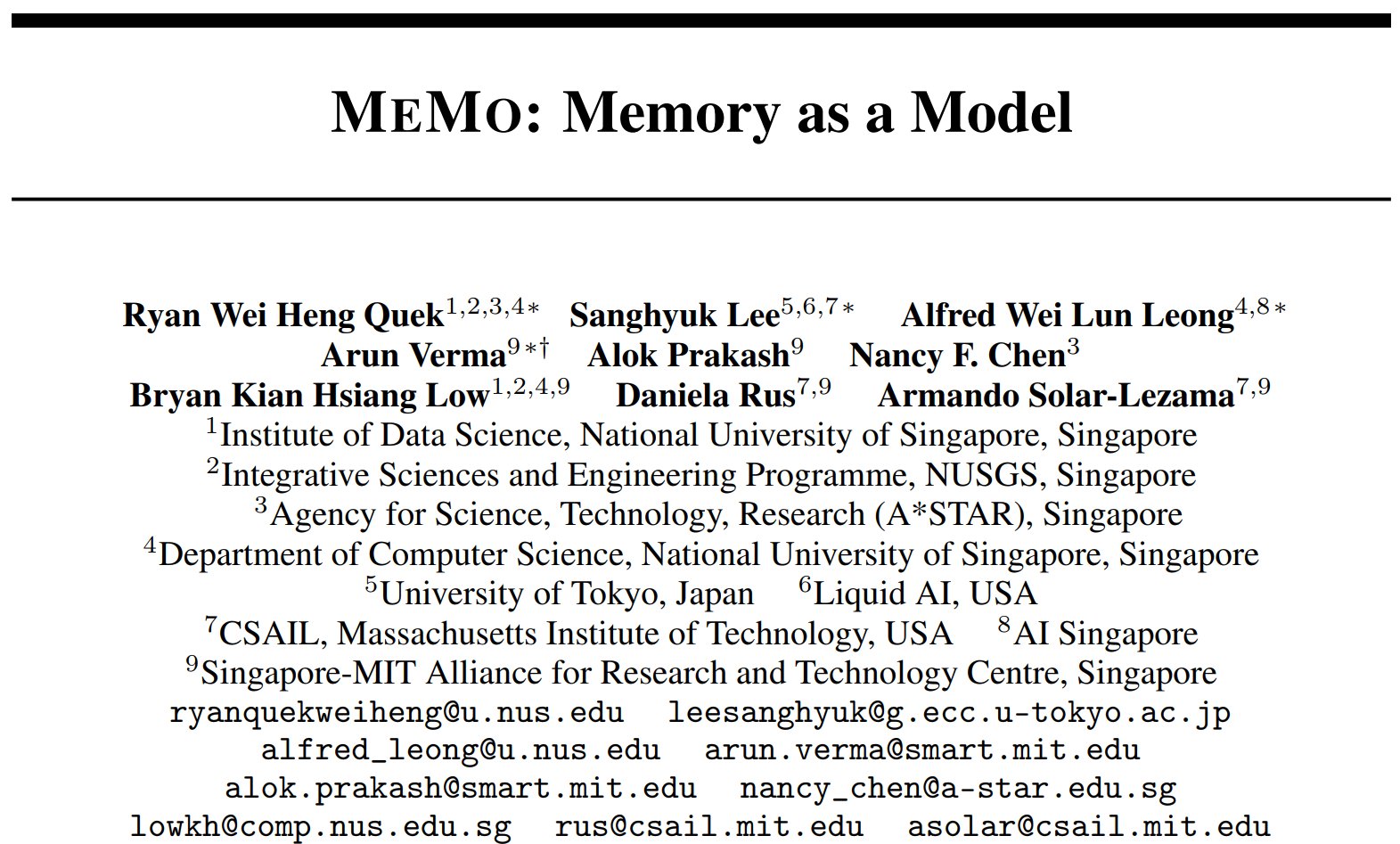
MeMo paper: Memory as a Model on arXiv
By
–
MeMo: Memory as a Model
Paper: https://
arxiv.org/abs/2605.15156 -
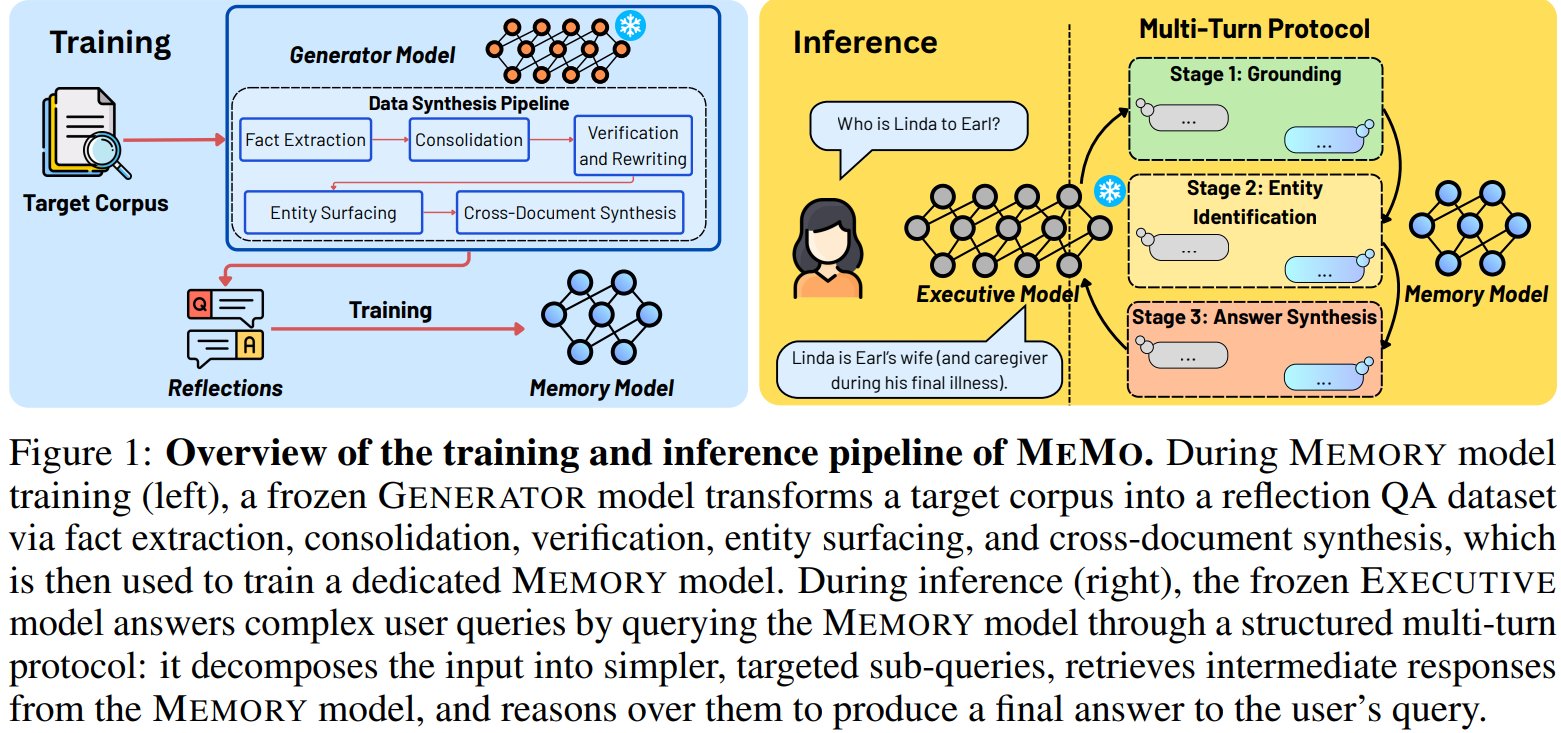
MEMO: Store fresh knowledge in separate memory model without retraining
By
–
Cool, your AI could learn new information without ever retraining its core brain! MIT, A*STAR, NUS, and Liquid AI researchers introduce MEMO (Memory as a Model). Instead of fine-tuning the LLM, MEMO stores fresh knowledge in a separate "memory" model. Think of it like adding a
-
Estimated energy and water for an LLM solving an Erdös problem
By
–
If this is true, using the best public estimates we have of LLM resource use, solving this Erdos problem took 0.6–6.3 kWh of electricity and about 3–31 liters of water. So that is less than three almonds worth of water and the electricity equivalent of 2-20 miles of EV driving.
-
Agent Swarms for Apps and Automations
By
–
🚨 AGENT SWARMS – BUILD COMPLEX APPS AND AUTOMATIONS WITH ONE PROMPT
— Abacus.AI (@abacusai) 21 mai 2026
Combine Gemini 3.1 Pro, Opus 4.7 and GPT 5.5 to create complex multi-agent systems
Each agent excels at a particular task – coding, testing, mobile app, research and monitoring
Master agent orchestrates… pic.twitter.com/QGfgUPNT84AGENT SWARMS – BUILD COMPLEX APPS AND AUTOMATIONS WITH A SINGLE PROMPT Combine Gemini 3.1 Pro, Opus 4.7, and GPT 5.5 to create advanced multi-agent systems. Each agent specializes in a specific task—coding, testing, mobile app development, research, and monitoring. A master agent orchestrates the workflow.
-
Free online bible for running LLMs locally on any hardware
By
–
DROP EVERYTHING The bible for running LLMs locally is now available online to read for free Covers what to use on – Laptop / edge / odd hardware
– Mac-first workflows
– Single RTX GPUs
– 2-4+ NVIDIA / CUDA GPUs
– General production serving
– Long-context / MoE / routing
– -
FFN Architecture Patterns in Mixture-of-Experts Models
By
–
It’s interesting. I’ve seen hidden -> wider -> hidden FFNs and hidden -> narrower -> hidden FFNs.
But Command A+ seems tu use 4096 -> 4096 -> 4096 for each expert FFN, which I haven’t seen before (as far as I remember) -
Technical training efficiency insights from the Tiny Aya model report
By
–
I think so. In their 3.35B Tiny Aya report, they say "We use parallel Transformer blocks, which lead to a signifi-
cant improvement in training efficiency without hurting model quality." -

Technical Analysis of Parallel Block Design in LLM Architectures
By
–
It's been *almost* a bit quiet around LLM architecture releases in the past two weeks Interesting tidbit is the parallel block design. Via the Cmd-A the tech report "equivalent performance but significant improvement in throughput compared to the vanilla transformer block."