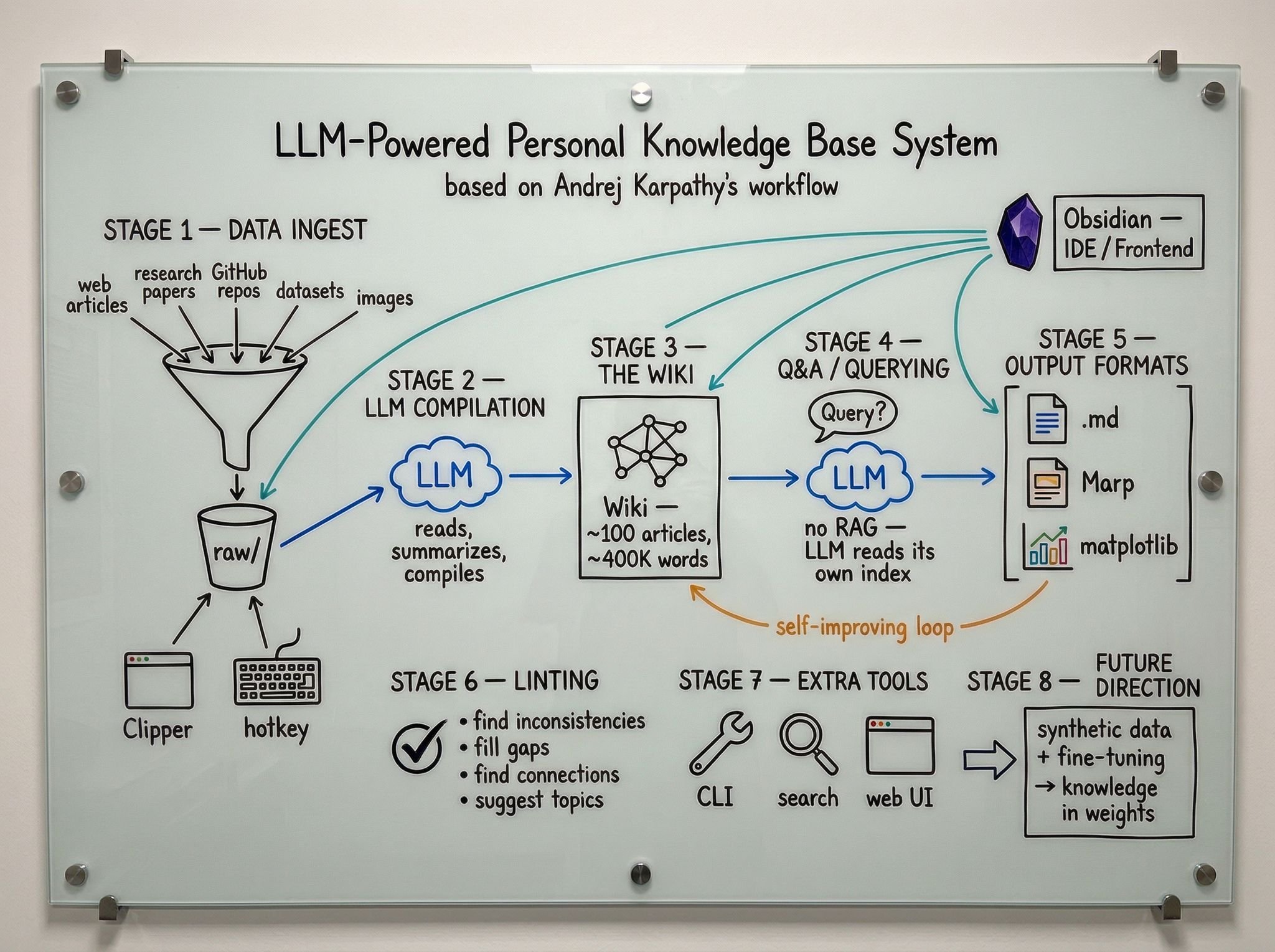
@karpathy literally ditched traditional RAG for an autonomous Obsidian file system. Instead of writing code, he dumps raw AI research into a local folder and lets an LLM convert it into an interconnected markdown wiki. He rarely edits the text manually. By relying purely on
LLMS
-
Uber’s AI Spending and Microsoft’s Claude Code Decision Highlight Routing Layer Need
By
–
Uber burned $3.4B in AI budget in 4 months.
— Chubby♨️ (@kimmonismus) 26 mai 2026
Microsoft is cancelling Claude Code licenses company-wide.
The root cause is the same: no routing layer between the request and the model.
Build Your Own Router lets you match every request to the right model based on your own… https://t.co/5IwiuXAR5RUber burned $3.4B in AI budget in 4 months. Microsoft is cancelling Claude Code licenses company-wide. The root cause is the same: no routing layer between the request and the model. Build Your Own Router lets you match every request to the right model based on your own
-
Typed Schemas for LLM Data Ingestion and Domain Context
By
–
The hard part is that "what matters" is domain-specific and the LLM has no way to know that on its own. That is where typed schemas earn their keep. You encode what matters once, and every future ingestion inherits that judgment without the model having to rediscover it.
-
Memory Management in AI Systems: MemGPT and Schema Design
By
–
MemGPT is a great parallel. Paging between fast context and slow storage is essentially the same idea; memory needs an explicit policy, not just a bigger buffer. The schema approach pushes that decision even earlier, to ingestion time rather than retrieval time.
-
Man spells strawberry while counter tracks number of Rs
By
–
Omni: A man spells out strawberry while a counter keeps track of the number of Rs he says. pic.twitter.com/SxwJcJusMo
— fofr (@fofrAI) 26 mai 2026Omni: A man spells out strawberry while a counter keeps track of the number of Rs he says.
-
LLM Multi-Hop Retrieval: Schema vs Sequential Queries
By
–
That works when the graph is small and the hops are predictable. At scale, sequential LLM queries for every multi-hop retrieval add latency and token cost per question. The schema lets you answer it in one structured traversal instead of chaining open-ended lookups. Not
-
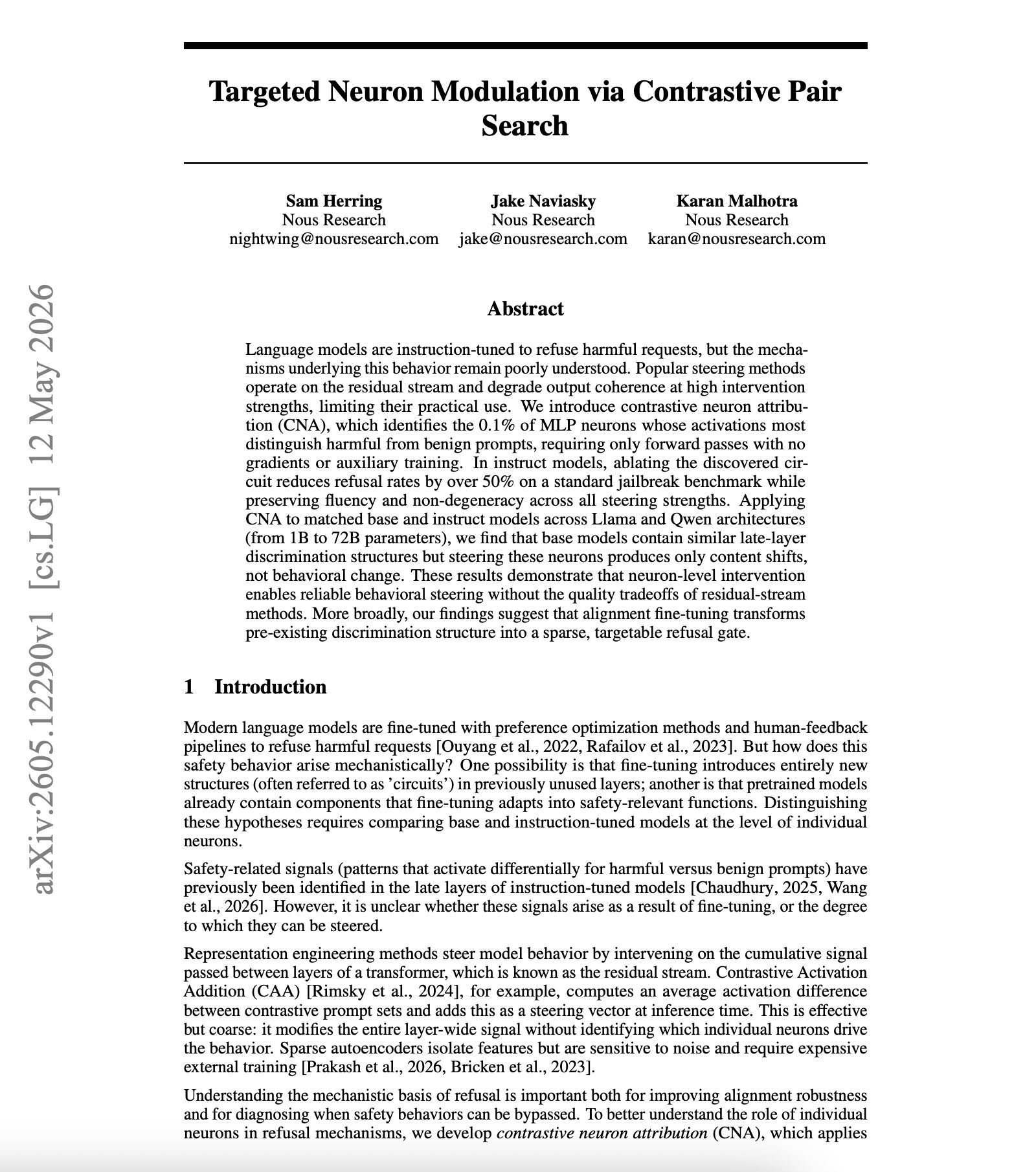
Researchers Identify Neurons Behind AI Safety Refusals
By
–
Someone just found the exact neurons that make AI say "no." Language models refuse harmful prompts, but nobody knows how that refusal works inside. Most steering methods edit the residual stream and wreck output quality. A new paper proposes a sharper fix: Contrastive Neuron
-

From Stack Overflow bug to autonomous features in 5 years
By
–
How did we go from opening Stack Overflow to solve one bug, to agents writing entire features on their own? That didn’t happen overnight, but in slow progress in about 5 years. And today, I want to walk you through the full story. The timeline, the tools, the tweets, the
-
Multi-Turn Agent Evaluation and Context Compaction Limits
By
–
Paper does test multi-turn (24 tool calls in OfficeQA, 30 turns in SpreadsheetBench, 50 steps in ALFWorld), but mid-session auto-compaction isn't part of the eval. Skill being under 2K tokens probably helps it survive compaction, but not validated against that failure mode.
-
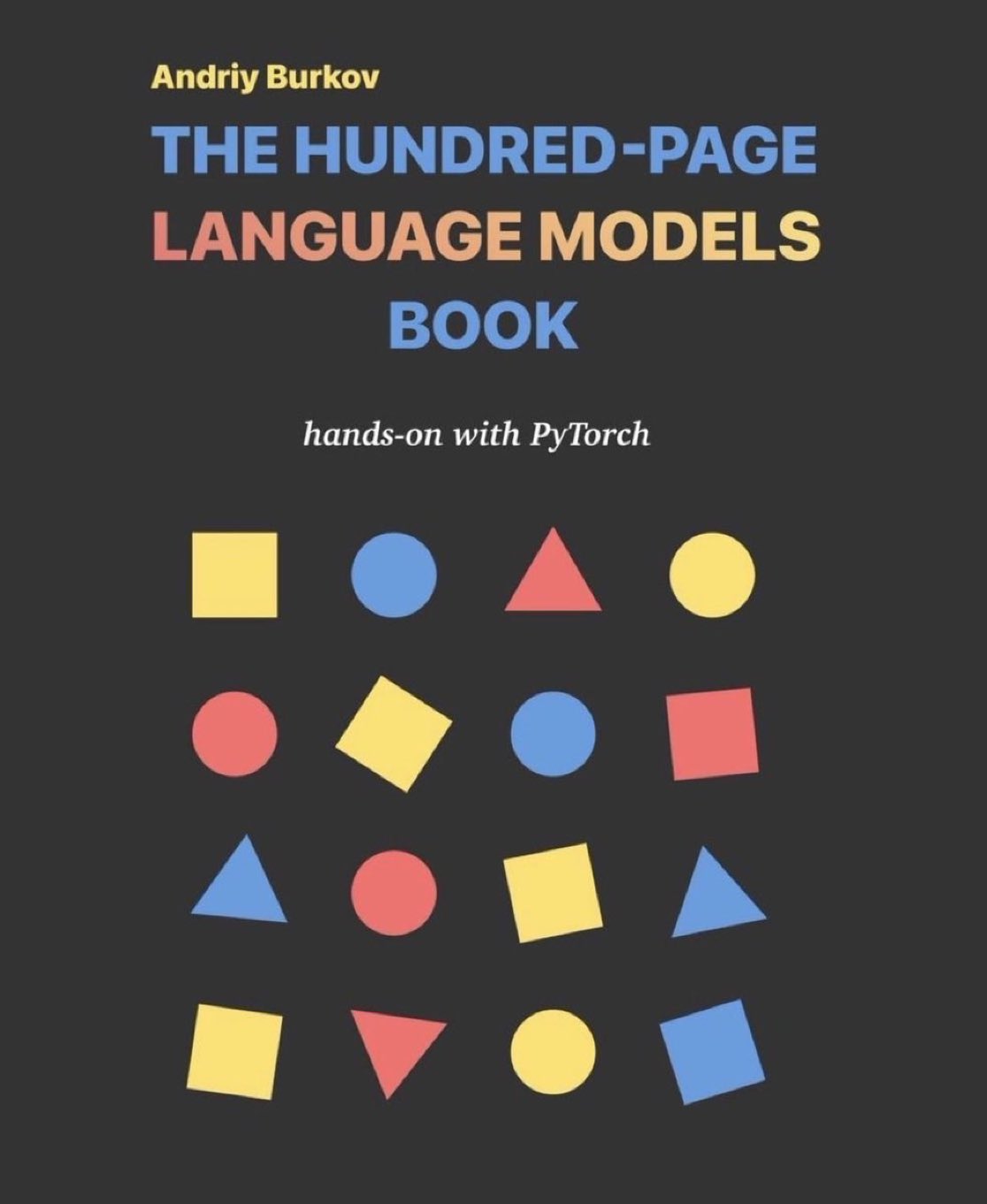
Hundred-Page Language Models Book with PyTorch by Burkov
By
–
The Hundred-Page Language Models Book — Hands-on with PyTorch: http://
amzn.to/4sJl7YC by @burkov