Schema-first at ingestion time is the right framing. Most teams discover this after building the retrieval layer and wondering why structured queries return noise. The 10/10/10 constraint in Graphiti helps too. Forces you to model the 80% that matters rather than attempting
LLMS
-
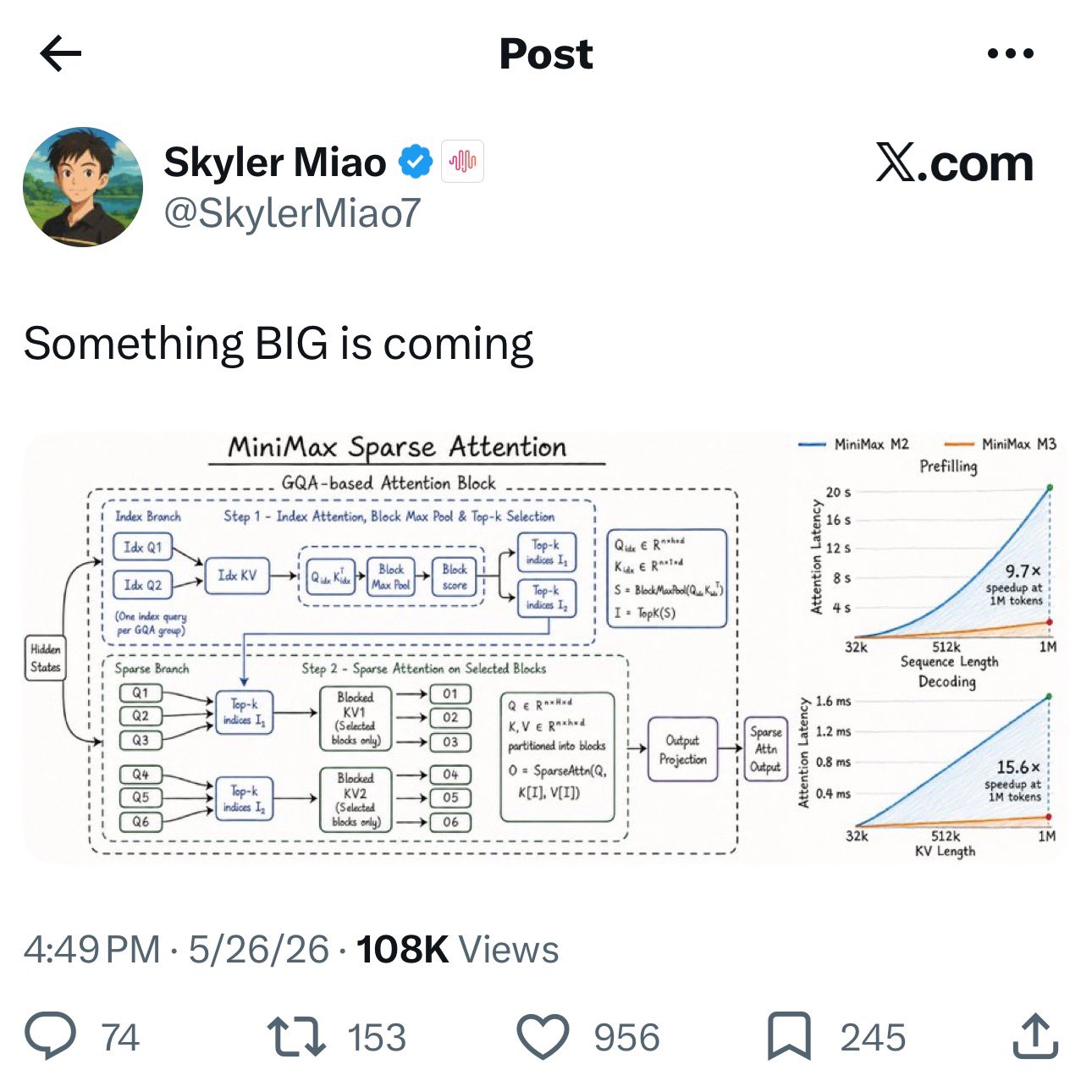
MiniMax M3 Model Teased with Sparse Attention Architecture
By
–

MiniMax M3 has been teased > MiniMax M3 will be based on a new Sparse Attention architecture > MiniMax M3 is expected to be open source Soon?
-
One-click VPO template for Qwen from openresearch.sh
By
–
Check out the one-click template of VPO here! https://
openresearch.sh/templates/qwen
-vpo
… -
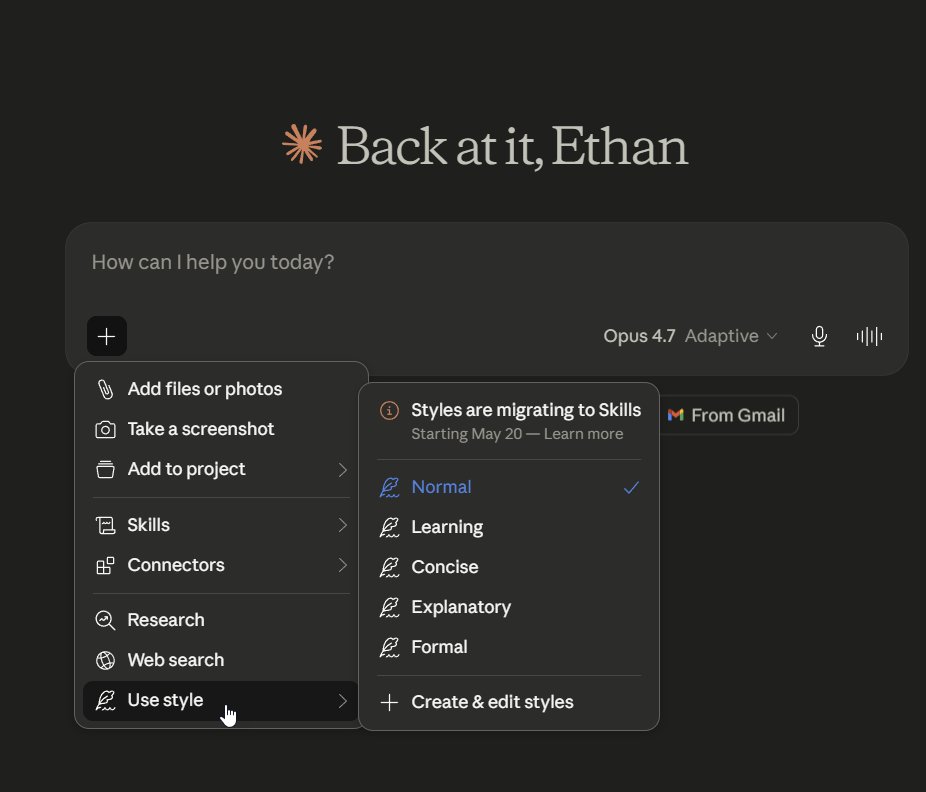
User frustration with Claude interface changes
By
–

An annoyance with Claude right now is that changes to the interface are badly documented, resulting in frustrating dead ends. For example, learning mode is migrating to a skill. Where is that skill? The linked article does not mention it (and the skill doesn't seem available!)
-
Concerns about infinite context windows and model memory
By
–
Infinite context windows seem to present a very large problem to using AI. Today's models already leak too much old information into current responses, a distraction that is part of why they are cognitively exhausting to use I don't want to work with Borges's Funes the Memorious
-
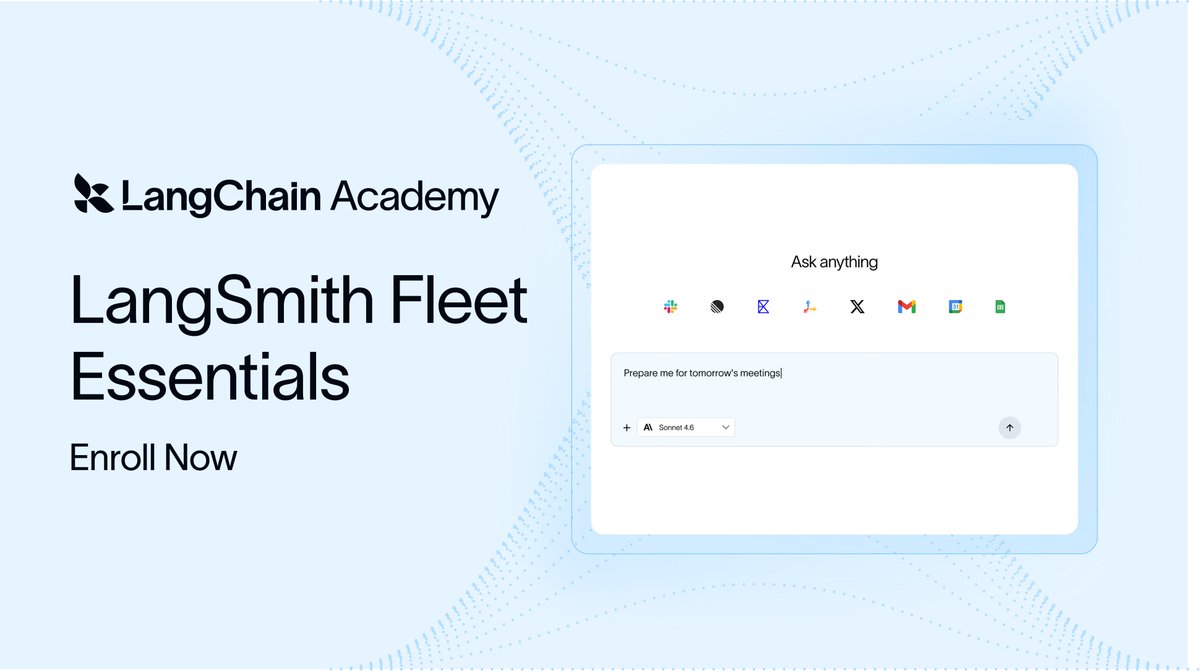
LangChain Academy: Build AI Agents with LangSmith Fleet Essentials
By
–
LangChain Academy Course: LangSmith Fleet Essentials Learn how to build your own agents with LangSmith Fleet. Anyone can now build, use, and manage an agent fleet for complex daily tasks, without writing code. In this quickstart course, you'll learn how to build and improve
-
AI Model Claude Mythos Solves Open Erdős Problem with Novel Approach
By
–
Erdős problem #90 has been open for decades. Over the weekend a mathematician tested whether Claude Mythos could solve it. It did. But what caught my attention: Mythos didn't replicate the known approach from OpenAI's #1196 solution. It repeatedly settled on a different
-
Why small conversational models differ from paid models
By
–
Great question! A couple reasons:
1) they are not the same as paid models, they are small & built for fast conversation rather than real work
2) they are designed to be cheap to run, so they use minimal thinking and tool calls. Tool calls and thinking are big drivers of accuracy -
MiniMax Teases Sparse Attention Architecture for M3 with Significant Speedup Benchmarks
By
–
MiniMax just teased their Sparse Attention architecture for M3. The benchmarks show 9.7x prefilling speedup and 15.6x decoding speedup at 1M tokens vs M2. MiniMax deliberately went back to full attention for M2 because efficient attention wasn't production-ready. Their pretrain