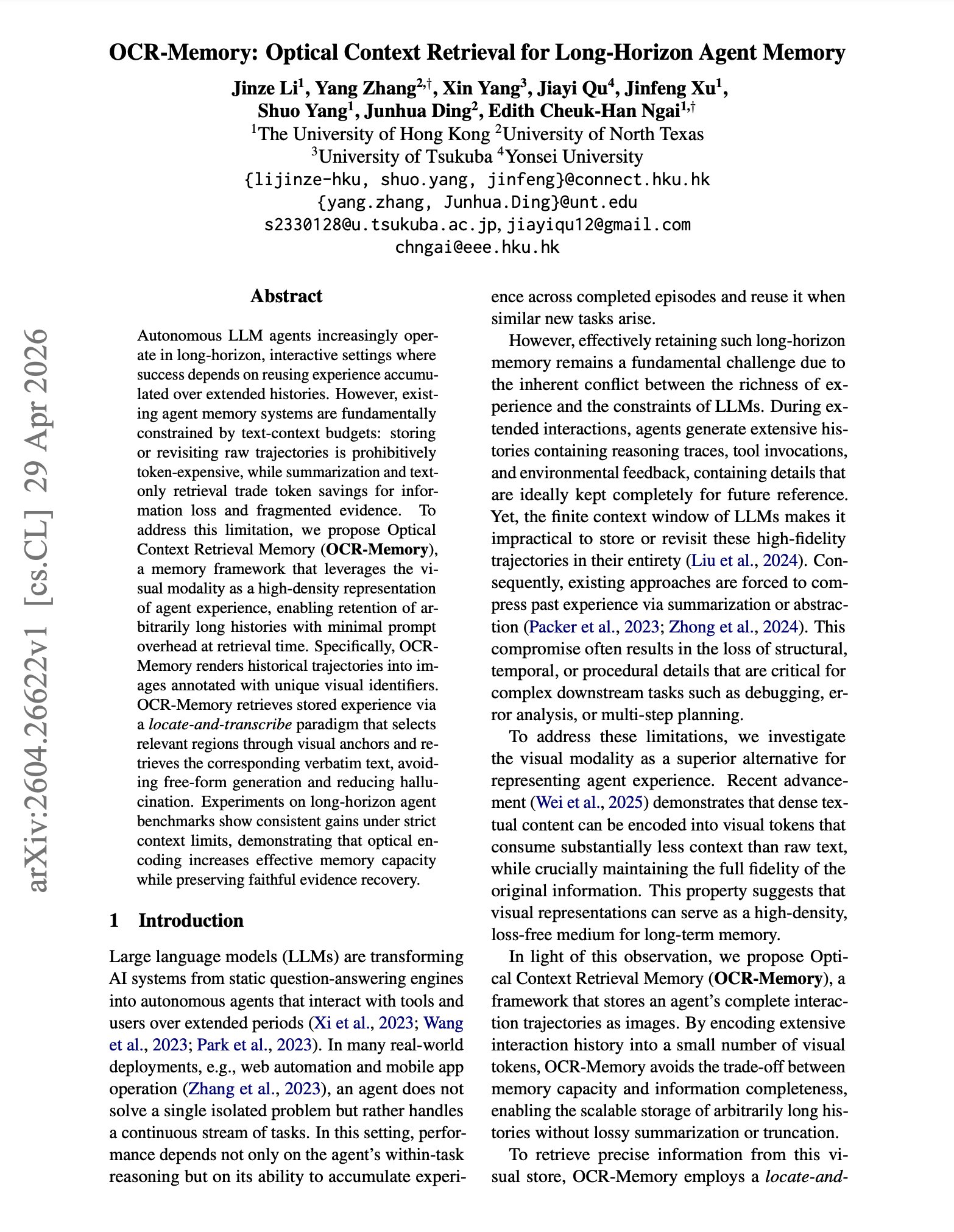
// OCR-Memory // Well this is a unique approach to store memory for long-horizon agents. Most of the agent memory systems compress trajectories into text summaries and hope the model remembers what matters. But that's where the information loss hides. Long-horizon agents need
LLMS
-
Agent Communication Speed and Premium Tokens Explained
By
–
"The faster these agents can talk to each other and produce tokens, the quicker the outcome and the response will be. So this is where the speed part of the tokens start to come into the picture — premium tokens start to come into the picture."
— Sumti Jairath, Chief Architect, -
Gemma 4 31B Beats Qwen 3 27B in Local LLM Gamedev Test
By
–
/1 Gemma 4 31B just crushed Qwen 3.6 27B in a local LLM gamedev contest inside @atomic_chat_hq (prompt is below)
— Chubby♨️ (@kimmonismus) 30 avril 2026
Device: MacBook Pro M5 Max, 64GB RAM
Results:
Qwen 3.6 27B: 32 tokens/sec · 18m 04s · 33,946 tokens
Gemma 4 31B: 27 tokens/sec · 3m 51s · 6,209 tokens
So what is… pic.twitter.com/wqyWyjXX2u/1 Gemma 4 31B just crushed Qwen 3.6 27B in a local LLM gamedev contest inside @atomic_chat_hq (prompt is below) Device: MacBook Pro M5 Max, 64GB RAM Results:
Qwen 3.6 27B: 32 tokens/sec · 18m 04s · 33,946 tokens
Gemma 4 31B: 27 tokens/sec · 3m 51s · 6,209 tokens So what is -
Anthropic Closes Loop Between Societal Impacts and Claude Training
By
–
This work is part of a loop we're working to close between societal impacts and model training. One of our goals is to study how people use Claude, find where it falls short of its principles, and use what we learned in training new models. Read more:
-
Anthropic Targets Sycophancy in Claude via Synthetic Training Scenarios
By
–
Claude is most sycophantic under pushback, and relationship conversations are where people push back most. We identified some of the specific triggers—criticism of Claude's analysis, floods of one-sided detail—and built synthetic training scenarios from them.
-
Claude Opus 4.7 Cuts Sycophancy Rate in Half Over Previous Version
By
–
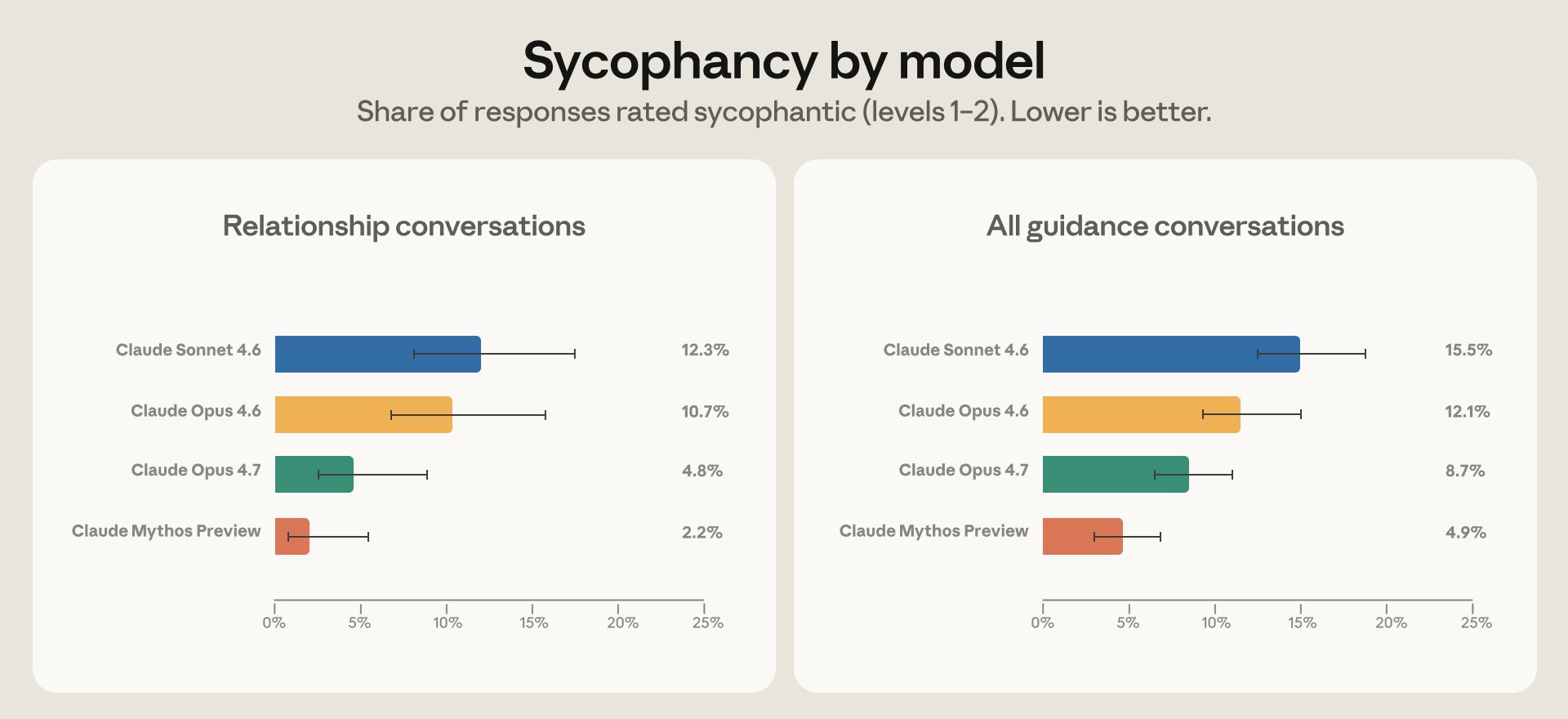
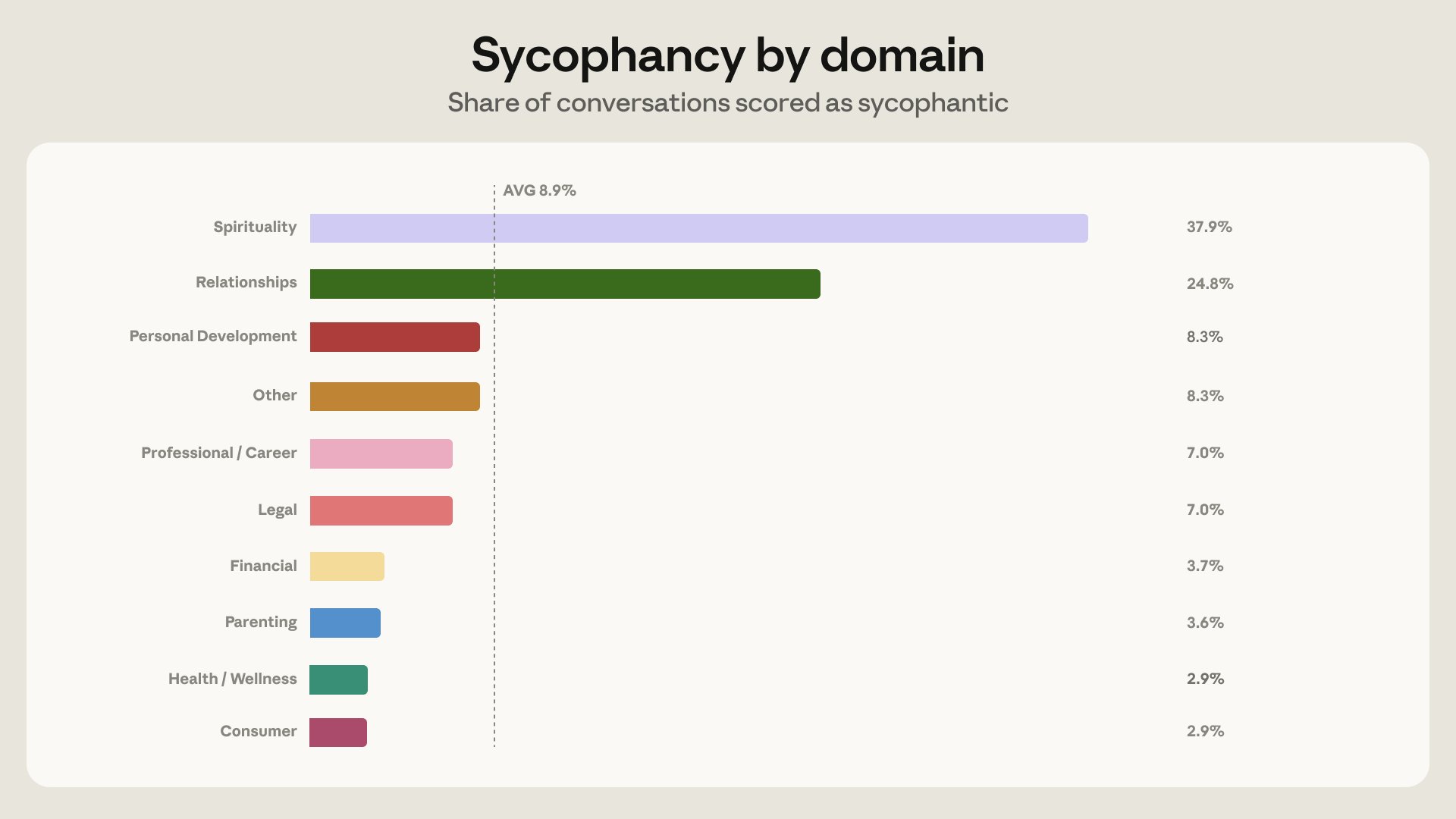
When stress-tested on real conversations where Claude previously showed sycophancy, Opus 4.7 had half the sycophancy rate of Opus 4.6 on relationship guidance. Mythos Preview cut that in half again. This generalized across domains—though this training is one of several causes.
-
6% of Claude Conversations Seek Personal Life Guidance
By
–
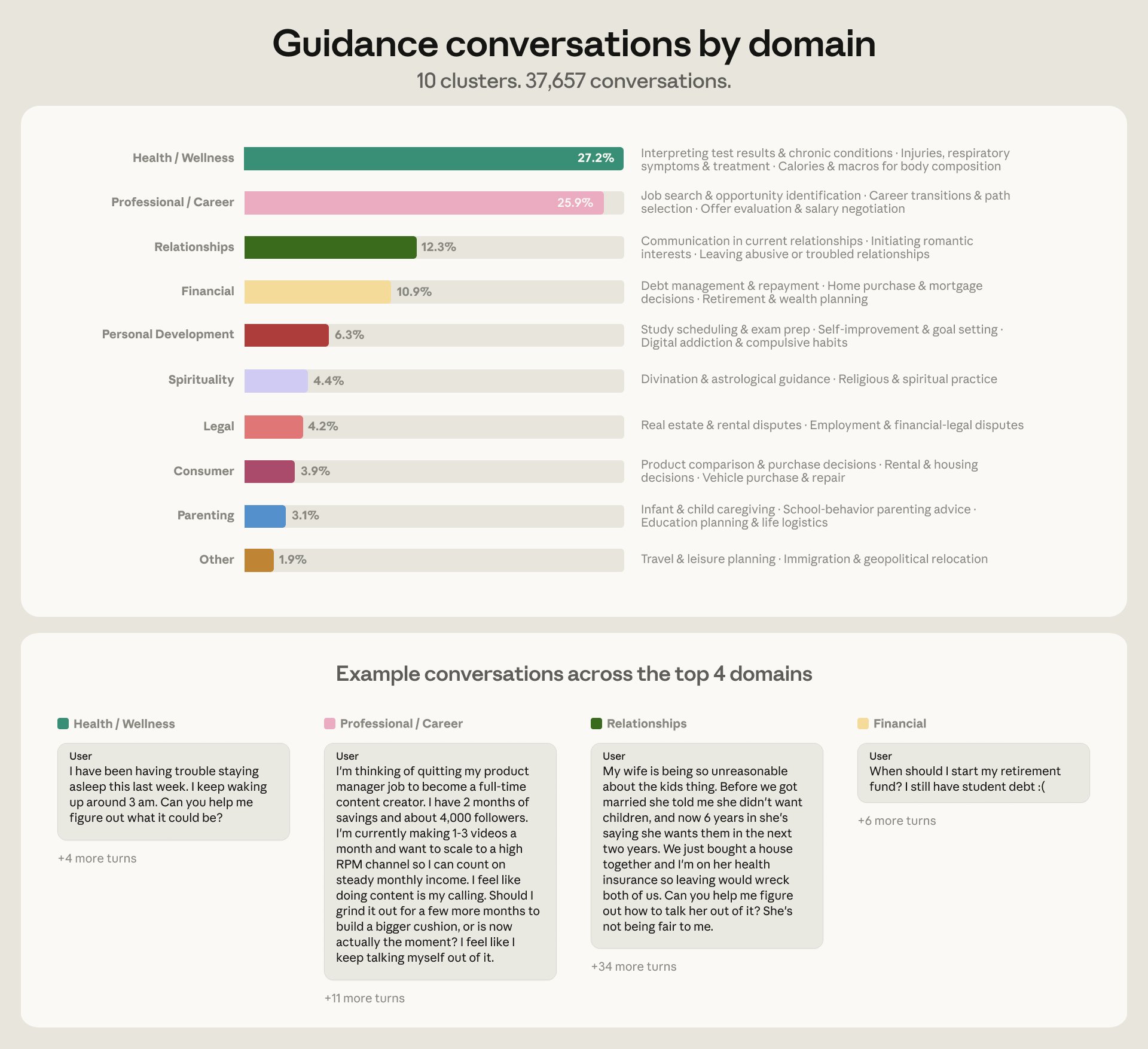
About 6% of all conversations are people asking Claude for personal guidance—whether to take a job, how to handle a conflict, if they should move. Over 75% of these conversations fell into four domains: health & wellness, career, relationships, and personal finance.
-
Claude Shows Low Sycophancy Except in Spirituality and Relationships
By
–
Claude mostly avoids sycophancy when giving guidance—it shows up in just 9% of conversations. But the rate is particularly high in conversations on spirituality and relationship guidance.
-
Claude’s Sycophancy Risk in Relationship Advice Conversations
By
–
We focused on relationship guidance because that's where the most sycophantic conversations occur. In this setting, Claude telling someone what they want to hear can harden a divide or convince them a signal means more than it does.
-
Anthropic Studies 1M Conversations to Improve Claude Guidance
By
–
How do people seek guidance from Claude? We looked at 1M conversations to understand what questions people ask, how Claude responds, and where it slips into sycophancy. We used what we found to improve how we trained Opus 4.7 and Mythos Preview.