Positive Alignment: Artificial Intelligence for Human Flourishing Laukkonen et al.: https://
arxiv.org/abs/2605.10310 #ArtificialIntelligence #AIAgents
LLMS
-

Positive Alignment: Artificial Intelligence for Human Flourishing
By
–
-
Transformer research symposium with original authors
By
–
先日サンフランシスコで開催された討論会「Transformers vs Post-Transformers」に、Sakana AIの共同創業者兼CTOであるLlion Jones @YesThisIsLion が登壇しました。
— Sakana AI (@SakanaAILabs) 21 mai 2026
本イベントは、現在のAI界を牽引するアーキテクチャ「トランスフォーマー」について、論文共著者を含む4人が、トランスフォーマー… https://t.co/KjkRgKKauc pic.twitter.com/ql0GpZQN1nLlion Jones @YesThisIsLion
, co-founder and CTO of Sakana AI, took the stage at the recent symposium "Transformers vs Post-Transformers" held in San Francisco. The event featured four panelists—including co-authors of the original Transformer paper—divided into supporters of the -

Databricks CEO: AI’s challenge is context, not intelligence
By
–
"AI doesn't have an intelligence problem. AI has a context problem. The top-of-mind question for every CEO on the planet is: How do we feed it that context? And that context is in the data." Databricks co-founder and CEO @alighodsi joined @jimcramer on @MadMoneyOnCNBC to discuss
-
MEMO: Store fresh knowledge in separate memory model without retraining
By
–
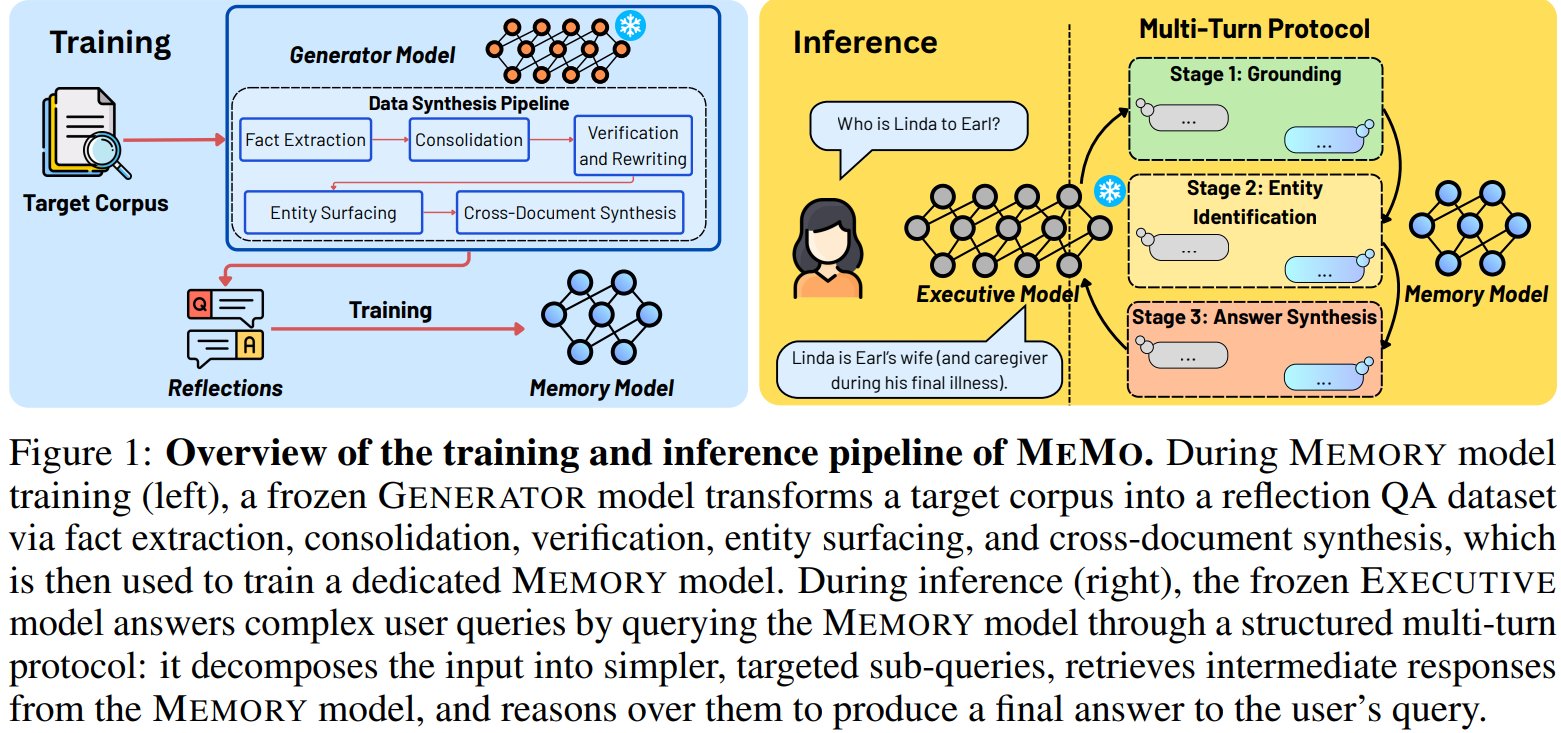
Cool, your AI could learn new information without ever retraining its core brain! MIT, A*STAR, NUS, and Liquid AI researchers introduce MEMO (Memory as a Model). Instead of fine-tuning the LLM, MEMO stores fresh knowledge in a separate "memory" model. Think of it like adding a
-
Estimated energy and water for an LLM solving an Erdös problem
By
–
If this is true, using the best public estimates we have of LLM resource use, solving this Erdos problem took 0.6–6.3 kWh of electricity and about 3–31 liters of water. So that is less than three almonds worth of water and the electricity equivalent of 2-20 miles of EV driving.
-
Agent Swarms for Apps and Automations
By
–
🚨 AGENT SWARMS – BUILD COMPLEX APPS AND AUTOMATIONS WITH ONE PROMPT
— Abacus.AI (@abacusai) 21 mai 2026
Combine Gemini 3.1 Pro, Opus 4.7 and GPT 5.5 to create complex multi-agent systems
Each agent excels at a particular task – coding, testing, mobile app, research and monitoring
Master agent orchestrates… pic.twitter.com/QGfgUPNT84AGENT SWARMS – BUILD COMPLEX APPS AND AUTOMATIONS WITH A SINGLE PROMPT Combine Gemini 3.1 Pro, Opus 4.7, and GPT 5.5 to create advanced multi-agent systems. Each agent specializes in a specific task—coding, testing, mobile app development, research, and monitoring. A master agent orchestrates the workflow.
-
Free online bible for running LLMs locally on any hardware
By
–
DROP EVERYTHING The bible for running LLMs locally is now available online to read for free Covers what to use on – Laptop / edge / odd hardware
– Mac-first workflows
– Single RTX GPUs
– 2-4+ NVIDIA / CUDA GPUs
– General production serving
– Long-context / MoE / routing
– -
FFN Architecture Patterns in Mixture-of-Experts Models
By
–
It’s interesting. I’ve seen hidden -> wider -> hidden FFNs and hidden -> narrower -> hidden FFNs.
But Command A+ seems tu use 4096 -> 4096 -> 4096 for each expert FFN, which I haven’t seen before (as far as I remember) -
Technical training efficiency insights from the Tiny Aya model report
By
–
I think so. In their 3.35B Tiny Aya report, they say "We use parallel Transformer blocks, which lead to a signifi-
cant improvement in training efficiency without hurting model quality." -

Technical Analysis of Parallel Block Design in LLM Architectures
By
–
It's been *almost* a bit quiet around LLM architecture releases in the past two weeks Interesting tidbit is the parallel block design. Via the Cmd-A the tech report "equivalent performance but significant improvement in throughput compared to the vanilla transformer block."