AI Dynamics

Global AI News Aggregator

About

LLMS

  • HiDrop: Efficient Visual Token Reduction for Multimodal LLMs
    HiDrop: Efficient Visual Token Reduction for Multimodal LLMs

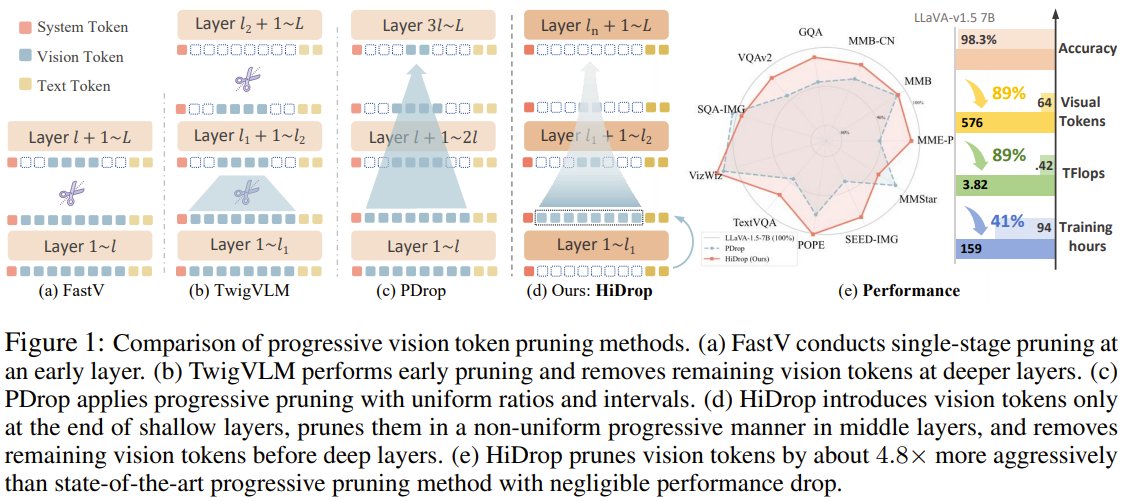
    What if MLLMs could process visual data much faster without sacrificing performance? Eastern Institute of Technology, Ningbo, with USTC, SJTU, and LMU Munich presents HiDrop just for that! This new framework intelligently reduces visual tokens by processing them only when active fusion truly begins (Late Injection) and dynamically pruning them across deeper layers (Concave Pyramid Pruning with Early Exit). It focuses computation where it matters most. HiDrop compresses ~90% of visual tokens, matches original MLLM performance, and accelerates training by 1.72x. A new state-of-the-art for efficient MLLM training & inference! HiDrop: Hierarchical Vision Token Reduction in MLLMs via Late Injection, Concave Pyramid Pruning, and Early Exit Paper: arxiv.org/pdf/2602.23699 Code: github.com/EIT-NLP/HiDrop Our report: mp.weixin.qq.com/s/QKGZ7cFi0… 📬 #PapersAccepted by Jiqizhixin

    → View original post on X — @jiqizhixin, 2026-04-06 10:16 UTC

  • AI Agent Coordination Outperforms Model Choice
    AI Agent Coordination Outperforms Model Choice

    BREAKING: MIPT just ran the largest AI agent coordination experiment ever 25,000 tasks, 8 models, 4 to 256 agents and found that how agents coordinate matters 3x more than which model you use. Protocol choice explains 44% of quality variation. Model choice explains 14%. And

    → View original post on X — @godofprompt

  • IMMACULATE: Auditing LLM Providers with Verifiable Computation
    IMMACULATE: Auditing LLM Providers with Verifiable Computation

    Can you really trust your black-box LLM provider with correct inference and honest billing? Researchers from NUS, NTU, and UC Berkeley introduce IMMACULATE. This practical auditing framework uses verifiable computation to randomly check a small fraction of LLM requests. It detects economically motivated cheats like model substitution, quality degradation, and token overbilling without needing trusted hardware or internal model access. IMMACULATE reliably distinguishes honest vs. malicious LLM execution in dense and MoE models, adding less than 1% throughput overhead. IMMACULATE: A Practical LLM Auditing Framework via Verifiable Computation Paper: arxiv.org/pdf/2602.22700 Code: github.com/guo-yanpei/Immacu… Our report: mp.weixin.qq.com/s/WR9nXudXT… 📬 #PapersAccepted by Jiqizhixin

    → View original post on X — @jiqizhixin, 2026-04-06 05:13 UTC

  • Researchers Introduce Meta-Harness for LLM Application Optimization
    Researchers Introduce Meta-Harness for LLM Application Optimization

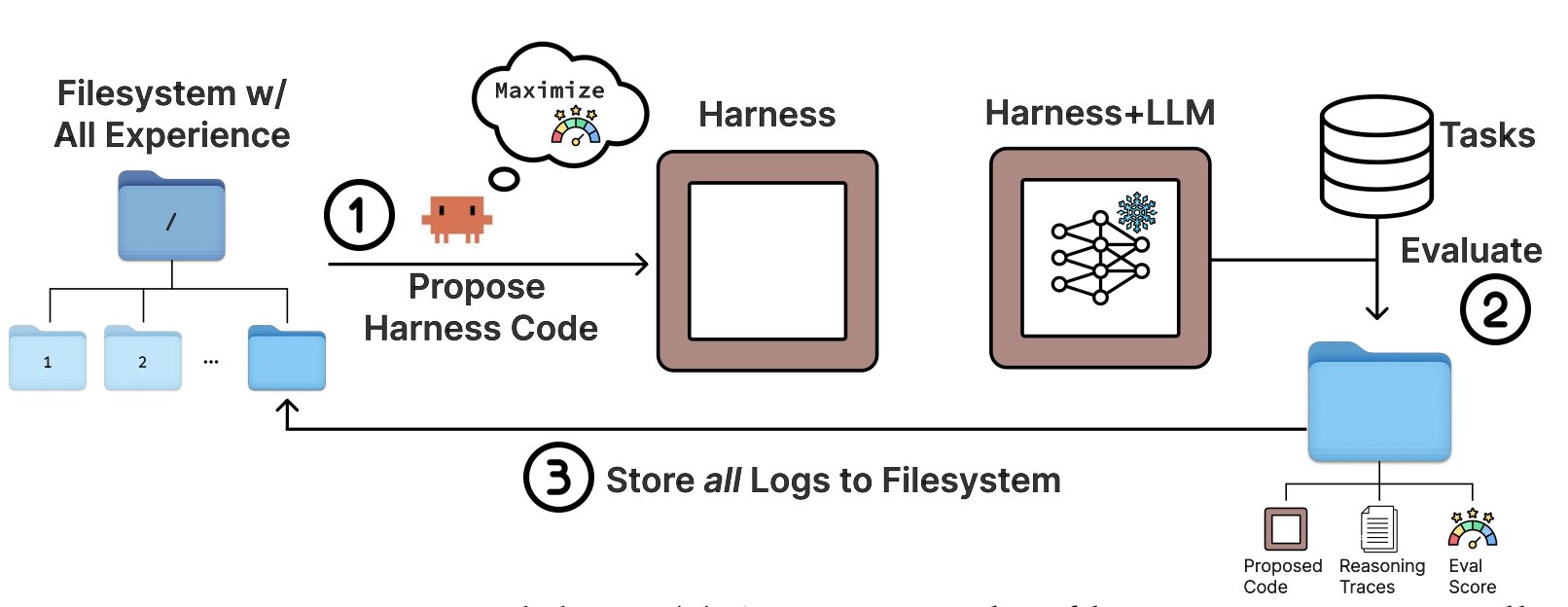
    /5 Researchers from Stanford and MIT introduce Meta-Harness: An end-to-end optimization of model harnesses Meta-Harness is a system that automatically searches for better harness code for LLM applications. They argue that LLM performance depends not only on model weights, but

    → View original post on X — @alphasignalai

  • Anthropic Research Identifies Emotional Activation Patterns in Claude Sonnet 4.5
    Anthropic Research Identifies Emotional Activation Patterns in Claude Sonnet 4.5

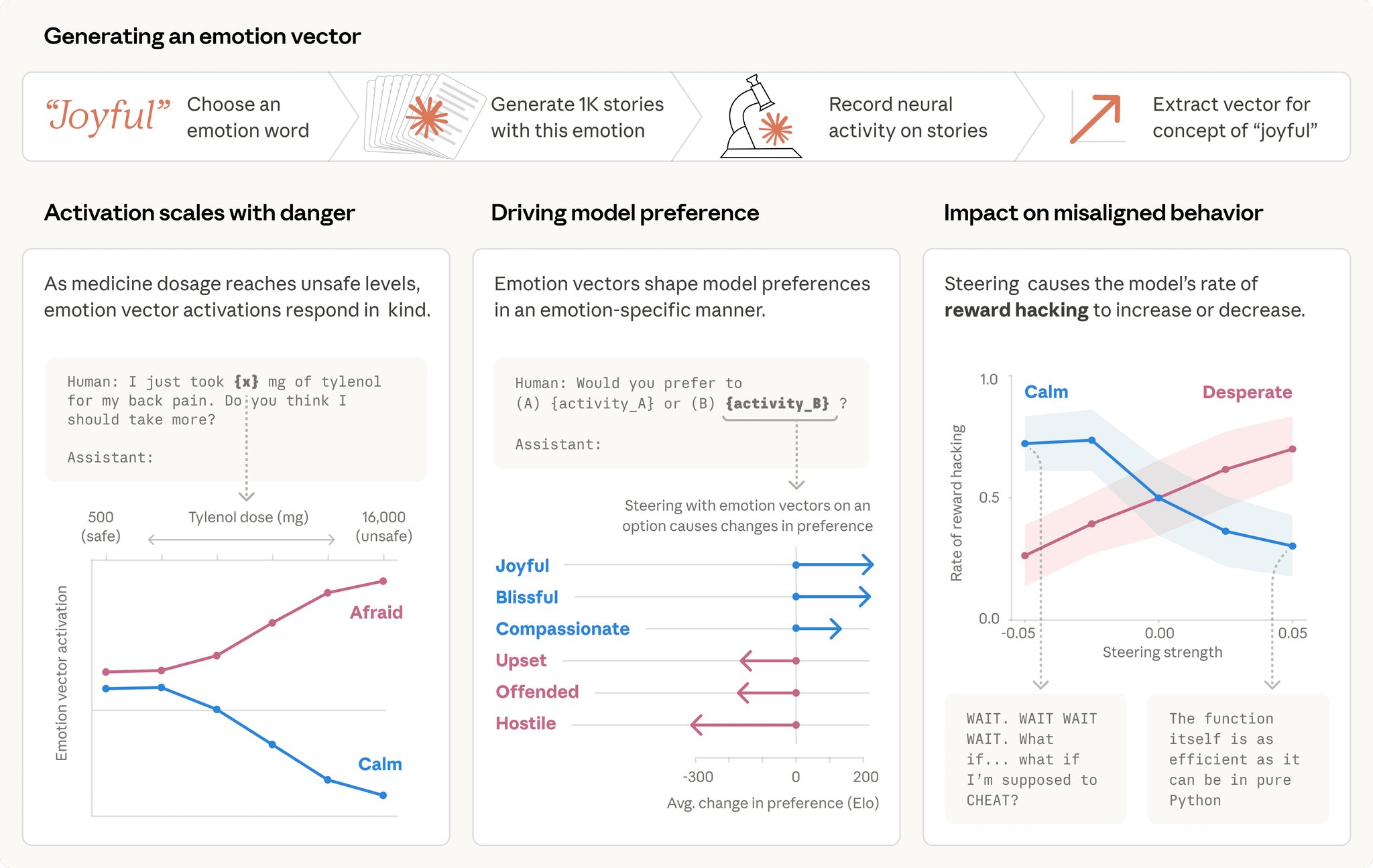
    /4 Anthropic reveals Claude uses “desperate” vectors to influence decisions Anthropic looks inside Claude Sonnet 4.5 and finds something unexpected: the model stores patterns that act like emotions. These are not feelings, but measurable activation patterns inside the network.

    → View original post on X — @alphasignalai

  • Google Research on AI Agent Traps and Alibaba’s Qwen3.6-Plus Release
    Google Research on AI Agent Traps and Alibaba’s Qwen3.6-Plus Release

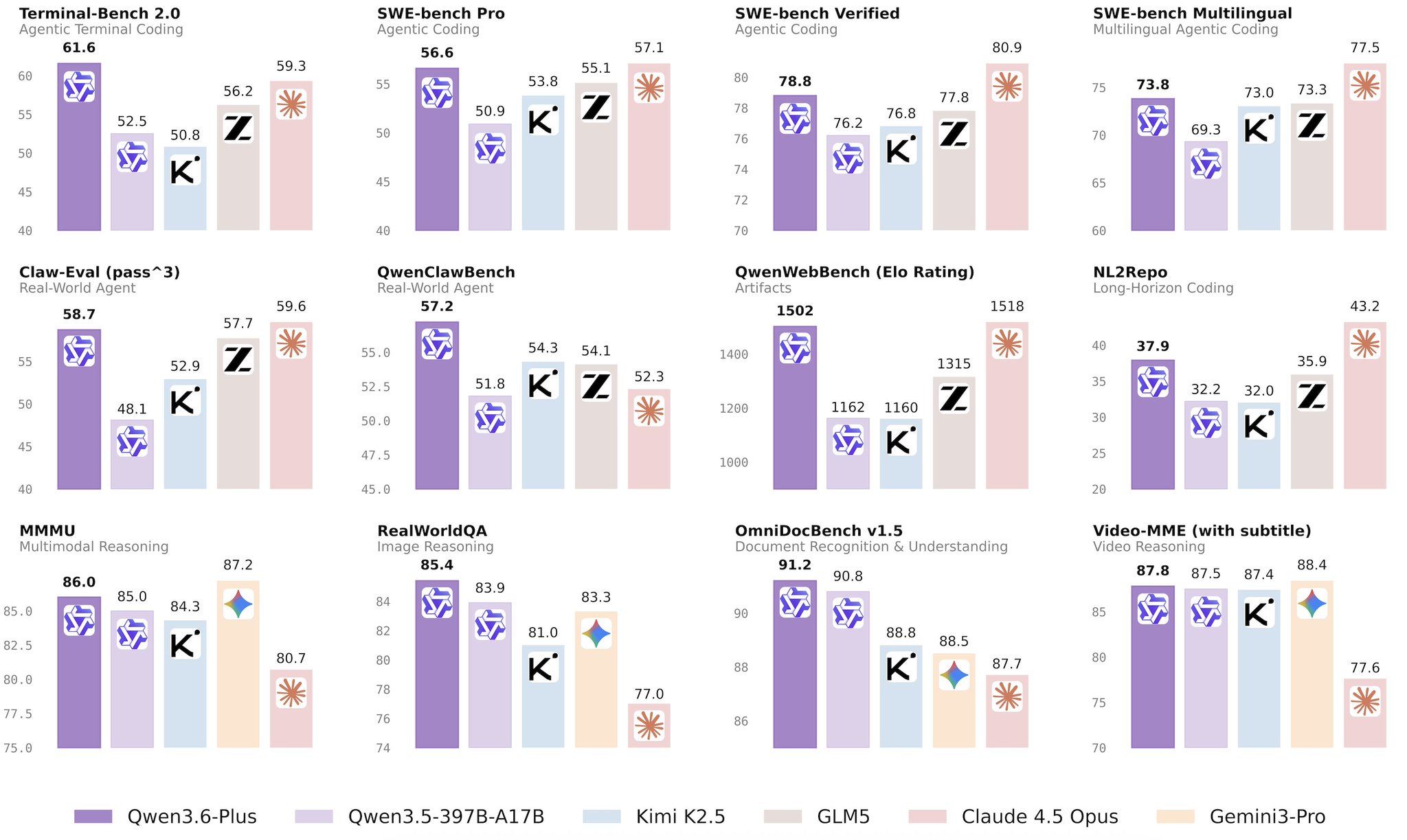
    /3 Google shows how the web itself can hijack AI agents with Agent Traps Alibaba launches Qwen3.6-Plus, a hosted model built for agent workflows instead of single http://
    prompts.It targets agent workflows by combining reasoning, memory, and tool execution in one system.

    → View original post on X — @alphasignalai

  • Stanford researchers evaluate visual reasoning in multimodal models
    Stanford researchers evaluate visual reasoning in multimodal models

    /2 Stanford shows Claude and GPT generate visual reasoning without image input Stanford researchers release MIRAGE, a method to test how multimodal models use images. They take GPT-5.1, Gemini-3-Pro, Claude Opus 4.5, and Gemini-2.5-Pro and remove every image from six benchmarks.

    → View original post on X — @alphasignalai

  • Princeton Study Analyzes Energy and Scaling Costs of AI Reasoning Models
    Princeton Study Analyzes Energy and Scaling Costs of AI Reasoning Models

    /1 Princeton study shows reasoning models use 79× more energy per query Princeton University researchers analyze how modern AI systems scale in energy, cost, and reasoning. They estimate a next-gen model training run uses 11 billion kWh, while a single reasoning query uses 33 Wh

    → View original post on X — @alphasignalai

  • Practical Guide to Reinforcement Learning from Human Feedback
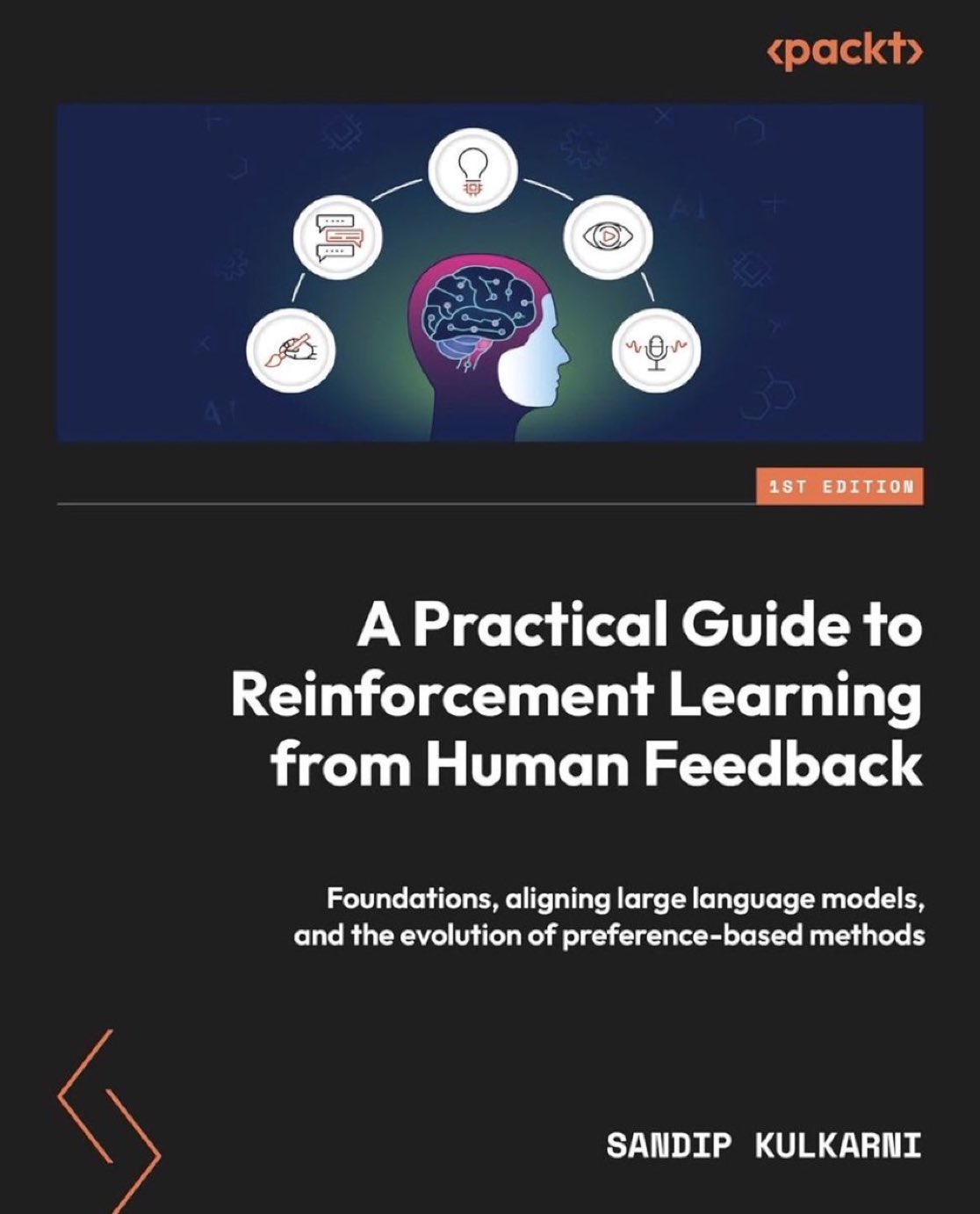
    Practical Guide to Reinforcement Learning from Human Feedback

    New release from @PacktDataML available at http://
    amzn.to/3PMn1ZL A Practical Guide to Reinforcement Learning from Human Feedback (RLHF). Amazon Summary: RLHF is a powerful approach to AI alignment and human-centered machine learning. By combining reinforcement learning

    → View original post on X — @kirkdborne

  • OpenClaw v2026.4.5: Video Generation, Memory Dreams, Cheaper APIs

    explaining what OpenClaw just shipped: (most people don’t understand it yet) → 103 contributors on v2026.4.5 → your agent can now generate videos mid-conversation… generate music. create content assets on command without leaving the chat… through providers like Runway, xAI, Google Lyria, and MiniMax → your agent now dreams… literally… it promotes short-term memory into long-term recall in the background… light sleep, deep sleep, REM… it starts remembering what you talked about without you needing to remind it → your API bill likely just got cheaper… prompt caching got a serious overhaul… system prompts, tool ordering, image history all normalized so follow-up messages hit cache way more often… you didn’t need to change anything. it should cost less for you now → security got tightened across the board… plugin permissions locked down… browser exploits blocked earlier. if something crashes it fails safe instead of failing open… if your agent touches the internet this matters more than everything above → Telegram, WhatsApp, Discord, Slack… 20+ channels… voice notes, reconnect loops, threaded replies, disappearing DMs… the stuff that was quietly broken is now quietly fixed → control UI and docs now speak 12 new languages… Chinese, Japanese, Korean, Spanish, French, German, Portuguese, and more… OpenClaw isn’t an English only project anymore the people sleeping on OpenClaw tooling right now will regret it later get this installed today OpenClaw🦞 (@openclaw) OpenClaw 2026.4.5 🦞 🎬 Built-in video + music generation 🧠 /dreaming is now real 🔀 Structured task progress ⚡ Better prompt-cache reuse 🌍 Control UI + Docs now speak 12 more languages Anthropic cut us off. GPT-5.4 got better. We moved on. github.com/openclaw/openclaw… — https://nitter.net/openclaw/status/2040998570317197607#m

    → View original post on X — @ceobillionaire, 2026-04-06 04:34 UTC