The 11 Best Online Courses To Master AI Agents #AIagents represent the next major wave of #digitaltransformation, capable of performing complex, multi-step tasks with minimal human intervention. The best part is that anyone can #learn to #build them using simple, no-code
EDUCATION
-
AI Textbooks Oversimplify Building Billion Dollar Startups
By
–
AI textbooks leave doing a $1B startup as an exercise for the reader.
-
LangChain Academy Live Workshop in San Francisco August 19th
By
–
Join us in San Francisco for LangChain Academy Live! Join LangChain Academy Instructor Lance Martin and fellow learners for an in-person workshop on August 19th at 4pm. We’ll walk through the Ambient Agents course, build an email agent together, answer your questions
-
On-Policy Learning in Life: Moving Beyond Imitation to Find Your Path
By
–
Becoming an RL diehard in the past year and thinking about RL for most of my waking hours inadvertently taught me an important lesson about how to live my own life. One of the big concepts in RL is that you always want to be “on-policy”: instead of mimicking other people’s successful trajectories, you should take your own actions and learn from the reward given by the environment. Obviously imitation learning is useful to bootstrap to nonzero pass rate initially, but once you can take reasonable trajectories, we generally avoid imitation learning because the best way to leverage the model’s own strengths (which are different from humans) is to only learn from its own trajectories. A well-accepted instantiation of this is that RL is a better way to train language models to solve math word problems compared to simple supervised finetuning on human-written chains of thought. Similarly in life, we first bootstrap ourselves via imitation learning (school), which is very reasonable. But even after I graduated school, I had a habit of studying how other people found success and trying to imitate them. Sometimes it worked, but eventually I realized that I would never surpass the full ability of someone else because they were playing to their strengths which I didn’t have. It could be anything from a researcher doing yolo runs more successfully than me because they built the codebase themselves and I didn’t, or a non-AI example would be a soccer player keeping ball possession by leveraging strength that I didn’t have. The lesson of doing RL on policy is that beating the teacher requires walking your own path and taking risks and rewards from the environment. For example, two things I enjoy more than the average researcher are (1) reading a lot of data, and (2) doing ablations to understand the effect of individual components in a system. Once when collecting a dataset, I spent a few days reading data and giving each human annotator personalized feedback, and after that the data turned out great and I gained valuable insight into the task I was trying to solve. Earlier this year I spent a month going back and ablating each of the decisions that I previously yolo’ed while working on deep research. It was a sizable amount of time spent, but through those experiments I learned unique lessons about what type of RL works well. Not only was leaning into my own passions more fulfilling, but I now feel like I’m on a path to carving a stronger niche for myself and my research. In short, imitation is good and you have to do it initially. But once you’re bootstrapped enough, if you want to beat the teacher you must do on-policy RL and play to your own strengths and weaknesses 🙂
→ View original post on X — @_jasonwei, 2025-07-16 01:26 UTC
-
Top Academics Sign Proposal to Fix Higher Education System
By
–
How to fix higher ed, signed by a who’s who of top academics:
-
Video generation transforms children’s stories into animated reality
By
–
My favorite use case for video generation so far: use it to turn your kid's stories into animated clips
— François Chollet (@fchollet) 15 juillet 2025
Kids find it completely natural that computers can make videos, and they love to see what they describe come to life — it’s like seeing your imagination validated, made real pic.twitter.com/NIJD1duChAMy favorite use case for video generation so far: use it to turn your kid's stories into animated clips Kids find it completely natural that computers can make videos, and they love to see what they describe come to life — it’s like seeing your imagination validated, made real
-

Stanford Student Affinity Group AI for Human Advancement
By
–
@Stanford students! Do you have an idea for advancing AI to improve the human condition? Our Student Affinity Group program is an opportunity to build a community of interdisciplinary students who have a shared interest in a topic related to the development or study of
-
AI Design Tool MagicPath Enables New Creative Possibilities
By
–
This is what designers can now create with @MagicPathAI
— Pietro Schirano (@skirano) 14 juillet 2025
One of the amazing submissions to the @contra hackathon by @_zuji.
Learn AI and design, because in the end, taste and skill always prevail, or you will be left behind. pic.twitter.com/g08mDRJTX5This is what designers can now create with @MagicPathAI One of the amazing submissions to the @contra hackathon by @_zuji
. Learn AI and design, because in the end, taste and skill always prevail, or you will be left behind. -
DeepSeek Adoption Surge: Free AI Captures Student Market Demand
By
–
The DeepSeek moment was supercharged by pent-up consumer demand for a good free AI for those who wouldn’t pay (especially for students for homework) A reason Kimi K2 has not had the immediate public impact of DeepSeek may be, for most consumers/students, DeepSeek is good enough
-
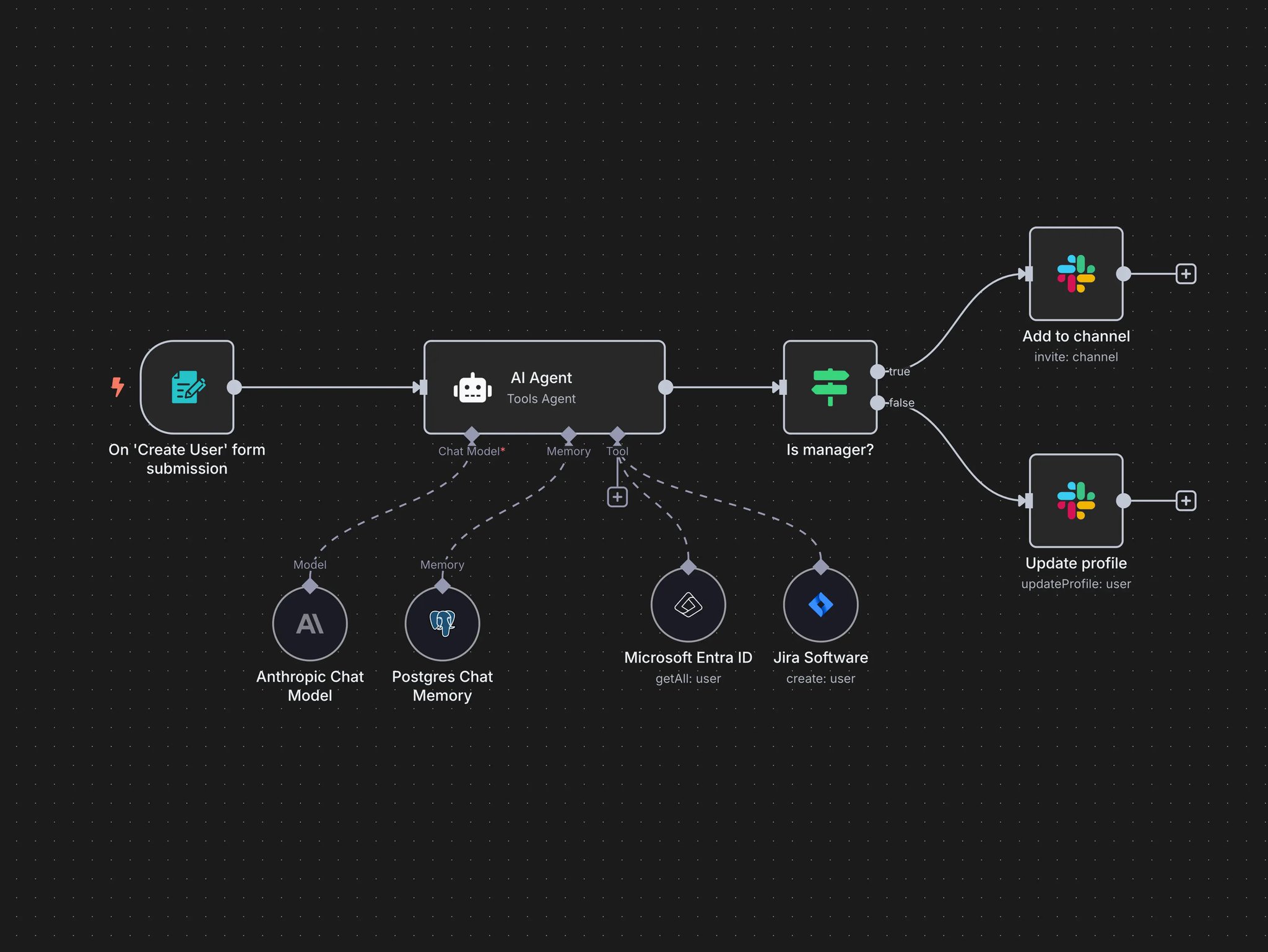
n8n AI Agents Module Launch Amid Microsoft Layoffs
By
–
Bientôt, grosse mise à jour dans la formation ! Un gros module sur n8n, je vous apprends a créer de vrais agents intelligents. Ceux-là même qui font que Microsoft licencie 9000 personnes. Merci à tous pour votre soutien et vos retours, mon but est vraiment de vous proposer le