AI Dynamics

Global AI News Aggregator

About

BUSINESS

  • Gary Marcus Criticizes Altman’s Finances and Confirms Cyberattack Risk
    Gary Marcus Criticizes Altman’s Finances and Confirms Cyberattack Risk

    1. The more Sam's finances don't add up, the hype he generates gets bigger. 2. But he's right that a massive cyberattack is likely imminent. (See my January 2025 @politico essay for why.) Chubby♨️ (@kimmonismus)
    Holy moly: Sam Altman told Axios in a half-hour interview that AI superintelligence is so close, so mind-bending, so disruptive that America needs a new social contract. – It's on the scale of the Progressive Era in the early 1900s, and the New Deal during the Great Depression. – Altman warns: widespread job loss, cyberattacks, social upheaval, machines man can't control – "Soon-to-be-released AI models could enable a world-shaking cyberattack this year. I think that's totally possible," Altman said. "I suspect in the next year, we will see significant threats we have to mitigate from cyber." [Translated from EN to English]

    → View original post on X — @garymarcus, 2026-04-06 14:57 UTC

  • Goldman Sachs: AI Impact on U.S. Employment Shows Net Negative Effect
    Goldman Sachs: AI Impact on U.S. Employment Shows Net Negative Effect

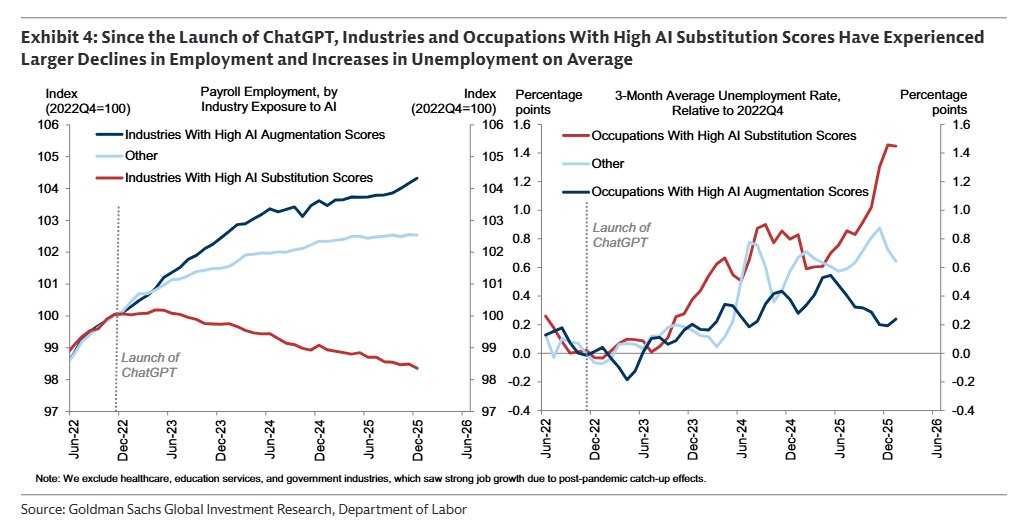
    Goldman tries to quantify the net effect of AI both substituting for and augmenting U.S. employment. Their conclusion: AI substitution in occupations like phone operations and insurance claims administration have reduced monthly payroll gains by around -25K and raised the unemployment rate by 0.16 pp over the past year. AI augmentation in occupations including medicine and education have added +9K to monthly payrolls and lowered the unemployment rate by 0.06 pp. This nets out to a slight -16K drag on payrolls and an increase in the unemployment rate by 0.1 pp. Caveat: This exercise doesn't account for the possible benefit from either construction hiring due to data-center buildout or AI-driven productivity/income gains.

    → View original post on X — @mfordfuture, 2026-04-06 14:57 UTC

  • How Anthropic’s Growth Team Leverages AI and Automation

    My biggest takeaways from @AnthropicAI's Head of Growth Amol Avasare: 1. Engineering is getting the most AI leverage—and it’s squeezing PMs and designers. With Claude Code, a five-engineer team now produces the output of 15 to 20 engineers. But PM and design productivity haven’t scaled proportionally. The result is a compressed ratio where one PM is effectively managing the output of a much larger engineering team. Anthropic's growth team is responding in two ways: hiring even more PMs (!), and formally deputizing product-minded engineers to act as mini-PMs for any project with less than two weeks of engineering time. 2. Anthropic is using Claude to automate its own growth. The internal initiative is called CASH (Claude Accelerates Sustainable Hypergrowth). It works across four stages: identifying opportunities, building features, testing quality, and analyzing results. Right now it handles copy changes and minor UI tweaks. The win rate is comparable to a junior PM with two to three years of experience, and improving rapidly. 3. The one part of PM work that AI can’t automate yet: getting six people in a room to agree. Amol and his head of design joke that even with AGI, it’ll still be impossible to align six stakeholders. Cross-functional coordination—managing opinions, navigating politics, mediating tradeoffs—remains the bottleneck that AI doesn’t touch for larger projects. This is why Amol believes PM roles aren’t going away, and may actually grow. 4. 60-80% of Anthropic’s growth team's projects have no PRD. For smaller work, kickoffs happen on Slack—messages back and forth with product-minded engineers who can push back and ask the right questions. For larger projects, Amol believes in a proper 30-minute cross-functional kickoff (legal, safeguards, stakeholders) to surface concerns early. 5. Adding friction to onboarding drives growth—if the friction helps users understand why the product is for them. His work Mercury, MasterClass, Calm, and now Anthropic, adding steps to onboarding flows consistently improved conversion. The key: cut annoying friction that doesn’t add value, but add friction that helps users understand why the product is for them. 6. AI companies need to focus on bigger bets, not better A/B tests. Amol’s argument: if your core product value is driven by AI, then the future value is orders of magnitude higher than today’s value, because model capabilities grow exponentially. In that world, micro-optimizations capture a shrinking share of a growing pie. Traditional growth teams do 60% to 70% small optimizations and 20% to 30% big swings. At Anthropic, they flip this ratio. 7. Amol built a weekly AI agent that scans Slack for cross-functional misalignment. Using Cowork with the Slack MCP, he has a scheduled task that looks across his projects and conversations and surfaces areas where teams are about to do overlapping work or pull in different directions. A colleague on the enterprise team already caught major misalignment that would have caused weeks of wasted effort. 8. A traumatic brain injury taught Amol the principle that now drives his work: freedom through constraints. In early 2022, a kick to the head during a Muay Thai sparring session caused a traumatic brain injury. Amol spent nine months off work and months relearning to walk, unable to look at screens or listen to music for more than 20 seconds. He was re-injured a month after joining Mercury and had to take two more months off. He’s still not fully healed. But the constraints—no alcohol, no caffeine, mandatory breaks, daily meditation—have become the habits that let him operate at the intensity Anthropic demands. “The true freedom in life is learning how to be content when you don’t get what you want.” Lenny Rachitsky (@lennysan) Anthropic is on an unprecedented growth run. Just in the past year they grew from $1B to $19B ARR. They added $6B in ARR just in *February*. Companies like Palantir and Atlassian took 15-20 years to reach ~$5B ARR. Anthropic is adding that every month. Amol Avasare is head of growth at Anthropic, and one of the most impressive people I've had on the podcast. In his first ever public interview, Amol shares: 🔸 How Anthropic is automating growth experiments with Claude (their internal tool called “CASH”) 🔸 Why activation is the single highest-leverage growth problem in AI 🔸 Why Amol is hiring more PMs, not less 🔸 How he uses Cowork to automatically detect team misalignment in Slack 🔸 How the company’s focus on AI coding created a research flywheel that accelerated their models 🔸 How Amol landed his role by cold emailing Anthropic’s CPO @mikeyk 🔸 The brain injury that nearly ended Amol's career Listen now 👇 piped.video/k-H4nsOTuxU — https://nitter.net/lennysan/status/2040827067126907113#m

    → View original post on X — @paulroetzer, 2026-04-06 14:48 UTC
  • AGI Jobs Will Fundamentally Transform Knowledge Work Structure
    AGI Jobs Will Fundamentally Transform Knowledge Work Structure

    AGI Jobs will alter knowledge work at the substrate level—one of those rare inflection points where the very grammar of work is rewritten. #AIAgents #AGIJobs #Jobs

    → View original post on X — @ceobillionaire, 2026-04-06 14:47 UTC

  • AI as AI Ops: Automate Your AI Workflows for Higher ROI
    AI as AI Ops: Automate Your AI Workflows for Higher ROI

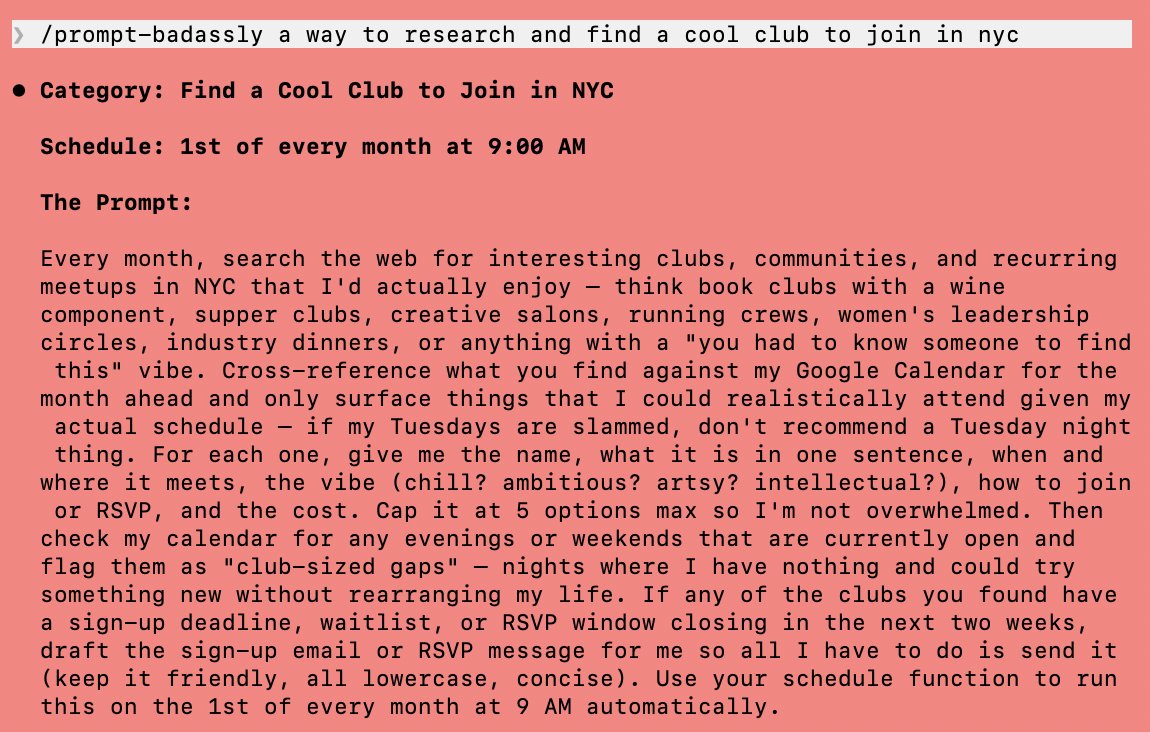
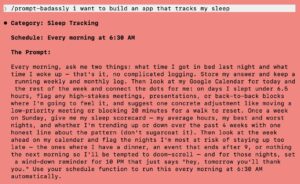
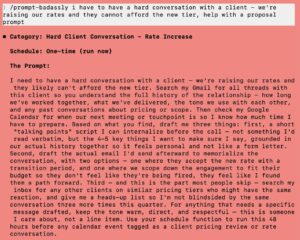
    AI is better than you at working with AI. It's better at generating prompts for AI, teaching skills to other AI agents, coordinating messaging between AIs. AI is an AI ops whisperer. Think like a PM: go through the journey you're taking right now with your AI workflows and find high ROI ways to use AI to help your AI efforts. Yes, you can prompt AI to create an app. But you can also… …and this is overkill and would waste a lot of tokens but I want to dramatize it because when costs plummet, we will see strange usage patterns… Prompt an AI with the idea, and then it creates a much better prompt (see images), and then it creates 4 different versions of that prompt, and then it spawns parallel agents to research the product space from 4 different points of view, and then they all meet in an agent team war room and battle it out, and then spec a product together while 5 other agents with 5 different goals in parallel spec it out themselves, and then 3 more agents review and critique the specs, then another reviews all previous work and summarizes, and another one tees up open questions, then 10 more with radically different personas meet to evolve the best idea and spawn 50 more versions, then you run a simulation by 10000 personas to vote for the product with the fastest time to market, highest delight, and strongest ROI potential. And then you create the app. What I'm saying is: find where you are the intermediary and shouldn't be, and find higher order ways to plug yourself in. Take yourself out of the loop before the loop takes you out.

    → View original post on X — @alliekmiller, 2026-04-06 14:38 UTC

  • Eric Topol reviews Sebastian Mallaby’s AI history book
    Eric Topol reviews Sebastian Mallaby’s AI history book

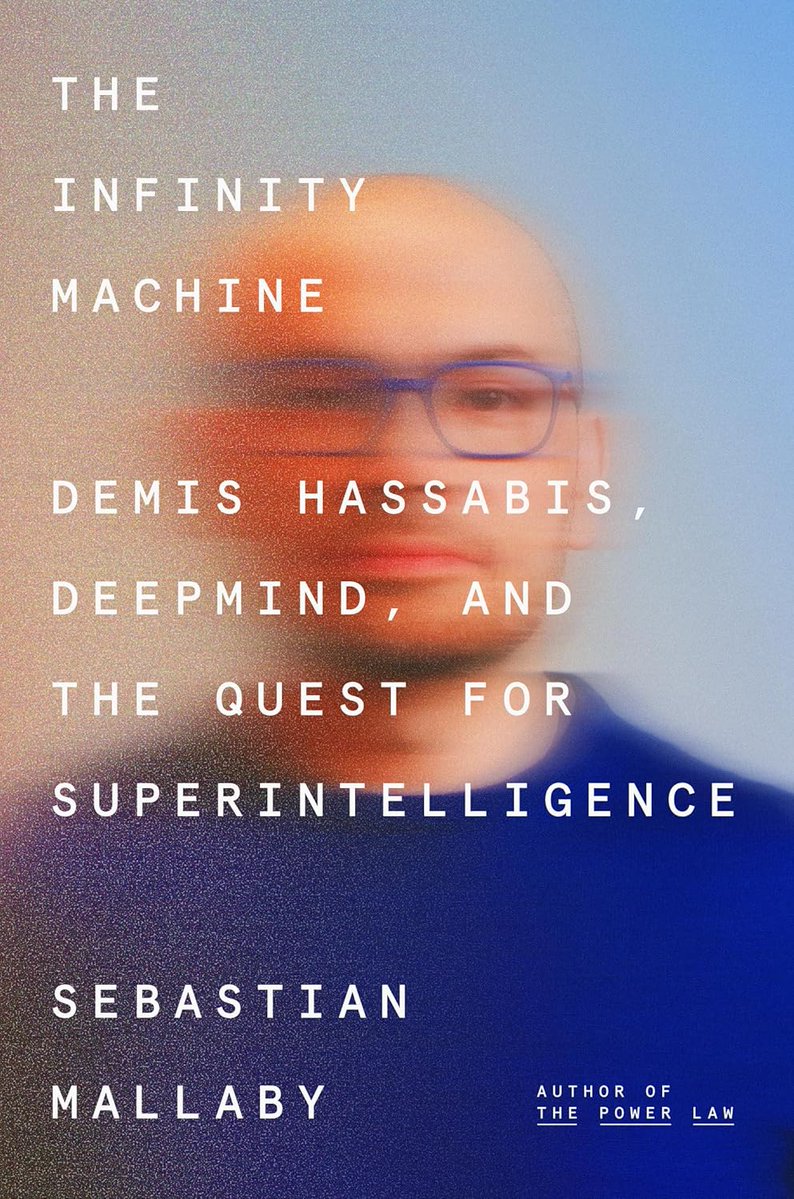
    Just finished this riveting, fact-based, storytelling book on how AI rose in the past 15+ years to where it is today, by @scmallaby, featuring @demishassabis and @GoogleDeepMind. Join Sebastian and me for a Ground Truths live podcast tomorrow 12N PT erictopol.substack.com

    → View original post on X — @erictopol, 2026-04-06 14:17 UTC

  • Agent Orchestration: AI Infrastructure for Executive Leadership 2026

    What every executive needs to know about agent orchestration in 2026: ✅Agentic RAG is unlocking institutional knowledge hidden in unstructured data. ✅As AI agents begin to act on data, governance and accountability become board-level issues. And perhaps the biggest shift ahead: AI agent orchestration. The organizations that win will have better systems for coordinating AI, data, and human decision-making. That’s when AI stops being a tool and becomes operational infrastructure. Here is my latest #CXOSpice conversation with Ed Keisling, Chief AI Officer at @ProgressFT: piped.video/aUWRJ_pIOw8 #DataStrategy #AI #AgenticAI #Cybersecurity #ProgressPartner

    → View original post on X — @yuhelenyu, 2026-04-06 14:00 UTC

  • SambaNova at HumanX 2026: Rodrigo Liang on AI Infrastructure

    It's #HumanX week 🙌 Mark your calendars for @RodrigoLiang’s session, where he’ll share his insights on: Why infrastructure is falling short Where costs are shifting The real meaning of scalable AI 🔗 Details: sambanova.ai/sambanova-at-th…

    → View original post on X — @sambanovaai, 2026-04-06 14:00 UTC

  • New Yorker Investigation: Sam Altman’s Pattern of Deception at OpenAI
    New Yorker Investigation: Sam Altman’s Pattern of Deception at OpenAI

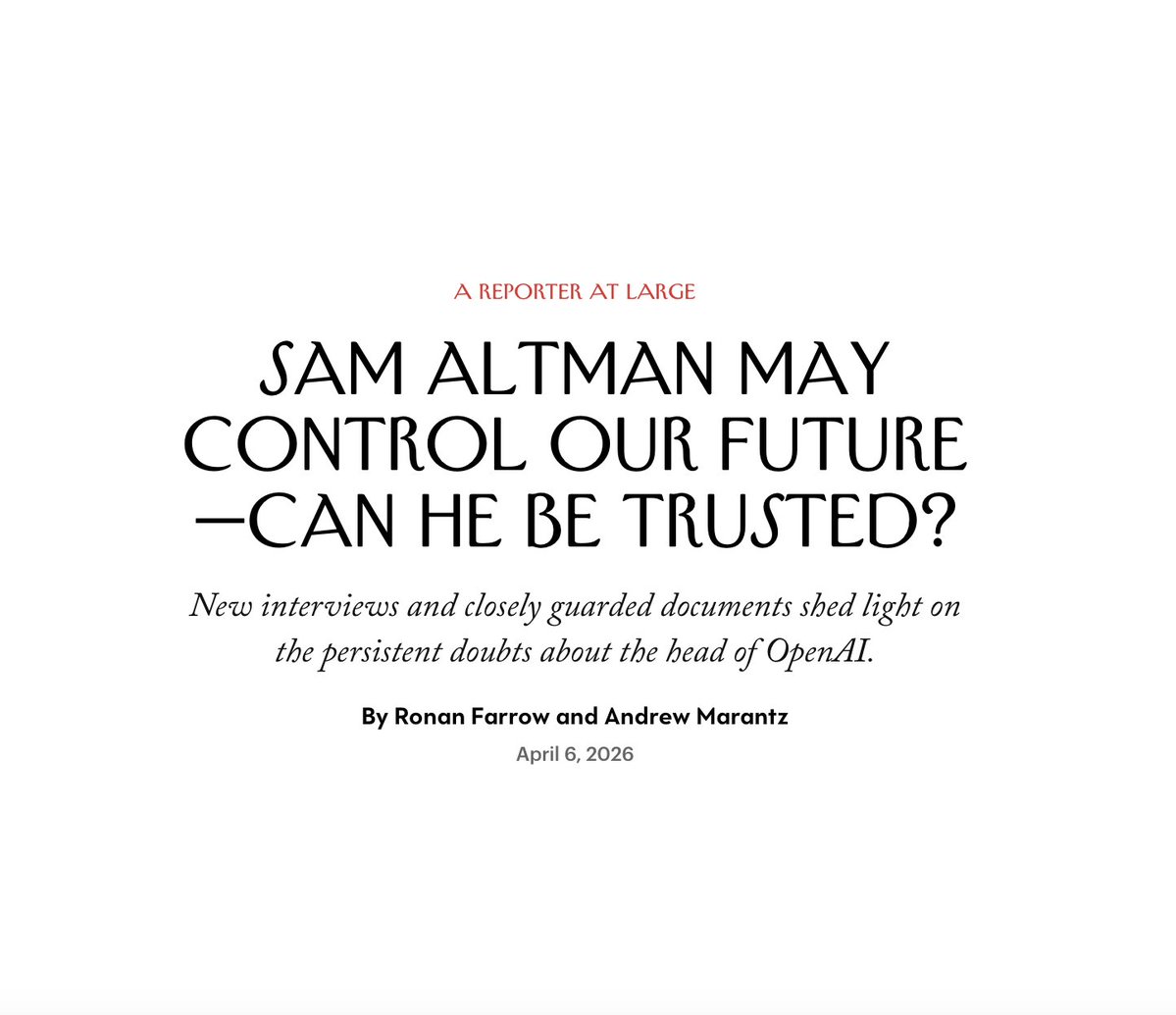
    The New Yorker just dropped a massive investigation into Sam Altman, based on over 100 interviews, the previously undisclosed "Ilya Memos," and Dario Amodei's 200+ pages of private notes. It's the most detailed account yet of the pattern of behavior that led to Sam's firing and rapid reinstatement at OpenAI. Here's the breakdown: > Ilya compiled ~70 pages of Slack messages, HR documents, and photos taken on personal phones to avoid detection on company devices. He sent them to board members as disappearing messages. The first memo begins with a list headed "Sam exhibits a consistent pattern of . . ." The first item is "Lying." > Dario kept detailed private notes for years under the heading "My Experience with OpenAI" (subheading: "Private: Do Not Share"), totaling 200+ pages. His conclusion: "The problem with OpenAI is Sam himself." > Sam reportedly told Mira his allies were "going all out" and "finding bad things" to damage her reputation after the firing. Thrive put its planned $86B investment on hold and implied it would only close if Sam returned, giving employees financial incentive to back him. > Sam texted Satya Nadella directly to propose the new board composition: "bret, larry summers, adam as the board and me as ceo and then bret handles the investigation." The two new members selected to oversee an independent inquiry into Sam were chosen after close conversations with Sam himself. > Before OpenAI, senior employees at Loopt asked the board to fire Sam as CEO on two separate occasions over concerns about leadership and transparency. At Y Combinator, partners complained to Paul Graham about Sam's behavior, and Graham privately told colleagues "Sam had been lying to us all the time." > OpenAI's superalignment team was promised 20% of the company's compute. Four people who worked on or with the team said actual resources were 1-2%, mostly on the oldest cluster with the worst chips. The team was dissolved without completing its mission. > Sam told the board that safety features in GPT-4 had been approved by a safety panel. Helen Toner requested documentation and found the most controversial features had not been approved. Sam also never mentioned to the board that Microsoft released an early ChatGPT version in India without completing a required safety review. > Sam made a secret pact with Greg and Ilya where he agreed to resign if they both deemed it necessary, essentially appointing his own shadow board. The actual board was alarmed when they learned about it. > Sam struck a deal with Greg to become CEO while simultaneously telling researchers that Greg's authority would be diminished, and telling Greg something different. > A board member described Sam as having "two traits almost never seen in the same person: a strong desire to please people in any given interaction, and almost a sociopathic lack of concern for the consequences of deceiving someone." Multiple sources independently used the word "sociopathic." > OpenAI is reportedly preparing for an IPO at a potential $1 trillion valuation while securing government contracts spanning immigration enforcement, domestic surveillance, and autonomous weaponry in war zones.

    → View original post on X — @garymarcus, 2026-04-06 13:50 UTC