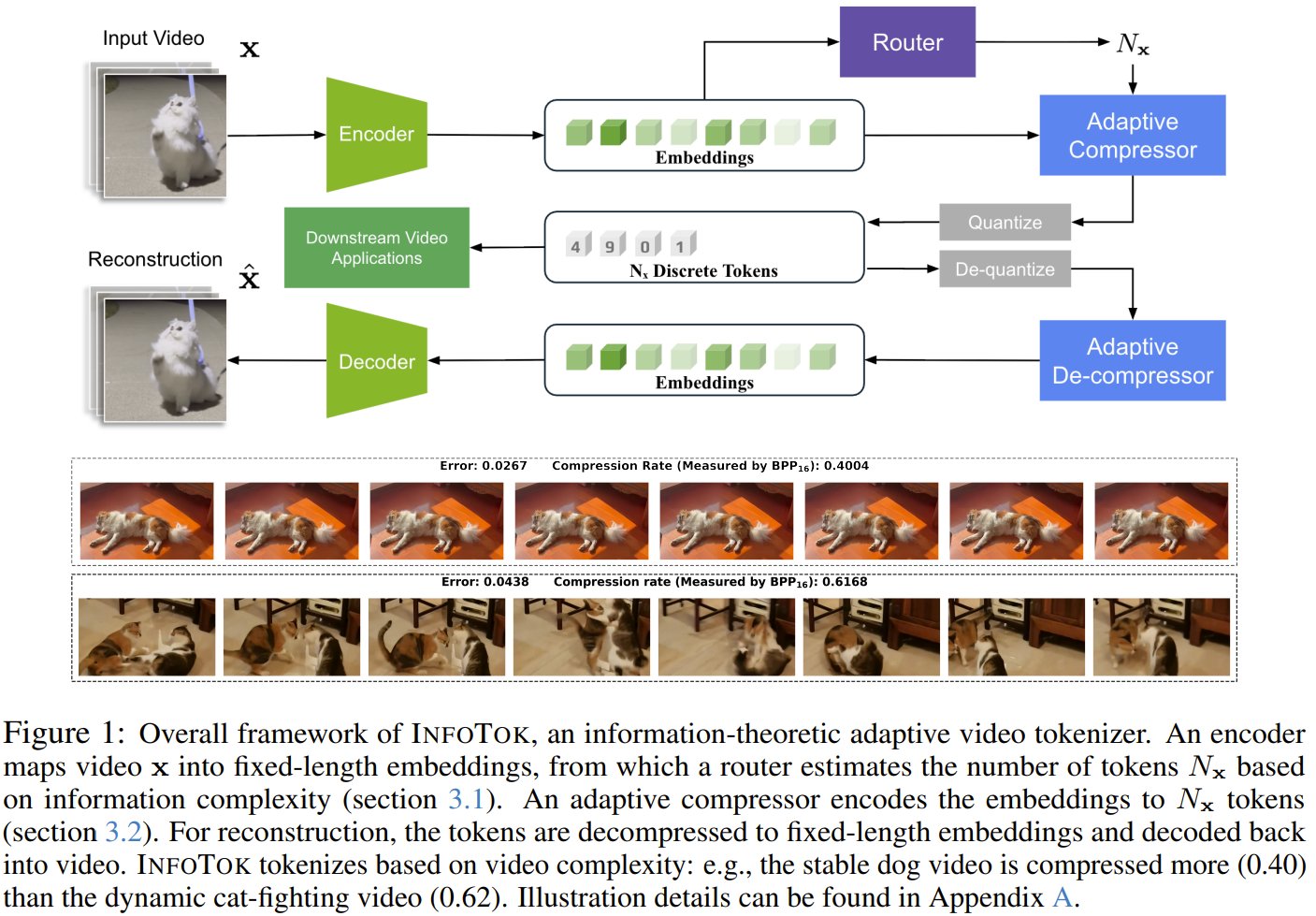
How do we process long videos efficiently without losing crucial information? NVIDIA, Stanford University, and National University of Singapore have an answer! They introduce InfoTok, a breakthrough method inspired by Shannon's information theory. It intelligently allocates
AI
-
True and Accurate Until February 28th 2026
By
–
100% TRUE. EXACT. VERY ACCURATE. …BUT THAT WAS BEFORE 28TH FEB 2026.
-

Goal-VLA: Zero-Shot Robot Manipulation from Images and Instructions
By
–
What if robots could perform complex manipulation tasks with zero prior examples, just from an image and instruction? Researchers from National University of Singapore, The University of Hong Kong, Peking University, and Tsinghua University present Goal-VLA! Their Goal-VLA uses
-
Data Center Value Chain and Investment Returns in AI
By
–
Very good explanation. As investors we also need to understand that once the data center is built, who will make the most profits? Profits = eventually decide investment returns. This brings us to the concept of value chain. One who controls the scarcest resources on the
-

CoreFluxIoT: From Porto to Hannover, Unified Industrial Protocol Platform
By
–
From Porto to Hannover. @corefluxiot started with 3 engineers and one idea: replace 6 factory tools with a single binary. Now they support 14 protocols and run on everything from a Raspberry Pi up. #HM26 #coreflux_ai pic.twitter.com/eQcsdQ3nrS
— Lucian Fogoros (@fogoros) 12 avril 2026From Porto to Hannover. @corefluxiot started with 3 engineers and one idea: replace 6 factory tools with a single binary. Now they support 14 protocols and run on everything from a Raspberry Pi up. #HM26 #coreflux_ai
-
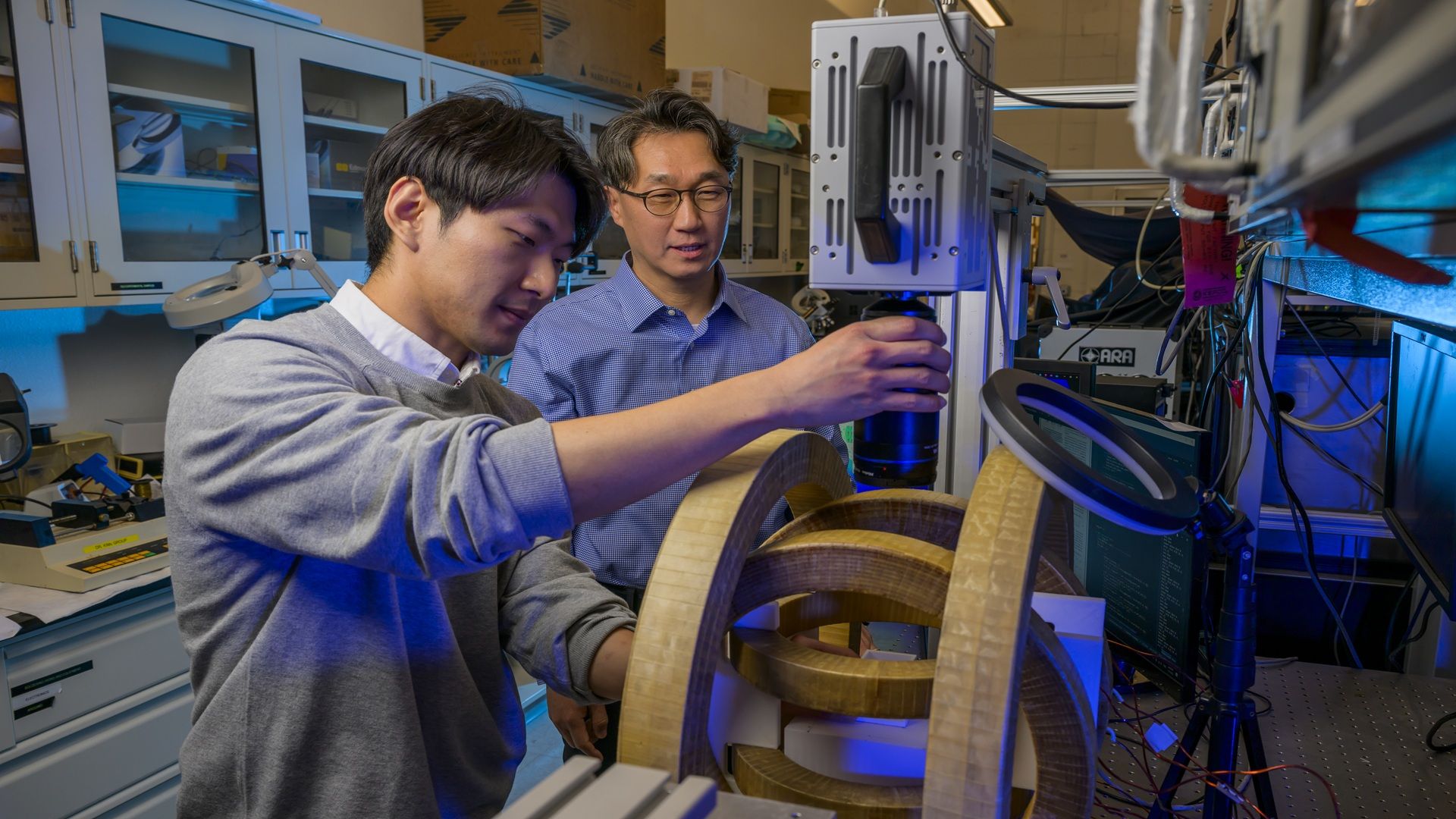
Magnetic System Enables Autonomous Microrobot Movement Without Tracking
By
–
New magnetic system lets microrobots move without cameras or tracking systems
by Neetika Walter @IntEngineering Learn more: https://
bit.ly/41UBeqi #Robotics #Engineering #ArtificialIntelligence #Innovation #Technology -
OpenClaw-RL Repository and Free AI/ML Engineering PDF Guide
By
–
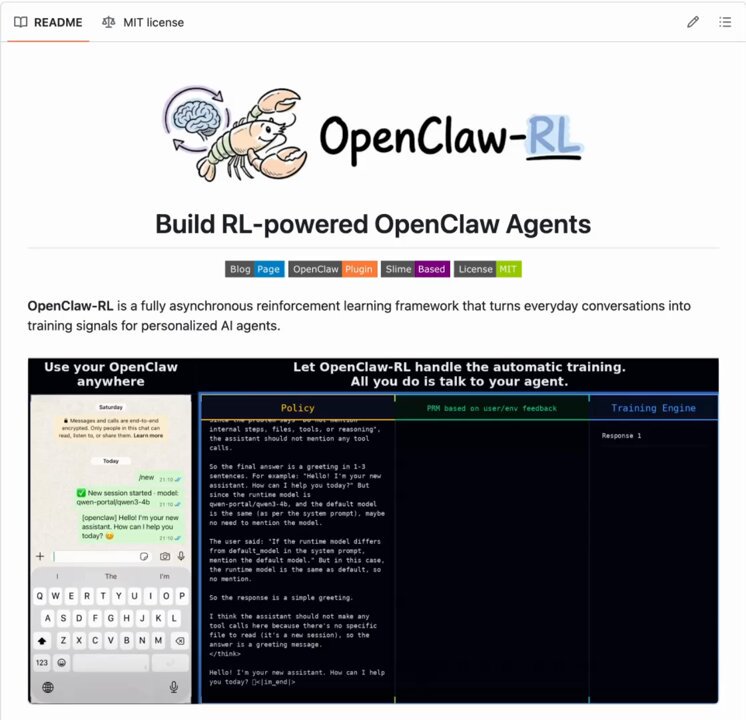
OpenClaw-RL Repo: github.com/Gen-Verse/OpenCla… If you want to learn AI/ML engineering, I have put together a free PDF (380+ pages) with 150+ core lessons. Download for free: dailydoseofds.github.io/ai-e…
→ View original post on X — @akshay_pachaar, 2026-04-12 13:35 UTC
-
OpenClaw-RL: Reinforcement Learning for Agent Model Weights
By
–
OpenClaw meets RL!
— Akshay 🚀 (@akshay_pachaar) 12 avril 2026
OpenClaw Agents adapt through memory files and skills, but the base model weights never actually change.
OpenClaw-RL solves this!
It wraps a self-hosted model as an OpenAI-compatible API, intercepts live conversations from OpenClaw, and trains the policy in… pic.twitter.com/4kxY1b2wSCOpenClaw meets RL! OpenClaw Agents adapt through memory files and skills, but the base model weights never actually change. OpenClaw-RL solves this! It wraps a self-hosted model as an OpenAI-compatible API, intercepts live conversations from OpenClaw, and trains the policy in the background using RL. The architecture is fully async. This means serving, reward scoring, and training all run in parallel. Once done, weights get hot-swapped after every batch while the agent keeps responding. Currently, it has two training modes: – Binary RL (GRPO): A process reward model scores each turn as good, bad, or neutral. That scalar reward drives policy updates via a PPO-style clipped objective. – On-Policy Distillation: When concrete corrections come in like "you should have checked that file first," it uses that feedback as a richer, directional training signal at the token level. When to use OpenClaw-RL? To be fair, a lot of agent behavior can already be improved through better memory and skill design. OpenClaw's existing skill ecosystem and community-built self-improvement skills handle a wide range of use cases without touching model weights at all. If the agent keeps forgetting preferences, that's a memory problem. And if it doesn't know how to handle a specific workflow, that's a skill problem. Both are solvable at the prompt and context layer. Where RL becomes interesting is when the failure pattern lives deeper in the model's reasoning itself. Things like consistently poor tool selection order, weak multi-step planning, or failing to interpret ambiguous instructions the way a specific user intends. Research on agentic RL (like ARTIST and Agent-R1) has shown that these behavioral patterns hit a ceiling with prompt-based approaches alone, especially in complex multi-turn tasks where the model needs to recover from tool failures or adapt its strategy mid-execution. That's the layer OpenClaw-RL targets, and it's a meaningful distinction from what OpenClaw offers. I have shared the repo in the replies!
→ View original post on X — @akshay_pachaar, 2026-04-12 13:35 UTC
-
Humanoid Robots Advancing: Costs Dropping, Everyday Integration Approaching
By
–
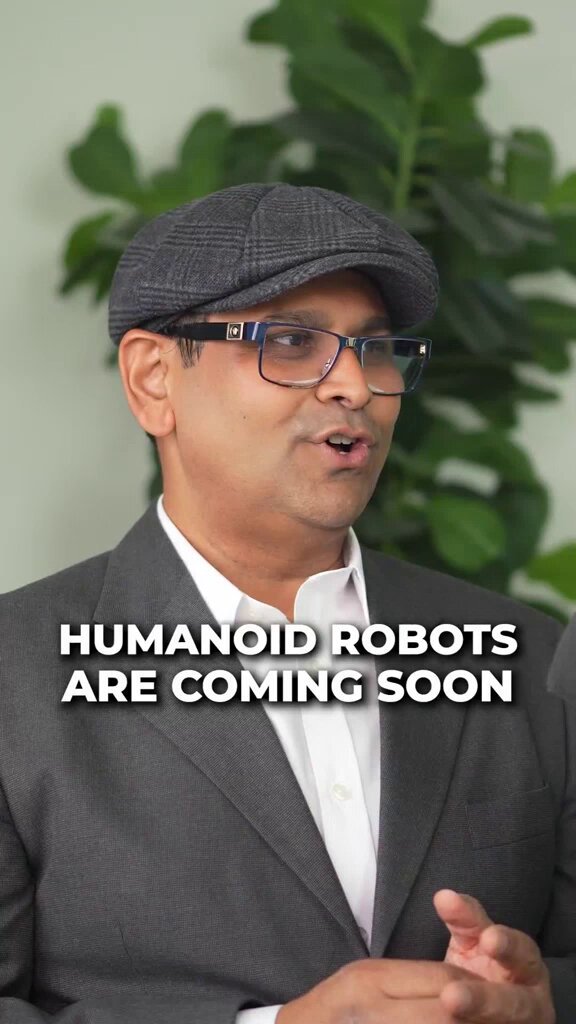
Robotics is advancing fast, and while it may take time, humanoid robots are becoming more realistic and capable with each breakthrough. As costs drop like they did with electric cars, these machines could become a common part of everyday life. pic.twitter.com/pxcr8rZDyP
— Satya Mallick (@LearnOpenCV) 12 avril 2026Robotics is advancing fast, and while it may take time, humanoid robots are becoming more realistic and capable with each breakthrough. As costs drop like they did with electric cars, these machines could become a common part of everyday life.
→ View original post on X — @learnopencv, 2026-04-12 13:32 UTC