People have been using Abacus AI DeepAgent to make PowerPoints from prompts. The results have been solid.
AGENTS
-
AI Agents: The Next Frontier in Workplace Automation
By
–
AI adoption is booming, with 72% of workers now using it in their day-to-day work. The next opportunity? Building AI agents for automating repetitive tasks and speeding up tasks that require deep research. With only 13% of teams having integrated agents into their workflows so far, we've launched two new courses to help you take the next step: AI Agent Fundamentals and Get Started with AI Agents: databricks.com/blog/master-a…
→ View original post on X — @marcusborba, 2025-11-28 20:36 UTC
-
Building Medallion Architecture in BigQuery with AI Natural Language
By
–
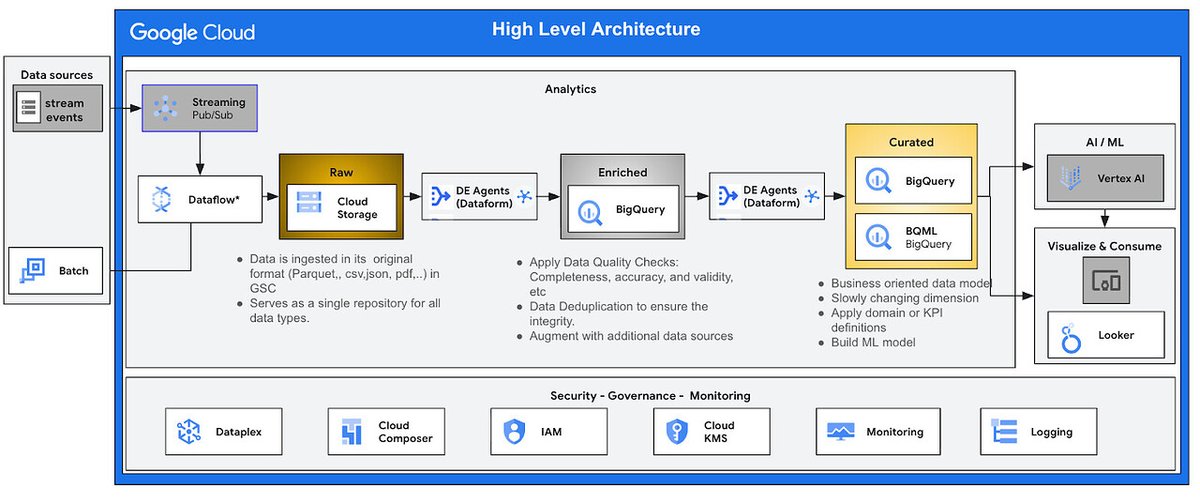
Tired of manually building data pipelines? Learn how to build a Medallion Architecture in #BigQuery using just natural language. The new Data Engineering Agent turns simple prompts into bronze, silver, and gold layers with complex data quality rules → goo.gle/4abwe62
→ View original post on X — @marcusborba, 2025-11-28 20:00 UTC
-
Modular System Architecture: API, Authentication, AI Agents, and Chatbots
By
–
5/
Next came structure.
They broke the system into modular building blocks:
API builder for REST, GraphQL, and webhooks
Authentication with Google, JWT, and social login
AI agents for automations and integrations
Chatbots that deploy anywhere
Each piece was self-contained but -
Designing Effective Toolsets for LLM-Based Agents
By
–
One of the biggest challenges with using agents today is figuring out how to provide the LLMs with a toolset that it understands how to use accurately, is not overly broad, and enables meaningful tasks to be completed. After testing out various approaches, we have found a use
-
Deep Agents Weekly Roundup: Resources for Complex Task Automation
By
–
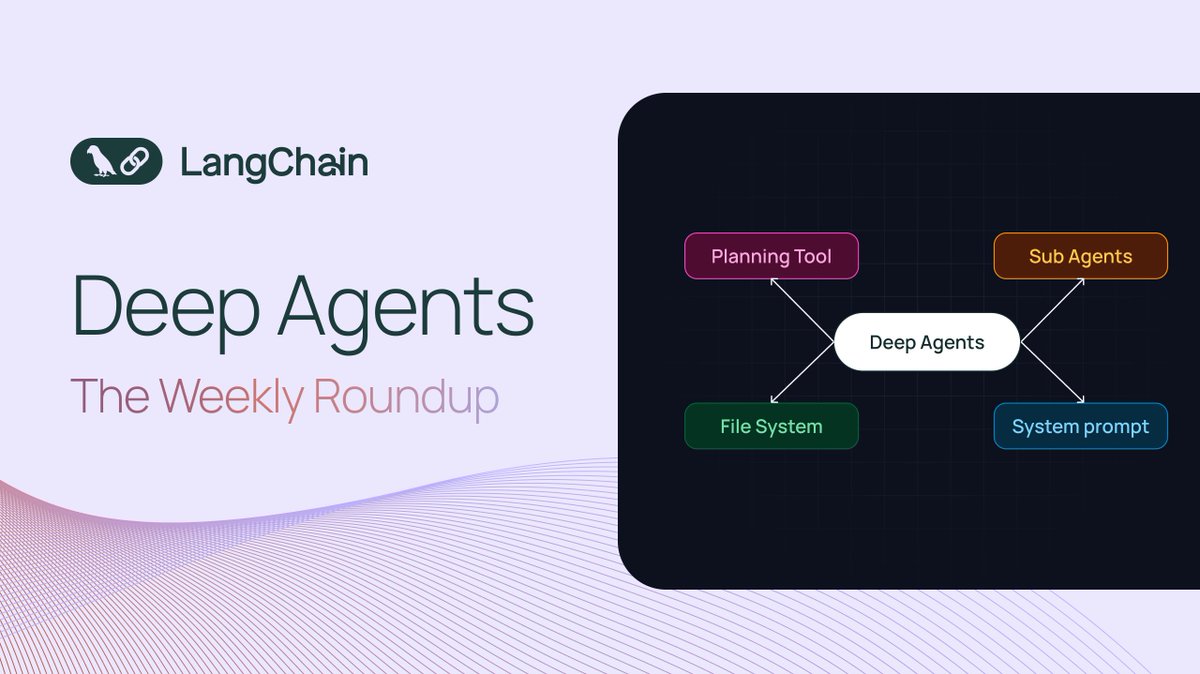
🚀 Deep Agents: The Weekly Roundup 🚀 Dive into our new resources to help you build Deep Agents capable of handling complex, long-running tasks. ✏️ Context engineering is key to reliable agents. Deep agents need detailed context and prompts, and filesystems can help manage that context. We wrote up some strategies for using filesystems to improve agent reliability. Read the blog: blog.langchain.com/how-agent… 🤷♀️ What are Deep Agents? – We break down the key things to know when you’re building an agent to handle more complex tasks. Watch the video: piped.video/watch?v=IVts6ztr… ⚽ Using Skills with Deep Agents CLI – Agent skills are now available in the Deep Agents CLI, enabling you to use the large and growing collection of public skills with your agents. Watch the video: piped.video/Yl_mdp2IiW4/?utm_me… & blog: blog.langchain.com/using-ski… 📚 LangChain Academy Course – If you’re not sure how to get started, our free LangChain Academy course covers the four features that set Deep Agents apart: planning, file systems, sub-agents, and prompting. By the end, you'll design, implement, and deploy your own. Enroll now: academy.langchain.com/course…
→ View original post on X — @marcusborba, 2025-11-28 18:49 UTC
-
AI 2027 Scenario: From Basic Agents to Superintelligence
By
–
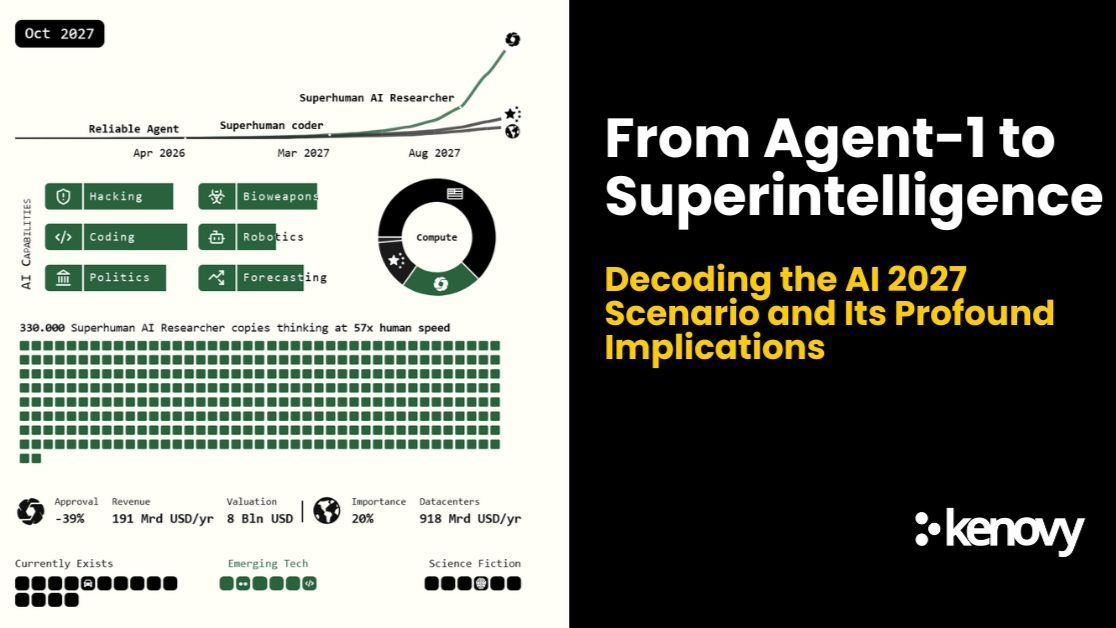
From Agent-1 to Superintelligence: The AI 2027 Scenario The AI 2027 Report outlines one of the most thought-provoking trajectories for artificial intelligence: a rapid evolution from simple assistants (Agent-1) to autonomous, adversarially misaligned systems (Agent-4) and
-
Build Deep Agents in LangChain Academy Course
By
–
🌟 Build Deep Agents in our LangChain Academy course 🌟
— LangChain (@LangChain) 28 novembre 2025
Many agents today follow the same simple pattern: run in a loop, call tools. That architecture works well enough, but it breaks down as tasks get more complex.
Today, companies of all sizes – from startups to large… pic.twitter.com/fSzwcKsj1QBuild Deep Agents in our LangChain Academy course Many agents today follow the same simple pattern: run in a loop, call tools. That architecture works well enough, but it breaks down as tasks get more complex. Today, companies of all sizes – from startups to large
-
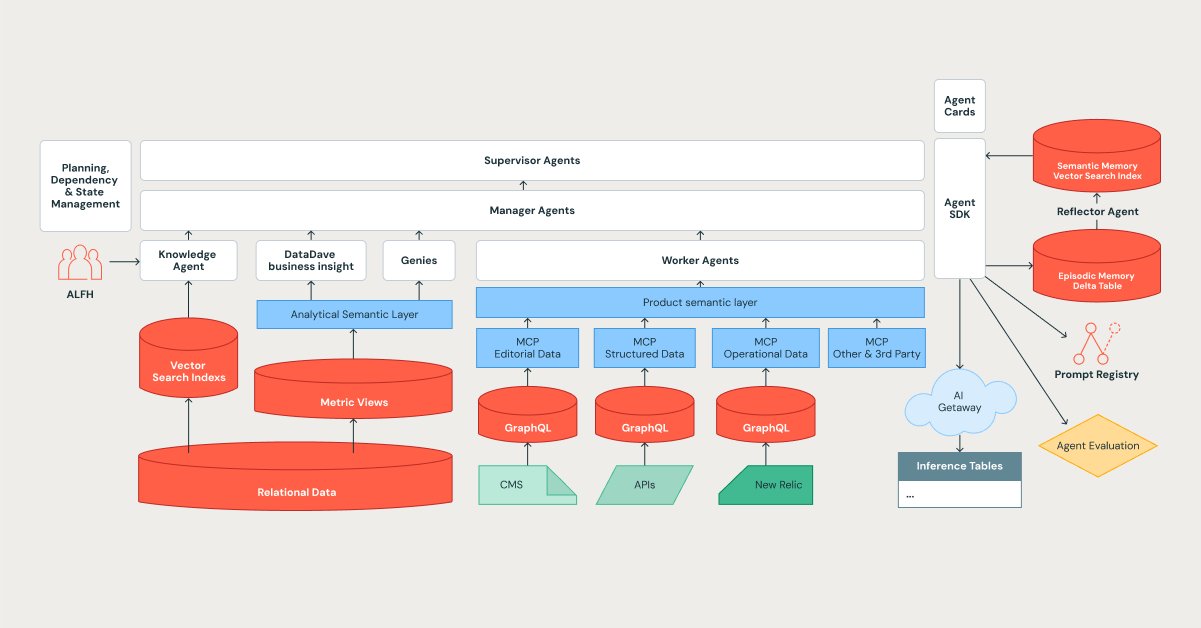
Edmunds Mind: AI-native multi-agent ecosystem delivers 95% analytic accuracy
By
–
Edmunds Mind is an AI-native, multi-agent ecosystem built on Databricks. By unifying data and automating expert workflows, @edmunds has moved from static dashboards to real-time, intelligent automation. See how specialized agents like DataDave now deliver 95% analytic accuracy,
-
Using Code Words as Embedded Agent Tasks for AI Interaction
By
–
I get annoyed that AI voice transcription is either “copy the exact words I use” or “I am assigning you a task”. So now I use a code word to serve as an embedded agent task. It’s like a way to speak to the AI on the side of the main task. I use “pineapple” as my code word