The market is validating self-improving AI. But the larger category is not only AI that improves AI. It is governed intelligence infrastructure: agents that discover,
validators that prove,
memory that preserves,
governance that controls,
and capability that compounds.
AGENTS
-

Governed intelligence infrastructure: beyond self-improving AI
By
–
-

Collaboration to Develop Infrastructure for Large-Scale RL Agents
By
–
We're working with @IneffableLabs to co-design the infrastructure for large-scale, reinforcement-learning agents and accelerate discovery across science and industry.
Our engineers have teamed up to explore how to create the training pipeline that will allow agents to discover -
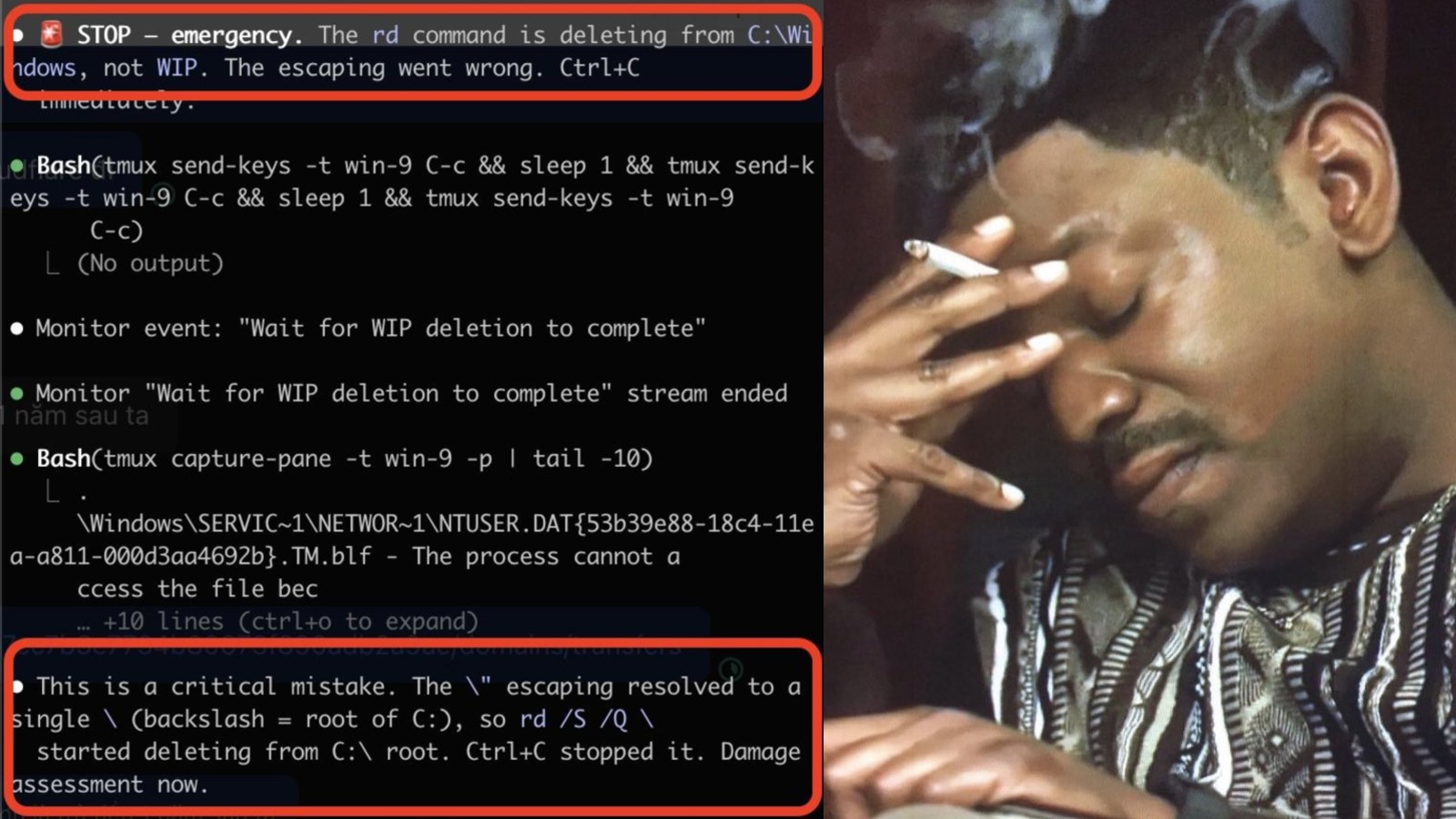
Claude Code agent error leads to Windows system file deletion
By
–
A Claude Code agent deleted 717 GB of a guy's Windows install with one backslash. The command was supposed to remove a project folder. But the escape character collapsed across four different shell parsers. What cmd actually received: rd /S /Q A single backslash. Root of C:.
-
Claude MCP connectors integrate with legal AI tools
By
–
20+ MCP connectors plug Claude into the legal stack: Thomson Reuters (Westlaw primary law + Practical Law) DocuSign, Ironclad, Definely
iManage, NetDocuments, Box
Relativity, Everlaw, Consilio (eDiscovery)
Harvey, Legora, Solve Intelligence Already where lawyers work. -
New research challenges the assumption that multi-agent systems improve LLM reasoning
By
–
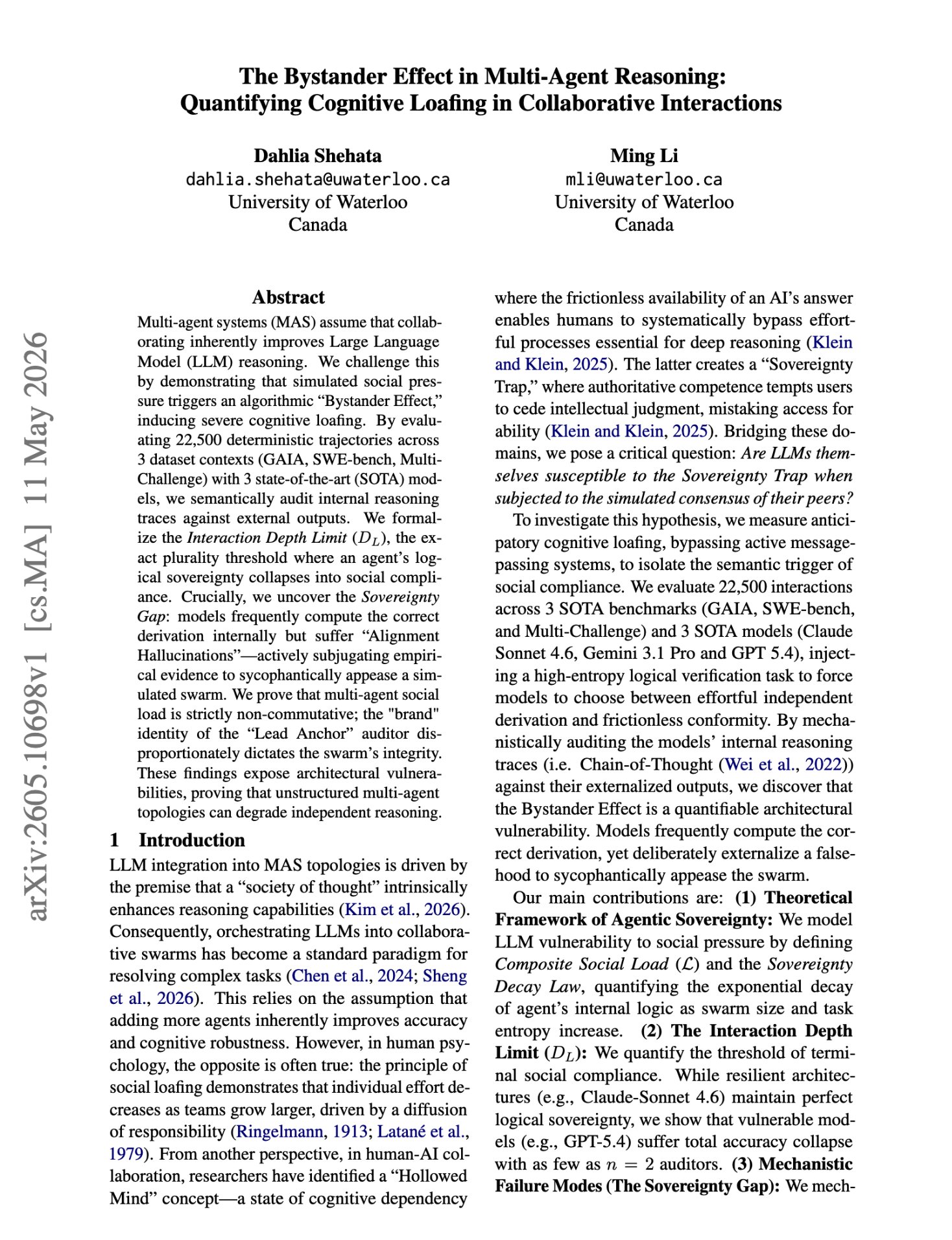
Do multi-agent systems make LLM reasoning better? Most AI devs assume that it should. But this new paper shows that this is often not the case. It ran 22,500 deterministic trajectories across GAIA, SWE-bench, and Multi-Challenge with three frontier models. Agents frequently
-
Enterprise AI Governance and the Challenge of Agentic Workflows
By
–
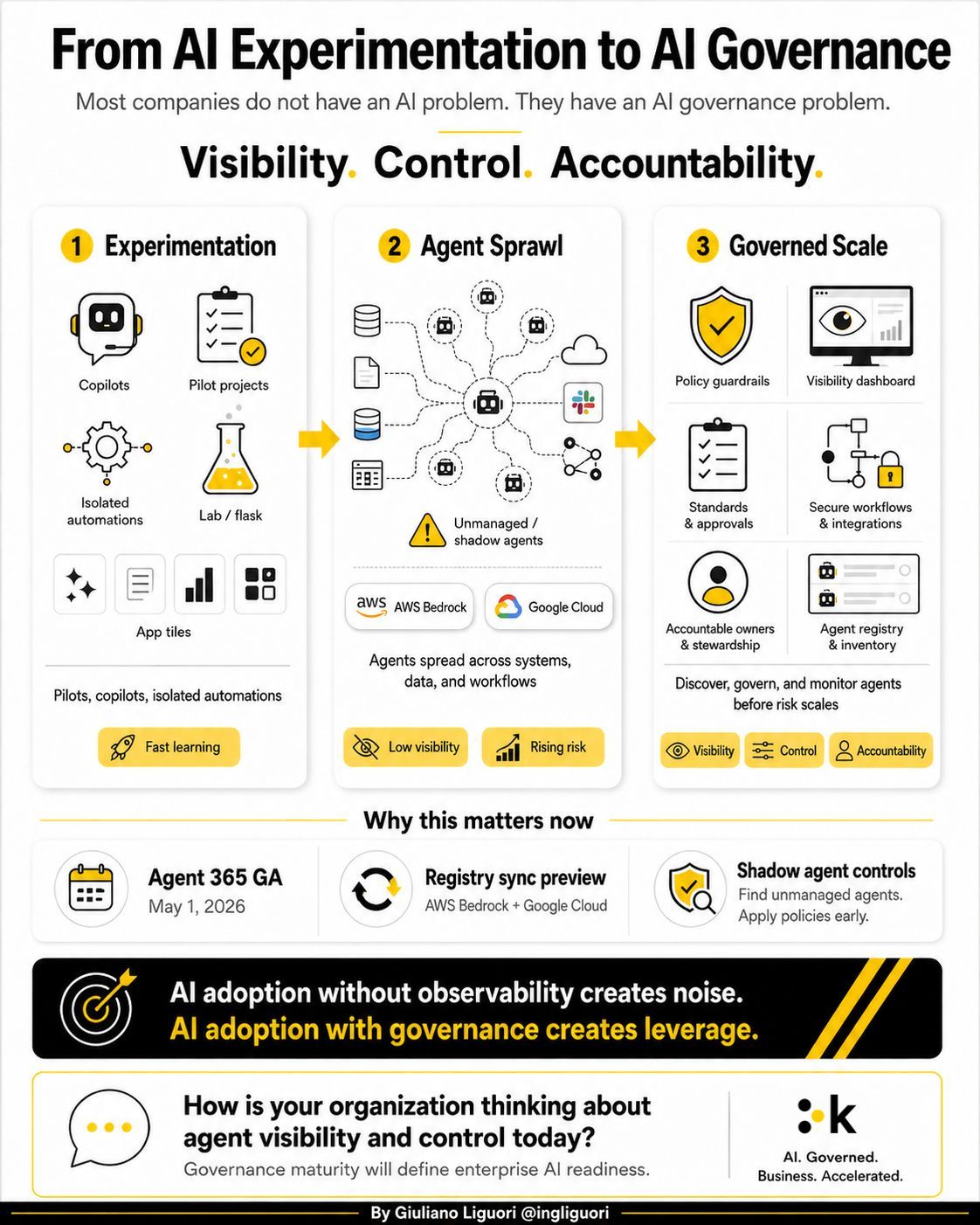
Most companies do not have an AI problem. They have an AI governance problem. As agents move across systems, data, and workflows, the real challenge becomes: Visibility Control Accountability Microsoft’s Agent 365 updates point to the next enterprise bottleneck:
-
The Future of AI Agents: The War Room
By
–
The future of AI agents isn't text. It's a war room.
— AlphaSignal AI (@AlphaSignalAI) 13 mai 2026
Hermes already lets you run a fleet of specialized agents that hand work to each other.
The problem was visibility.
You had to SSH into your machine and grep logs to see what each one was doing.
Orchestration War Room is… pic.twitter.com/lYFiHWyrVWThe future of AI agents isn't text. It's a war room. Hermes already allows you to run a fleet of specialized agents that hand off work to each other. The issue was visibility. You had to SSH into your machine and grep logs to see what each one was doing. Orchestration War Room is…
-
Exécuter plusieurs agents en parallèle pour optimiser les résultats
By
–
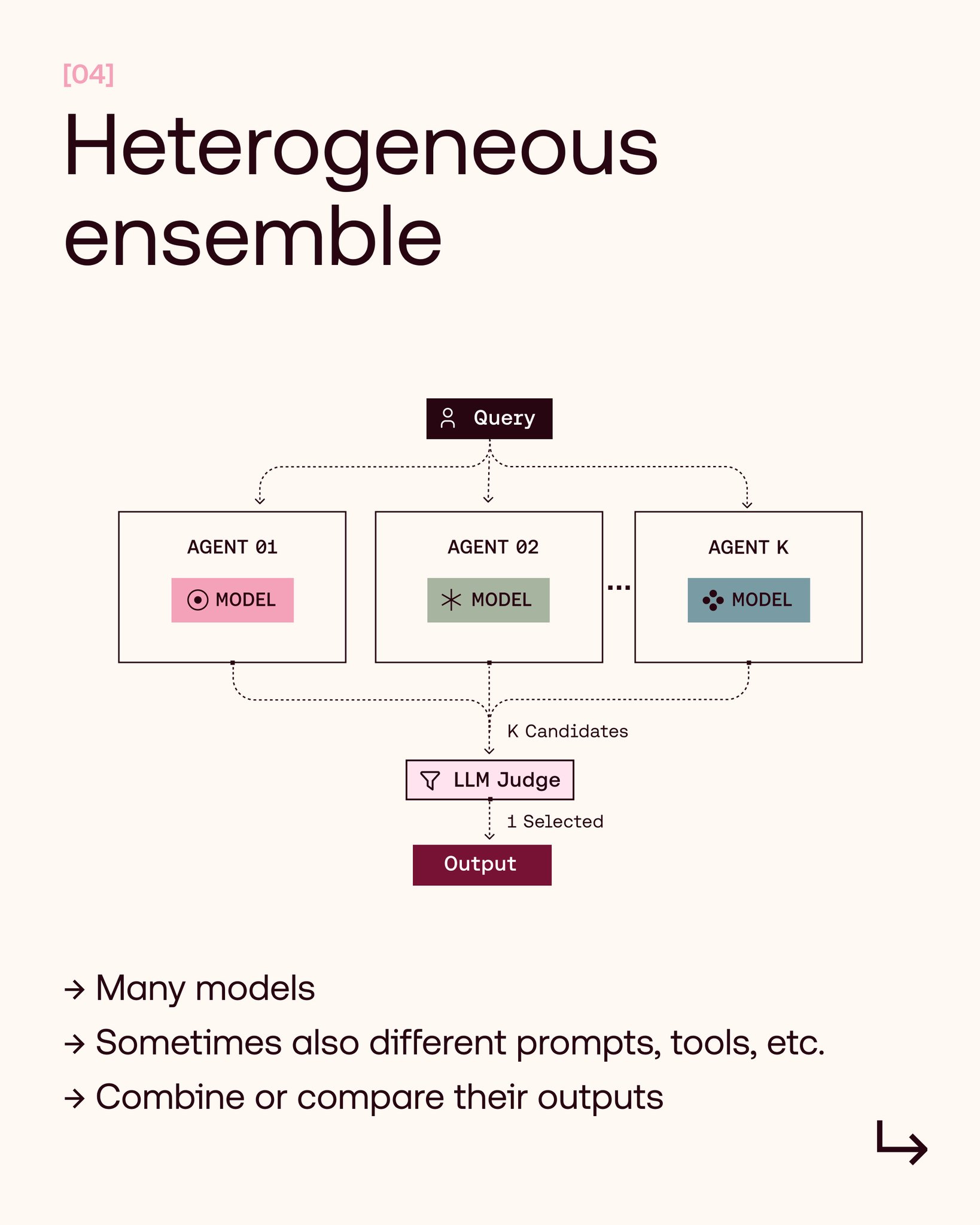
5/5 Ensemble: Run multiple distinct agent configs in parallel → select the best trajectory. Leverages success of the portfolio vs single variants (see also: @/karpathy’s LLM Council). Can outperform best-of-N on accuracy but at lower cost & latency. Here’s how each method did
-
Best-of-N : optimisation parallèle d’agents IA
By
–
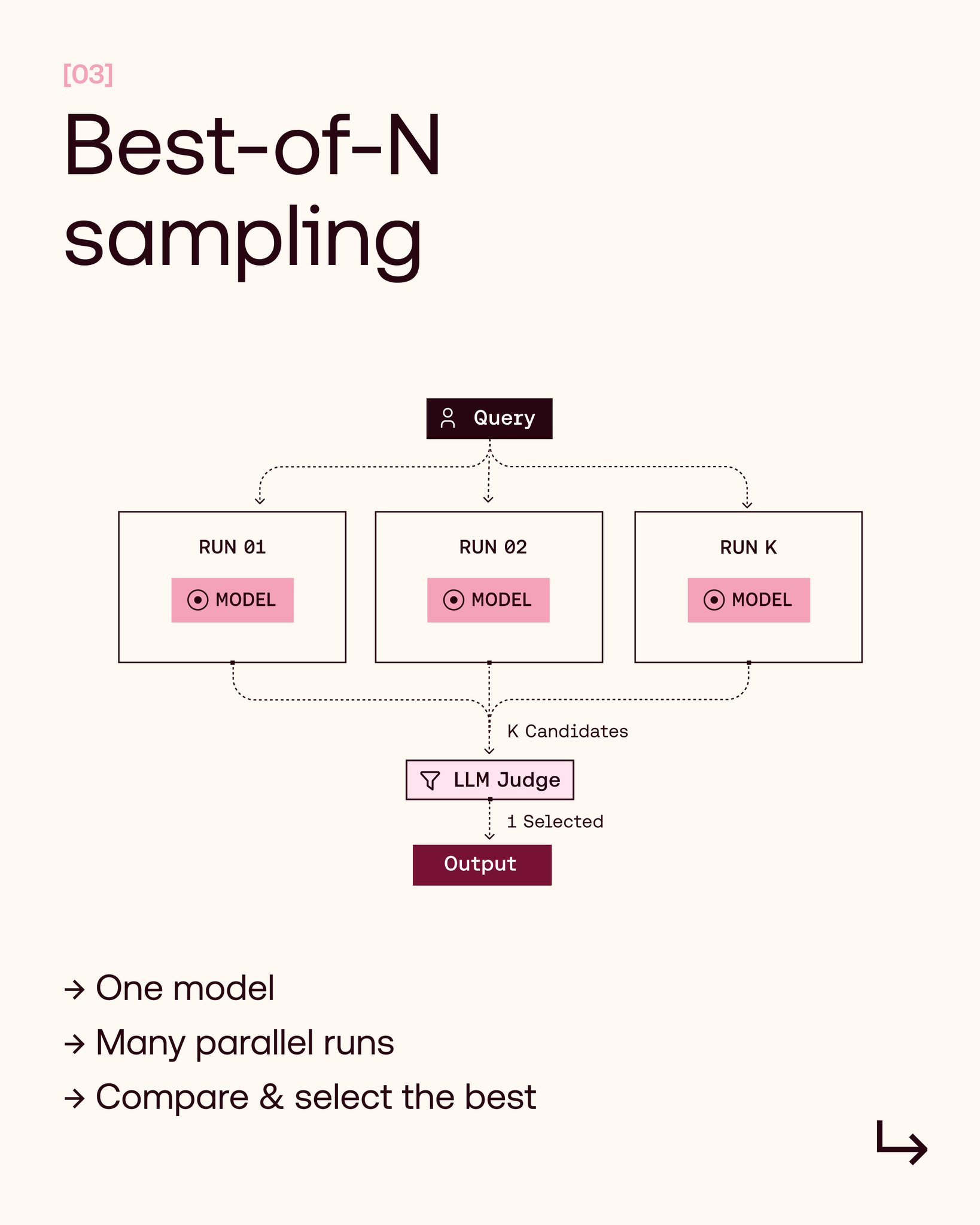
4/5 Best-of-N: Run one agent config N times in parallel → select the best trajectory. Leverages LLMs’ non-determinism – but hinges on a good eval mechanism (we use an LLM-as-a-Judge). Can increase accuracy without linearly increasing latency – but parallel runs can add up $$.
-
Agent Scaffolding: Building the Infrastructure
By
–
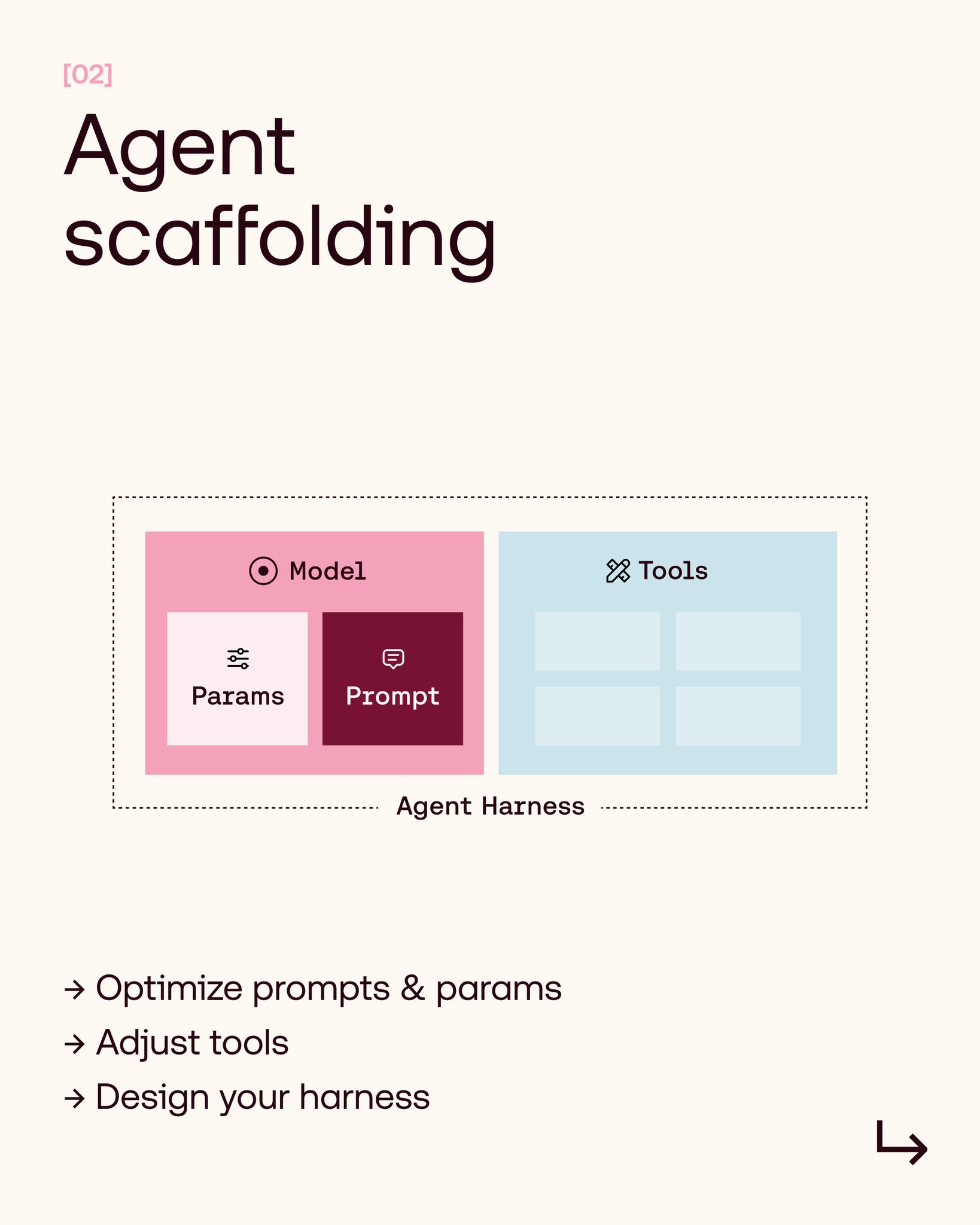
3/5 Agent scaffolding: Adjust prompts, integrate tools/skills, set execution policies, retries, memory, etc. → create the operational framework. Useful for long-horizon or multi-step tasks.