Building on a 2025 study of emergent labor market impacts of AI, the Stanford @DigEconLab has launched the Canaries Dashboard in collaboration with @AdpResearch to explore how recent employment changes vary with work experience and exposure to AI.
@stanfordhai
-

Delusional spirals in chatbots: warning signs and solutions
By
–
When chatbots are programmed to please, some interactions can escalate into what researchers call 'delusional spirals.' Learn more about the warning signs and what can be done: https://
brnw.ch/21x3ysH -
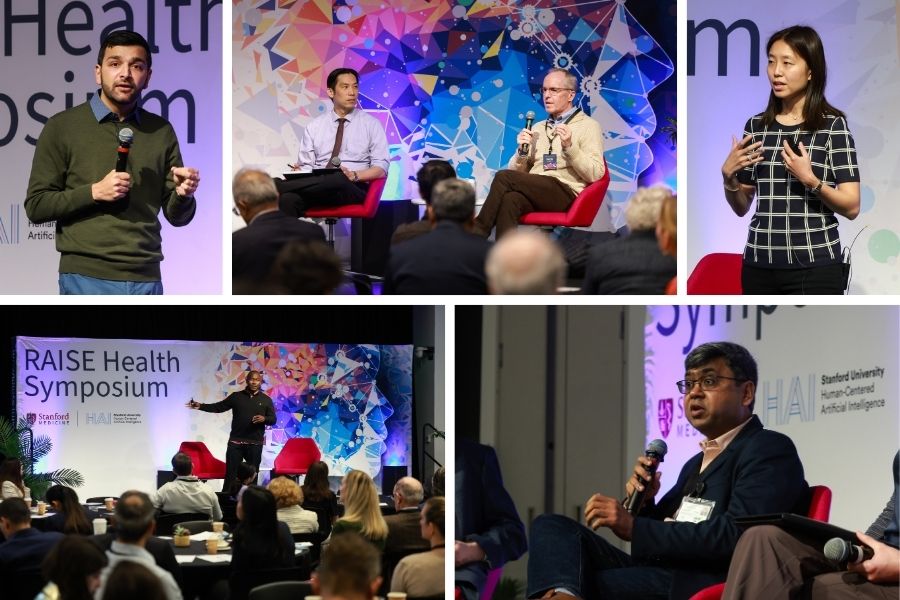
Stanford Health AI Week: patient collaboration, trust, and AI discoveries
By
–
Speakers at the Stanford Health AI Week discussed patient collaboration in developing AI tools, building trust with doctors and patients, and how AI accelerates discoveries impacting diagnosis and treatment. Explore the big ideas here: https://
med.stanford.edu/news/all-news/
2026/06/stanford-health-ai-week.html
… -
Stanford AI Lab director joins WEF panel on AI-first enterprise limits
By
–
On June 23, AI and Organizations Lab Faculty Director @stanfordmav joins other leaders in the academia and industry space at the @wef #AMNC26. They’re tackling the question: What’s the limit for AI-first enterprises? Join the livestream https://
weforum.org/meetings/annua
l-meeting-of-the-new-champions-2026/sessions/whats-the-intelligence-limit-for-ai-first-enterprises/
… -
Stanford scholars: AI coding agents lack collaboration, need social intelligence
By
–
AI coding agents lack a critical skill: collaboration. @Stanford scholars believe it’s a solvable problem if we train models in social intelligence.
-
Stanford method reduces training demands for AI scaling laws
By
–
Scaling laws help AI developers predict the performance of large language models, but they require expensive compute power. Stanford scholars developed a new method that reduces training demands:
-
US faces dual AI talent loss to China
By
–
The U.S. faces two distinct talent problems: 1) Chinese AI researchers training in the U.S. are returning to China at high rates; and 2) China’s domestic AI talent pipeline is increasingly contributing to frontier models without any U.S. training. (3/4)
-

Policy brief on DeepSeek AI talent base for U.S. policymakers
By
–
U.S. policymakers must tackle both problems, as noted by the authors in last year’s policy brief published by @HooverInst
’s Technology Policy Accelerator and @StanfordHAI
. (4/4) Read their recommendations here: https://
hai.stanford.edu/policy/policy-
implications-of-deepseek-ai-talent-base
… -
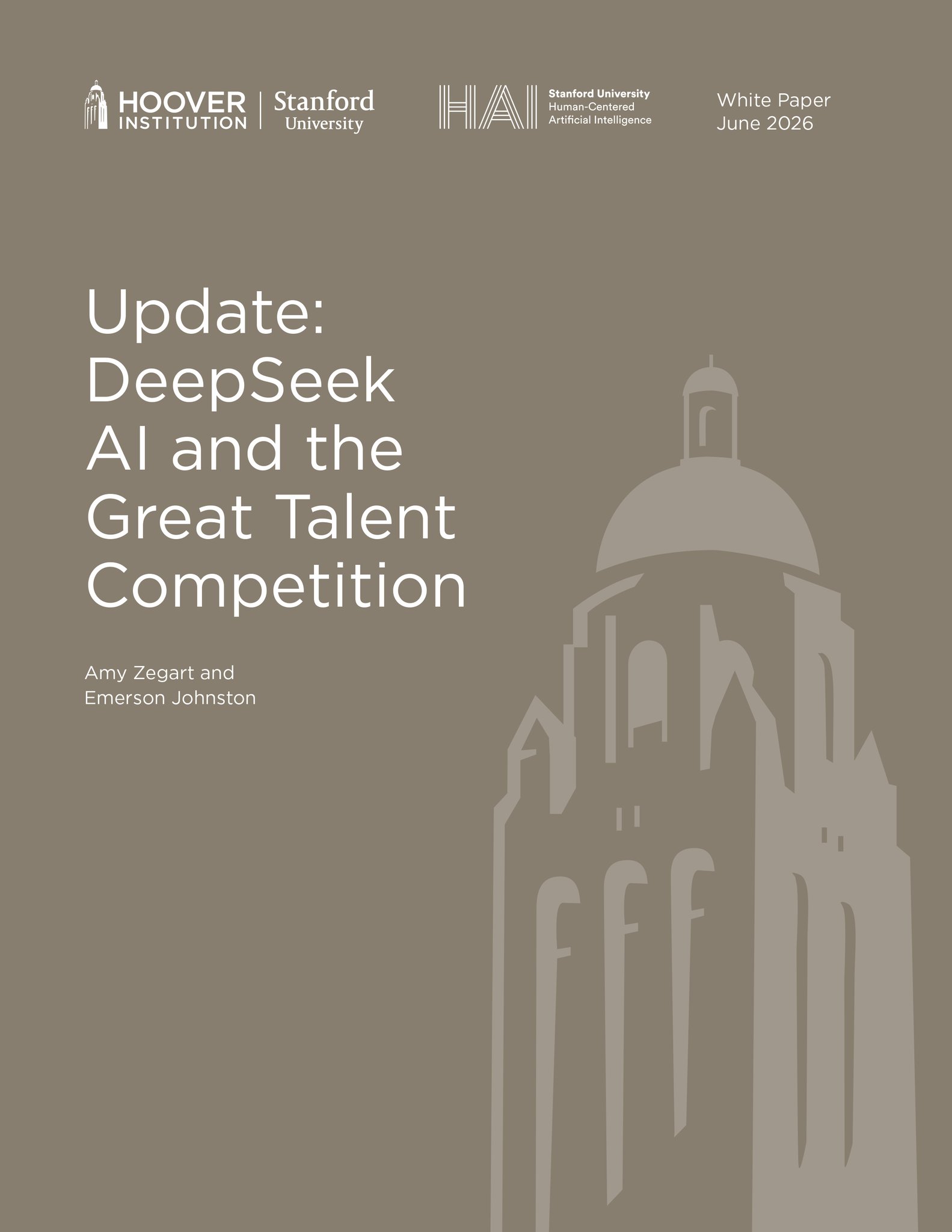
New data shows US AI talent advantage no longer permanent
By
–
One year after their 1st white paper analyzing DeepSeek’s talent base, HAI senior fellow @AmyZegart and @HooverInst
's Emerson Johnston publish new data that shows even more clearly that the U.S. can no longer assume a permanent AI talent advantage. (2/4) https://
hoover.org/research/updat
e-deepseek-ai-and-the-great-talent-competition
… -
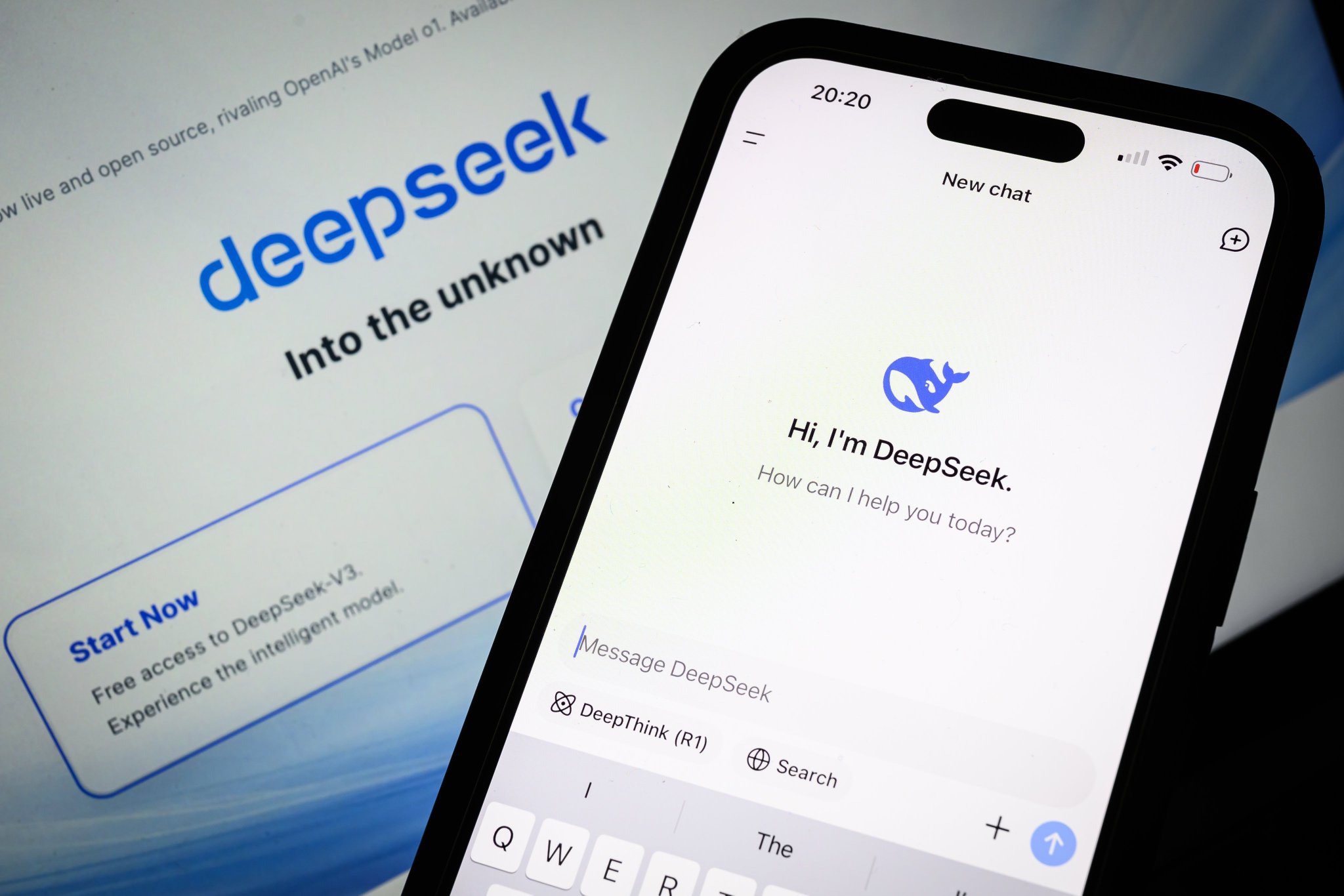
DeepSeek V4 signals China’s competitive AI research talent pipeline
By
–
When DeepSeek released its V4 model in late April, it received mixed reviews. But when viewed from a talent perspective, it acts as another clear signal that China’s domestically grown AI research pipeline is highly competitive. (1/4)