HAI Founding Director @drfeifei is featured on @FastCompany
's cover, explaining "world models" – AI that understand physical space and real-world dynamics. Rooted in human-centered philosophy, she explains what makes it different and what's at stake:
@stanfordhai
-
Stanford HAI director Fei-Fei Li featured on FastCompany cover explaining world models
By
–
-
Angèle Christin: Interdisciplinary debate critical for AI’s future
By
–
At the AI+Science conference, @StanfordHAI Senior Fellow Angèle Christin explains why interdisciplinary debate is critical for AI's future. ↘️ pic.twitter.com/FfhB9v0aW1
— Stanford HAI (@StanfordHAI) 12 juin 2026At the AI+Science conference, @StanfordHAI Senior Fellow Angèle Christin explains why interdisciplinary debate is critical for AI's future.
-
New science of intelligence from neurons and AI may treat schizophrenia
By
–
HAI Senior Fellow @SuryaGanguli is building a new science of intelligence by studying how neurons fire and AI learns — work that may have uncovered a neural mechanism with implications for treating schizophrenia.
-
AI’s productivity paradox in science and creative solutions
By
–
What happens when AI makes science too productive? @StanfordHAI Senior Fellow @SuryaGanguli talks about creative solutions for addressing AI's productivity paradox. Read more insights from the AI+Science conference: https://t.co/X9kKtL1oKo pic.twitter.com/c0CZL5sYjw
— Stanford HAI (@StanfordHAI) 12 juin 2026What happens when AI makes science too productive? @StanfordHAI Senior Fellow @SuryaGanguli talks about creative solutions for addressing AI's productivity paradox. Read more insights from the AI+Science conference: https://
hai.stanford.edu/news/how-ai-is
-transforming-scientific-discovery-while-keeping-humans-at-the-center
… -
Researchers restore personality to AI language model outputs
By
–
Large language models trained on millions of authors produce a flattened, agreeable voice. Now researchers have found a way to restore individual personality to AI output, enabling applications from therapy training to personalized education.
-

Stanford HAI and AI4MH explore responsible AI for youth mental health
By
–
Last week, @StanfordHAI & AI4MH's 2026 symposium explored responsible AI adoption in mental health. CA Assembly Member @AsmMiaBonta stressed the need to protect youth as they turn to chatbots & other AI tools for mental health challenges. Full session https://
youtube.com/watch?v=KBZJYk
zqT0c
… -

AI chatbots give invisible wrong facts in news, Stanford study finds
By
–
1 in 10 Americans now get news from AI chatbots. When @Stanford researchers tested them with 2,100 real news questions, they found that the chatbots can get facts wrong in invisible ways. Here's what they discovered: https://
hai.stanford.edu/news/reading-t
odays-headlines-through-ai-a-real-time-audit-of-six-commercial-chatbots
… -
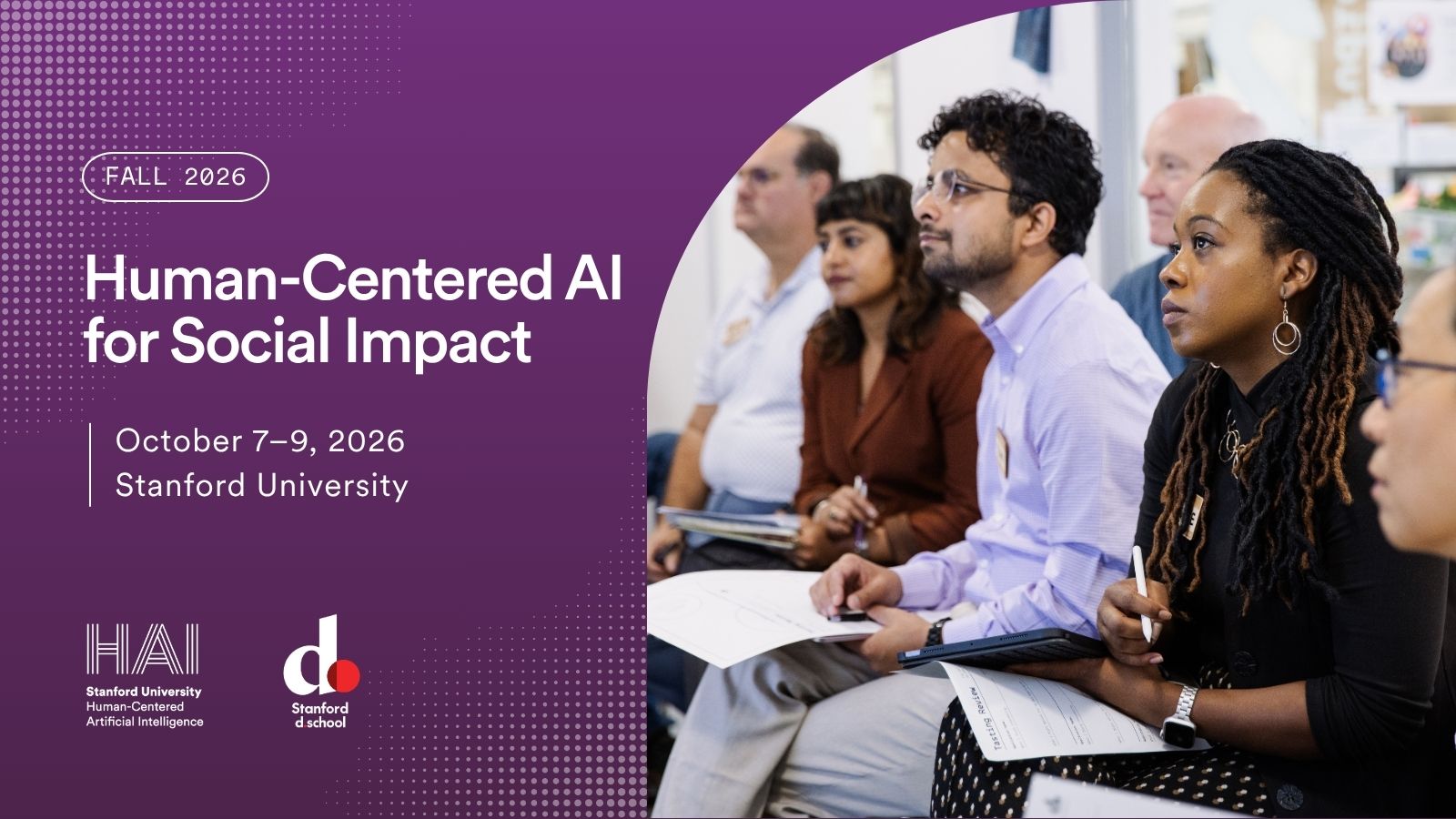
Stanford HAI and d.school program for human-centered AI integration
By
–
Are you part of an organization seeking to integrate AI? This fall, @StanfordHAI and @stanforddschool are offering an educational program to help you develop AI solutions that are not just technologically advanced, but deeply human. Move from AI experimentation to strategic
-
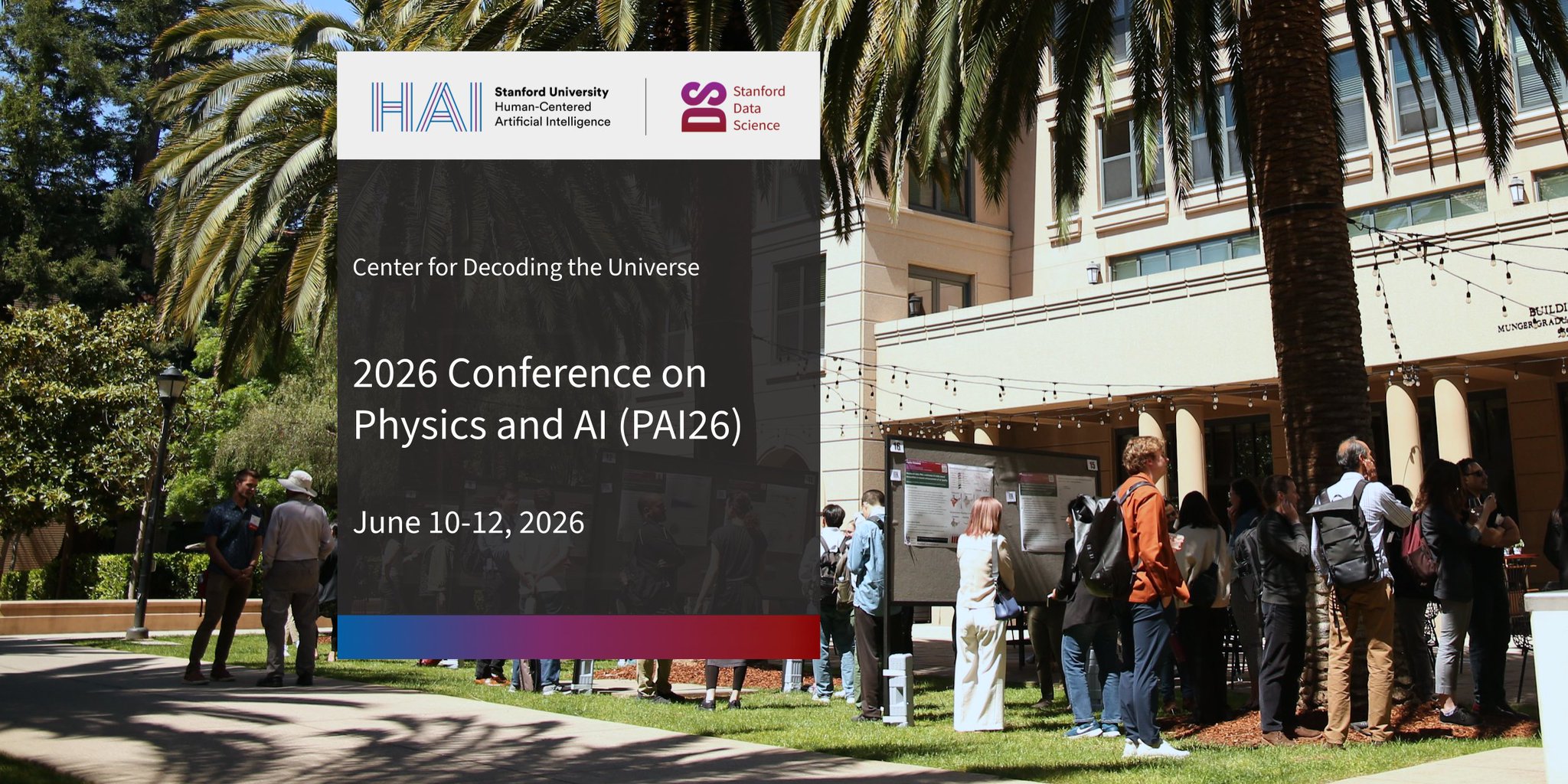
2026 Physics and AI Conference: ML for Discovery, Physics Principles for AI
By
–
Physics presents distinctive AI problems that go beyond computer vision or NLP applications. How can ML accelerate discovery, and which physics principles can improve AI? Explore these and more at the 2026 Conference on Physics and AI next week: https://
datascience.stanford.edu/events/center-
decoding-universe/c4du-annual-conference/2026-conference-physics-and-ai-pai26
… -
Making AI trustworthy for genuine scientific discovery
By
–
How do we make AI trustworthy enough for genuine scientific discovery? @Stanford and @SLAClab Associate Professor Ben Nachman – who is also the co-director for the Center for Decoding the Universe – shares his insights from the AI+Science conference ↘️ pic.twitter.com/2t4GlkIjPM
— Stanford HAI (@StanfordHAI) 5 juin 2026How do we make AI trustworthy enough for genuine scientific discovery? @Stanford and @SLAClab Associate Professor Ben Nachman – who is also the co-director for the Center for Decoding the Universe – shares his insights from the AI+Science conference