The core message which I thought was interesting is that people end up burning out less when you move fast, because you feel like you're actually accomplishing things, and making forward progress. Totally resonates with my experience.
@lennysan
-
Threado AI Bot Transforms Community Slack Conversations
By
–
Threado is my favorite community tooling product out there, by far. It quickly become central to our newsletter Slack community, and they just launched an AI bot that is trained on all of your past Slack conversations. We're piloting it in a few channels, and it's VERY good. https://t.co/YIm8G0zOVo
— Lenny Rachitsky (@lennysan) 9 août 2023Threado is my favorite community tooling product out there, by far. It quickly become central to our newsletter Slack community, and they just launched an AI bot that is trained on all of your past Slack conversations. We're piloting it in a few channels, and it's VERY good.
-
Evaluating Problem Importance and Market Opportunity Delta
By
–
How important to potential customers is the problem you’re exploring, on a scale of 1 to 10? How underserved is the current market, on a scale of 1 to 10? And where would your solution rank? Look for a delta 4+. For more, don't miss my full post
-
Emerging Trends, Transformative Tech, Customer Validation Strategy
By
–
Questions to reflect on: What’s a trend that’s emerging but underserved (e.g. security, collaboration)? What’s a transformative technology that’s emerging that’s underutilized (e.g. data scalability)? How many potential customers have you spoken with about your idea?
-
How Zip Founders Found $1B Market in Procurement
By
–
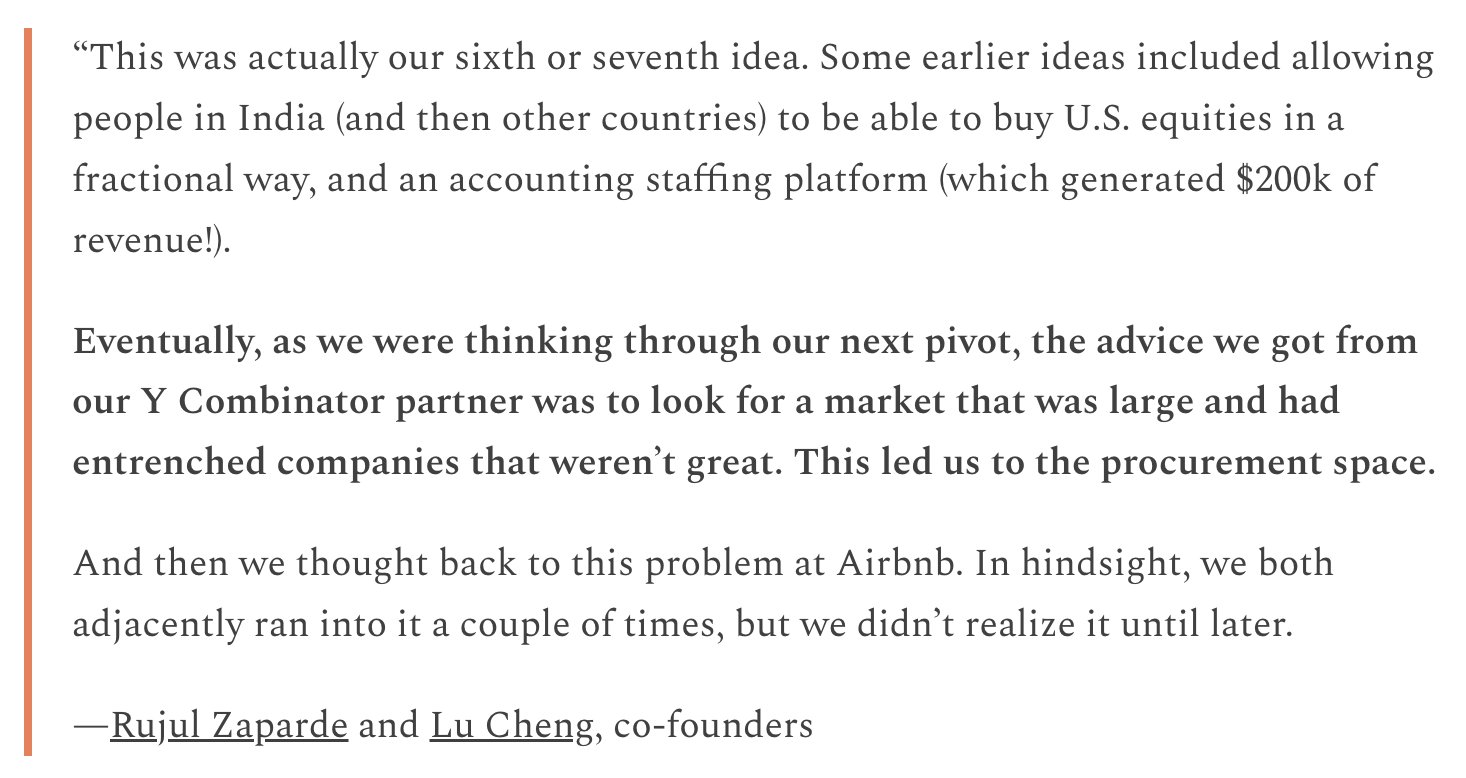
The founders of @theziphq went through a variety of ideas looking for a big and underserved market they were excited about (talking to 75+ potential customers!), and eventually focused on procurement (note: their company is currently valued at over $1B):
-
Code-Driven Validation: Connecting Ideas to Real User Needs
By
–
What I realized was all our ideas sounded great, but they were not connected to a user pain. For us, writing code, even though it’s not the most efficient use of time, helped us explore ideas best. It forced us to talk to people and build a mental model of the real world.”
-
Notion founders pivoted no-code builder into focused product
By
–
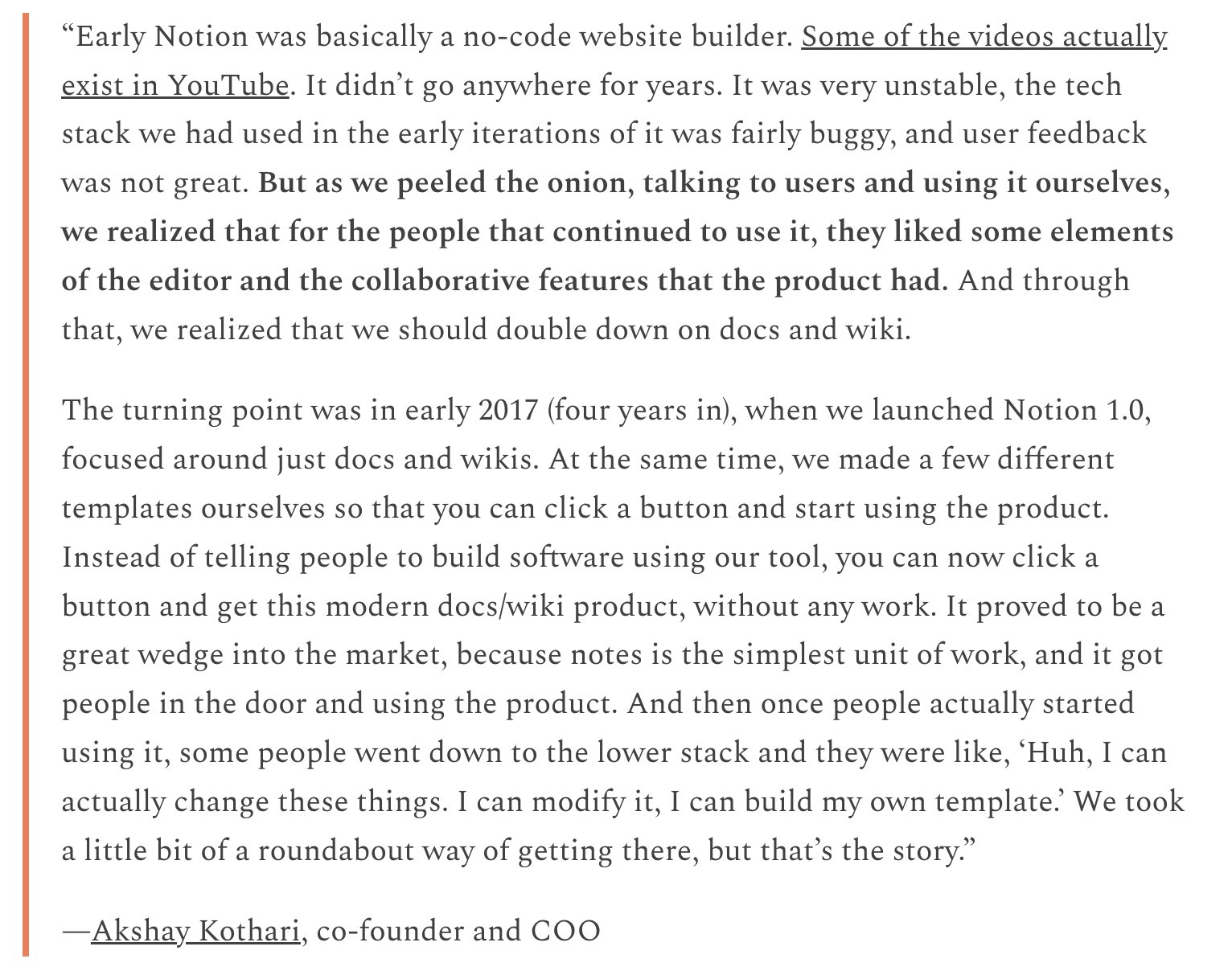
@ivanhzhao and @akothari at @NotionHQ started with the general idea of a no-code app builder and eventually (four years later!) noticed pull for a specific set of features—and leaned fully into that.
-
Validate Your Tech Ideas Early With Potential Users
By
–
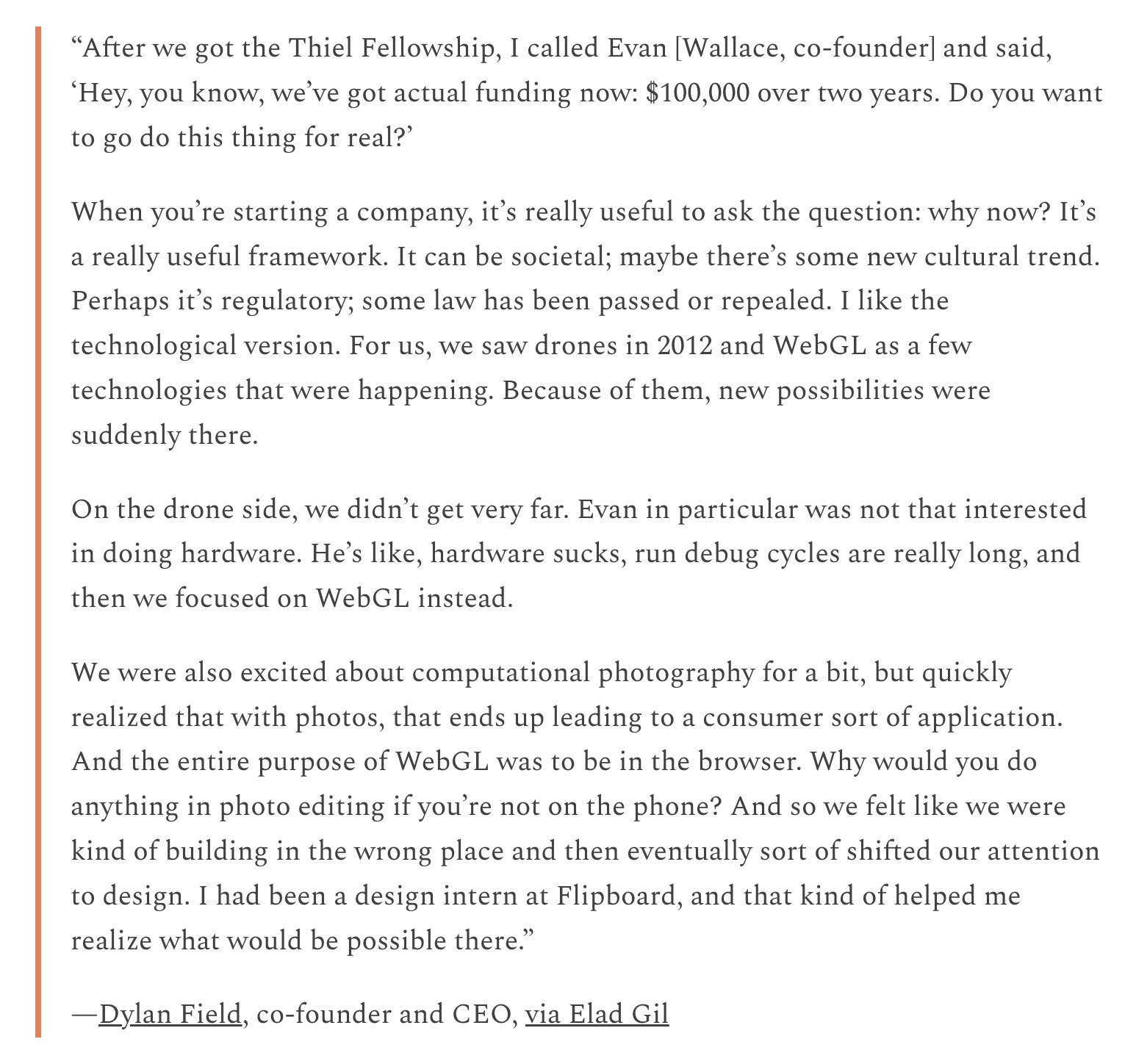
Key: Start with a space you're excited about—that's big and underserved—and ideate. But, as soon as you have a concept you're excited about, quickly talk to potential users. @zoink narrowed his focus to two areas he saw potential in (drones and WebGL) and then started digging:
-
Finding Product Market Fit Through Customer Pain Points
By
–
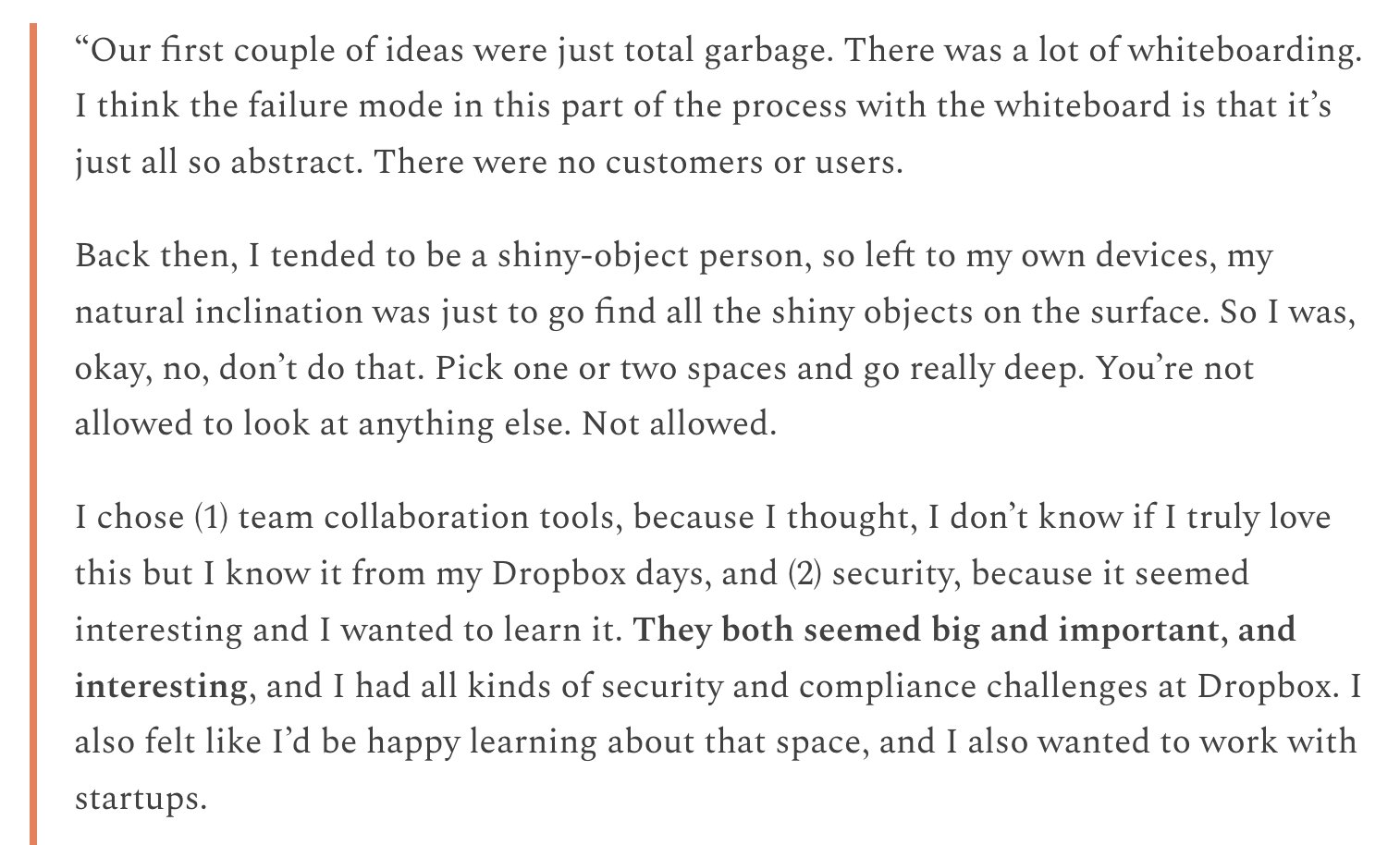
Eventually, she zeroed in on two spaces that felt ripe for opportunity, that she was excited about (security and collaboration), and kept talking to customers to find the biggest source of *pain* and *pull*:
-
Startup Validation: Talk to Users, Not Just Brainstorm
By
–
@borisjabes
, the co-founder of @Census
, shared a similar learning: "Looking back, sitting in a room and trying to come up with a great startup is really bad. We played that exercise for a month, and it’s just bad because we should have been talking to people who had problems."