This makes $100M training runs obsolete. Why spend months training a massive model when you can deploy a smaller one and scale intelligence dynamically per query? Hard math problem? Give it 60 seconds to think.
Simple question? Answer instantly. Intelligence becomes elastic
@godofprompt
-

Elastic Intelligence: small model, dynamic per-query scaling
By
–
-

Economics flip: small models with more inference match GPT-4
By
–
The economics just flipped completely. Training GPT-4: $100M+ in compute
Inference scaling: $0.10 per complex query You can make a 7B model as smart as GPT-4 by letting it think 100x longer at inference. Smaller models + more thinking time = beats bigger models at fraction of -
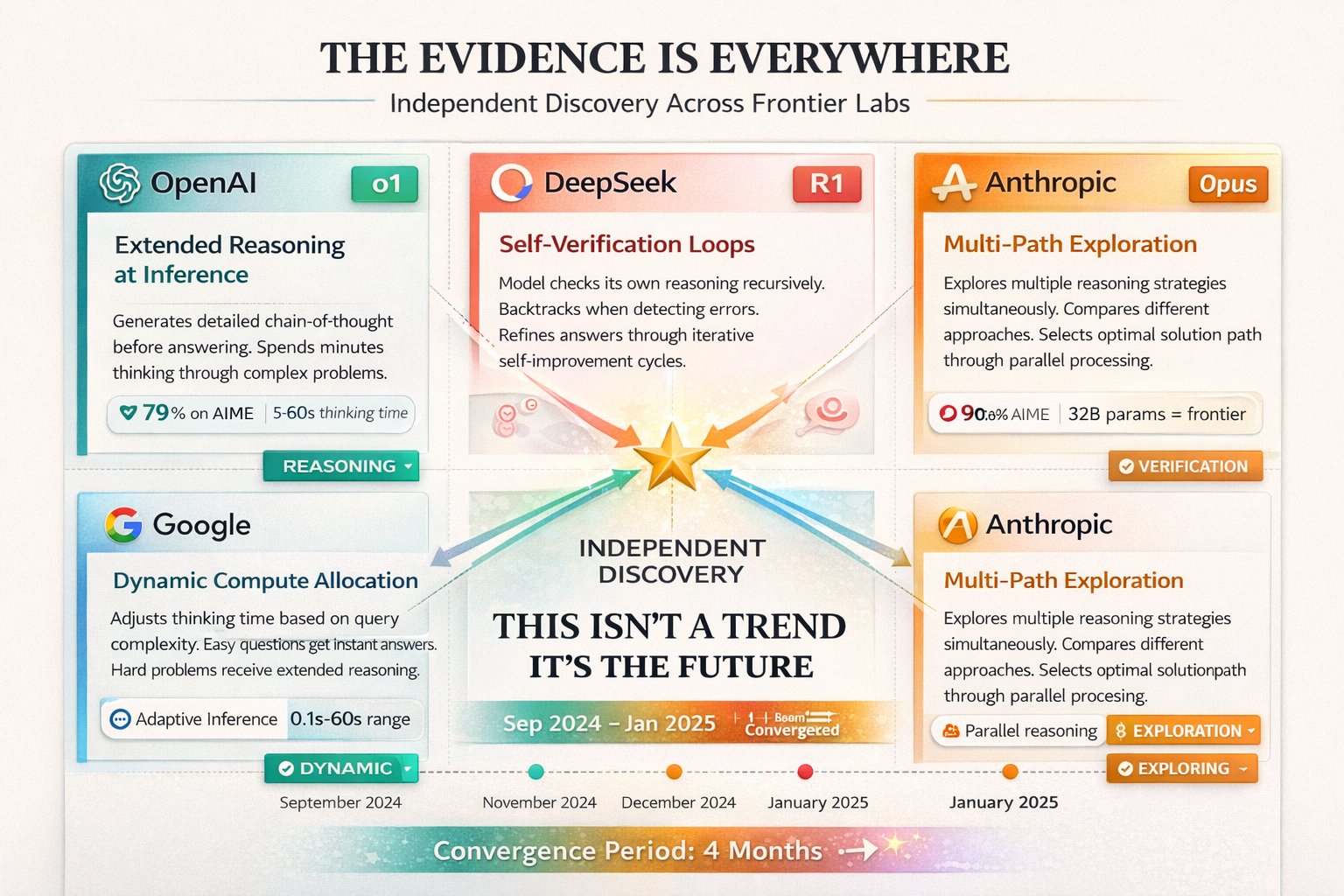
All frontier AI labs discover identical reasoning breakthrough
By
–
The evidence is everywhere: – OpenAI o1: Extended reasoning at inference
– DeepSeek-R1: Self-verification loops
– Gemini 2.0 Thinking: Dynamic compute allocation
– Claude Opus: Multi-path exploration Every frontier lab independently discovered the same breakthrough. This isn't -
Test-time compute scaling: models think harder during inference
By
–
Test-time compute scaling is simple but revolutionary: Instead of making models bigger, you make them think harder during inference. The model generates multiple reasoning paths, verifies answers, backtracks when wrong, and improves solutions in real-time. It's thinking, not
-
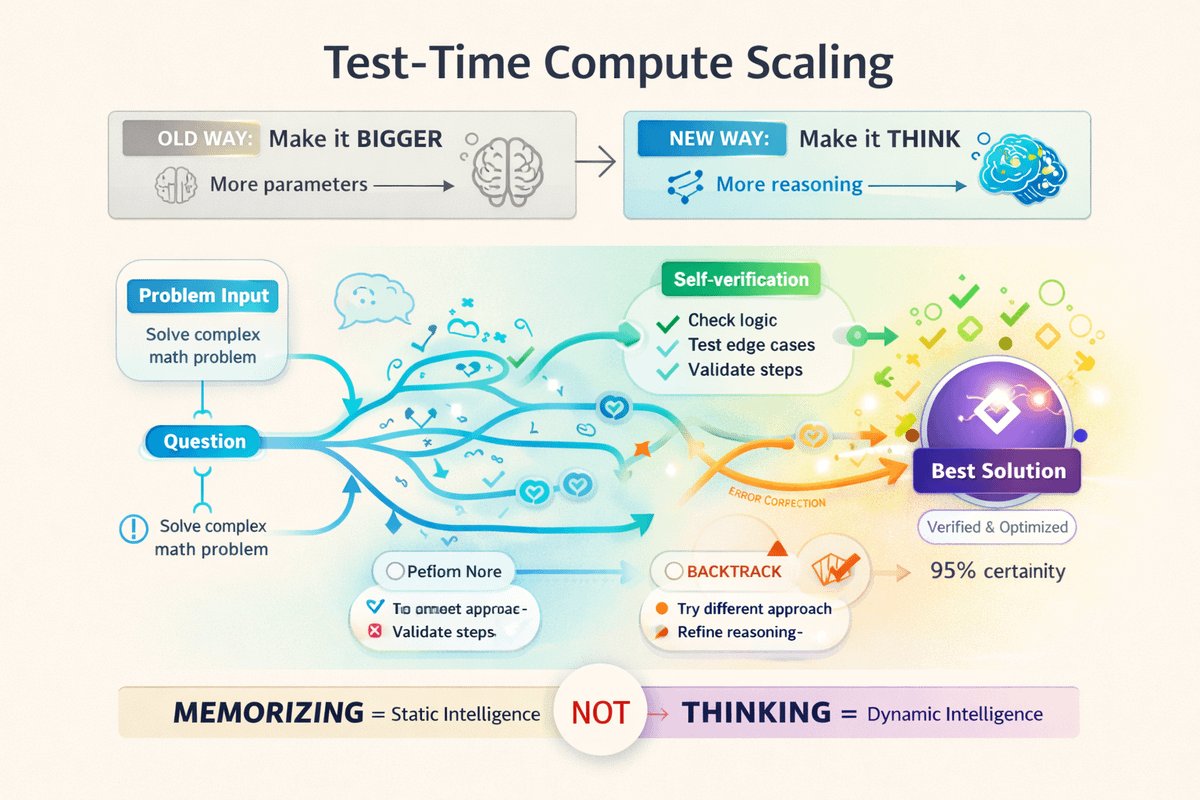
OpenAI’s o1 demonstrates smarter models via inference-time compute
By
–
OpenAI's o1 proves you can make models smarter by making them "think longer" at inference not training bigger models. DeepSeek, Google, Anthropic all pivoting to test-time compute. Training wars are over. The inference wars just started. Here's the paradigm shift happening
-
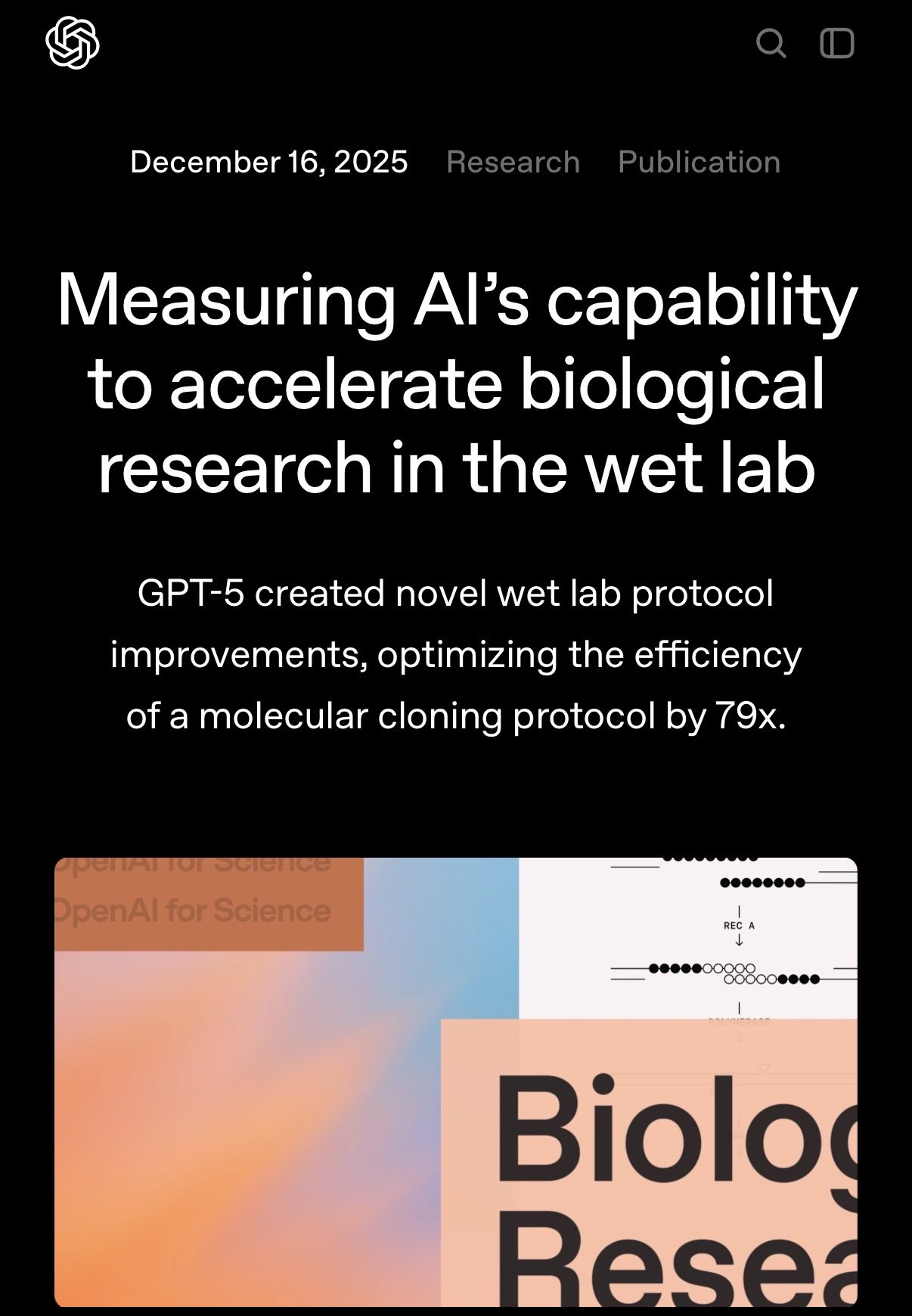
GPT-5 boosts gene-editing efficiency 79x
By
–
OpenAI’s lab experiment with GPT-5 via Red Queen Bio optimized an actual gene-editing protocol and achieved a 79× efficiency gain . This is AI actually doing wet-lab biology, not just simulations. First real AI-augmented experimentation mixing predictions with robotic
-
Agent stacks outperform single models
By
–
Banger thread. Single-model supremacy is dead – the real alpha is in these purpose-built agent stacks that actually ship value instead of just flexing parameter counts. MoE routing + hierarchical planning + action-oriented LAMs is the stack that's quietly eating the world right
-
MoE: From Niche to Industry Standard by 2025
By
–
Mixture of Experts went from academic curiosity (1991) → impossible to scale (2000s) → production breakthrough (2021) → industry standard (2025). Dense models are becoming legacy infrastructure. If you're building AI in 2025 and not considering MoE, you're overpaying by 10x.
-
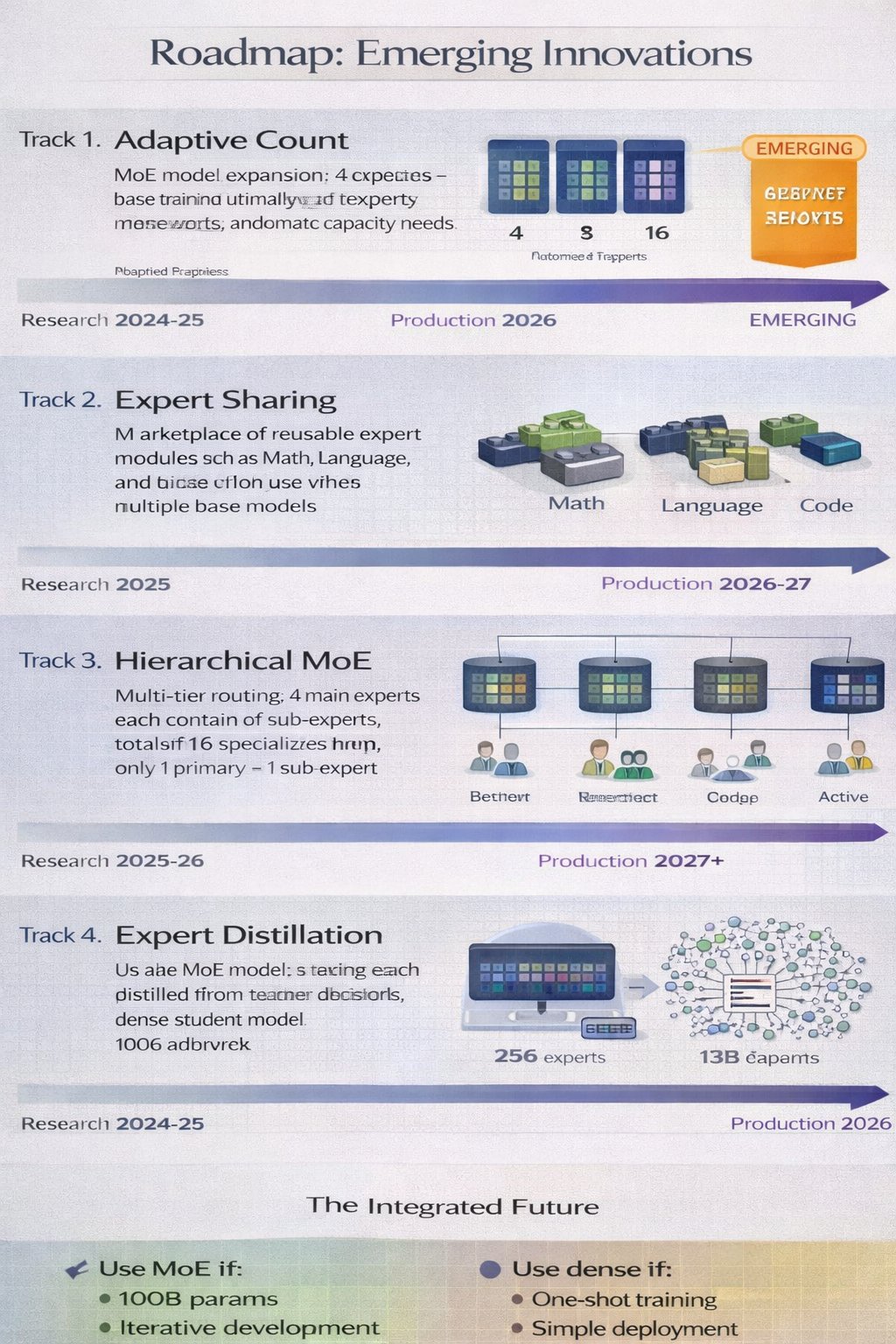
Next-Gen MoE Innovations in 2026
By
–
What's coming next: → Adaptive expert count (dynamically add/remove experts during training)
→ Cross-model expert sharing (reuse specialists across different models)
→ Hierarchical MoE (experts that route to sub-experts)
→ Expert distillation (compress MoE knowledge back -
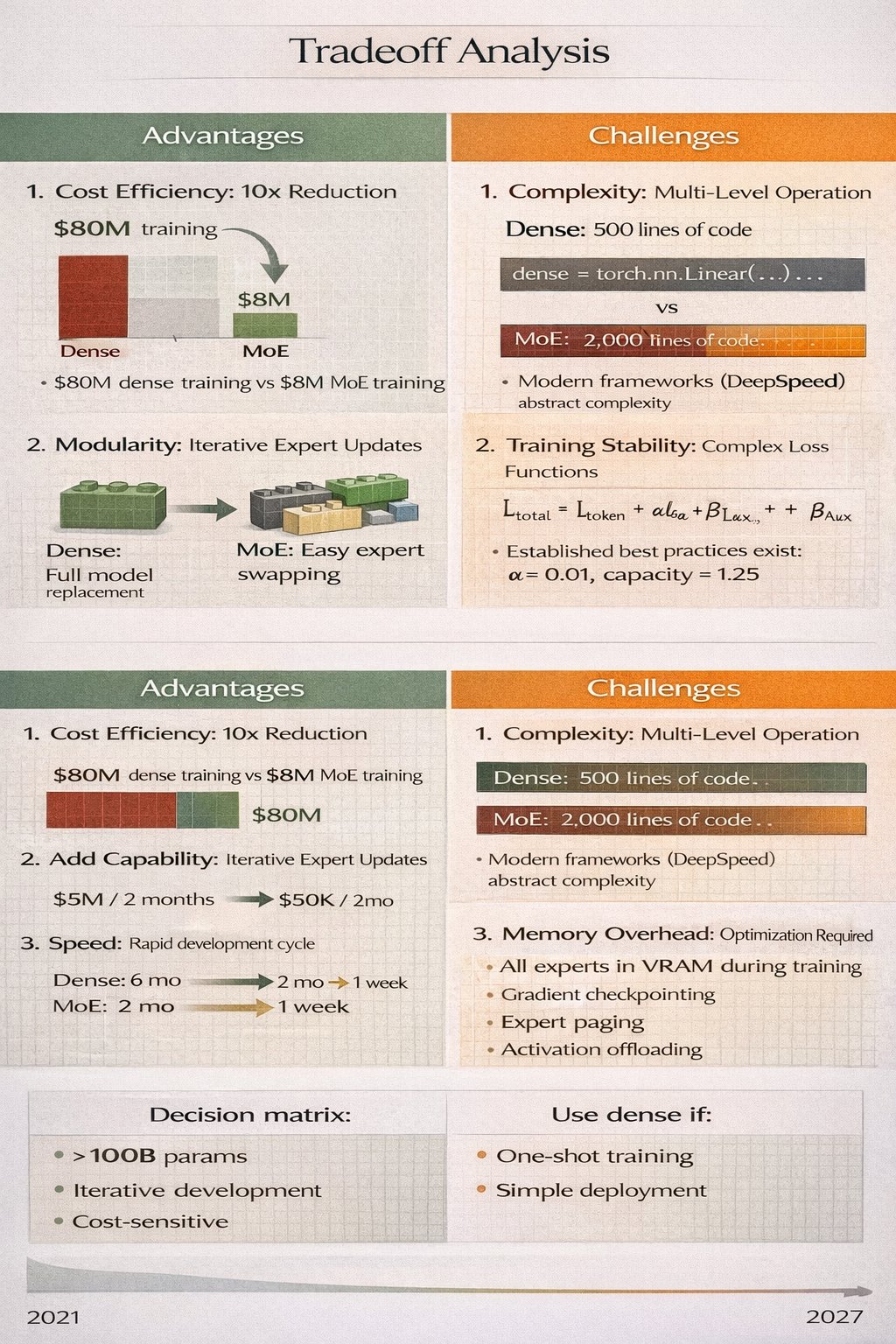
Tradeoffs of modular AI architecture
By
–
The tradeoffs are real though: 5-10x cheaper training and inference Modular, composable architecture Faster iteration cycles More complex to implement correctly Requires load balancing during training Higher memory overhead (all experts must fit in VRAM during