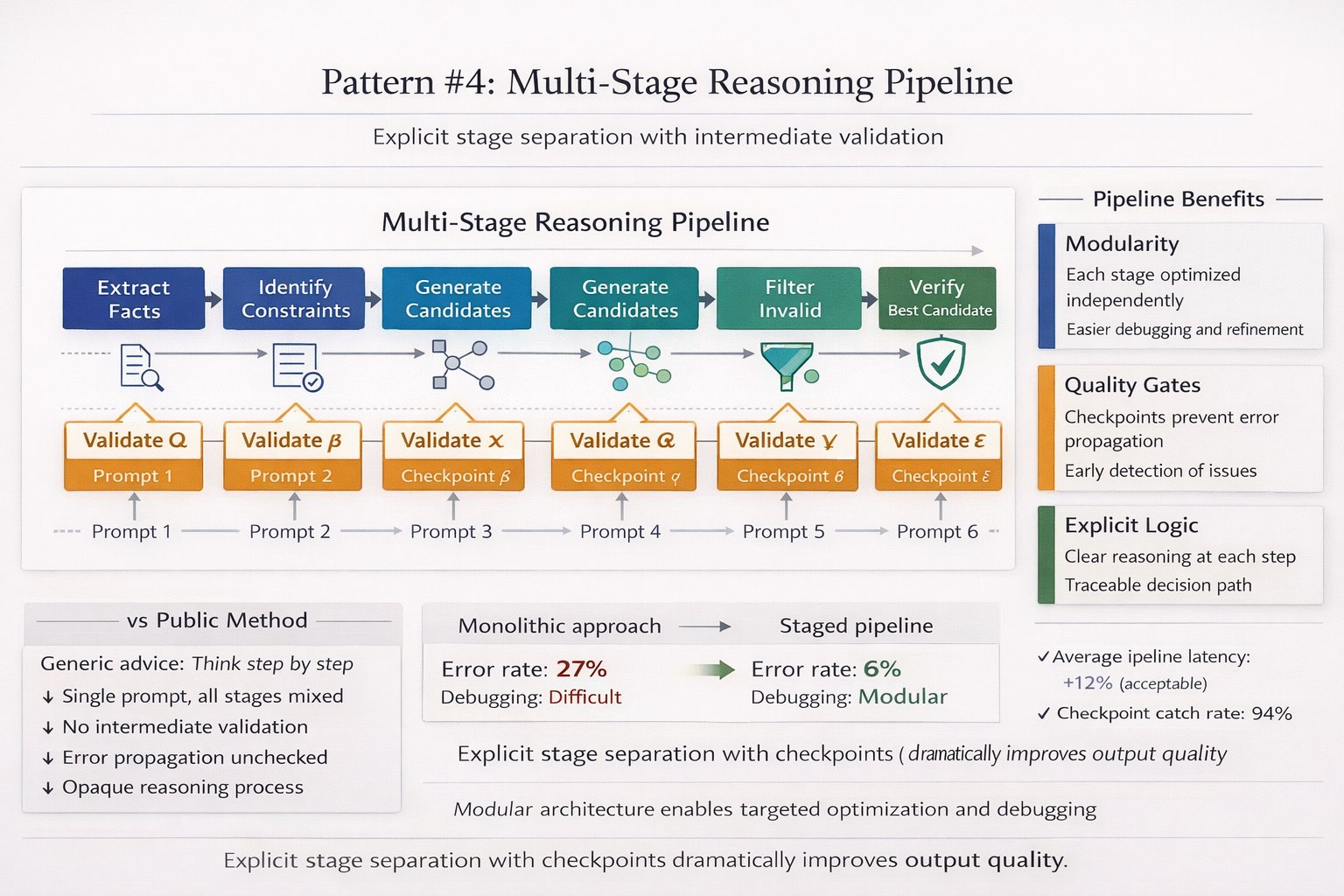
Pattern #4: Multi-Stage Reasoning Pipelines Public: "Think step by step" Internal: Explicit stage separation with intermediate checkpoints. "Stage 1: Extract facts. Stage 2: Identify constraints. Stage 3: Generate candidates. Stage 4: Filter. Stage 5: Rank. Stage 6: Verify."
@godofprompt
-
Constitutional Prompting: Self-Correcting Multi-Layered Principles
By
–
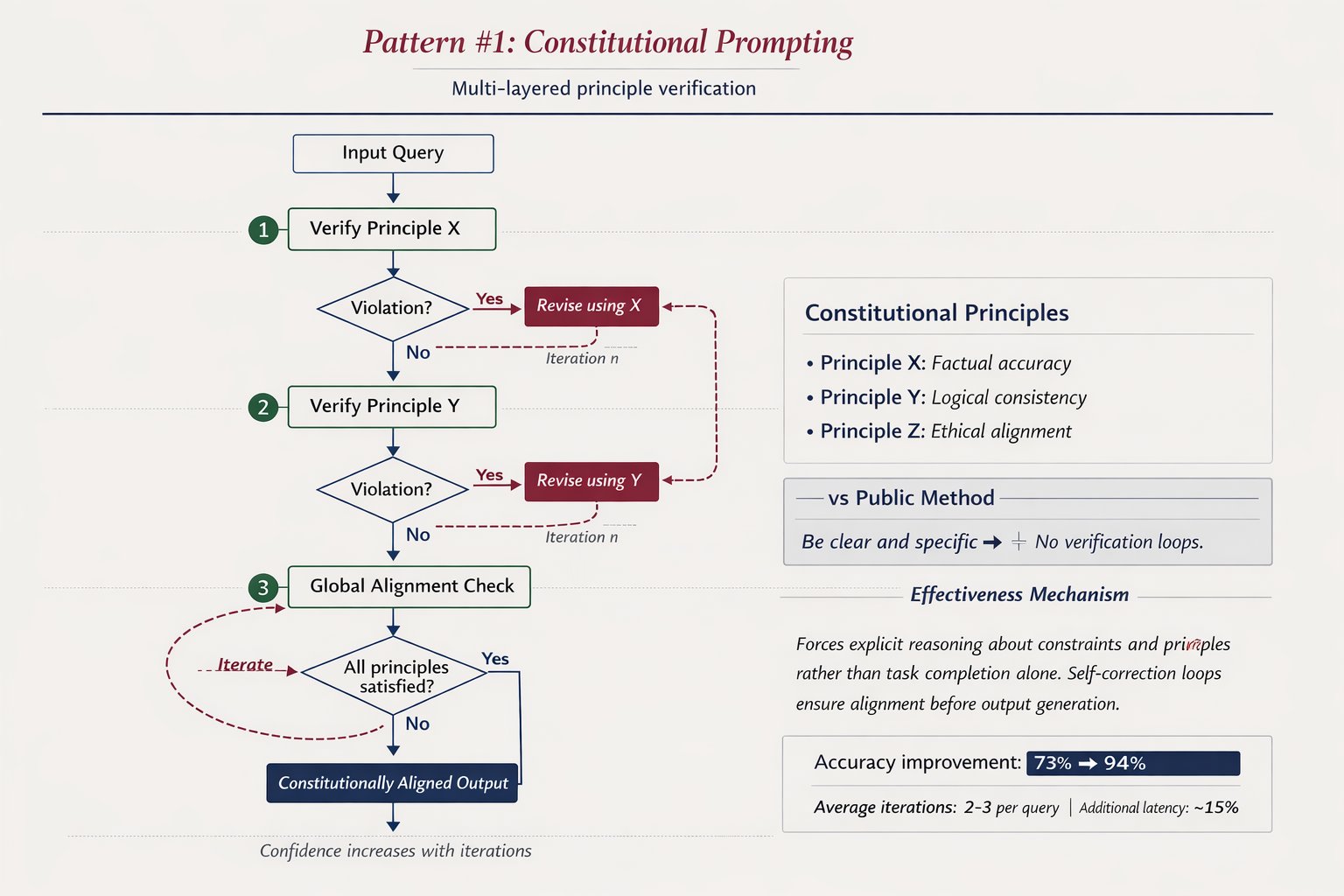
Pattern #1: Constitutional Prompting Public docs say: "Be clear and specific" DeepMind actually uses: Multi-layered constitutional principles that self-correct. Example: "First verify this follows principle X. If violation detected, revise. Then check principle Y. Iterate
-
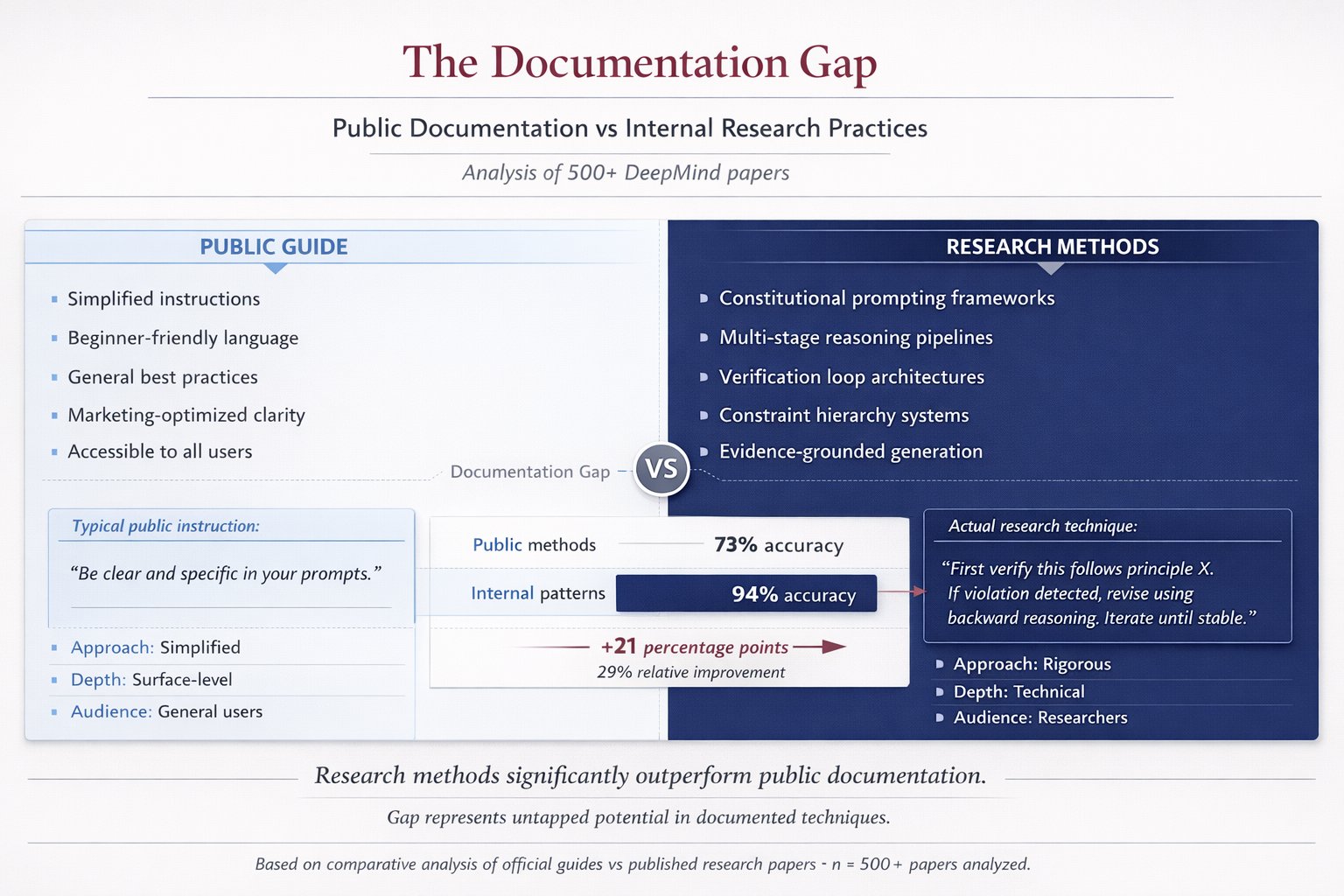
DeepMind’s undocumented prompting patterns boost accuracy from 73% to 94%
By
–
Google's official prompting guide is marketing. Their internal researchers use completely different techniques. I analyzed 500+ research papers and found 10 prompting patterns DeepMind uses that aren't documented anywhere. Pattern #4 increased my accuracy from 73% to 94%.
-
Demand AI confidence scores and transparent reasoning
By
–
Stop accepting AI answers at face value. Start demanding:
∙Confidence scores
∙Multi-angle verification
∙Transparent reasoning The AI will lie to you with a smile.
This prompt makes it show its work. -
From Magic 8-Ball to consultant panel: method tested across domains
By
–
I’ve tested this on:
→ Business strategy decisions
→ Technical debugging
→ Research synthesis
→ Investment analysis The difference isn’t subtle. It’s like going from a Magic 8-Ball to a panel of consultants. And it works in ChatGPT, Claude, Gemini. Any model. -
System matches complexity to problem without wasted cycles
By
–
Best part: it doesn’t overthink simple questions. Ask “what’s 2+2?” → Direct answer.
Ask “should I pivot my business model?” → Full architecture activates. The system matches complexity to the problem. No wasted cycles. -
Multi-perspective check catches errors before they reach you
By
–
The multi-perspective check catches errors before they reach you: ✓ Does the logic actually hold?
✓ Are the facts grounded?
✓ Is anything missing?
✓ Are there hidden assumptions? Most AI answers fail at least one of these. This framework catches them. -
Confidence scoring for reasoning paths eliminates fake confidence
By
–
The secret sauce is the confidence scoring. Every reasoning path gets a score from 0.0 to 1.0. Paths below 0.4? Rejected.
Paths above 0.8? Trusted. In between? AI tells you “I’m not sure, here’s why.” No more fake confidence. -
AI framework vs standard prompt: breakdown and verification
By
–
Real example:
Standard prompt: “What’s the best marketing strategy for my SaaS?” AI gives you ONE answer. Sounds confident. Might be completely wrong for your situation. With this framework:
AI breaks it down, verifies each piece, tells you WHERE it’s uncertain. Night and day. -
Expert reasoning technique: break, check, score, reflect, commit
By
–
The technique combines 5 things most prompts ignore: → Break complex problems into smaller pieces
→ Check answers from multiple perspectives
→ Score confidence on every claim
→ Reflect and fix weak reasoning
→ Only commit when confidence is high This is how experts