6). An Open-source LM Specialized in Evaluating Other LMs – open-source Prometheus 2 (7B & 8x7B), state-of-the-art open evaluator LLMs that closely mirror human and GPT-4 judgments; they support both direct assessments and pair-wise ranking formats grouped with user-defined
@dair_ai
-
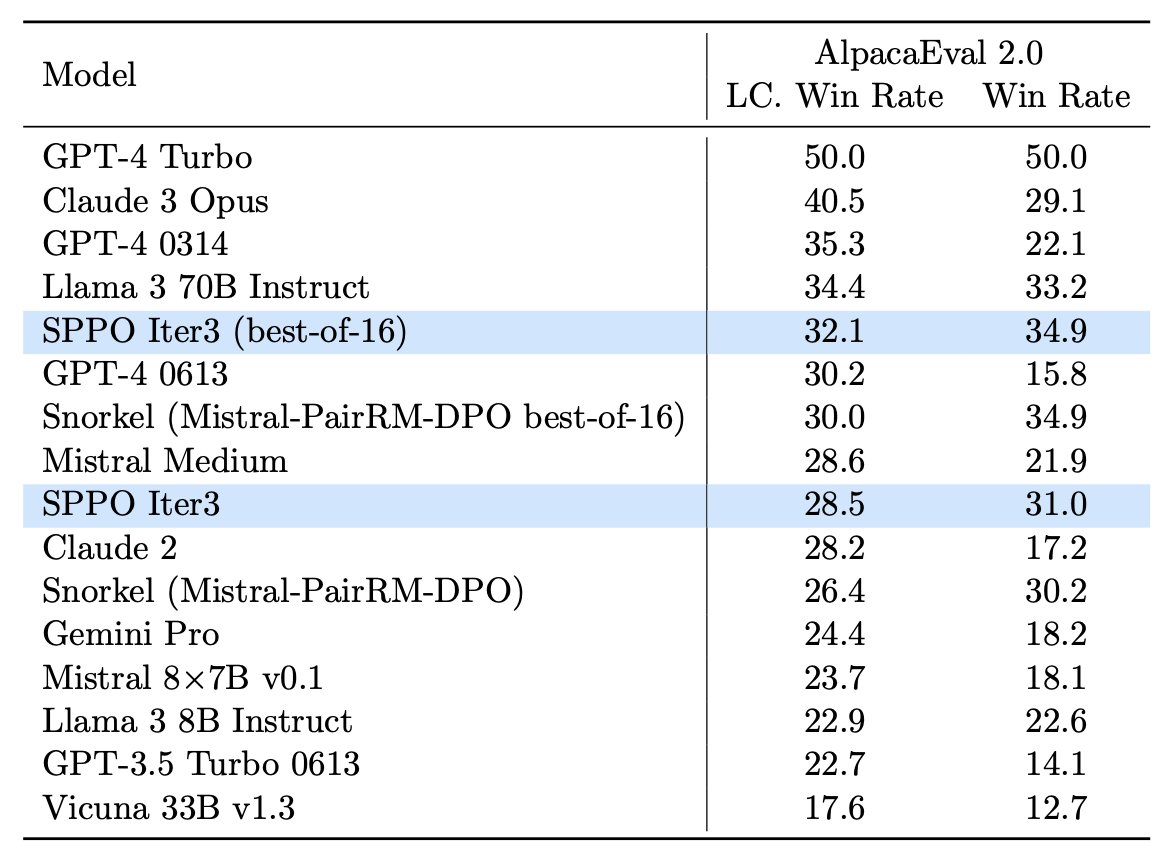
Self-Play Preference Optimization for Language Model Alignment
By
–
7). Self-Play Preference Optimization – proposes a self-play-based method for aligning language models; this optimization procedure treats the problem as a constant-sum two-player game to identify the Nash equilibrium policy.
-

Survey on Retrieval-Augmented Language Models: Evolution and Applications
By
–
5). A Survey on Retrieval-Augmented Language Models – covers the most important recent developments in RAG and RAU systems; it includes evolution, taxonomy, and an analysis of applications.
-
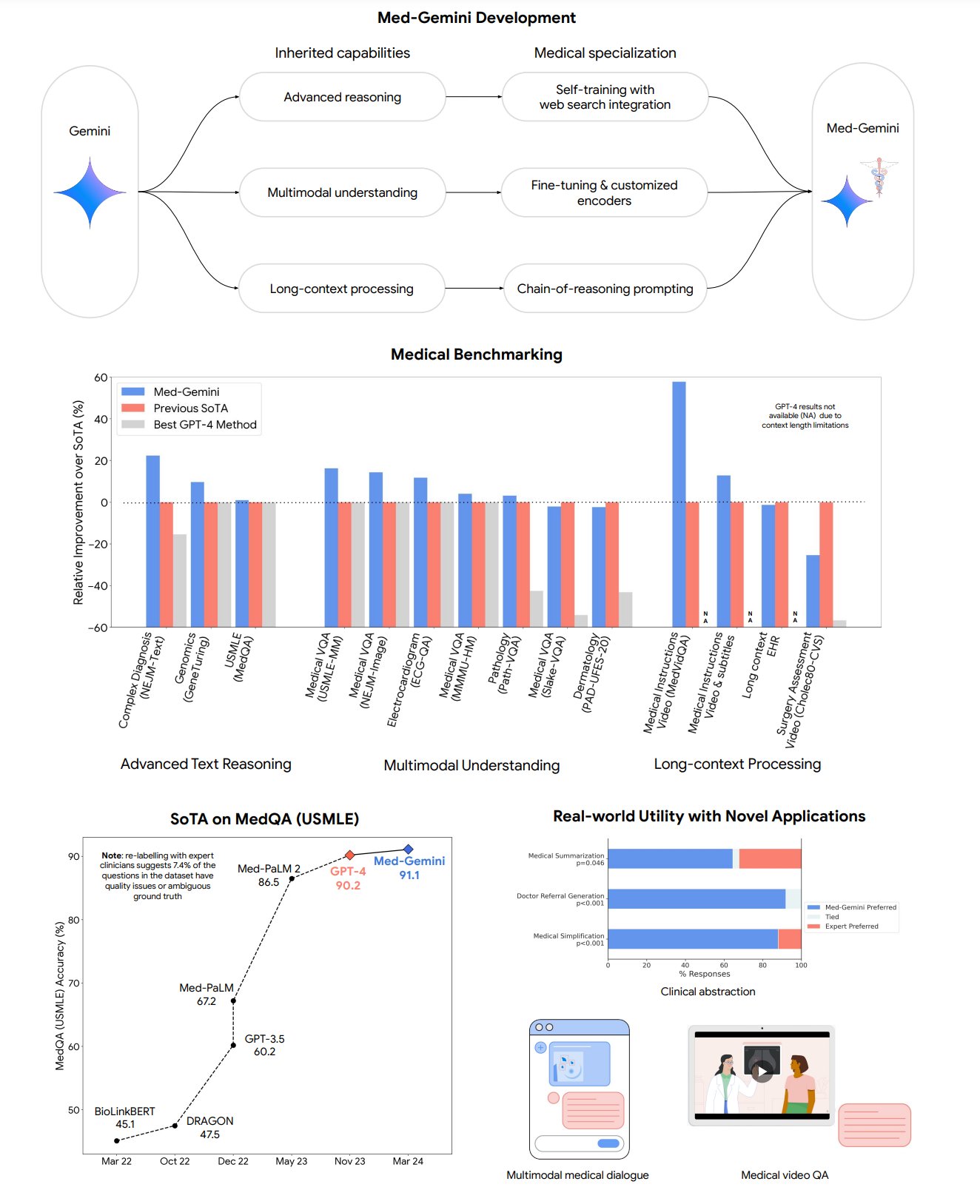
Med-Gemini Multimodal Model Surpasses GPT-4 on Medical Benchmarks
By
–
3). Med-Gemini – presents a family of multimodal models specialized in medicines and based on the strong multimodal and long-context reasoning capabilities of Gemini; achieves state-of-the-art performance on 10/14 benchmarks surpassing GPT-4 models.
-
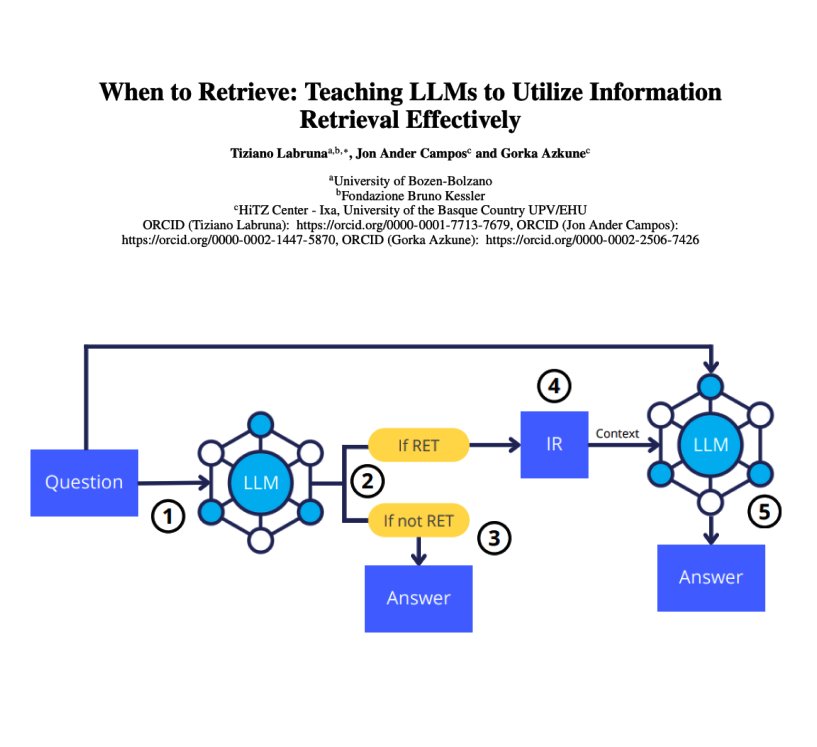
Training LLMs to Retrieve Information When Uncertain
By
–
4). When to Retrieve? – presents an approach to train LLMs to effectively utilize information retrieval; it first proposes a training approach to teach an LLM to generate a special token, , when it's not confident about the answer to a question.
-
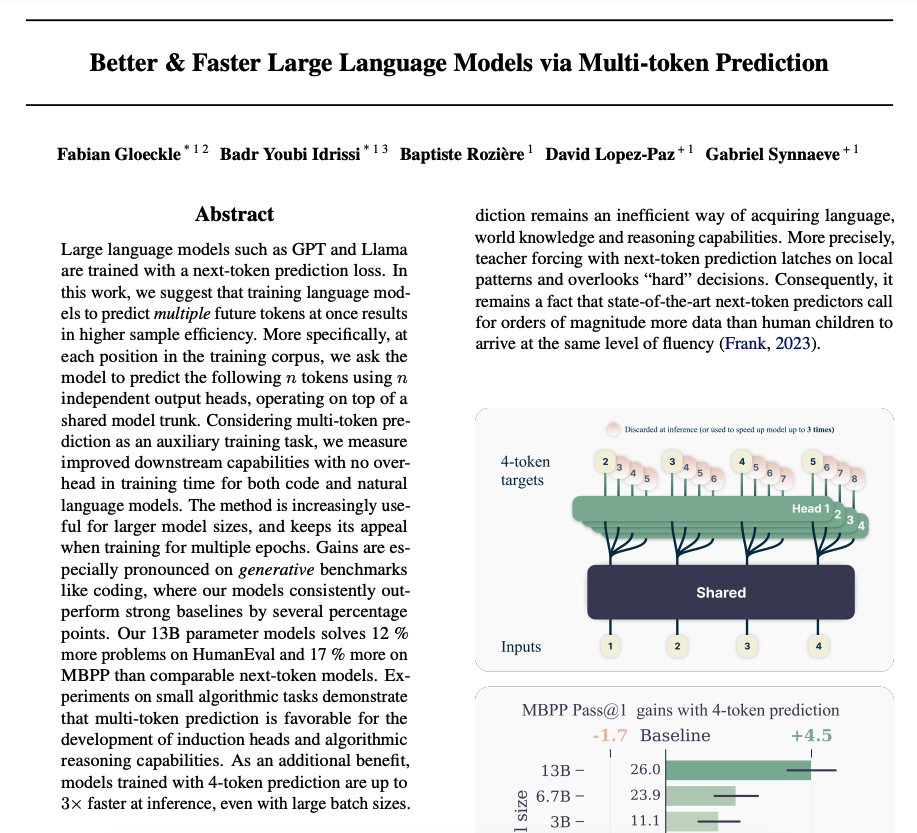
Multi-token Prediction Approach Improves LLM Speed
By
–
2). Better and Faster LLMs via Multi-token Prediction – proposes a multi-token prediction approach that performs language modeling by training the predict the following n tokens using n independent output heads…
-

State Space Models Survey: Analysis and Applications
By
–
10/ A Survey on State Space Models – a survey paper on state space models (SSMs) with experimental comparison and analysis; it reviews current SSMs, improvements compared to alternatives, challenges, and their applications.
-

LLM In-Context Recall Depends on Prompt Formulation
By
–
9/ LLM In-Context Recall is Prompt Dependent – finds that a model's recall performance is significantly affected by small changes in the prompt; the interplay between prompt content and training data can degrade the response quality.
-
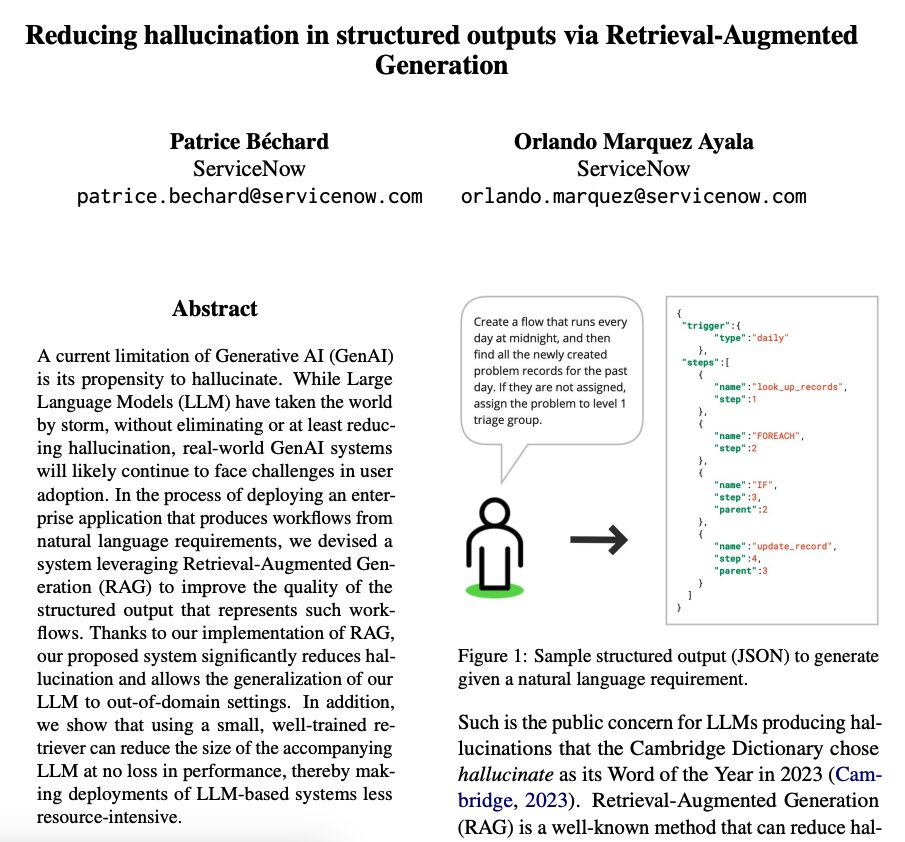
RAG Reduces Hallucination in LLM Structured Outputs
By
–
7/ Reducing Hallucination in Structured Outputs via RAG – shows that RAG can enable deploying powerful LLM-powered systems in limited-resource settings while mitigating issues like hallucination and increasing the reliability of outputs.
-
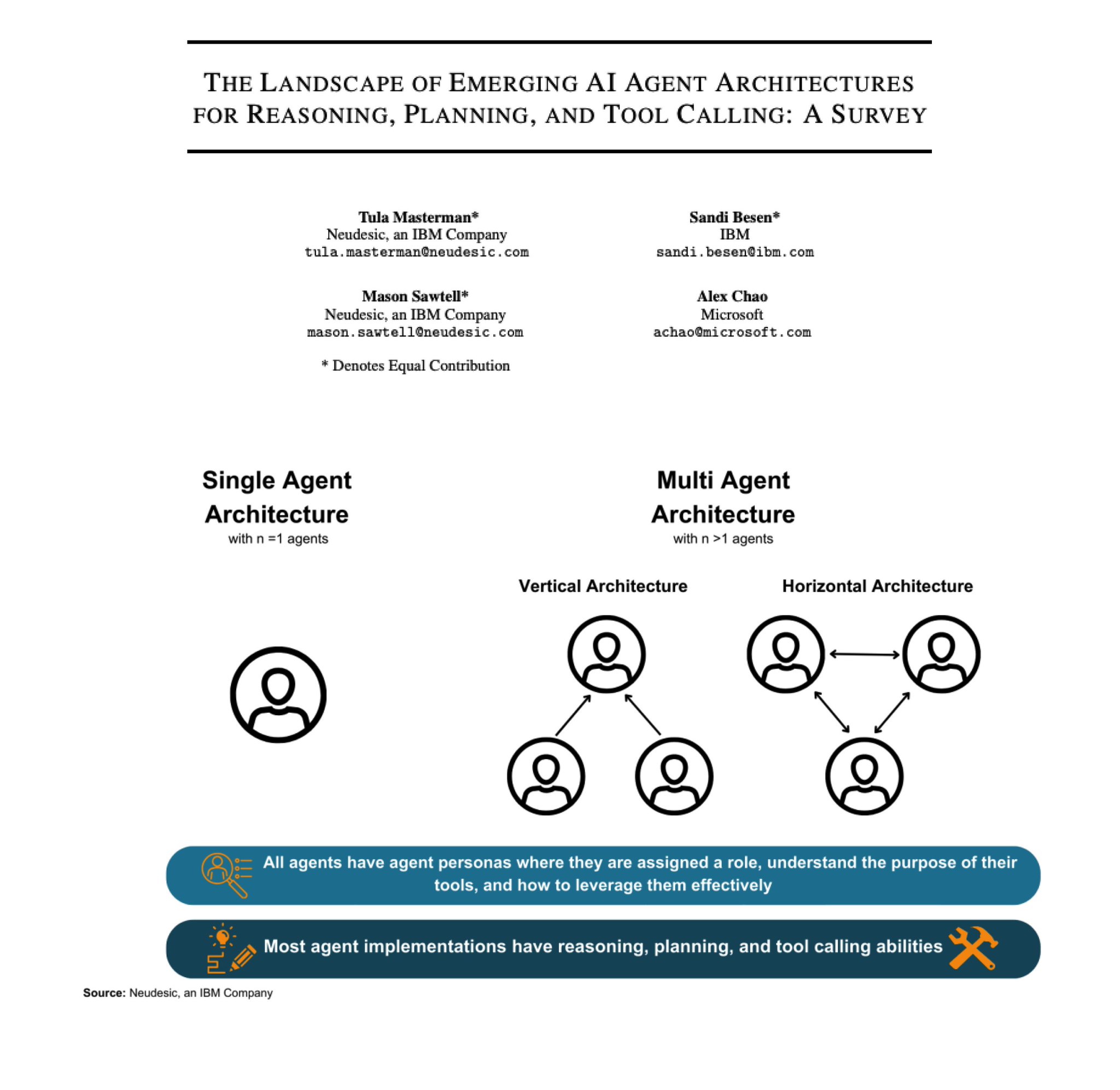
Emerging AI Agent Architectures: Reasoning, Planning, and Tool Calling
By
–
8/ Emerging AI Agent Architectures – a summary of emerging AI agent architectures; it focuses the discussion on capabilities like reasoning, planning, and tool calling which are all needed to build complex AI-powered agentic workflows and systems.