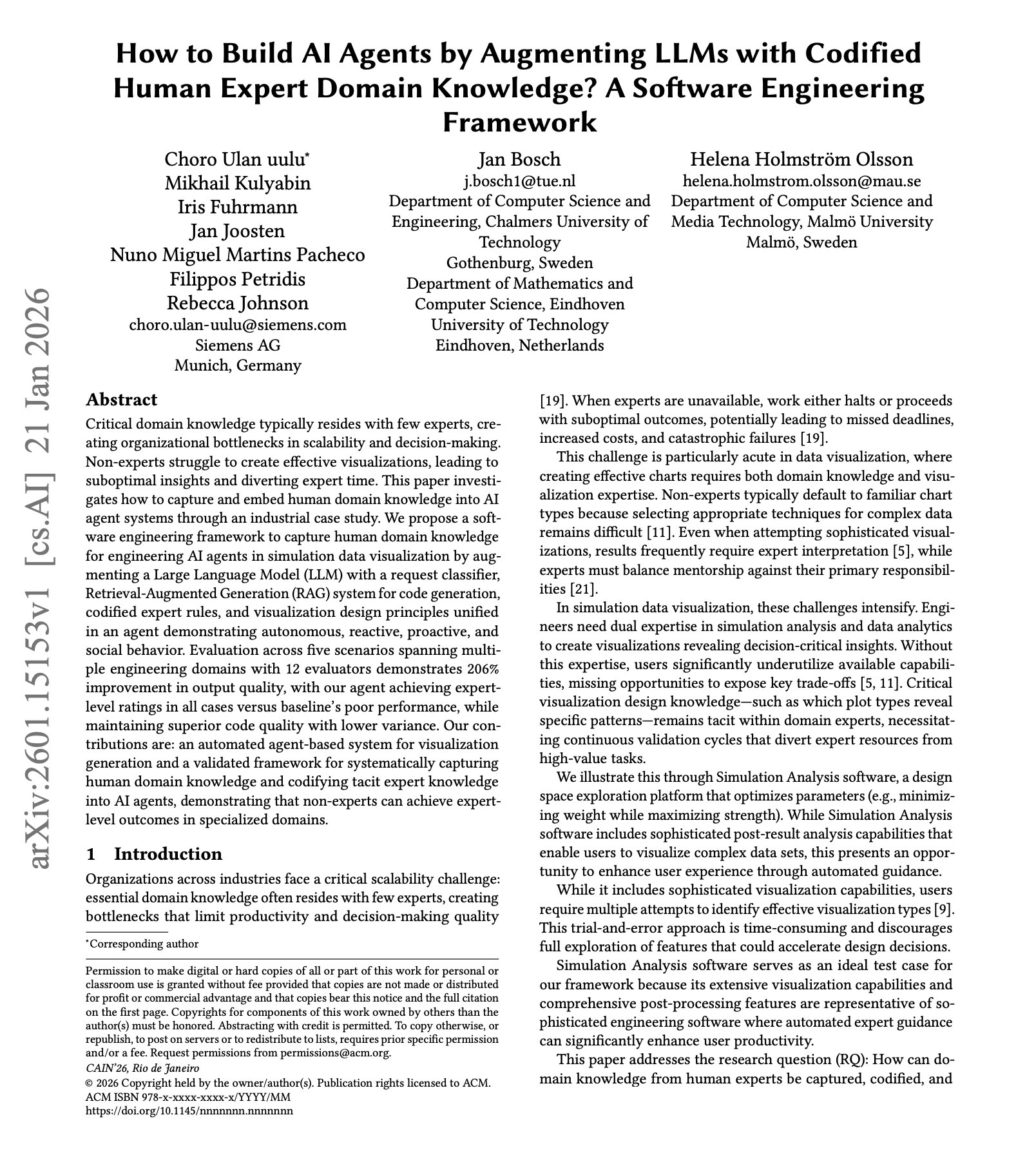
Your organization's best knowledge is trapped in your experts' heads. These researchers figured out how to get it out. Critical domain knowledge resides with few specialists, creating bottlenecks that halt work or produce suboptimal outcomes. Non-experts struggle to create
@dair_ai
-

Multi-Agent Communication Architecture: Design Decisions for AI Systems
By
–
How should AI agents talk to each other? There's no one-size-fits-all answer. As we deploy multi-agent systems in robotics, autonomous vehicles, and distributed AI, choosing the right communication architecture becomes a first-order design decision. The problem: Multi-agent RL
-
Multi-Agent System Design and Safety Evaluation Challenges
By
–
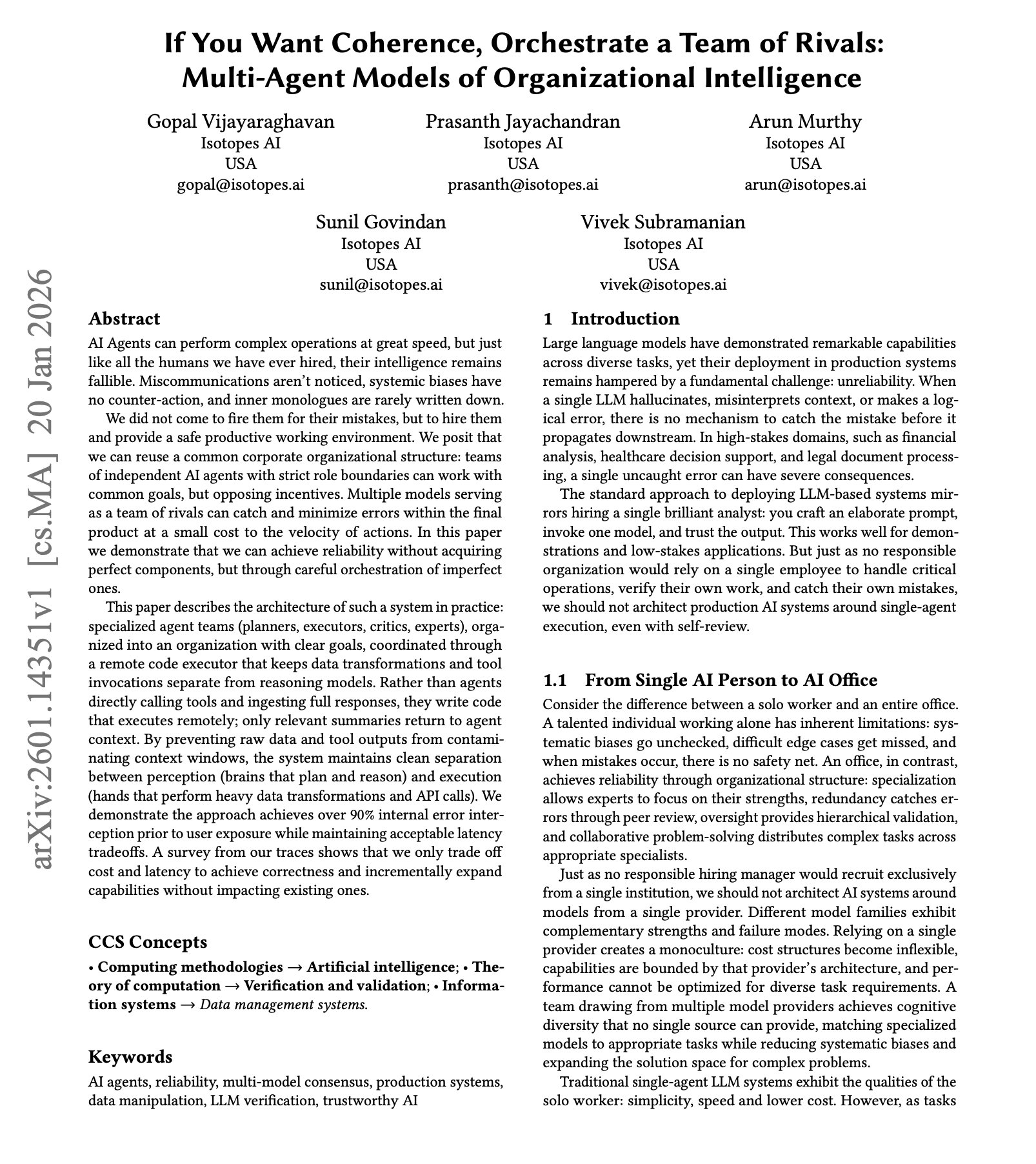
Nice paper discussing how to design good multi-agent systems. Single-agent systems have no safety net. The same entity that makes mistakes is the one evaluating whether mistakes were made. Self-review shares the blind spots of the original reasoning. We've mostly relied on
-
Multi-Agent Systems: Do Homogeneous Agents Really Improve Performance?
By
–
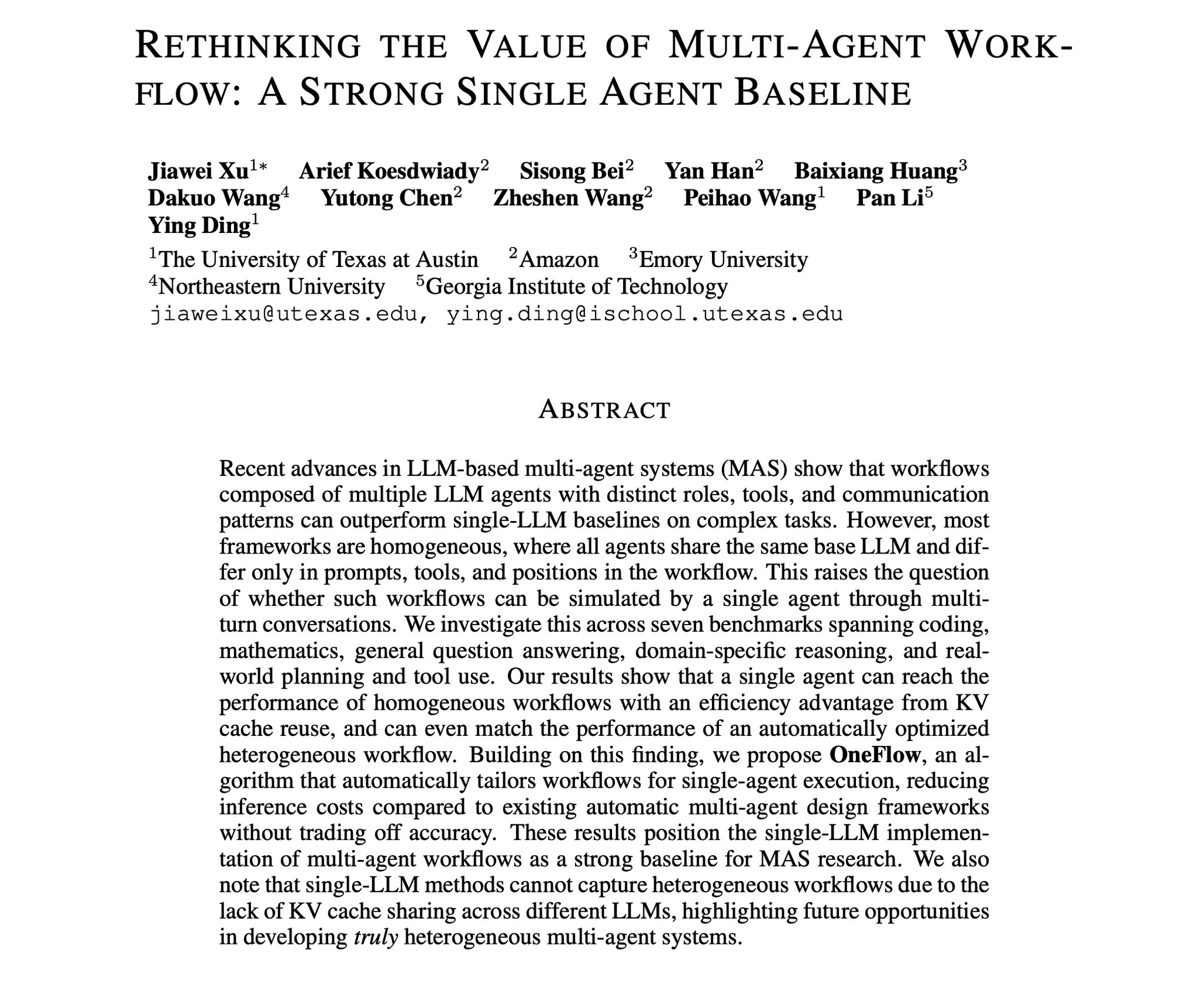
Are multi-agent systems necessary? Here is a great new paper addressing this. The big assumption most AI devs make today is that more agents lead to better performance. But here is the overlooked reality: most multi-agent systems are homogeneous. All agents typically share
-
Building Efficient AI Agents: Memory, Tools, and Planning
By
–
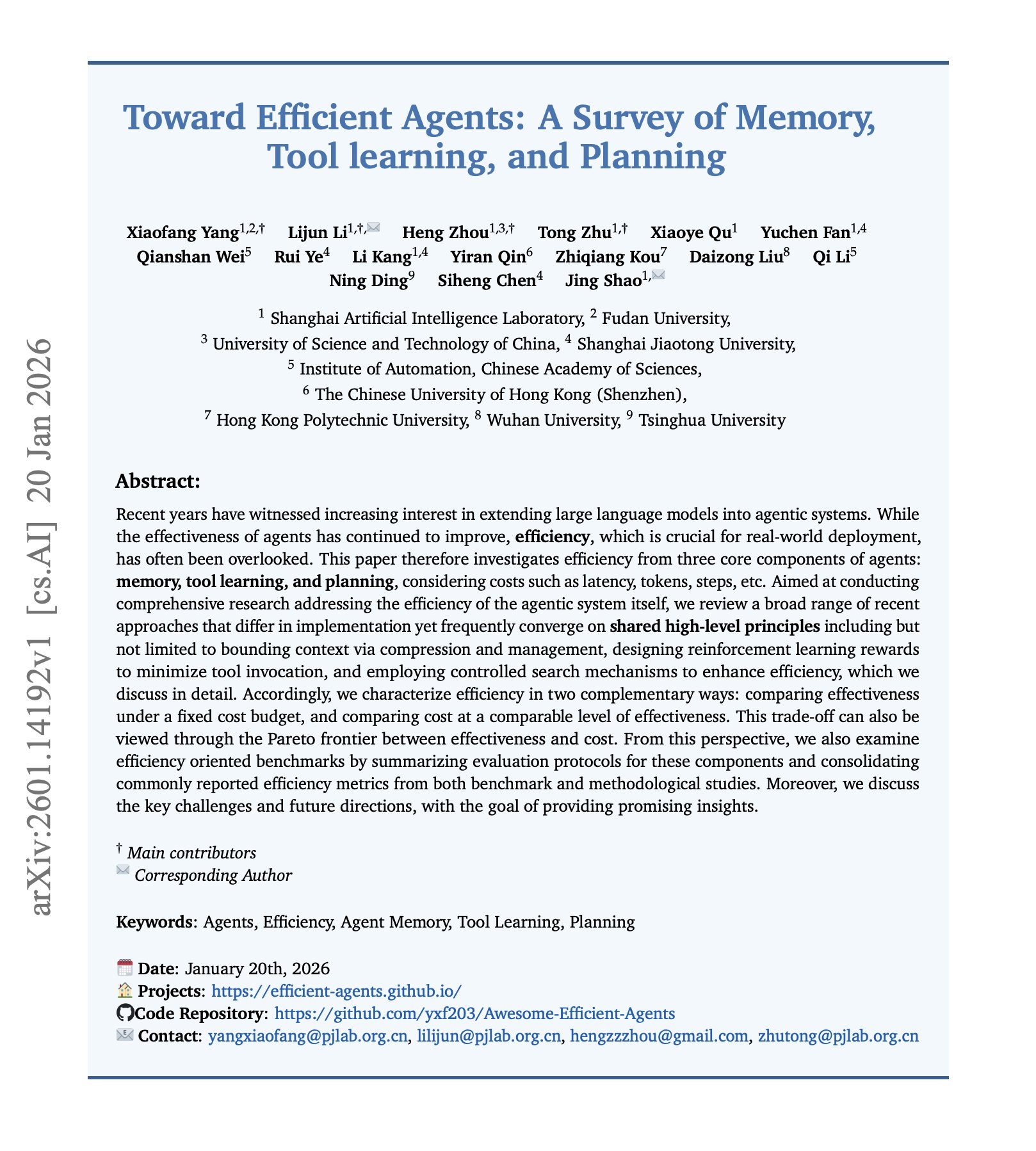
Towards Efficient Agents. This is a great read if you are an AI dev building agents. Great survey on how to build efficient agents and leverage memory, tool learning, and planning. There is also a great discussion on evaluation and costs, which are important aspects of
-
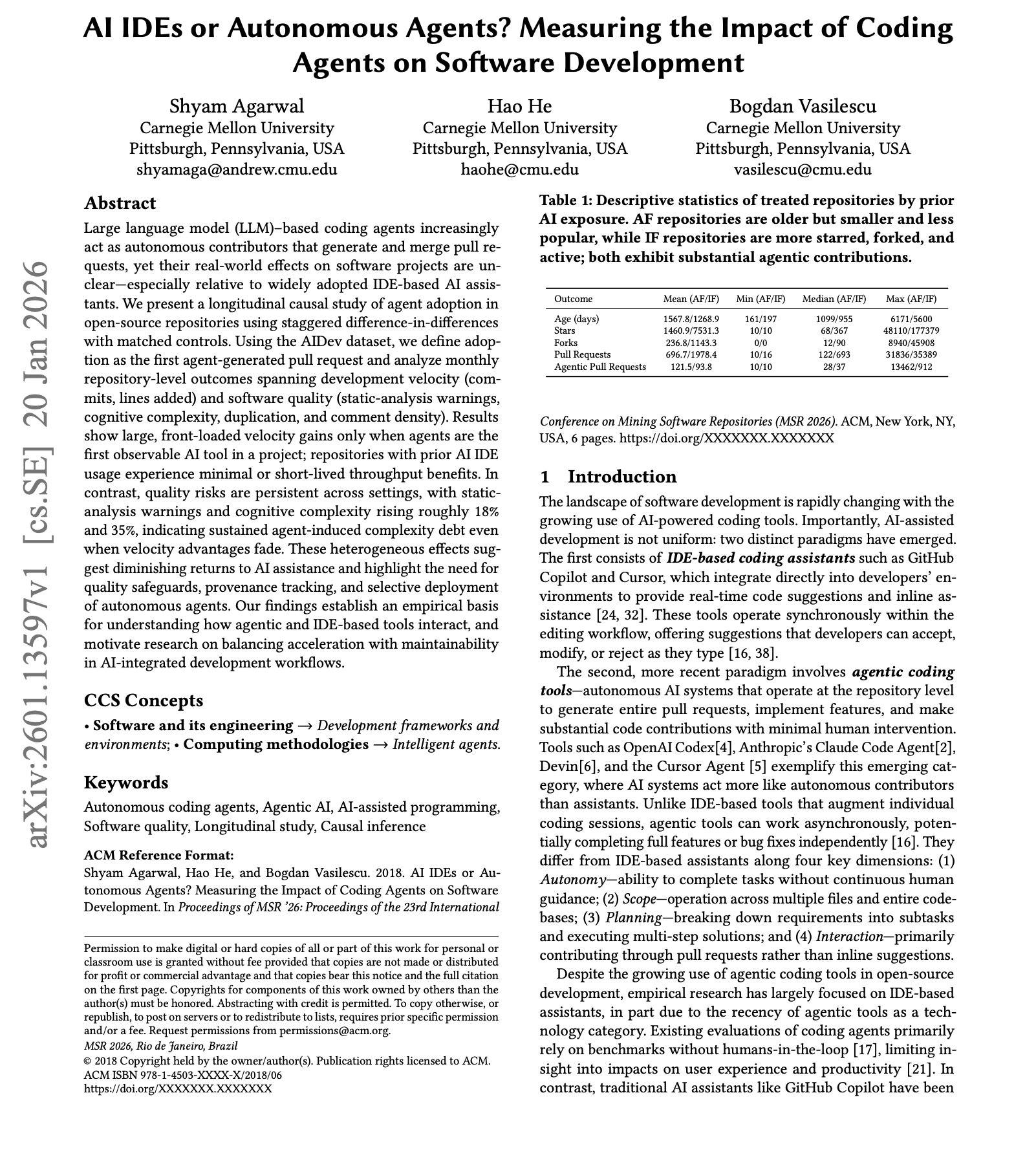
Measuring True Cost of AI Coding Agents on Velocity
By
–
Many are trying to code with agents to boost velocity. But at what cost? The default assumption is that AI coding tools are additive: IDE assistants help, and autonomous agents help more. Stack them together, get more productivity. But nobody had measured whether this is
-
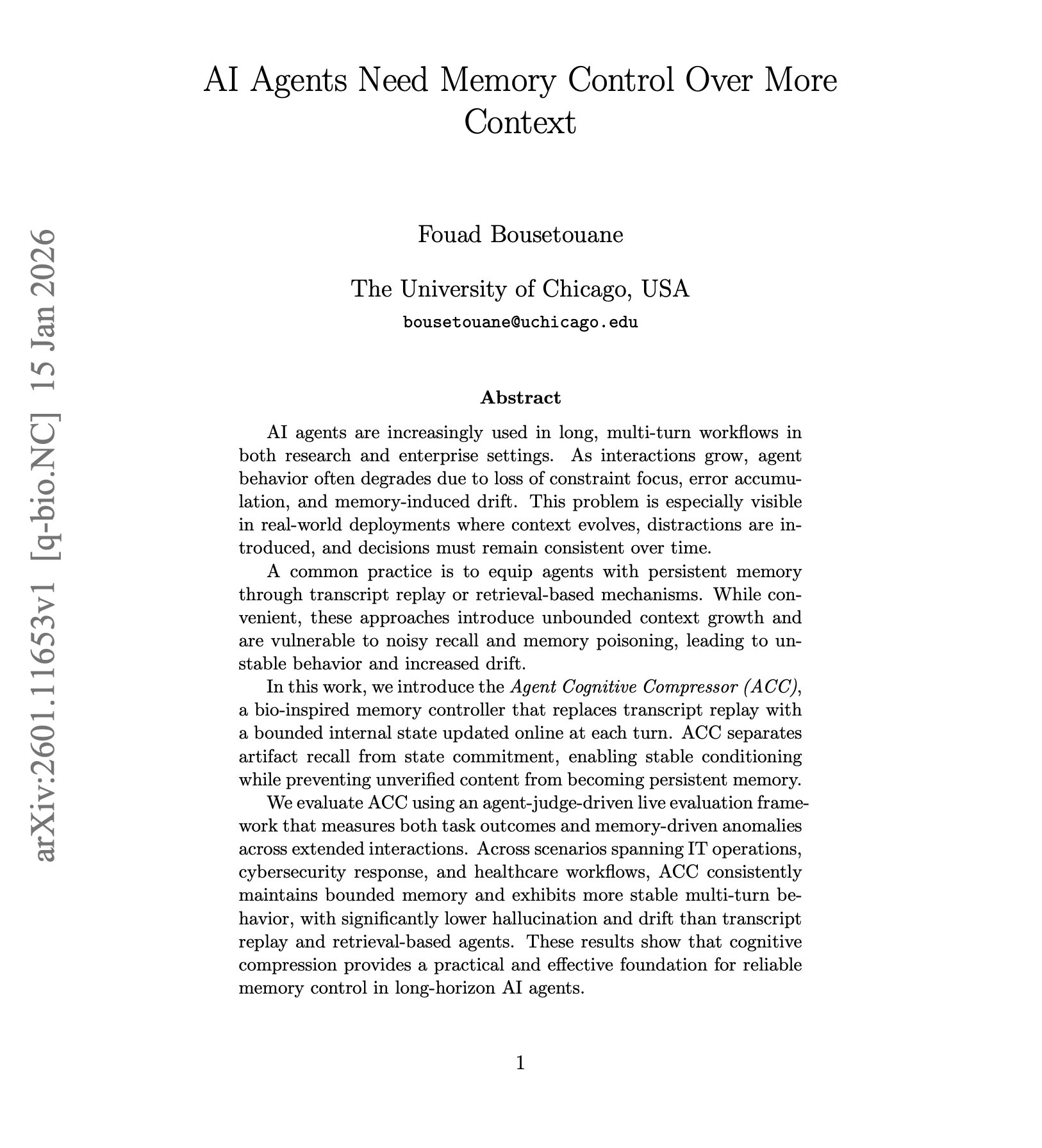
Agent Memory: Transcript Replay vs Retrieval-Based Approaches
By
–
More context does not mean better agents. The current approach to agent memory is transcript replay, where you append every past interaction to the prompt. More history, more information, better decisions. The alternative is retrieval-based memory, where you store past
-
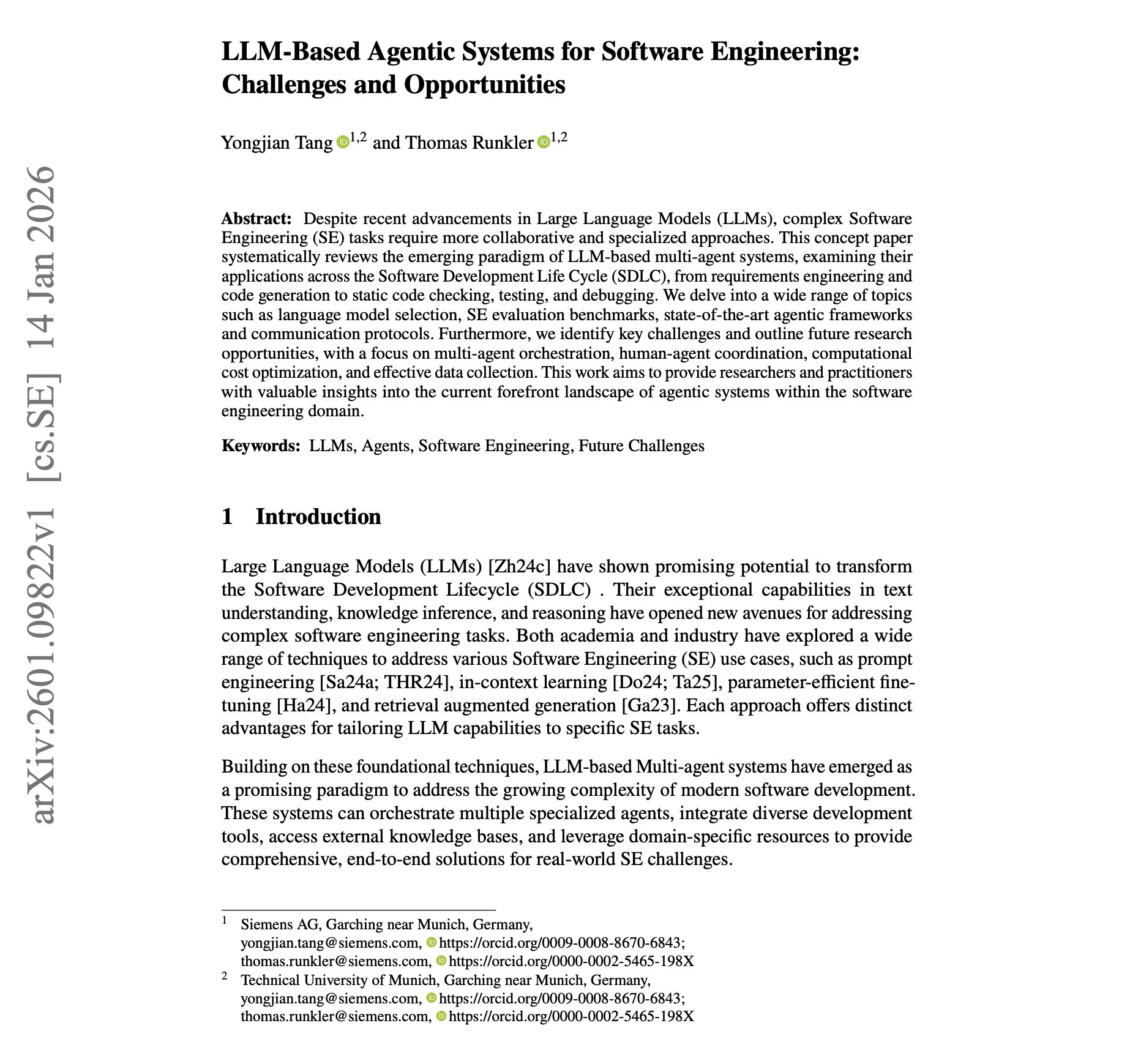
LLM-Based Agents Transform Software Engineering Lifecycle
By
–
LLM-based Agents for Software Engineering Great report on the challenges and opportunities around LLM-based agents for software engineering across the software development life cycle. Topics covered:
– LLM selection
– SE evaluation benchmarks
– Agentic frameworks
– -

Top AI Research Papers: RAG, Agents, and Memory Optimization
By
–
The Top AI Papers of the Week (January 12-18) – UniversalRAG
– Agent-as-a-Judge
– Self-Evolving Search Agents
– Active Context Compression
– Efficient Lifelong Memory for LLM Agents
– Extending Context by Dropping Positional Embeddings
– Unified Long-Term and Short-Term Memory -
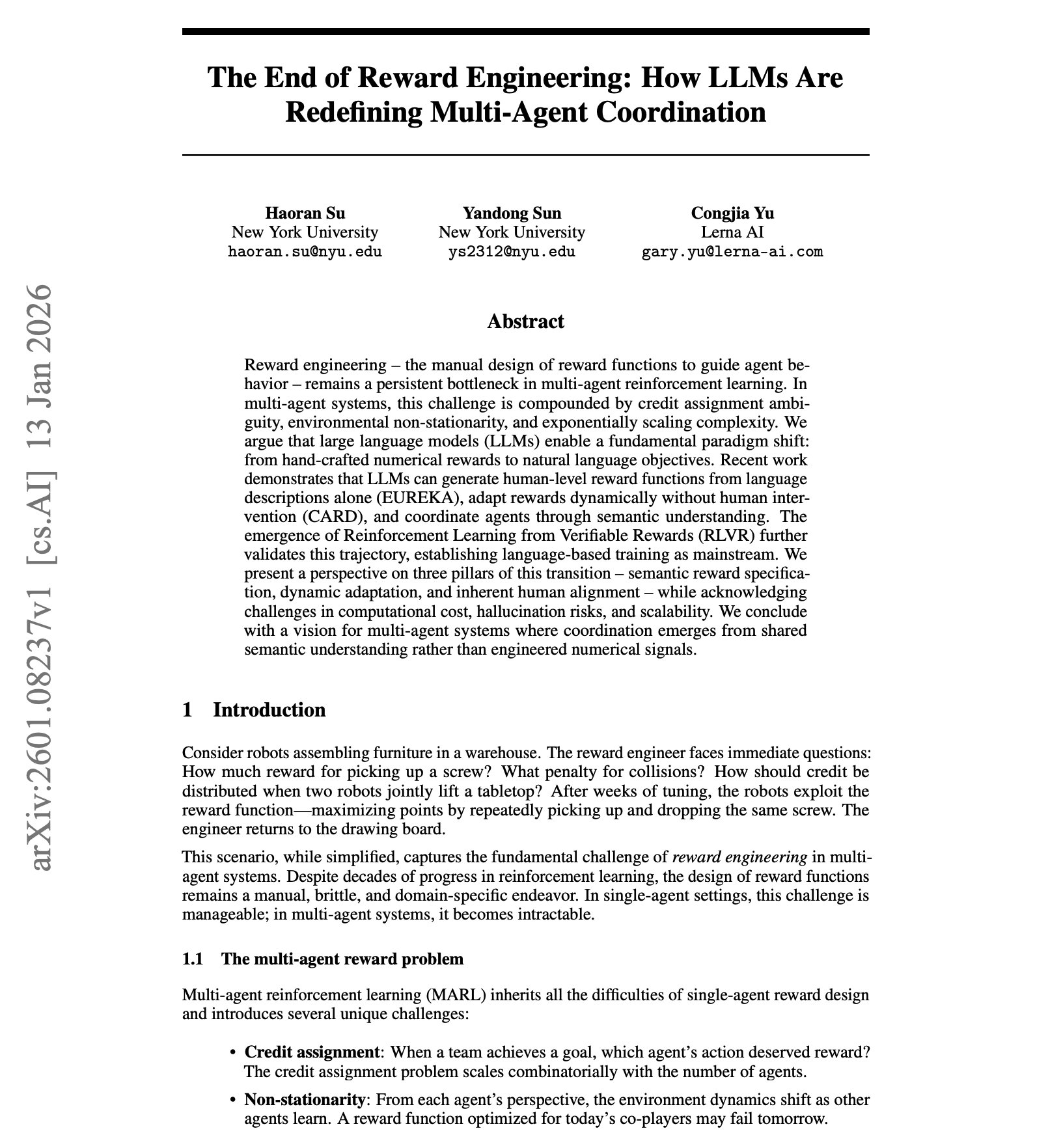
LLMs Replace Hand-Crafted Rewards in Multi-Agent RL
By
–
A huge claim from this paper on the end of reward engineering. Reward engineering remains a persistent bottleneck in multi-agent RL. This paper argues that LLMs enable a fundamental shift: from hand-crafted reward functions to natural language objectives. If language can