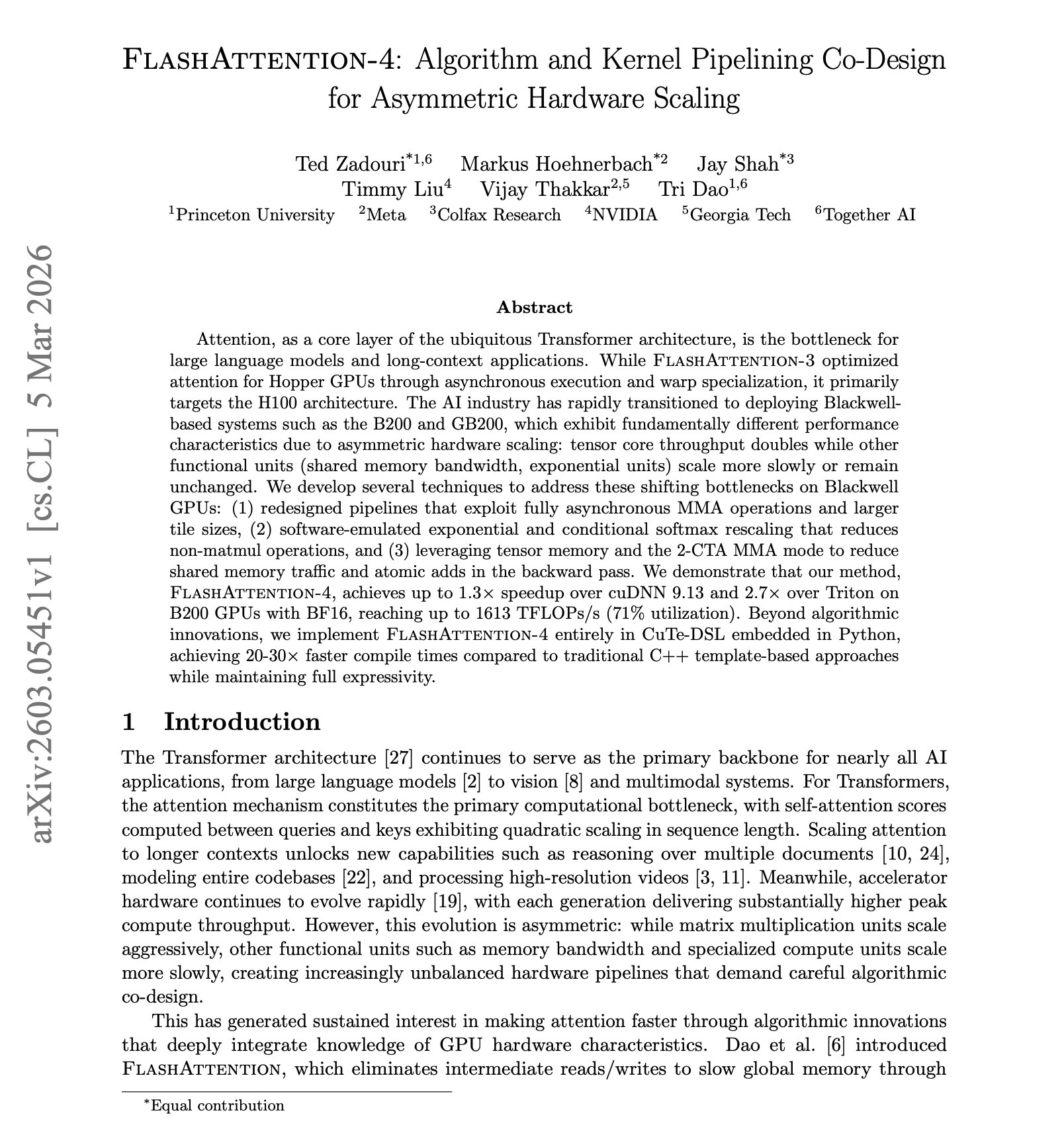
New research: FlashAttention-4 FlashAttention-4 achieves up to 1.3x speedup over cuDNN 9.13 and 2.7x over Triton on B200 GPUs with BF16. FlashAttention-4 co-designs algorithms and kernel pipelines for Blackwell GPUs, where tensor core throughput doubles but memory bandwidth and
@dair_ai
-
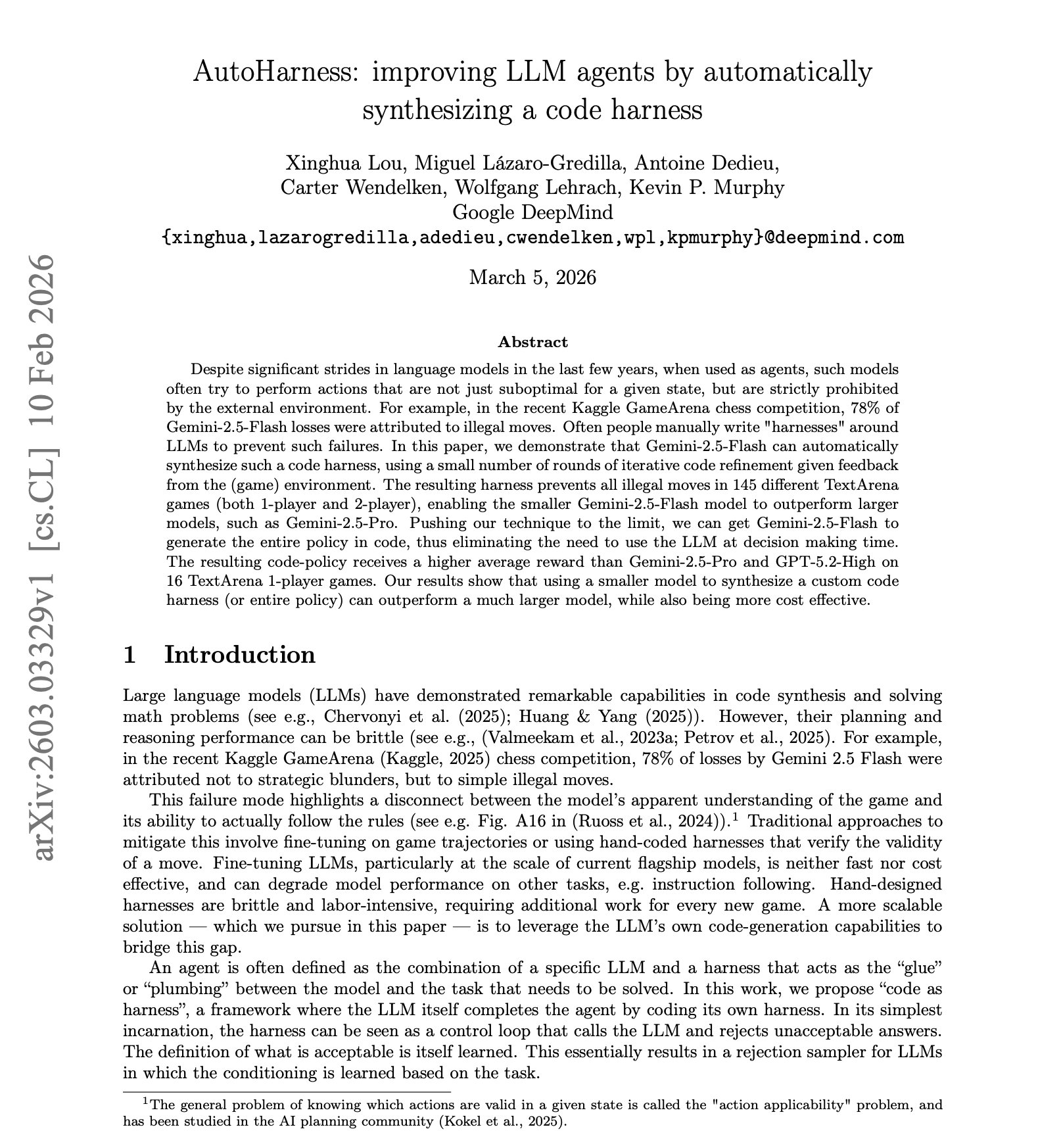
Automatic Harness Synthesis for LLM Agents Research
By
–
New research on automatic harness synthesis for LLM agents. Great read if you are engineering your own agent harness. The agent harness is the scaffolding that lets an agent interact with its environment: tools, code execution, file systems, APIs. Building a good harness is
-
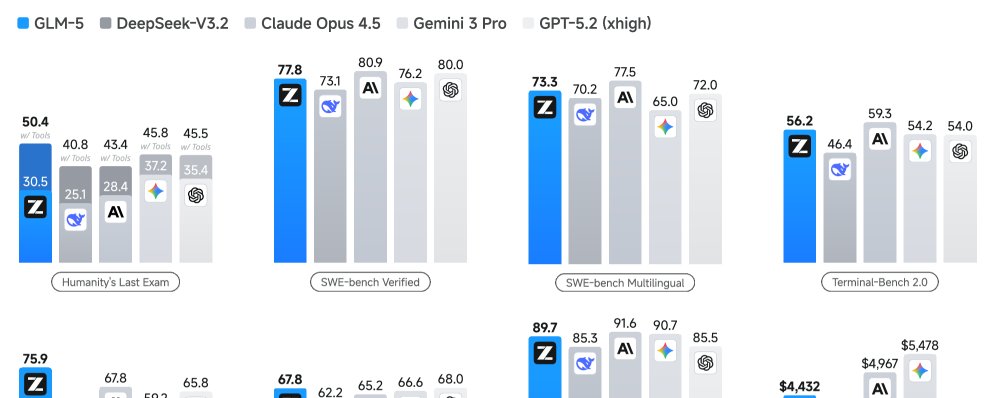
Top AI Research Papers: GLM-5, Agents, and Context Management
By
–
The Top AI Papers of the Week (February 16-22) – GLM-5
– SkillsBench
– MemoryArena
– Team of Thoughts
– AI Delegation Framework
– Lossless Context Management Read on for more: -
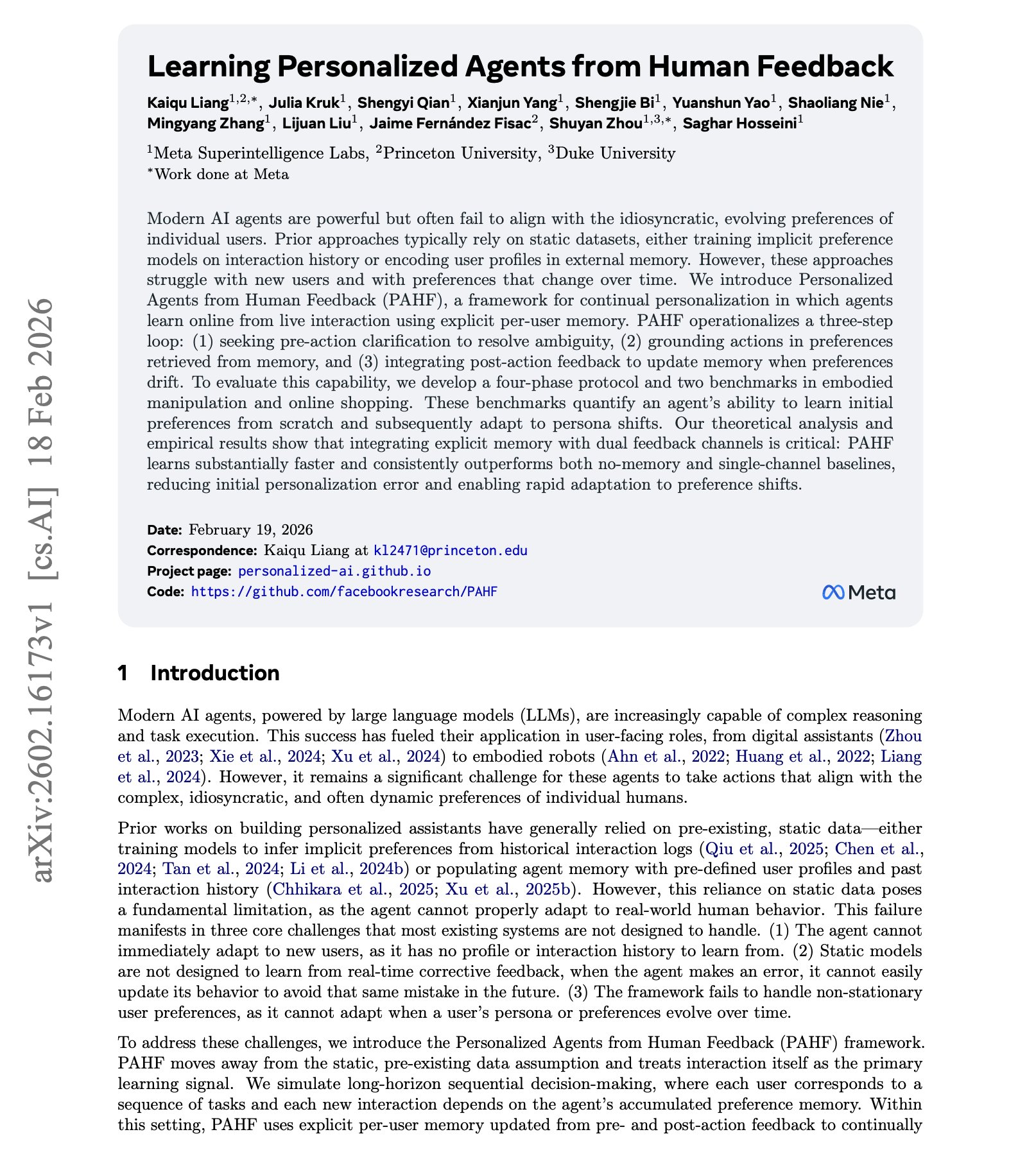
Meta’s PAHF Framework Personalizes AI Agents Through Human Feedback
By
–
New research from Meta. AI agents are powerful but generic. Personalized agents are on the rise, but hard to get right. This new research introduces PAHF (Personalized Agents from Human Feedback), a framework that teaches agents to learn and adapt to individual user
-
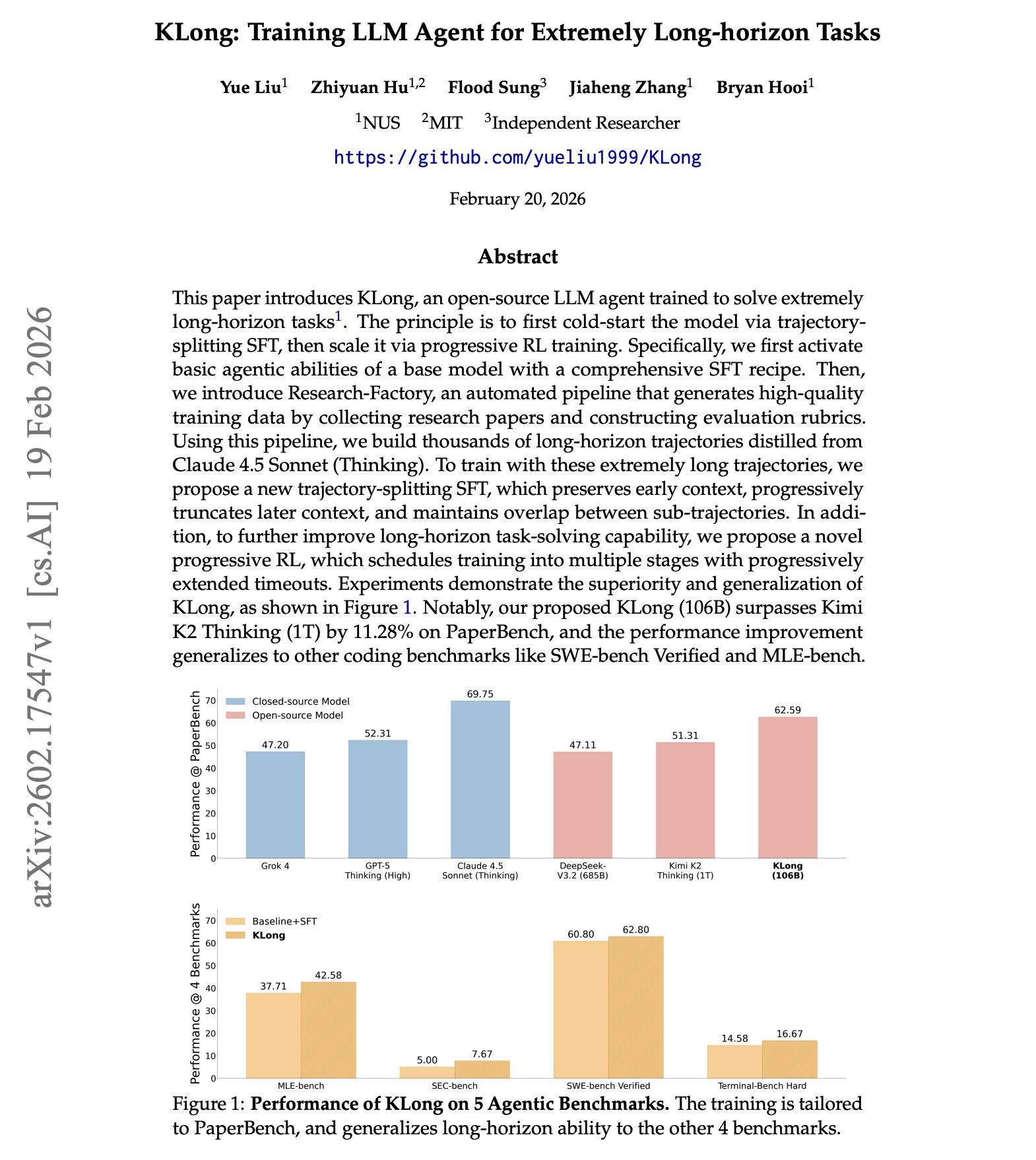
KLong: Training LLM Agents for Extremely Long-Horizon Tasks
By
–
Training LLM agents for extremely long-horizon tasks remains an open challenge. Most agent training pipelines struggle with extended-duration trajectories. Context gets lost, rewards are sparse, and the learning signal degrades over long sequences. KLong tackles this with a
-
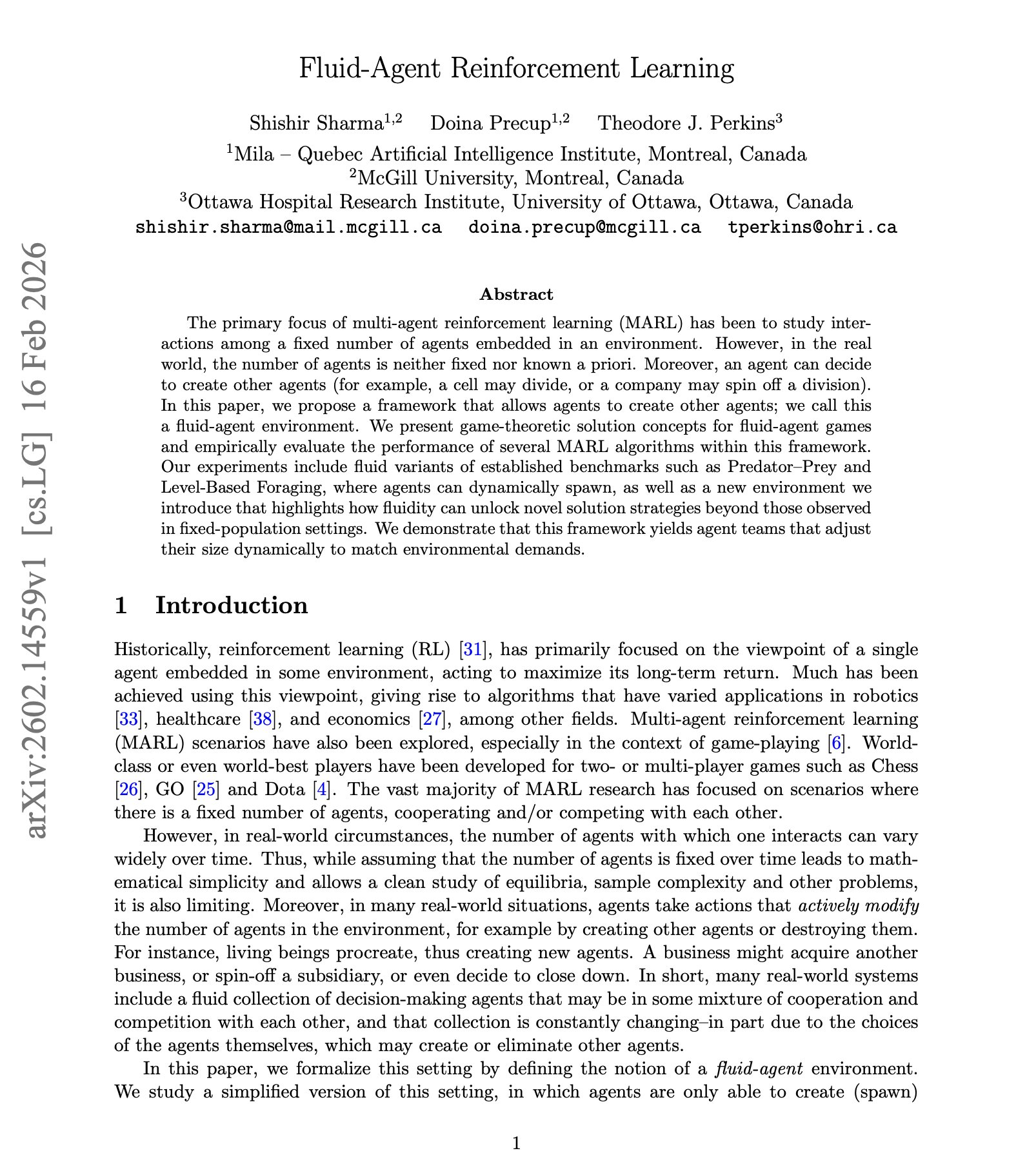
Dynamic Multi-Agent Systems with Population Growth and Adaptation
By
–
Interesting new work on dynamic multi-agent systems. Traditional multi-agent RL assumes a fixed number of agents. But real-world scenarios often involve populations that grow, split, or shrink dynamically, such as cell division, team expansion, or organizational scaling.
-
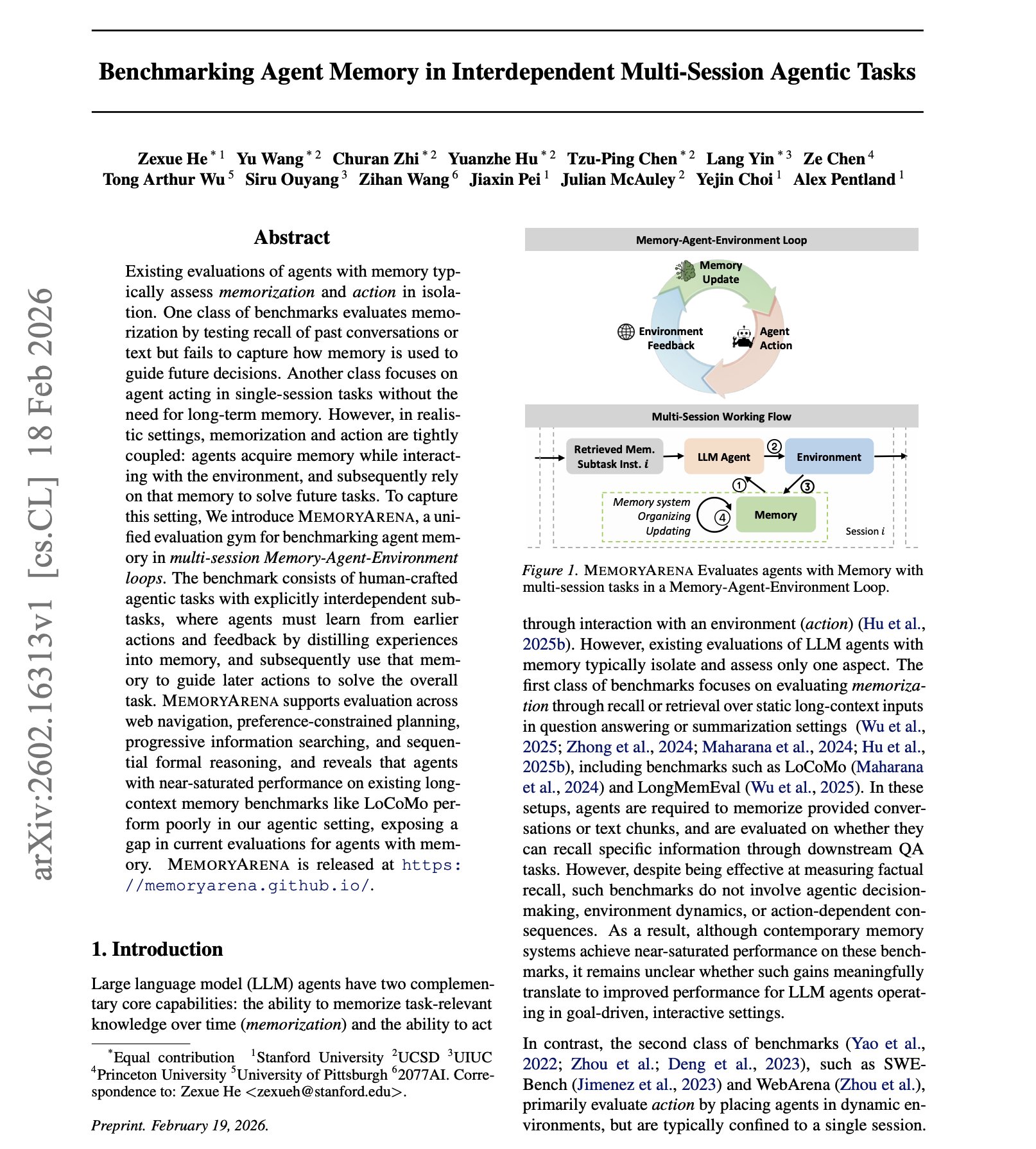
Agent Memory Benchmarks Don’t Predict Real-World Performance
By
–
Agent memory benchmarks are misleading. Scoring well on memory recall doesn't mean an agent can actually use that memory to take correct actions across sessions. Models that achieve near-saturated performance on existing long-context memory benchmarks like LoCoMo perform poorly
-
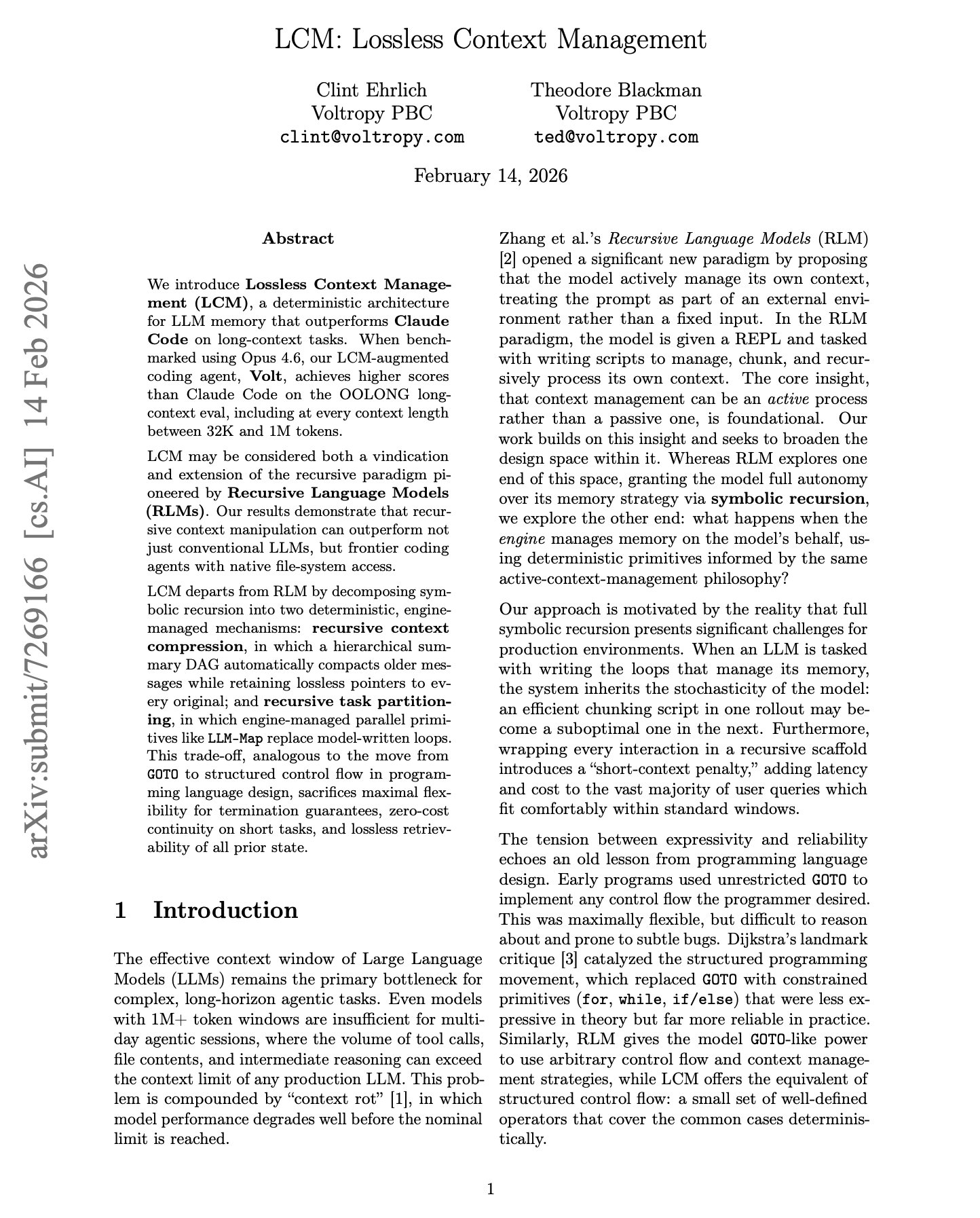
Lossless Context Management Advances Agent Language Models
By
–
A paper worth paying close attention to. It presents Lossless Context Management (LCM), which reframes how agents handle long contexts. It outperforms Claude Code on long-context tasks. Recursive Language Models give the model full autonomy to write its own memory scripts. LCM
-
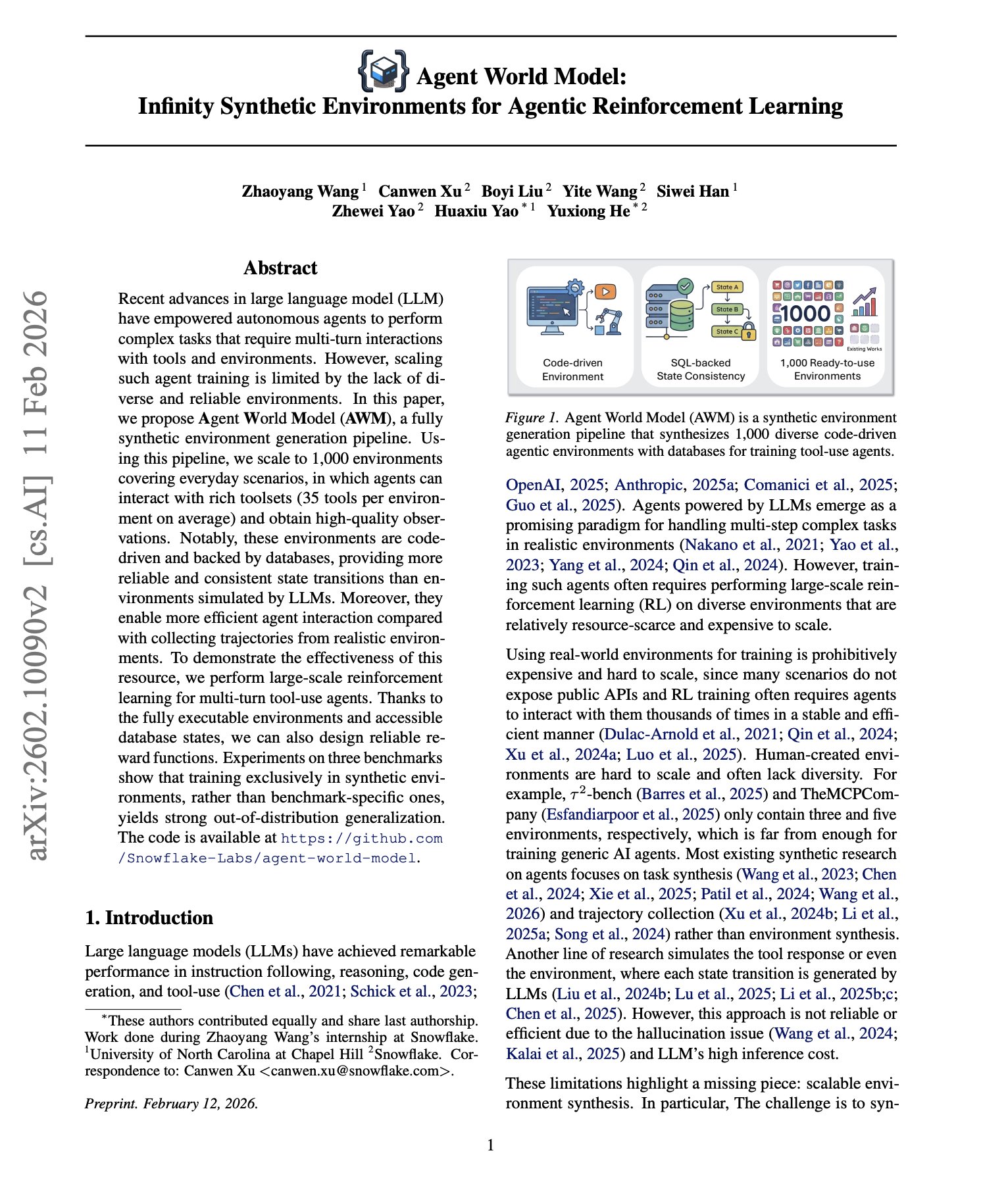
Agent World Model: Synthetic Environments for RL Agent Training
By
–
Training tool-use agents with RL requires diverse, executable environments. But these environments barely exist. This new research introduces Agent World Model (AWM), a fully synthetic pipeline that generates executable agentic environments at scale. Starting from high-level
-

WebClipper Framework Optimizes Web Agent Search Efficiency
By
–
// Efficient Evolution of Web Agents // Web agents waste a lot of compute on cyclic reasoning loops and unproductive exploration. This new research introduces WebClipper, a framework that models web agent search processes as state graphs and prunes them into minimal directed